

Curing is the step that elevates your buds from "pretty good" to "really good." After harvesting and drying, the buds continue to mature in a controlled environment. During this time, flavors settle, hardness softens, and the overall picture becomes more rounded. If you take your time, follow simple rules, and avoid extreme conditions, you will be rewarded with a clean taste, balanced aroma, and a pleasantly smooth smoke.
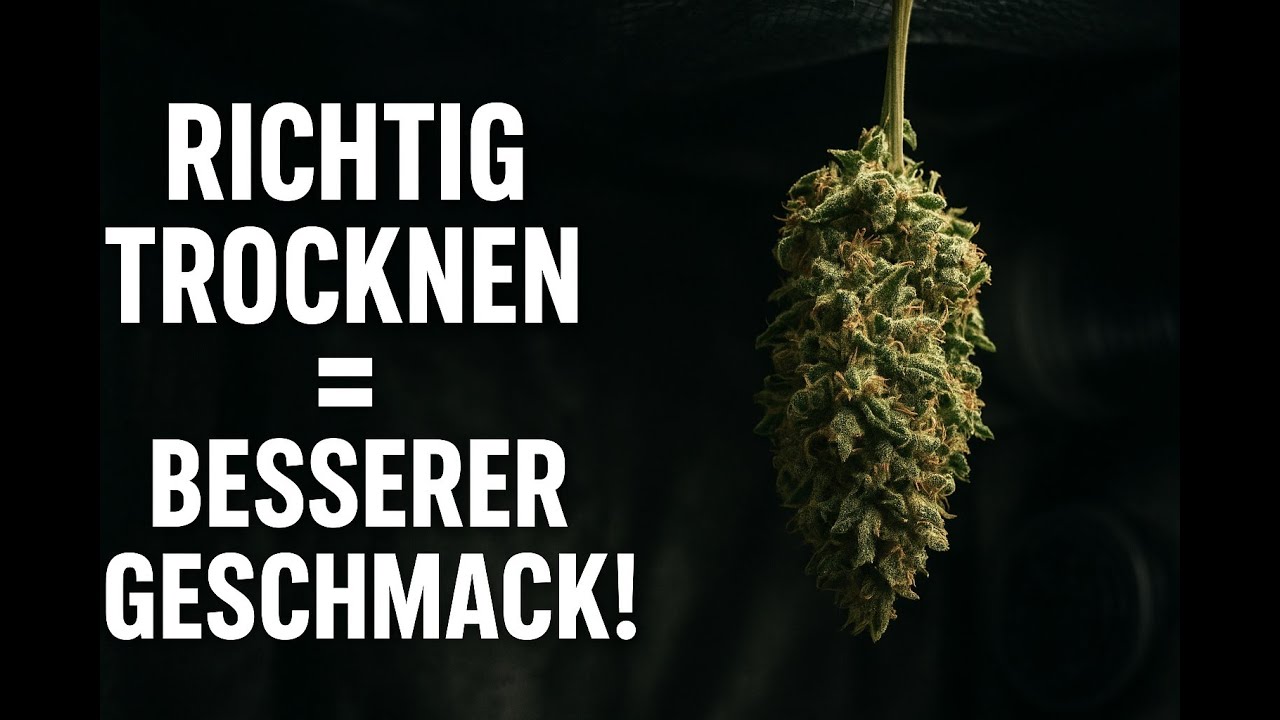
Click on the image to watch the whole video!
What does "curing" mean in relation to cannabis?
Curing involves allowing dried flowers to slowly mature in closed, airtight containers. The residual moisture is distributed from the inside to the outside, enzymes continue to break down unwanted plant components, and the terpene profile stabilizes. Technically, this is not classic fermentation as with yogurt or sauerkraut. It is refinement through controlled post-ripening. The goal is a more harmonious smell, a more differentiated aroma, and a smoother smoking experience. Many find that after successful curing, the buds are less harsh and significantly more aromatic because the "green" note recedes into the background.
Why is curing cannabis so important?
Freshly dried flowers can feel rough despite being harvested correctly. This is due to residual chlorophyll, sugar, and starch, as well as an often uneven distribution of moisture in the flower tissue. Curing gives the buds time to further break down these substances and distribute the remaining moisture evenly. This ensures that terpenes are better preserved, hard edges disappear, and the perception of the effect becomes more harmonious. At the same time, curing increases storage stability. Properly matured flowers stored in a cool, dark place retain their profile much longer than if you consume them immediately after drying or store them in a place that is too warm and bright.
How does curing work on a chemical level?
After harvesting, degradation processes continue in the plant. Chlorophyll breaks down, sugar and starch are reduced, and enzymatic reactions slowly subside. This degradation is desirable because it reduces grassy, bitter notes. Terpenes are volatile and sensitive to heat, light, and oxygen. A cool, dark environment with moderate, stable humidity protects them while the flowers mature undisturbed.
On the much-discussed question of potency: The actual psychoactive conversion of THCA to THC occurs primarily through heat during consumption. A small, very slow decarboxylation can also take place over long periods of time at room temperature, but it is limited. The goal of good curing is therefore not to increase THC. It is about preserving terpenes, reducing harsh accompanying substances, and preventing oxidation, because too much heat, light, or oxygen breaks down THC into CBN and can even reduce the perceived potency. In other words, curing optimizes taste and overall effect primarily by improving aroma and texture, not by adding more active ingredient.
What is the difference between drying and curing?
Before you can refine your flowers, you must first dry them thoroughly. Drying removes so much moisture from the buds that they are no longer wet and mold can hardly spread. This step preserves your cannabis and prepares it for the next phase. But drying alone is not enough to bring out the full aroma. Only the subsequent curing process transforms simple, dry flowers into a final product with a harmonious taste and complex aroma. During curing, the remaining moisture inside the buds is redistributed, enzymes break down sugars and chlorophyll, and the aromas combine to form a well-rounded overall profile.
How does the drying process work?
To ensure optimal curing later on, you need to take care when drying. The goal is to reduce moisture slowly and evenly without losing valuable terpenes or cannabinoids. A common method is hanging drying: you cut off the branches, remove the large leaves, and hang the plants upside down in a well-ventilated, dark room. This allows air to circulate freely around the buds.
An alternative is net drying, where you separate the individual flowers from the stems and place them on special drying nets. This saves space and can speed up the process, but requires more attention to prevent pressure marks from forming.
In both cases, it is important to maintain a room temperature of around 15 to 20 degrees Celsius and a relative humidity of 45 to 55 percent. A small fan that provides gentle air movement helps to prevent damp spots and mold.
How long does it take to dry?
Allow seven to fourteen days, depending on the size of the buds, temperature, and humidity. You can tell whether your flowers are ready for the next step by looking at the stems: they should break easily, not just bend. The outside should feel dry and slightly crisp, while the inside still retains a slight residual moisture. This moisture is important for the aromas to develop during curing.
What happens during the actual curing process?
Once the flowers are optimally dried, curing begins, which is the actual maturation process. Now the residual moisture is distributed evenly inside the buds, and enzymatic processes continue. Sugar, starch, and chlorophyll continue to break down, making the aroma rounder and the smoke smoother. During this phase, the characteristic scent and taste of your harvest develops—what many describe as the "refining" of cannabis. Patience pays off here, because the more carefully you accompany this step, the more intense the aroma will be in the end and the more pleasant the smoking experience.
How do I cure cannabis properly?
Curing is the final major step that transforms simple dried flowers into a truly aromatic and pleasant smoking product. After drying, your buds continue to mature slowly in a closed container. This changes their smell, taste, and consistency. This is exactly what ultimately gives you the smooth smoke and full aroma you want. To achieve this, you need time, patience, and a few simple steps.
How do I prepare the buds?
Before you start the actual curing process, you need to prepare your buds properly. Wait until the drying phase is complete. This usually takes seven to fourteen days, depending on the size of the buds and the room climate. Then carefully cut the buds off the stems. The large stems store a lot of moisture, which could cause mold later on. Use clean scissors or a trimming tool to cut the buds cleanly.
Now you can manicure the buds. This means removing any small leaves that are sticking out, known as sugar leaves. Although they contain some resin, they often taste bitter and can make the smoke harsh. Manicuring also makes the buds look nicer and dry more evenly.
Then choose the right jars. Clean, airtight glass containers are best. They do not absorb odors and retain moisture well. Fill the jars only about three-quarters full and place the buds loosely inside so that enough air can circulate. If you compress them too much, the moisture will not be distributed evenly.
What happens during the first week?
The first few days are the most important phase. Now the residual moisture slowly moves from the inside to the outside, and the buds balance their moisture content. During this time, open the jars two to three times a day for about ten minutes. This regular ventilation, often called "burping," ensures that fresh air can enter and excess moisture can escape. Move the buds carefully so that all sides are well ventilated.
Pay attention to the smell when opening. A pleasant, slightly sweet aroma is normal. However, if there is a pungent smell of ammonia or a musty odor, the flowers are too damp. In this case, you should spread them out on a clean cloth for a few hours to allow them to dry out a little. If you wish, you can place a small hygrometer in the jar. The ideal humidity is around 60 to 65 percent.
What happens after the first week?
After seven days, you can reduce the frequency of opening the jars to every two to three days. This longer phase is called long-term curing. Now the actual maturation process takes place: the buds become evenly drier on the inside, enzymes slowly break down sugar and chlorophyll, and the aroma becomes increasingly rounded. The flowers should feel firm but not hard on the outside, while remaining slightly elastic on the inside. If they become too dry, you can place small moisture packets (such as Boveda packs) in the jar to prevent them from becoming crumbly.
For good results, you should be patient for at least four weeks. Many people even let their buds mature for six to eight weeks. Some strains benefit from even longer periods, but after six months, the quality can slowly decline.
How can I tell when the curing process is complete?
Your buds are ready when they feel dry and slightly springy. They should not crumble, but should give a little when you press them. The smell is also a good indicator: an intense, variety-specific aroma without any "green" notes indicates that chlorophyll and excess substances have been broken down. When you take a test smoke, the taste should be smooth and full, without any throat irritation.
How long does curing really take?
Don't count in days, but in weeks. Four to eight weeks is a good guideline, and some strains benefit from an even longer resting period. However, the exact duration depends on the strain, the density of the buds, and the residual moisture after drying. The more even and slower the process, the better the aroma and consistency will develop.
What environment does the ripening process require?
Cool temperatures, darkness, and stable humidity are crucial for successful curing. Heat and light accelerate the breakdown of terpenes, while excessively dry air dilutes the aroma. A shaded, well-ventilated room with about 60 percent humidity creates the best conditions for the flowers to mature undisturbed.
Why is chlorophyll degradation important?
Freshly harvested flowers contain a lot of chlorophyll, which gives them their typical "green" flavor. During the curing process, it is slowly broken down. This removes bitter, herbal notes and makes the smoke significantly milder. Only when the chlorophyll has been broken down can the natural terpenes develop their full aroma.
How important are variety and harvest time?
Dense, resin-rich Indica buds usually need a little more time than airier Sativa strains. The harvest time also has an effect: buds harvested earlier have a different terpene and cannabinoid profile than those harvested later. Harvesting at the optimal time lays the foundation for harmonious curing.
How is quality maintained after curing?
Once matured, it is best to store your harvest in airtight jars in a cool, dark place. This will preserve the aroma, color, and effect for many months. Avoid opening the jars too often or exposing them to direct sunlight, so that the sensitive terpenes and cannabinoids do not lose their intensity.
How do I store cannabis after curing?
Once you are satisfied with the result, it's time to move on to proper storage. Leave the flowers in the airtight jars and store them in a cool, dark place. A pantry or cupboard that doesn't get too warm is ideal. Avoid direct sunlight, as light and heat can break down terpenes and cannabinoids. It's best to keep the temperature between 15 and 20 degrees Celsius and make sure the humidity isn't too high.
When stored correctly, your cannabis will easily keep for a year, often even longer. The aromas will remain intact and the smoke will stay pleasantly mild. If you follow these steps and take enough time, you will be rewarded with buds that not only smell and taste fantastic, but also stay fresh for a long time.
How do cannabinoids and terpenes influence enjoyment?
The delicate aromas and flavors of your cannabis come from terpenes. These aromatic compounds determine whether your buds taste fruity, spicy, or earthy. Together with cannabinoids such as THC and CBD, they shape not only the smell but also the entire experience: from relaxing to stimulating. Successful curing protects these sensitive compounds, ensuring that the aroma and effect remain balanced and do not seem flat or harsh.
What common mistakes should you avoid?
Impatience is the most common stumbling block. If the buds are stored in conditions that are too humid, mold will quickly form. Too much light or frequently opening the jars will also damage the sensitive resin glands. Watch out for warning signs such as a musty smell or a gray-white coating. Both indicate mold and make the flowers inedible.
Why is curing a genuine refinement?
Curing is much more than just an extra step. It is the fine tuning that turns good buds into a top-quality product. With patience, stable conditions, and careful storage, the flavors become more rounded, the smoke smoother, and the effect more balanced. Those who take this process seriously will be rewarded with cannabis that is significantly higher in quality than just dried buds.