

Making hash – How to do it
When people talk about making hash, they are referring to one of the oldest cannabis concentrates in existence. Hashish is nothing more than the concentrated resin of the female cannabis plant. This resin is found in the trichomes, i.e., the resin glands on flowers and certain leaves.
These resin glands contain:
- Cannabinoids such as THC and CBD
- Terpenes, which are responsible for smell and taste
- Other ingredients of the cannabis plant
As a result, hash is significantly more concentrated than normal flowers. This means that a smaller amount has a greater effect. This is precisely why it is important to use it responsibly, whether for consumption or theoretical hash production.
How does hashish differ from kief and other cannabis concentrates?
When it comes to hash production, many people stumble over terms such as kief, bubble hash, dry sift, and rosin. It helps to sort these things out clearly.
What is Kief?
Kief is the loose powder that consists of trichomes. It dissolves when grinding or sifting flowers and collects, for example, in the kief chamber of a grinder. Kief is already a cannabis concentrate, but has not yet been pressed into hash.
What is hashish?
Hash is produced when kief or another resin concentrate is collected, compressed, and usually molded into slabs, coins, or balls using pressure. Pressure and moderate heat cause the resin glands to bind together into a solid mass.
What is the difference between this and other cannabis concentrates?
In addition to classic hashish, there are many other cannabis concentrates available today:
- Dry sift, i.e., sifted resin
- Bubble hash or bubble hash from water-based processes
- Ice O Lator, a special bubble hash approach using ice water
- BHO, or butane hash oil, as a solvent-based concentrate
- Rosin, which is made by pressing resin from pine cones or flowers using heat and pressure
Hashish is part of the larger family of cannabis concentrates, but plays a special role because it is traditionally produced without solvents.
What are the advantages of hash production?
Making hash offers you several advantages:
- more efficient use of plant material such as sugar leaves
- more compact, longer-lasting product
- More intense aroma due to concentrated terpenes
- more easily adjustable thickness and consistency
- more control over your own concentrate
What risks and limitations should you be aware of when it comes to making hash?
When it comes to making hash, people often forget how quickly a seemingly simple idea can turn into a real risk. Hash sometimes has very high THC levels, which can easily overwhelm inexperienced users. Improper methods, poor hygiene, or improvised equipment also increase the risk of contamination—from simple dirt to cutting agents. Moist processes such as bubble hash also carry the risk of mold if they are not extremely clean and thoroughly dried.
Solvent-based methods such as BHO are particularly sensitive. These methods combine fire hazards,harmfulvapors, and possible solvent residues in the product. In Germany, there is also the legal aspect: the production of hashish is usually considered a criminal offense. It makes sense to inform yourself, but practical hash production in this country clearly involves real risks and strict legal restrictions.
Which parts of the cannabis plant are relevant for hash production?
To produce hashish, you need parts of the plant with lots of trichomes. Not every part of the cannabis plant is equally productive.
blossoms
Flowers are the most important raw material. They contain the most resin and are the classic basis for dry sift or bubble hash with a high cannabinoid content.
sugar leaves
Sugar leaves sit directly on the buds and are visibly coated with resin. They are ideal for extracting kief and are often used as a by-product of flower harvesting.
Trim and fan blades
Large leaves contain less resin. They can serve as additional plant material, but often yield a coarser concentrate with more plant residue and less potency.
As a general rule, the more resinous the plant material, the better the starting point for any type of hashish production.
What is the step-by-step process for producing hashish?
Even though there are different methods and names, hash production always follows the same logical sequence.
Step 1: How is the plant material prepared?
Before you can even think about hash, the focus is on preparing the cannabis plants.
First, choose the material. Dried flowers and so-called sugar leaves, i.e., the small leaves directly on the buds that are visibly covered with resin, are usually processed. Large leaves with little resin are of lower quality and are more likely to be used as a supplement.
The plant material must be evenly and completely dried:
- Too much moisture promotes mold and bacteria growth.
- Plants that are too dry and crumbly destroy many trichomes during handling or produce too many small plant crumbs that later end up in the kief.
Next, you need to prepare your materials. Before actually making the hash, remove any coarse stems, seeds, and visible foreign objects. The cleaner the raw material, the easier it will be to obtain a pure concentrate later on.
You should also ensure that the product is stored correctly before processing. The climate should not be too warm or too humid, and it should be dark with good air circulation. This protects the terpenes and prevents any loss of quality before the trichomes are even collected.
At this point, some of the final quality is already determined. Poor, moldy, or improperly stored material inevitably leads to inferior or even hazardous hashish.
Step 2: How are the trichomes removed from the plant?
The second step involves actually separating the resin glands from the rest of the plant material. The principle is always the same: trichomes are brittle little balls with stems. Under mechanical stress or cold temperatures, they break off more easily than the rest of the plant tissue.
Depending on the method, this happens in different ways:
- Dry sift
- Dried flowers and sugar leaves are passed through fine sieves.
- Shaking, tapping, or turning loosens the trichomes, which fall through as a fine powder.
- The goal is to collect as much pine cone as possible while taking as little plant debris as possible.
- Bubble Hash and Ice O Lator (water-based methods)
- Cold water and ice make trichomes even more brittle.
- Movement in the water causes them to detach from the flowers and sink.
- Several screening stages (bubble bags) separate the resin glands according to size and purity, with plant debris remaining in the upper stages.
- Charas and hand-roll method
- Here, fresh or slightly dried flowers are rubbed between the hands.
- Friction and body heat cause the resin to stick to the skin, forming a dark, sticky layer.
- This layer is later removed and rolled into small balls.
Even though the methods appear very different, they all use the same physical effect: the trichomes are more sensitive than the actual plant material and can therefore be removed relatively selectively.
Step 3: How are kief and resin collected and cleaned?
After removing the trichomes, depending on the method used, a different intermediate state is present:
- Dry sieving produces a fine, dry powder called kief. The aim here is to have as many resin glands and as few small crumbled plant parts as possible in the sieved material.
- With bubble hash or ice oilator, the trichomes settle as a moist mass in the filter layers. These resin clumps are highly concentrated, but still contain water and possibly very fine plant residues.
- When rolling by hand (charas), a resinous layer remains on the hands, which must first be removed mechanically. This substance is less "sorted" than kief or bubble hash, but strongly influenced by the flowers used.
In professional contexts, this is about purity:
- In some cases, several screening stages with different mesh sizes are used to sort out coarse plant residues.
- With water-based methods, individual fractions (coarser and finer grades) are collected separately because they can differ in purity, terpene profile, and potency.
- The goal is always to obtain a high proportion of trichomes and as little leaf and flower residue as possible.
The purer the intermediate product, the more uniform, aromatic, and predictable the final hash will be.
Step 4: How is the concentrate dried and stabilized?
Now we come to an often underestimated part of hash production: drying. Water-based products in particular, such as bubble hash or ice oil, are prone to problems if they are not dried properly.
Why is drying so important?
- Residual moisture is an ideal breeding ground for mold and bacteria.
- Heating too quickly can destroy terpenes and significantly impair the aroma profile.
- Uneven drying leads to lumps with moisture still present in their core.
What does gentle drying look like in practice?
When drying, you should pay attention to the following:
- Do not use high heat, but rather "room temperature" or slightly below. This will preserve most of the terpenes.
- Ensure a dark environment. Light, especially UV light, causes cannabinoids to break down more quickly. Darkness helps to stabilize quality.
- Check the humidity and ensure there is some air movement, as air that is too dry can make the product crumbly, while air that is too humid promotes mold growth. Light air movement aids drying without putting too much stress on the material.
Dry kief or bubble hash will eventually stop feeling sticky, will no longer form damp clumps, and can be crumbled or shaped relatively evenly. Only then can you meaningfully process the concentrate further.
Step 5: How does kief or resin ultimately become hash?
In the final step, loose kief or dried resin is turned into actual hashish. The aim is to compress the trichomes to create a homogeneous, malleable mass without burning the material or unnecessarily destroying terpenes. This requires pressure and moderate heating. For smaller quantities, a combination of hand pressure and body heat is often sufficient. The kief is wrapped in baking paper or a similar material and slowly kneaded, pressed, or rolled between the palms of the hands. The pressure causes the trichomes to move closer together, while the gentle heat melts the outer layers of resin and binds everything together into a compact structure that can be shaped into slabs, coins, or balls.
If you are processing larger quantities or very dry material, you will need additional tools. Small manual hash presses or pollen presses made of metal ensure even pressure. Some people use a slightly heated metal plate, a brief, careful water bath for the wrapped concentrate, or a low-temperature rosin press. It is important to keep the temperature deliberately low. The resin should only become soft and malleable, not liquid or burnt. If this step is successful, the result is an even, compact mass with a typical hashish texture.
After pressing, the hash should be left to mature. During this phase, the residual moisture is distributed more evenly throughout the product, the aromas and terpenes continue to develop, and the texture often becomes smoother. You should store it in a cool, dark place with as little air as possible, for example in well-sealed jars or tins that are not opened constantly. Depending on the desired style, this maturing phase can take just a few days or several weeks. The end result is a product that is easier to process, more stable, and usually has a rounder, more complex aroma than freshly pressed hash.
What solvent-free methods are there for making hashish?
From a safety and quality perspective, solvent-free methods are key when it comes to hash production. Three principles are particularly common.
How do dry sifting and dry sift work?
During dry sieving, the dried plant material is moved over sieves. The combination of a dry surface, light pressure, and movement causes the trichomes to detach and fall through the sieve as kief. The finer the sieve, the more plant residue is retained.
Dry sift is popular because:
- no solvents are required
- the process is relatively easy to scale
- Terpenes remain largely intact with good temperature control
The quality depends heavily on how carefully the screening is carried out and what mesh sizes are used.
How does bubble hash work?
Bubble hash uses cold water and movement. The plant material is placed in a container together with ice and water. The cold and movement cause the trichomes to break off and be filtered through water using bubble bags of varying fineness.
This results in several fractions: from very pure resin to coarser mixtures. Ice O Lator refers to a similar process that uses ice water and special filter systems. The basic idea remains the same. Trichomes are sorted using water and sieves, not solvents.
What are charas and the hand-roll method all about?
Charas is produced by rubbing fresh or slightly dried flowers between the hands. This loosens the resin glands, which collect as a sticky layer on the skin. This layer is then peeled off and rolled into small balls.
The hand roll method is:
- culturally and historically significant
- very labor-intensive
- more suitable for smaller quantities
The yield is lower than with modern dry sift or bubble hash methods, but many appreciate the special aroma profile.
Why are solvent-based methods such as BHO problematic?
If you are involved in hash production, sooner or later you will come across methods such as BHO, or butane hash oil. At first glance, such processes appear modern and extremely efficient. In fact, they can be used to obtain very potent cannabis concentrates because butane or other solvents extract cannabinoids and terpenes from the plant material.
However, the catch becomes apparent as soon as you take a closer look. These processes are not only technically demanding, but also dangerous. Even small mistakes can cause butane vapors to ignite. There have been numerous accidents worldwide because someone experimented in their kitchen or basement. In addition, the vapors are hazardous to health, and there is always the possibility that residues will remain in the end product.
Added to this is the legal situation in Germany. Solvent-based extractions are considered to be the production of a cannabis concentrate here—and that is not permitted for private individuals. So anyone who produces BHO is not only entering dangerous territory, but also breaking the law.
Even though BHO may be technically impressive, it does not belong in the home kitchen. For hobby producers, solvent-free methods such as dry sift, ice o-lator, or bubble hash are more sensible ways to understand, at least in theory, how hash can be obtained.
How is hashish consumed and what role does the vaporizer play?
Hash can be enjoyed in different ways, and which method suits you best depends largely on your preferences. Many stick to the classic method and mix the hash in a joint with herbs or tobacco substitute. Others use pipes or bongs because they work quickly and are uncomplicated.
In recent years, however, vaporizers have come to the fore. They heat hashish or other cannabis products in such a way that the cannabinoids and terpenes vaporize without burning the material. This results in fewer combustion products, a clearer aroma, and a more controllable experience.
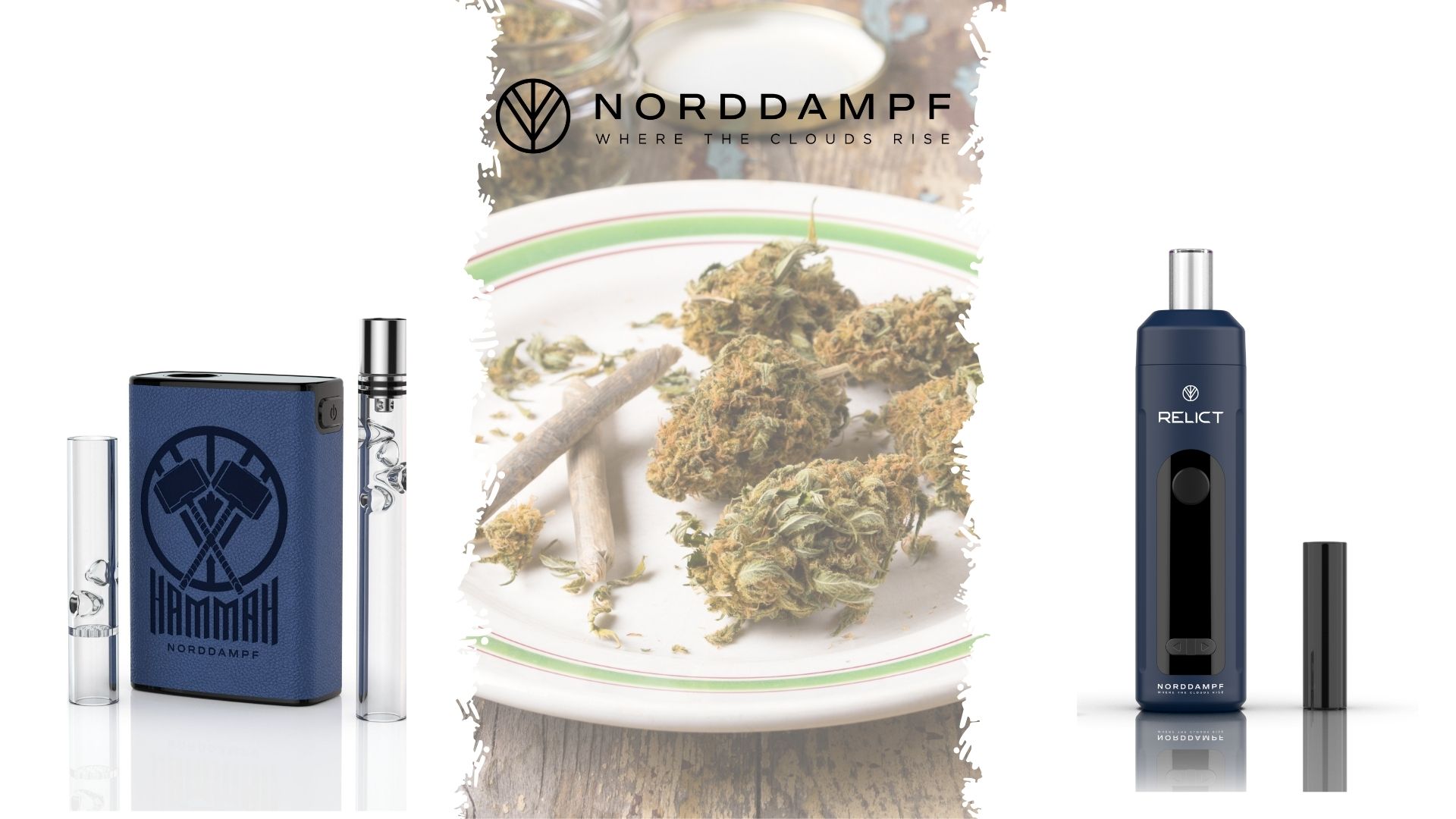
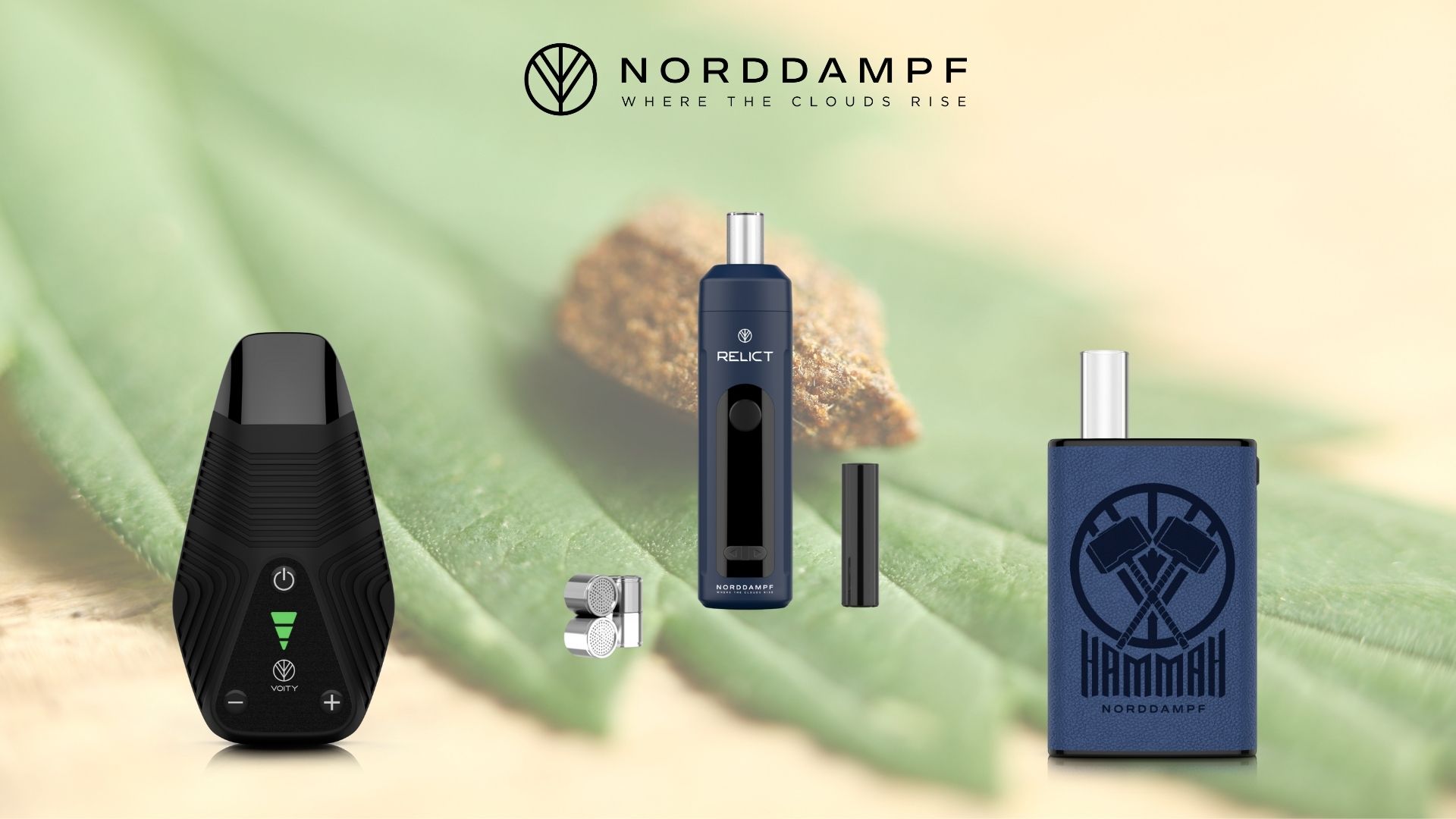
Devices such as the Relict , the HAMMAH , or the VOITY from Norddampf designed precisely for such applications. Temperature control allows you to gently vaporize hash at moderate temperatures and finely adjust the dosage. For many, this is the most pleasant and cleanest way to enjoy a concentrate.
Regardless of the device, however, it is important to remember that hash is more potent than buds. Always start with small amounts and increase slowly until you know how you react to it.
Is it permitted to produce hashish at home in Germany?
Even though adults have been allowed to possess certain amounts of cannabis since the law was reformed, the situation is different when it comes to production.
Hashish is considered to be a separate resin of the cannabis plant, i.e. a cannabis product in its own right. Private production is predominantly classified in Germany as the criminal production of a cannabis concentrate. This means that anyone who produces hashish is generally exceeding the legal limits.
Cultivation associations are also permitted to grow plants, but processing them into hashish is not expressly permitted and may also be considered production. The legal situation has not been conclusively clarified, which is why seeking expert advice is more sensible than making your own interpretations.
In short: possession of certain quantities is permitted. Production remains legally sensitive and is not permitted in private settings.