

Have you consumed cannabis and are wondering how long THC will remain detectable in your body? A THC breakdown calculator can help you estimate this – whether for driving, a drug test at work, or an upcoming medical-psychological assessment.
Such a calculator provides estimates, not guarantees. Individual variability in THC breakdown is enormous. Genetics, metabolism, body fat, and consumption history all play a role that no algorithm can fully capture.
Since the partial liberalization of cannabis in Germany (April 2024) and the new limit for road traffic (August 2024), the topic has become more relevant than ever. The current limit is 3.5 ng/ml THC in blood serum—a value that you should not exceed as a driver. This article explains how a THC breakdown calculator works, what factors influence breakdown, and what you need to be aware of.
THC breakdown calculator: How to use the tool correctly
With a few details, you can estimate how long THC might be detectable in your system. The quality of the estimate depends directly on the accuracy of your input.
A typical THC calculator requires the following personal data:
- gender
- age
- Body weight and height
- Body fat percentage or BMI
- Metabolic rate (slow, normal, fast)
- Cardio level or sporting activity
In addition, consumption data is requested:
- Type of consumption (smoking, vaping, edibles)
- THC content of the product in percent
- Daily consumption in g or weekly consumption
- Date and time of last consumption
- Frequency and duration of previous consumption (one-time consumption, occasional, daily)
Ideally, the result will show you two values: first, an estimate of when your THC level in your blood will fall below the limit of 3.5 ng/ml. Second, the approximate detectability of THC COOH in your urine. Both pieces of information are relevant for different scenarios—driving a car requires the blood serum value, while drug tests at work often focus on urine.
Vaporizers as the healthiest form of consumption
We strongly recommend using a vaporizer as the most effective and healthiest way to consume cannabis. Compared to conventional smoking, vaporizers are rated significantly better in terms of health risks, as vaporizing does not involve inhaling harmful combustion products, which significantly reduces the strain on the lungs and respiratory tract. In addition, vaporizers allow for more precise dosing of THC content, which has a positive effect on the assessment of THC concentration in the body. If you want to delve deeper into the subject, a comprehensive guide to vaporizing will help you master the technology, temperatures, and application. Our Relict in particular impresses with its state-of-the-art technology, ease of use, and optimal temperature control – so you can enjoy your cannabis experience while treating your body responsibly.
How does a THC breakdown calculator work in the background?
The calculator uses pharmacokinetic models based on scientific studies. Typical half-lives are used: Active THC in the blood has an initial half-life of approximately 1 to 1.5 hours, followed by a longer elimination phase of 16 to 22 hours.
The models distinguish between different consumption patterns. One-time consumption is calculated differently than occasional use (1-2 times per week) or daily consumption. In long-term users, THC accumulates in fatty tissue, which fundamentally changes the degradation curve.
Sample calculation 1: A man weighing 70 kg smokes a single joint containing 0.3 g of cannabis with a THC content of 15%. The calculator calculates a dose of approximately 45 mg THC, of which approximately 25% is bioavailable when smoked. The estimated THC concentration typically falls below 3.5 nanograms per milliliter of blood serum within 24 to 48 hours.
Example calculation 2: A daily user has been consuming 0.5 g of cannabis with 20% THC for months. In this case, the fatty tissue is already saturated. The breakdown calculator estimates that it will take several weeks to fall below typical limits – with considerable uncertainty.
These estimation functions reflect empirical values from studies and practical cases. They are not precision tools.
THC breakdown in the body: What really happens in the organism
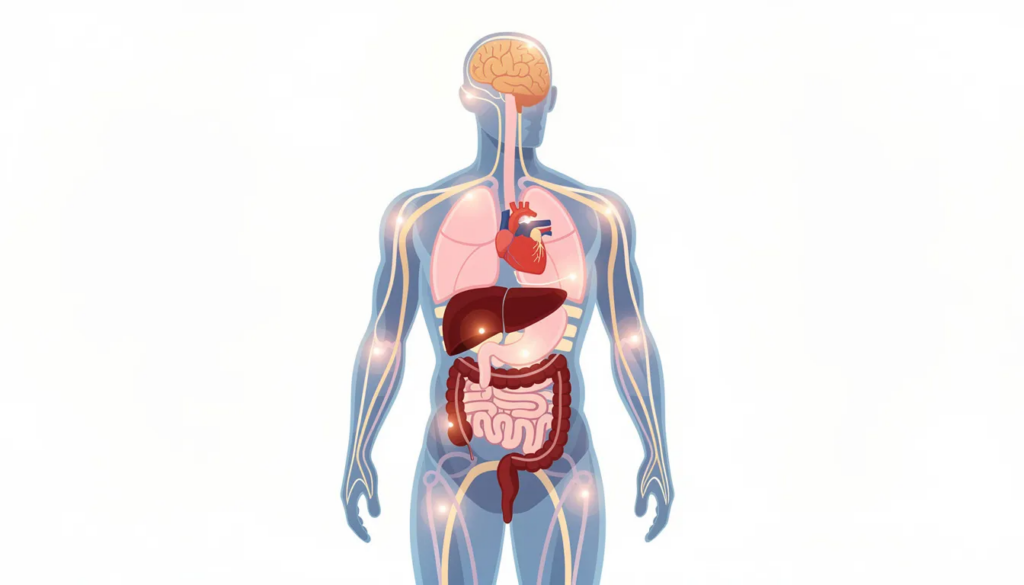
After ingestion, THC is metabolized in the liver. This produces two important metabolites: 11 OH THC (also known as 11 hydroxy THC), which itself has a psychoactive effect, and THC COOH, an inactive breakdown product.
THC is highly fat-soluble. This means that the active ingredient is stored in your fatty tissue. This is not a major problem with occasional use. However, with regular use, THC accumulates in the body over weeks and months. These residues are only slowly released and broken down by the body.
Approximately 60 to 80 percent is excreted in urine, 20 to 30 percent in stool. Small amounts leave the body through sweat. This distribution explains why urine tests are the preferred screening method.
Absorption and distribution depending on form of consumption
When smoking or vaping, THC enters the bloodstream directly through the lungs. The peak is reached within 5 to 15 minutes. The effect sets in almost immediately, but also wears off more quickly. For a controlled inhalation profile, the optimal use of vaporizer herbs and temperature ranges plays a central role.
Edibles (cookies, brownies, cannabis drinks) take longer to be absorbed. THC levels only reach their maximum after 1 to 3 hours. However, this produces more 11 OH THC, which makes the effect more intense and longer lasting. The bioavailability of edibles is only around 10 percent, but the detection time can be extended.
Two people who take the same dose can experience completely different effects. A slim person with a fast metabolism breaks down THC much faster than someone with a higher body fat percentage and a slow metabolism.
Metabolism and excretion
The liver enzymes of the cytochrome P450 system convert THC into its metabolites. The activity of these enzymes varies genetically. Some people are "fast metabolizers," others are "slow metabolizers."
Active THC often drops sharply in blood serum after just a few hours. With single use, the level can fall below detectable limits within a day. THC COOH, on the other hand, remains detectable in the body for longer—many days to weeks with regular use, and potentially months with chronic use.
Kidney function, bowel activity, and hydration influence the process, but don't expect a "turbo effect." Breakdown follows biological laws that cannot be dramatically accelerated.
THC degradation curve: Typical progression over time
The decline in THC levels is not linear. The degradation curve shows a rapid initial decline in the first few hours, followed by a flat "residual phase" lasting days or weeks.
With single use, the THC level in the blood drops significantly within the first 6 to 12 hours. A single user will usually be below the limit of 3.5 ng/ml after 24 to 48 hours. With daily use, the degradation curve is flatter and longer—it can take 5 to 7 days or significantly longer.
Single use: Rapid increase, rapid decrease. The degradation time is manageable.
Continuous consumption: The THC stored in fatty tissue is released continuously. The body works against a "supply," not just against the last dose.
Example: One-time joint
Specific scenario: A 21-year-old person weighing 75 kg with a normal metabolism smokes a joint containing 0.3 g of cannabis with 18% THC in the evening. This corresponds to a quantity of approximately 54 mg THC.
The peak level in the blood is reached within 10 to 20 minutes. Depending on the inhalation technique and cannabis strength, peak values of 50 ng/ml or higher can occur in the blood serum.
The THC degradation calculator typically estimates that the limit value will be undershot after approximately 12 to 36 hours in this scenario. This is a guideline value—individual deviations are possible.
THC COOH can be detected in urine for approximately 1 to 3 days after this single consumption, and in some cases slightly longer.
Example: Daily consumption over several months
Another scenario: A 32-year-old person weighing 70 kg has been consuming 0.5 to 1 g of cannabis with 15 to 20% THC almost daily for 6 months.
THC and its breakdown products have accumulated in fatty tissue. The original levels in the body are high, and breakdown takes significantly longer. The calculator estimates that it will take several weeks for the THC COOH concentration to fall below typical urine limit ranges of 20 to 50 ng/ml.
Consumers with this pattern may still have positive urine test results even after 3 to 4 weeks of abstinence. A calculator can only provide cautious predictions in this case.
Factors that influence THC degradation
These influencing factors explain why two people with the same consumption have completely different detection times:
- Body weight and body fat: More fatty tissue means more storage capacity for THC. With a higher body fat percentage, THC remains detectable in the body for longer.
- Liver function and genetic metabolism type: Fast metabolizers break down THC more efficiently than slow metabolizers.
- Gender and hormone levels: Women have a higher average body fat percentage (25-31% vs. 18-24% in men), which can extend the detection time by 10 to 15 days.
- Fluid intake and nutrition: Adequate hydration supports excretion, but extreme measures are of little benefit.
- General fitness and sports: Regular exercise can boost your metabolism by up to 20%.
- Stress and sleep: Chronic stress and lack of sleep have a negative impact on metabolism.
- Frequency of use and duration: First-time experience vs. years of use makes a fundamental difference.

THC vs. THC-COOH: Different detection times
THC is the psychoactive molecule that triggers the effect. It dissipates relatively quickly in the blood—within hours to a few days.
THC COOH is an inactive breakdown product. It accumulates in fatty tissue and is primarily tested for in urine. The detection period ranges from a few days to 30 or 90 days for heavy long-term users.
Many urine tests use cut-off values of 25 to 50 ng/ml THC COOH. The calculator attempts to take such values into account, but cannot guarantee them. The variability is simply too great.
THC breakdown calculator & driving: Legal limits in Germany
Since August 22, 2024, a limit of 3.5 ng/ml THC in blood serum has applied to drivers in Germany. The previous limit was 1.0 ng/ml. The increase is intended to correspond to the 0.5 per mille limit for alcohol.
Stricter assessments apply to new drivers and people under the age of 21. Many expert reports already take a strict view from around 1 ng/ml. Zero-tolerance approaches may be relevant for this group.
Typical consequences of exceeding the limit:
- First offense: €500 fine, 1-month driving ban, 2 points in Flensburg
- Repeat offenders: Higher fines, longer driving bans
- In case of failure: MPU and possible driver's license revocation
The THC breakdown calculator helps you to better assess the risk. However, it never provides a guarantee that you are free to participate in road traffic. Driving ability must always be assessed on an individual basis.
Blood serum vs. whole blood
Blood serum values are often used in legal contexts. These are approximately twice as high as the values in whole blood.
Specifically, this means that 3.5 ng/ml in blood serum corresponds to approximately 1.7 to 2.0 ng/ml in whole blood. This information is important for interpreting laboratory results. Pay attention to the value shown in your results.
How long is THC detectable? Overview by test method
Different tests have different detection windows. The breakdown calculator primarily estimates blood and urine values. Here is an overview:
Blood: THC can be detected in occasional users for several hours to around three days. With daily use, this period extends to up to seven days or longer. The THC level in the blood is decisive for traffic checks.
Urine: Detectability ranges from 1 to 3 days for single use to 30 or 90 days for chronic use. Urine tests are the standard for workplace screenings.
Saliva: THC is detectable for approximately 1 to 3 days. Saliva tests are often used as rapid tests during traffic stops.
Hair: Up to 90 days or longer, depending on hair length. Hair analysis is used in MPU procedures to detect long-term consumption patterns.
This information is based on experience and serves as a guideline—it is not a legally binding or medical statement.
THC-COOH levels in regular users
In regular users, THC COOH concentrations in the blood can be in the double-digit or triple-digit ng/ml range. These values provide information about the frequency of use.
In forensic contexts such as driver's license proceedings or MPU (medical-psychological assessment), high THC COOH levels in conjunction with THC findings are considered a sign of repeated or habitual consumption. The results of such tests have significant legal consequences.
A computer cannot reproduce these values exactly. It rather shows the rough order of magnitude and the tendency of degradation. For forensic questions, you should always seek professional advice.
Can THC breakdown be accelerated?
There is no miracle method for safely and quickly "detoxifying" THC or THC COOH from the body.
Measures that can support natural metabolism:
- Drink enough fluids (but don't "flood" yourself excessively).
- Regular moderate exercise
- Balanced diet
- Getting enough sleep
Intensive diets, extreme water consumption, or dubious detox products are risky or ineffective. Some can even cause health problems.
If in doubt, you should seek medical advice, especially if you have pre-existing liver, kidney, or cardiovascular conditions. Accelerating THC breakdown is not a process that can be manipulated with tricks.
What really helps—and what is more of a myth
Good practices:
- Taking a break from consumption – the most important factor
- Drink a lot, but not excessively
- Maintain normal physical activity
- Avoid alcohol and other drugs so as not to put additional strain on the liver and metabolism.
Myths and risks:
- Baking soda, vinegar treatments, sauna marathons: no reliable solution
- "Miracle detox drinks": Mostly ineffective, sometimes problematic for health
- Intense exercise immediately before a blood test: Theoretically, this can release THC from fatty tissue and temporarily increase levels – not suitable as test preparation.
The calculation of the breakdown time remains an estimate. Your body follows its own rules.
Conclusion: THC breakdown calculator as a guide—not a guarantee
The breakdown of THC varies from person to person. It depends on the form of consumption, frequency, physical factors such as weight and metabolism, and the test method used.
A THC breakdown calculator can only serve as a guide for estimating time frames. It does not provide any legal or medical certainty. The data and information you enter determine the quality of the estimate—but even perfect entries do not guarantee a correct result.
Especially when driving and when drug tests are imminent (MPU, workplace), you should always allow for a safety margin beyond the calculated estimates. Ultimately, only a test can answer the question of whether you are fit to drive.
Make informed decisions. Know your risks. Do not participate in road traffic under the influence or when unsure.
Legalization has created new freedoms—but also new responsibilities.
Sources for the calculation
Here are the main scientific sources on which the calculator's reference values are based:
Fundamental work on THC pharmacokinetics:
The central review work is Huestis (2007), which summarizes the entire pharmacokinetics of THC in humans—absorption, distribution, metabolism, and elimination times for blood, urine, and saliva. This is essentially the reference from which most detection window information originates: Human Cannabinoid Pharmacokinetics—Huestis 2007 (PMC)
Urine detection times for chronic use:
For the long detection windows associated with daily consumption (30–70+ days), the model is based on this controlled study involving 60 subjects under monitored abstinence: Urinary Elimination of THCCOOH in Cannabis Users During Monitored Abstinence (PMC)
In addition, this study shows that THC-COOH can be detected in urine for up to 67–93 days in chronic users: Extended Urinary THC Excretion in Chronic Cannabis Users (PMC)
Saliva detection window:
The saliva reference values are based on controlled smoking studies by Lee et al., which show detection windows of up to 30+ hours for frequent users and up to 24 hours for occasional users: Oral Fluid Cannabinoid Concentrations – Chronic vs. Occasional Smokers (PMC)
As well as: Cannabinoid Disposition in Oral Fluid After Controlled Administration (PMC)
Blood pharmacokinetics after inhalation and oral administration:
For blood detection times and the difference between inhaled and oral THC (edibles modifier): Pharmacokinetic Profile of Oral Cannabis in Humans (PMC)
And for controlled smoking vs. vaporizers: Acute Pharmacokinetic Profile of Smoked and Vaporized Cannabis (PMC)
BMI / body fat and THC storage:
The basis for the BMI modifier – THC accumulates in fatty tissue and is released again during lipolysis: Reintoxication: Release of Fat-Stored THC into Blood (PMC)
Sports/Activity Modifier:
The study showing that moderate exercise significantly increases THC plasma levels in regular users (correlated with BMI): Exercise Increases Plasma THC Concentrations in Regular Cannabis Users (PubMed)
Supplementary review: Can Physical Exercise or Food Deprivation Cause Release of Fat-Stored Cannabinoids? (PMC)
If you like, I can incorporate these sources as an annotated list directly into the plugin code (e.g., as a comment in the JS or as a separate info section in the results area) so that users can understand the scientific basis.
Sources:
- Human Cannabinoid Pharmacokinetics – PMC
- Urinary Elimination of THCCOOH – PMC
- Extended urinary THC excretion – PMC
- Oral Fluid Cannabinoid Concentrations – PMC
- Cannabinoid disposition in oral fluid – PMC
- Pharmacokinetic Profile of Oral Cannabis – PMC
- Smoked and Vaporized Cannabis Pharmacokinetics – PMC
- Reintoxication: Fat-Stored THC Release – PMC
- Exercise Increases Plasma THC – PubMed
- Exercise and Fat-Stored Cannabinoids Review – PMC