

Measuring and correcting cannabis pH levels: The key to nutrient uptake
When growing cannabis, it is not primarily the amount of fertilizer that matters, but whether the cannabis plants can actually absorb the nutrients it contains. The decisive factor here is the pH value, which indicates how acidic or alkaline a medium is. The pH scale ranges from one (strongly acidic) to 14 (strongly alkaline). Even small deviations are enough to upset the balance: if the pH value is too high or too low, important elements such as iron, magnesium, or phosphorus can become chemically bound. This leaves hardly anything for the roots, and the plants respond with nutrient deficiencies, slower growth, and a noticeably lower yield.
Healthy soil with active microbial life is worth its weight in gold: it supports nutrient uptake and makes plants more resistant to disease. This is precisely where the close relationship between substrate quality and the correct pH value of the soil becomes apparent. Anyone who understands this interaction will quickly recognize the need to take pH regulation seriously as an integral part of cultivation.
Beginners in particular often overlook this point and focus almost exclusively on the amount of fertilizer. However, it is the adjustment of the pH value that determines whether the system remains stable or tips over. Therefore, both the pH value of the water and the pH value of the soil should be checked regularly. With a clear routine, you can prevent small fluctuations from leading to big problems, and your cannabis plants will grow evenly, healthily, and produce a richer harvest.
What is pH and why is it so important in cannabis cultivation?
The pH value describes how acidic or alkaline a liquid or substrate is. The pH scale serves as a measure of the acidity and alkalinity of a solution and is based on the concentration of hydrogen ions; different pH values result depending on the concentration of these ions.In cannabis cultivation—whether indoors, in the garden, or on the balcony —the pH value is much more than a theoretical number: it determines the form in which nutrients are present and whether the roots can absorb them. Various methods such as pH meters, pH test strips, or pH meters enable accurate measurement of the pH value, which is extremely important for optimal cannabis cultivation. If the value is outside the appropriate pH range, this is referred to as a nutrient lockout. In this case, the minerals are present in the substrate but remain inaccessible to the plant due to unfavorable concentrations and a less than ideal pH value.
The correct pH value of the water is often more important than you might think when growing cannabis. If it is not right, the plants cannot properly absorb the nutrients it contains. This is true even if there is actually enough fertilizer available. The problem is that an incorrect pH value often looks like a classic nutrient deficiency at first glance. Yellowed leaves, slow growth, or dry tips look like over- or under-fertilization, but in reality, they are often an indication of problems with the pH value of the water.
Therefore, before you adjust the amount of fertilizer, always measure the pH value first when growing cannabis. A pH meter will give you the most accurate results, but simple pH test strips are also sufficient for an initial overview. Once you have the values in mind, you can be sure that your plants are really using the nutrients. In the end, this will be directly reflected in the quality of the harvest.

What are the target pH ranges for soil, coco, and hydro?
There is no such thing as an "ideal pH value" because not all major and trace elements are optimally available at exactly the same pH. The decisive factor is the size of the pH range, as this has a significant influence on how well nutrients can be absorbed and how optimally the plants grow. It is about ranges that have proven themselves in practice and in which many things work well at the same time. In soil, you are on the safe side if you stay between pH 6.0 and 7.0; 6.2 to 6.8 is suitable for everyday use and safe. In coco, hydro, and rock wool, a narrower, slightly more acidic window of pH 5.5 to 6.5 has become established, with growers often aiming for 5.8 to 6.2. These ranges have a clear advantage: calcium and magnesium remain available without trace elements such as manganese or iron precipitating. What is important is not so much the exact point as a steady guide within the range, i.e., no hectic jumps, but small, comprehensible corrections.
Why is thinking in terms of ranges more helpful than searching for a "magic" number?
Because every system buffers differently. Soil provides microbiology and exchange capacity, hydro reacts more directly to the nutrient solution, and coco lies somewhere in between. A stable pH range cushions these differences and ensures that the nutrient curves overlap sufficiently.
Does something else apply depending on the growth phase?
The growth phase and flowering phase require slightly different pH settings for cannabis. While young cannabis plants grow better at the lower end of the respective range in the first few weeks, plants in flowering benefit from a slightly higher pH value. In soil, this difference is less noticeable due to natural buffering, but in hydro or coco cultivation, the system reacts directly.
A rigid fixation on a single number is of little use here. By regularly checking the pH value of the soil or nutrient solution, you can identify trends in good time and make small, careful adjustments. This keeps cannabis cultivation stable without stressing the plants with extreme fluctuations.
How can you recognize pH problems in your cannabis plant?
If the pH value is too high or too low, the plants show clear symptoms. Typical symptoms include slowed growth, discolored leaves, spotted patterns, and dry leaf tips that look like overfertilization. In reality, however, these are often not nutrient deficiencies, but rather blocked absorption—the classic nutrient lockout.
The cause lies in the incorrect pH value when growing cannabis: the nutrients are present in the substrate, but the roots cannot use them. That is why it is so important to consistently check the pH value of the water and substrate before adjusting the amount of fertilizer.
How do you distinguish pH problems from genuine nutrient deficiencies?
This is precisely where the wheat is separated from the chaff: while a genuine nutrient deficiency usually improves as soon as you replenish the missing substance, the problem persists or even worsens in the case of a pH imbalance.
To get clarity, it is not enough to just look at the symptoms. You have to measure. Compare the pH value of your nutrient solution or watering water with the value of the so-called runoff, i.e., the water that drains out of the bottom of the pot after watering. If this value is significantly outside the recommended range or deviates greatly from the initial value, this is a clear indication of a pH problem.

How do you correctly measure the pH value of your cannabis plants?
To assess how well your cannabis plants are absorbing nutrients, you need to look not only at the water, but above all at what is happening in the substrate. Only by comparing the two can you see how the pH is really behaving in the root zone. A clear measurement setup prevents misunderstandings and ensures that you get values you can work with.
How do you measure the pH value in water or nutrient solution?
A digital pH meter is the most reliable option. It provides accurate results—provided you treat it correctly. This includes calibrating it regularly, rinsing the electrode with clean water after each measurement, and keeping it moist in a special storage solution. This will ensure that the device remains accurate in the long term.
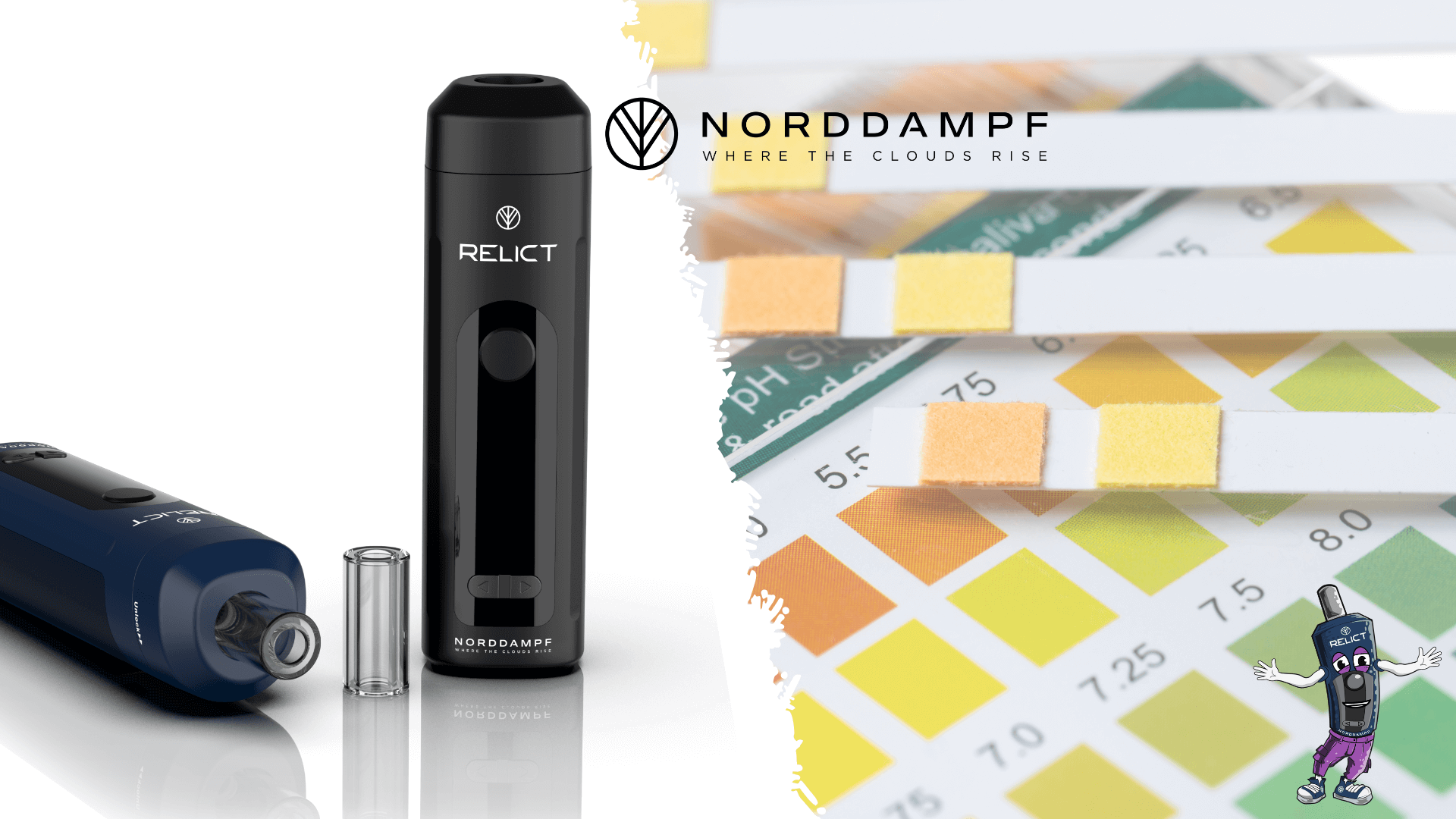
Drip tests and test strips are handy for quick checks in between, but they are more suitable for rough estimates. If you need accurate values, a pH meter is essential. Also, make sure you follow the correct sequence: first dissolve the fertilizer completely in water, then let the mixture rest for a few minutes, and then measure the pH. This is the only way to get a realistic picture, because the dissolved nutrient salts significantly shift the value.
How do you determine the pH value directly in the substrate?
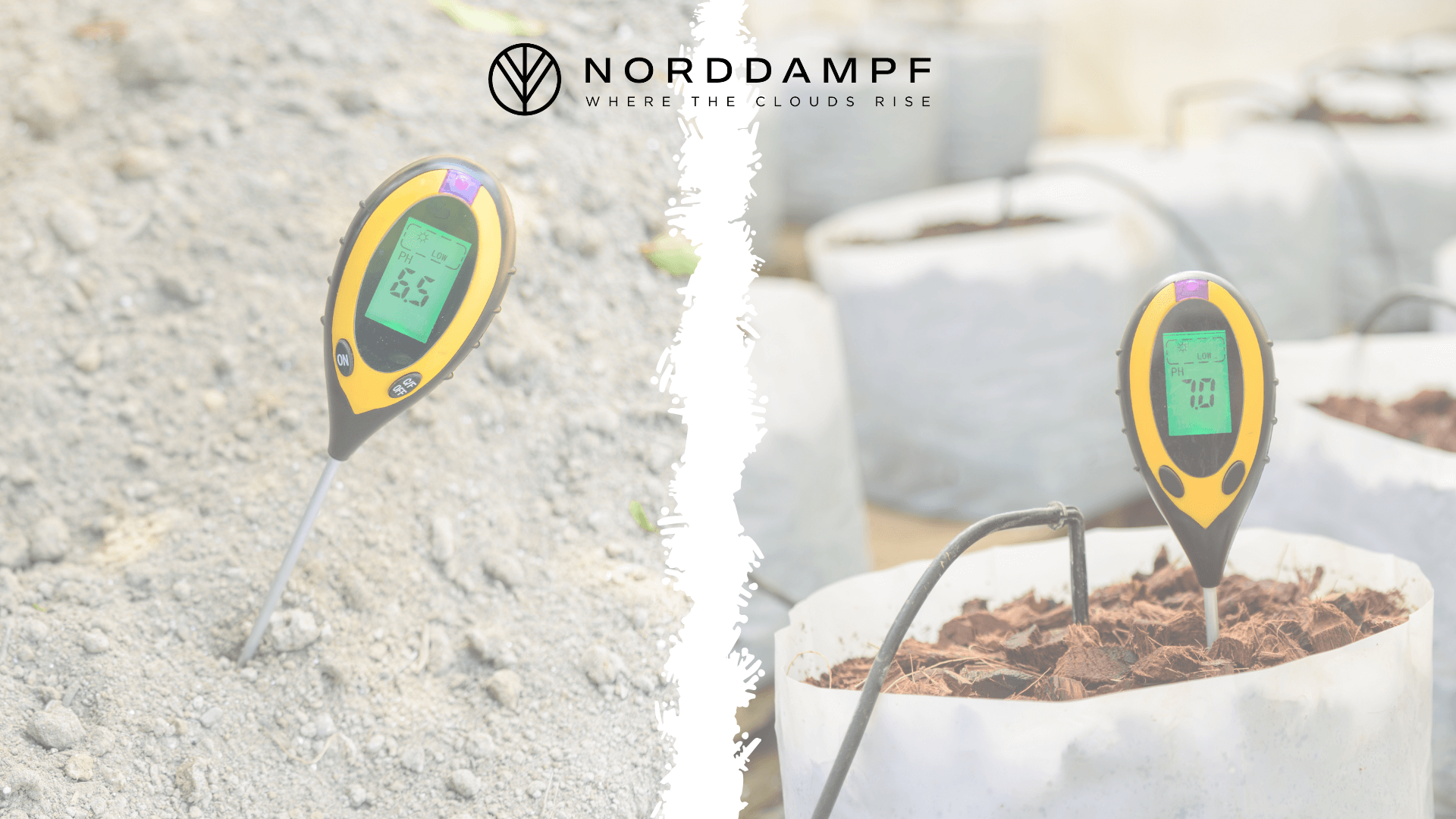
Simply measuring the water is not always sufficient, because the crucial processes take place in the root zone. It is therefore particularly important to regularly check the pH value of the soil, as this shows you how the actual conditions around the roots are developing. Two methods have proven effective for this:
Runoff measurement
You water your plants with a solution whose pH you know and then measure the pH of the runoff water. The difference provides information about how the pH changes in the root zone and whether the pH value of the soil remains stable in the long term.
soil slurry
To do this, mix some substrate with distilled water in a ratio of 1:1 or 1:2. After stirring thoroughly and allowing it to stand for a short time, measure the pH of the suspension. This will give you a very direct picture of the current condition in the root zone.
Both methods have their strengths: The runoff is suitable for regular everyday checks, while the slurry test allows for a more detailed analysis if you want to understand the situation in the substrate in detail.
How often should you measure the pH value?
The frequency depends heavily on the system in question. In mineral setups, it makes sense to check every watering. With hydro systems, you also need to check the tank regularly, as the pH shifts particularly quickly here. If you grow cannabis in soil, it is usually sufficient to measure once a week as long as the plants appear healthy. The individual number is less important than the development over time. If you document the values and pay attention to trends, you will be able to recognize in good time whether the system is stable or drifting in a problematic direction.
How do you avoid measurement errors?
Many problems with pH values are not caused by the plant itself, but by inaccurate measurements. If the measuring device is not calibrated regularly or the electrode is already old, it will provide values that are misleading. Measurements taken too quickly immediately after mixing the nutrient solution also distort the result, because the pH only stabilizes after a few minutes. In addition, temperature differences between the solution and the measuring device can shift the value. So if you work carefully, pay regular attention to the device, and give the solution the necessary time, you can prevent many of the typical sources of error in advance.
How do you correct and stabilize the pH value?
When adjusting the pH value, you should always keep in mind that the goal is to achieve a stable and consistent range. If you make hasty adjustments, you run the risk of triggering the so-called "ping-pong effect," in which the pH value of the water and substrate constantly fluctuates. A step-by-step approach is more effective: first add water and fertilizer, then measure and correct only in small doses.
In mineral systems, classic pH-down solutions such as phosphoric acid or pH-up agents based on potassium hydroxide are usually used for this purpose. In organic cannabis cultivation, on the other hand, substrate components such as lime or sulfur are used to adjust the pH value. These work more slowly but ensure long-term stability. You should refrain from using improvised home remedies such as vinegar or citric acid – they lower the value in the short term but do not provide a reliable basis for constant control.
What influence does water quality have on pH stability?
Whether your water is easy or difficult to adjust in terms of pH depends primarily on its carbonate hardness. If your tap water contains a lot of lime, the value can hardly be lowered and tends to drift back again and again. This makes control unpredictable. In such cases, it helps to partially blend the water with osmosis water or treat it with a filter system. This makes it respond much better to corrections and leaves fewer unwanted salt deposits in the substrate.
What is pH drift and when should you intervene?
Especially in hydro and coco systems, the pH value changes over time all by itself. This is because the plants absorb nutrients and CO₂ is exchanged at the same time. Slight fluctuations within the intended range are normal and no cause for concern. It only becomes critical if the value deviates from the target permanently or suddenly drops sharply. In soil, it is often sufficient to measure once a week, while in hydro, more frequent monitoring is necessary because changes are noticeable much more quickly.
How do you fix a nutrient lockout?
If a nutrient lock occurs, this means that the nutrients are present in the substrate, but the plant cannot absorb them due to the incorrect pH value. To remedy this, you should first measure the pH and EC so that you can narrow down the cause. If the pH is significantly off, rinse the substrate with lightly fertilized water that is exactly within the correct range. Then prepare a fresh nutrient solution and introduce it carefully. It is important to closely monitor the following watering cycles and maintain a consistent routine. This will restore balance to the system without unnecessarily stressing the plant through extreme interventions.
What are pH Up and pH Down products?
When growing cannabis, it is not enough to simply add fertilizer to the water. It is crucial that the pH value of the water and the nutrient solution is within the correct range. If the pH value is too high or too low, your cannabis plants will not be able to fully absorb the nutrients. This is where pH Up and pH Down solutions come into play: they help you to precisely adjust the value and keep it stable.
pH Down solutions usually contain acids such as phosphoric acid, sometimes also citric acid, to reliably lower the pH value. pH Up products, on the other hand, are often based on potassium hydroxide or similar bases, which you can use to raise the value. Both variants are available in liquid or powder form, allowing you to adjust the pH value very precisely. This is a major advantage over home remedies such as vinegar or lemon juice, which have an unpredictable effect and do not allow for constant pH regulation.
How do you use pH Up and pH Down correctly?
The application is simple, but requires a little patience. After you have completely stirred the fertilizer into the water, measure the current pH value. If it is outside the optimal range, add pH Up or pH Down drop by drop, stir thoroughly, and measure again. Be sure to work in small increments—even a few milliliters can significantly change the value. This will prevent the pH value from fluctuating too much and unnecessarily stressing your plants.
A practical tip: Make a note of how much you usually need for your water or nutrient solution. This will help you quickly find the right dosage and save you unnecessary trial and error next time.
What should you keep in mind regarding storage and dosage?
As these are highly concentrated products, safe storage is essential. Store pH Up and pH Down out of reach of children and ensure that they are tightly closed. This will preserve their quality and prevent risks in everyday use.
Is there a simple pH checklist for everyday life?
A clear routine is the best insurance against unnecessary stress for your plants. It not only helps you avoid measurement errors, but also prevents nutrient deficiencies. Those who understand the need for stable control ensure that the quality of the harvest is not left to chance. pH regulation is not an isolated step, but part of a consistent approach that focuses on calmness and accuracy.
1. Maintain measuring instruments and calibrate them regularly
A pH meter can only provide reliable readings if it is in good condition. This includes rinsing the electrode with clean water after each use, storing it correctly in a storage solution, and calibrating it regularly. This ensures that your readings are accurate and not based on faulty measurements.
2. Follow the correct order when preparing
First, fill the container with water, then add the fertilizer and stir thoroughly. Only when everything has completely dissolved should you measure the pH. If you measure earlier, you risk inaccurate results because the nutrient salts will continue to affect the value.
3. Pay attention to the appropriate target area
The ideal pH range depends on the medium. In soil, 6.0 to 7.0 is considered solid, while hydro and coco systems are slightly lower at 5.5 to 6.5. At the same time, you should bear in mind that requirements can shift slightly depending on the growth or flowering phase.
4. Using runoff as an indicator
The water that drains away after watering is a direct indication of the condition of the root zone. Regular runoff measurements allow you to detect changes before they cause visible damage.
5. Evaluate trends rather than individual results
A single measurement can be misleading. Only by comparing several values over a period of time can you determine whether your system is running stably or whether a deviation is occurring.
6. Consider pH and EC together
It is not only the pH value that determines the uptake of nutrients. An EC value that is too high also blocks uptake. It therefore makes sense to keep an eye on both values and interpret them in combination.
7. Correct carefully and in small steps
When adjusting the pH, do so carefully. Small adjustments prevent the value from jumping from one extreme to the other. The goal remains a stable curve without constant fluctuations.
Stable pH value, healthy plants
When growing cannabis, it quickly becomes apparent that it is not the amount of fertilizer that determines success, but whether the cannabis plants can actually absorb the nutrients. The pH value is one of the most important factors in cannabis cultivation. Even small deviations are enough to make essential nutrients such as iron, phosphorus, or magnesium inaccessible. This results in slowed growth, spots on the leaves, or even a complete nutrient blockage that cannot be remedied by adding more fertilizer.
Fortunately, the pH value of the water and substrate can be kept stable with a clear routine. If you measure regularly, maintain your pH meter, and make corrections carefully, you can keep the value within the ideal pH range—whether in soil, hydro, or coco. The quality of the water and the choice between organic or mineral systems also play a role, but with a little attention, these can be easily controlled.
Ultimately, consistency is more important than constant readjustment. If you take a calm approach to your cannabis plants and don't stress them with hectic interventions, you will promote stable growth and even nutrient uptake. This keeps the "nutrient gate" to the roots permanently open – the best foundation for strong plants, healthy leaves, and a successful harvest in cannabis cultivation.