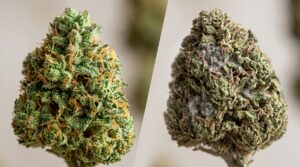

After spending twelve exciting weeks tending to your plants like a doting parent, you’re pretty sure everything went well. You rub your hands together in anticipation—the buds look gorgeous and smell so rich you could almost eat them. And now you’re standing there, scissors in hand, absolutely unable to decide whether to harvest today or wait another week.
Knowing when to harvest cannabis is one of the most important decisions a grower makes. Getting this wrong can ruin months of work. Fortunately, there’s a quick and reliable way to figure it out: You need to understand the structure of the trichomes—and by that, we mean actually looking at them.
This guide explains how it works, the different stages of visual maturity, what additional signs are helpful, and the typical mistakes growers often make.
Key Points
- Trichomes are the most reliable visual indicator of whether a plant is ready for harvest.
- They go through three stages: clear, cloudy or milky, and amber.
- Most growers aim for predominantly milky trichomes with 10–30% amber trichomes.
- The color of the pistils, the swelling of the buds, and the fading of the leaves are useful additional indicators.
- A 30x jeweler's loupe is the most affordable and practical tool for inspection.
- Check directly on the calyxes of the buds, not on the sugar leaves.
Why is choosing the right time to harvest so important?
This is because, if harvested too early, cannabinoids and terpenes haven’t fully developed yet. That means the buds smell weaker, taste blander, and overall feel a bit “meh.” Harvesting too late usually causes the terpenes to break down, making the effect heavier and more sedating, which can ultimately lead to a similar “meh” feeling.
Seriously: There’s no such thing as the one perfect harvest time. A grower looking for a terpene-rich, energizing experience will harvest differently than someone who’s after a heavy, couch-lock Indica night.
But both require the same thing: good information. Environmental conditions are easier to monitor with a tool like the VPD calculator, but the plant’s maturity is harder to assess. To do that, you have to learn to read the plant itself. The most honest signal it gives you is found on the surface of every bud: the trichomes.

Our Best Sellers
Discover the most popular Norddampf products

What are trichomes?
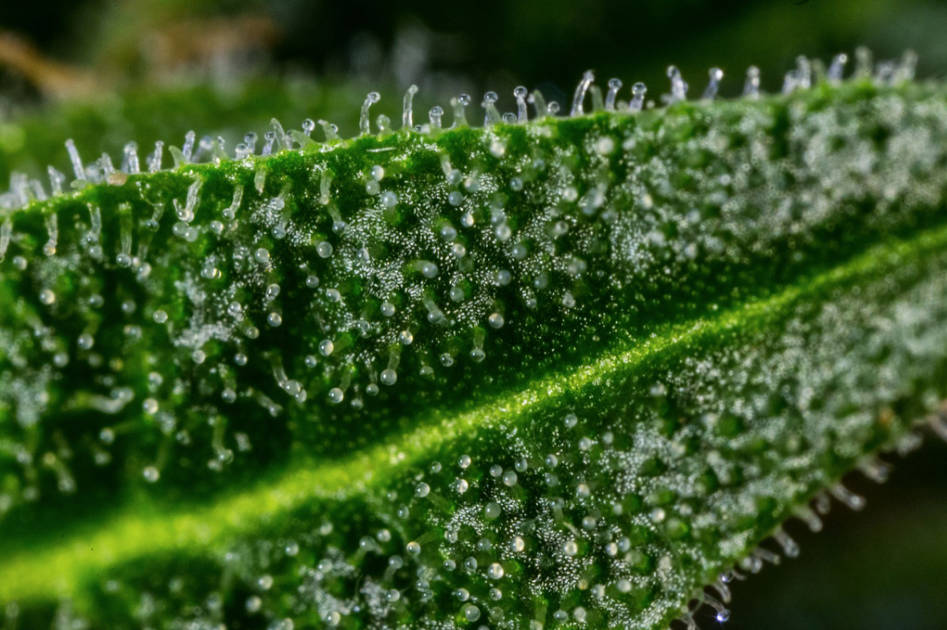
Trichomes are tiny resin glands that cover the buds and sugar leaves of a mature cannabis plant. If you’ve ever touched a bud and ended up with sticky fingers, they were the ones responsible. That’s where the plant produces its cannabinoids and terpenes.
Botanically speaking, there are three types: bulbous, capitate-sessile and capitate-stalked trichomes The first two are tiny and of little help in determining the harvest time. The cap-stalked trichomes are the mushroom-shaped ones that become visible at 30x magnification. These are the ones we’re interested in.
You can think of trichomes as a snapshot of the plant's development. Clear means: not quite ready yet. Milky means: ready. Amber means: the timer has been running for a while.
The three trichome stages: clear, milky, and amber
Let's take a closer look at these three stages.
Step 1: Clear Trichomes
Under magnification, clear trichomes look like tiny glass mushrooms: transparent and shiny. The plant is still actively producing cannabinoids and terpenes. So: put the scissors away and step back.
Step 2: Cloudy or milky-white trichomes
This is the stage you've been waiting for. The trichomes become opaque and milky white. Development is now generally considered complete. Most growers looking for a clearer, more stimulating effect harvest when the majority of the trichomes are milky white and only a small portion has turned amber.
Step 3: Amber-colored trichomes
When trichomes turn golden brown, the cannabinoids they contain begin to oxidize. As trichomes mature and degrade, their cannabinoid composition changes, and the CBN content may increase.
That isn't necessarily a bad thing. Growers looking for a heavier, more relaxing “I'm not moving from this couch” experience often wait for more amber . Ultimately, it's a matter of preference and not necessarily a mistake.
Still, here’s the rule of thumb: If more than 50% of the trichomes on most strains are amber-colored, you’ve probably waited too long. So it all comes down to good timing and keeping your cool.
| ℹ️Pro Tip: The rule of thumb that many growers agree on is: mostly milky with 10–30% amber trichomes. Please consider this a starting point, not a hard-and-fast rule. |
How to Properly Examine Trichomes
You can't do this with the naked eye. At least not really—even if many people claim they have enough experience and a good feel for it. We don't recommend it. Ideally, you'll need a magnifying glass.
The most affordable practical option is a jeweler's loupe with 30x to 60x magnification. For a more long-term solution, a digital USB microscope with magnification ranging from 60x to 200x is a worthwhile investment, especially if you want to take photos and compare progress from day to day. Macro lenses for smartphones are also available, though their quality varies widely.
No matter what you decide, keep the following in mind:
✔️ Check the buds, not the sugar leaves. Sugar leaves turn amber more quickly and can therefore give a misleading impression.
✔️ Check several spots. The upper colas mature faster than the lower branches.
✔️ Examine your samples under natural daylight or neutral-white LED light. Yellowish light sources make trichomes appear amber-colored, even though they aren't.
✔️ Take photos every few days. During the peak of the ripening phase, trichomes can change visibly within 48 hours.
Other visual signs of readiness for harvest besides trichomes
Trichomes are the most reliable indicator, and our guide to trichome biology delves deeper into the science behind them. However, there are a few other clues that can help you make a decision, including:
Pistil color: The hair-like structures on the buds are white at first and turn orange, red, or brown as they mature. As a general rule of thumb, if 70–90% of the pistils have darkened, you’re probably in the harvest window. But don’t rely on this alone, as pistil color can also change due to stress.
Bud Swelling: The calyxes are becoming plumper, and the buds are growing significantly in the final weeks. If your buds still look airy, the plant probably needs more time.
Leaf Discoloration: Fan-shaped leaves typically turn yellow as the plant nears the end of its life cycle. This is a normal part of the aging process and is not a nutrient problem.
Breeder's Flowering Times: Seed banks specify a time frame, such as “8–10 weeks.” This is a helpful starting point for beginning your monitoring. However, it is not a harvest date. Think of it as the moment to reach for the magnifying glass—not the scissors.
Differences Between Varieties and Harvest Windows
Different varieties are ready at different times. Treating them all the same way is a pretty sure way to harvest them either too early or too late. Therefore, keep the following timing guidelines in mind.
| Variety Type | Prime | When should you start checking for trichomes? | What should you look out for? |
| Indica-dominant | 7–9 weeks | Around week 6 | Done faster; the trichome method applies as usual |
| Sativa-dominant | 10–14+ weeks | Around week 8 | Longer flowering period; check more frequently |
| Autoflowers | Fixed life cycle (no response to light cycle) | Around weeks 7–8 after sowing | Ripen quickly as soon as the final ripening stage begins |
| High-CBD Strains | Varies depending on genetics | Standard Timing | They are often harvested with minimal amber trichomes to preserve the terpene profile |
Common Mistakes When Determining Harvest Time and How to Avoid Them
Growing cannabis is, above all, a matter of patience and observation. And harvest is exactly the moment when many growers run out of patience. The problem is: The buds look fantastic and smell heavenly. You’ve been waiting twelve weeks for this moment, and the temptation to just cut the whole thing down becomes almost unbearable.
But be careful not to undo all your hard work. The following tips will help you do just that.
1. Harvesting too early out of impatience. Set a rule: Don't harvest until most of the trichomes are at least milky.
2. Think of the breeder's flowering period as a fixed deadline. It is a time frame, not a specific date. Start monitoring at the beginning of the specified time frame.
3. Inspect only the sugar leaves. Sugar leaves turn amber faster than the buds. Always check right at the calyxes.
4. Take a look at the trichomes and make your decision. Trichomes change quickly. Once you’re in the harvest window, you should check them every 2–3 days.
5. Panicking over a few amber-colored trichomes. A small amount of amber is normal. What matters is the overall ratio across multiple checkpoints.
Bottom Line
No one gets the timing perfectly right on their first grow. Or their second. Probably not even on their third. So don't worry if you get it wrong—it's all part of learning to intuitively understand when cannabis is ready to harvest.
For most growers, there comes a moment—usually around the fourth or fifth cycle—when you’re standing over the plant with a magnifying glass in one hand and a calendar in the other, and you just know. That’s a good moment. And if you’re still new to this, we almost envy you for the fact that you still have it ahead of you.
Intuition aside: Just get yourself a decent magnifying glass, start checking the plant earlier than you think is necessary, and take photos every few days. That way, you can observe how the trichomes slowly change. The plant will tell you when it’s ready—if you look closely enough.
Once you’ve harvested, dried, and cured all those hard-earned buds, the vaporizer you load them into determines how much of that work actually makes it into your lungs. All you need now is a Norddampf vaporizer, and you’ll be all set.
Frequently Asked Questions
How can I tell when to harvest cannabis without a microscope?
To be honest: not really. Without magnification, you're left with only secondary indicators like pistil color and leaf discoloration, and none of them are that reliable. A simple 30x magnifying glass costs less than a beer.
What percentage of amber-colored trichomes should I aim for?
It depends on what you want. Most growers aim for 10–30% amber. More amber means a more sedative effect; less amber tends to have a more stimulating effect. There’s no one-size-fits-all answer.
Can I harvest different parts of the plant at different times?
Yes. Upper colas mature faster than lower branches. A staggered harvest—first the upper buds, then the lower ones a few days later—is perfectly acceptable for larger plants.
Do trichomes look different under different types of light?
Yes. Yellowish light, such as that from incandescent bulbs or warm-white LEDs, can make clear or milky trichomes appear amber-colored when they are not. Therefore, always check them under natural daylight or neutral-white LED light.
What happens if I harvest too late?
Above all, terpenes break down. The aroma becomes less pronounced, the flavor fades, and the effect becomes more sedative because THC oxidizes into CBN.
Will the plant wait for me if I don't have time on harvest day?
Unfortunately, trichomes don't care about your weekend plans. A delay of 24–48 hours isn't a disaster, but a week could push you past your target ratio.
Sources
Glandular trichome development, morphology, and maturation in cannabis, PubMed (2023).
Characterization of trichome phenotypes through automated trichome gland analysis, ScienceDirect (2023).
Trichomes Unveiled: Cannabis Maturity and Quality, LSU AgCenter.
Accumulation of Cannabinoids in Glandular Trichomes, Mahlberg & Kim (2004).
Disclaimer: This article is for informational purposes only and does not constitute medical advice. Always consult a qualified healthcare professional before using cannabis products for health-related purposes.