

The world of vaporizers continues to evolve. While classic herbal vaporizers are the perfect introduction to vaping for many users, there’s a new category of devices that takes things to a whole new level: the Ballvape. But what exactly sets these two systems apart—and which one is right for you?
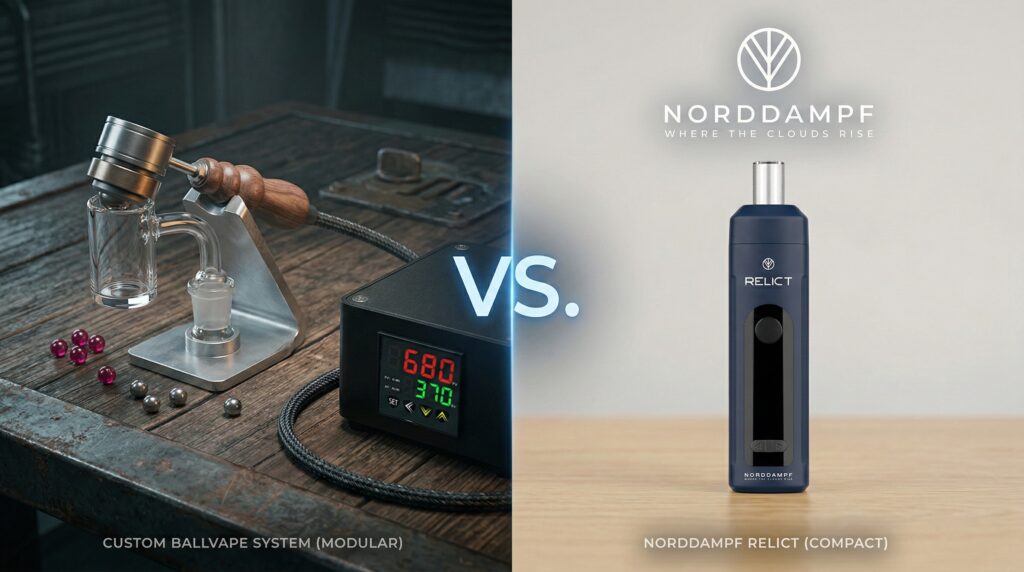
Short answer: Ballvape vs. traditional vaporizer
A Ball Vape is a special, extremely powerful tabletop vaporizer. The principle: Small spheres made of materials such as ruby, glass, or ceramic are heated and store enormous amounts of heat. When inhaling, air flows through these hot beads and vaporizes the plant material in a fraction of a second. Classic vaporizers—such as the models from Norddampf, as well as the Relict Hammah —work with built-in heating chambers or heating blocks, however, and offer a gentler vaping experience that’s better suited for everyday use.
The key differences at a glance:
- Performance level: Ball vapes produce extremely dense clouds in 1–2 puffs. Classic vaporizers offer moderate, easily controllable vapor production over several puffs.
- Temperature ranges: Ball vapes typically operate at around 250–350 °C on the controller. Traditional herbal vaporizers usually operate in the range of 160–230 °C.
- Usage: Ball vapes are stationary and usually require a water filter. Portable and compact tabletop devices are easier to use and can be taken on the go.
- Effect: A ball vape delivers a fast, intense extraction—almost like a dab. Traditional vaporizers allow for gentler, more controllable sessions.
- Water filtration: Models such as the Relict the Hammah , in particular, allow you to enjoy the vapor through a bubbler or bong adapter with water cooling. This feature enhances the vaping experience by cooling and humidifying the vapor, which is especially pleasant during more intense hits.
Later in this article, we’ll take a detailed look at purchase costs, how they work, all the necessary components, and a comprehensive comparison—and to help you find the right device for your needs, we’ve also included a comprehensive comparison of various vaporizer models.
What exactly is a Ballvape?
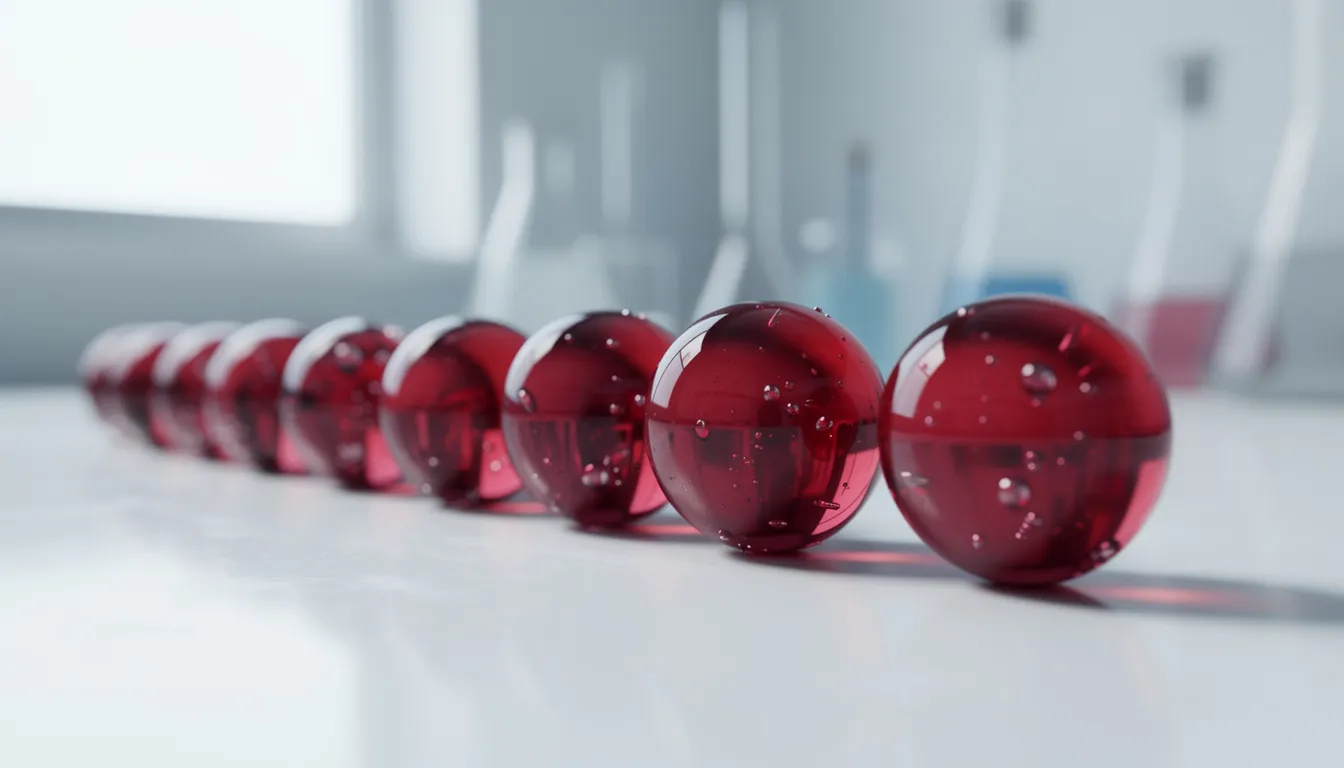
A ball vape is a stationary vaporizer in which a chamber containing many small balls—usually 3–6 mm in diameter—is heated. These balls are made of materials such as corundum (lab-grown rubies), quartz, zirconia, or ceramic. When you inhale, air flows through the heated balls, absorbs their stored heat, and vaporizes the cannabis or other herbs in the bowl.
The principle sounds simple, but the physics behind it are crucial: The balls act as a thermal reservoir with enormous mass. This high thermal capacity enables a type of extraction that traditional vaporizers cannot achieve.
The key features of a ball vape:
- Operates primarily by convection—hot air flows through the material
- Uses beads as heat storage to maintain a constant temperature over multiple runs
- Produces extremely dense vapor, often comparable to the experience of using concentrate
- Originally developed from DIY craft projects, they have been established as a distinct product category since the late 2010s
- Designed for dried flowers, not extracts
- Generally requires water filtration for pleasant consumption
The intensity of a ball vape is often described as “dab-like”—without anything being burned. That is the key difference from smoking.

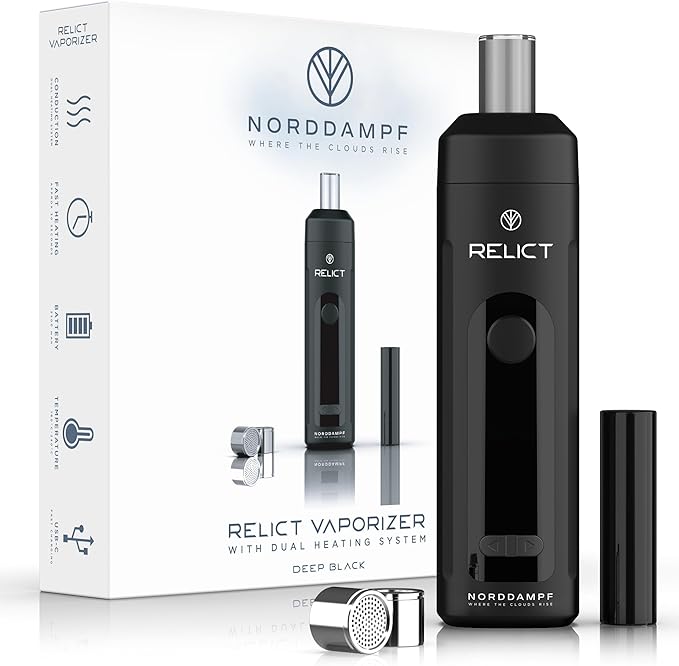
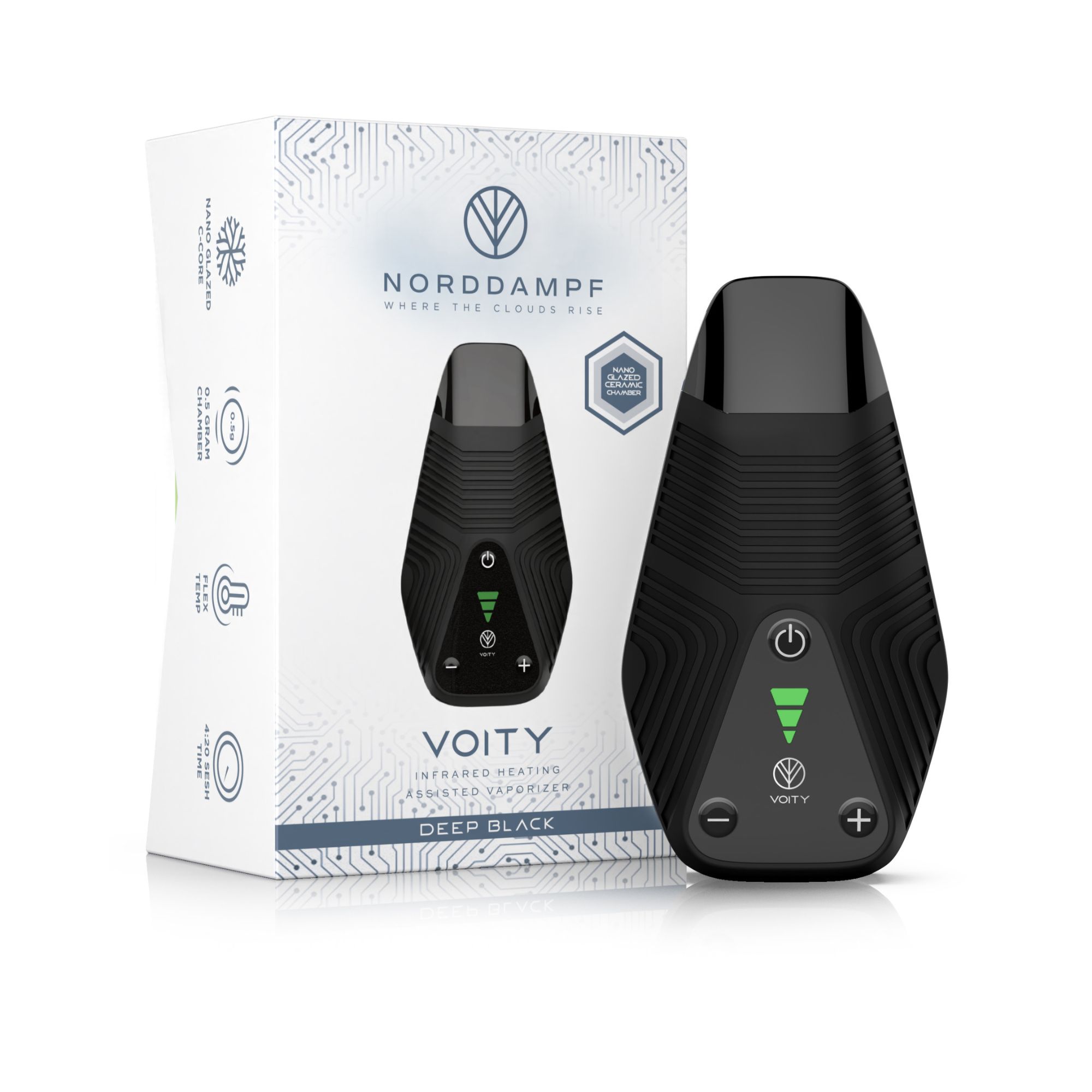
Our Best Sellers
Discover the most popular Norddampf products

How Does a Ball Vape Work? – Design and Technology
A Ball Vape consists of several components that must work together. The system is more modular than a traditional device—you don't just buy a ready-made unit, but put together a set.
An overview of the core components:
- Heating head with balls: The heart of the system. A housing (often made of titanium or stainless steel) contains the balls and is heated from the outside.
- Heating coil or heating element: An electric coil surrounds the head and generates the necessary heat.
- PID Controller: The PID controller precisely regulates the temperature and keeps it constant—essential for reproducible results.
- Bowl or herb chamber: This is where the ground material goes. Common grind sizes are 14 mm or 18 mm.
- Water filters: Almost indispensable. The vapor is so hot and dense that using a bubbler or a borosilicate glass bong makes the experience much more enjoyable. Vaporizers like the Relict the Hammah with special adapters for bubblers or bongs, allowing you to take full advantage of the water cooling.
What happens on the train?
- The controller heats the heating coil to the set temperature
- The coil transfers heat to the housing and the balls inside it
- The balls store this thermal energy
- When you inhale, air flows through the hot balls
- The heated air flows into the bowl and vaporizes the plant material
- The steam is cooled and humidified by the water filter
Different header concepts:
There are two basic types, which differ in their characteristics:
- Injector Head: The head hovers above the material. The hot air is “injected.” The result is a smoother, more flavorful vapor with better control over heat distribution.
- Diffuser Head: The head sits directly on the bowl. Maximum airflow, very fast extraction, more intense draws. Less flavor, more performance.
Both methods have their merits—the choice depends on your personal preferences.
What temperatures does a Ballvape use?
Temperature is one of the biggest differences between Ball Vapes and traditional vaporizers.
Typical operating ranges:
- Ballvape on the controller: approx. 250–350 °C (the actual temperature at the balls and the material is lower due to heat loss)
- Classic herb vaporizer: approx. 160–230 °C
What do these numbers mean in practice?
- Higher controller temperatures (> 320 °C) allow for nearly complete extraction in 1–2 passes—but the intensity can be overwhelming for beginners
- Many users start at around 260–280 °C and gradually increase the temperature to find their personal sweet spot
- Even at lower settings, the flavor intensity of Ball Vapes remains distinctly noticeable—the efficient heat transfer makes all the difference
The comparison shows that while a traditional vaporizer gently extracts active ingredients, a Ballvape extracts everything from the material in no time.
What do you need to make a ball vape?
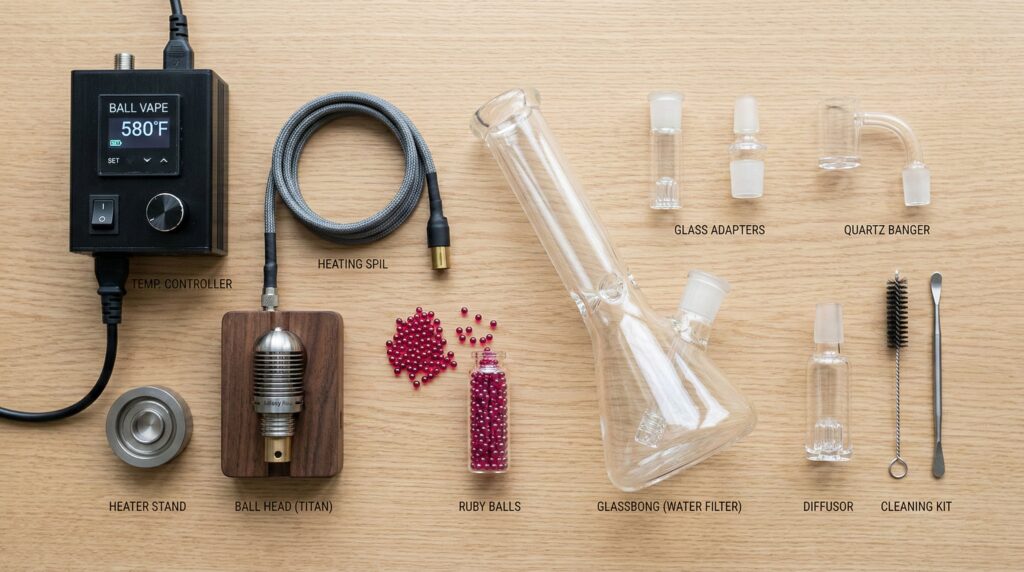
A Ballvape isn't an all-in-one device. You build your own system. That requires some understanding and planning—but it also gives you maximum control.
The necessary components:
- Heating chamber with beads: The chamber contains the beads. Typical bead sizes range from 3 to 6 mm. Materials such as ruby (corundum), glass, ceramic, or zirconia offer different properties in terms of heat retention and heat distribution. The beads can be selected in various sizes to influence the surface area and thus the extraction performance.
- Heating element / heating coil: An electric coil that surrounds the head and heats it evenly. Important: The coil and head must fit together properly. The size of the housing directly affects performance.
- PID Controller or Temperature Control: The PID controller is the brain of the system. It maintains the temperature precisely at the set value—which is crucial for consistent results. Most systems display the temperature in Fahrenheit.
- Bowl / Herb Chamber: The bowl for your finely ground material. Common sizes are 14 mm and 18 mm—compatible with standard glassware. The bowl serves as the connecting piece between the Ballvape head and the water filter.
- Water Filters / Bongs / Bubblers: The vapor from a ball vape is extremely hot and dense. Without water filtration, the experience can be unpleasant. A good borosilicate glass bubbler cools and humidifies the vapor. Vaporizers like the Relict the Hammah special adapters for bubblers and bongs, making it easier to integrate them into your setup and enhancing your vaping experience.
- Power supply and safe storage: A Ballvape needs to be plugged into an outlet. You’ll also need a stable, heat-resistant surface to place the hot head on. Safety is crucial—the head reaches temperatures that pose a burn hazard. Keep children and pets away.
Optional, but recommended:
- Replacement bowls in various sizes
- Adapters for different cuts
- Various ball sizes for experimenting
- A dedicated stand or mount
Cost: Ballvape vs. traditional vaporizer
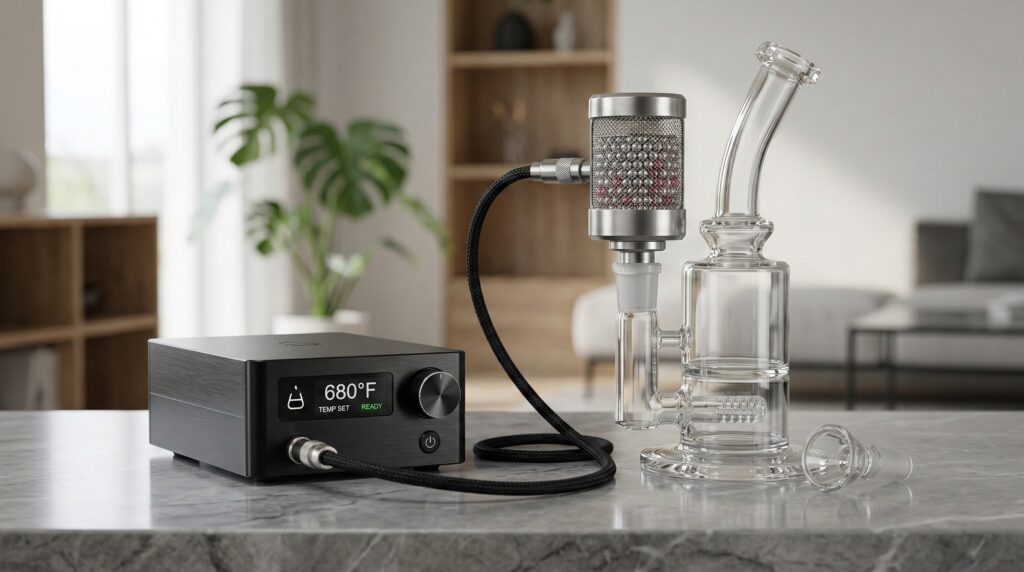
It’s a fair question—and the answer is complex. The cost depends on whether you buy a complete kit or put together individual components.
Purchasing a Ballvape:
- Basic or DIY-style heads: starting at around €100–150 (excluding controller and accessories)
- High-quality complete sets with a controller and heating coil: approx. €200–€400
- High-end configurations with premium materials: €400 and significantly more
Additional costs for the Ballvape:
- Water filter / bubbler: approx. €20–80
- Replacement bowls: approx. €10–30 each
- Balls in alternative sizes or materials: approx. €20–50
- Adapters and other glass accessories: various
The total cost of a fully functional Ball Vape system is realistically between €250 and €500, depending on your quality standards.
Classic vaporizer (e.g., such as those from Norddampf, Relict Hammah):
- Entry-level devices: starting at around €70–100
- Mid-range with good performance: approx. €150–250
- High-quality desktop devices or premium portable devices: €250 and up
The main drawback when comparing prices: With a traditional vaporizer, you’re usually buying a complete, ready-to-use device. With the Ballvape, there are almost always additional costs for water filters and accessories.
Value for money:
Ball vapes are extremely efficient in terms of vapor volume and extraction yield per gram of material. Maximizing active ingredient yield while minimizing material consumption can save money in the long run—provided you use the system regularly. Classic vaporizers, on the other hand, score points for being easier to get started with and universally suitable for everyday use; the advantages of vaporizers over smoking lie primarily in gentler inhalation and more efficient use of the herbs.

Comparison of Effects and Vaping Experience
Both Ball Vapes and traditional vaporizers operate without combustion. The herbs are heated, not burned. But the method of heating and the intensity result in fundamentally different experiences.
Ballvape effects:
- The high thermal mass of the beads allows for nearly complete extraction in 1–2 passes
- The effects kick in quickly—often within seconds
- The experience is described as "physically intense," comparable to concentrates
- The thick clouds and strong hit remind many users of the sensation of smoking—only without the harmful combustion byproducts
For former smokers, this is often the deciding factor. Many say that with traditional vaporizers, “something was missing”—the pressure on the lungs, the intensity of the draw. A Ball Vape delivers exactly that, without combustion.
Classic vaporizer effects:
- Smoother sessions that are easy to control over multiple puffs
- The effect builds up gradually
- Ideal for beginners and users with low tolerance
- Better suited for everyday use if you want to keep things practical
- Devices like the Relict the Hammah , which allow users to cool the vapor using a bubbler or bong adapter, Hammah a more pleasant and milder vaping experience—a feature that is particularly appealing to users who value gentle cooling.
Steam quality:
| aspect | Ballvape | Classic vaporizer |
|---|---|---|
| vapor density | Extremely dense, massive clouds | Easy to moderate |
| Steam temperature | Very hot; water filter required | Cooler, often without a filter—pleasant |
| Taste | Intense, strong terpene release | Well-balanced, with more subtle flavors |
| Steps leading up to extraction | 1–3 | 5–15+ |
| Tolerance and material consumption: |
One drawback of the Ball Vape: Its high power output can lead to higher herb consumption per session—simply because you extract more and consume more intensely. Ball Vapes are generally intended for users with a higher tolerance. Classic vaporizers allow for efficient vaporization at moderate doses.
Handling and practicality
The biggest practical difference between the Ballvape and a traditional vaporizer lies in how they’re used. Ease of use, portability, heat-up time, safety—these are where they really differ.
Ballvape Handling:
- Primarily stationary – you need a dedicated space (desk, living room)
- Heating times of several minutes for the head and balls (typically 3–5 minutes)
- The hot pot must always be placed on a stable surface—a heat-resistant trivet is required
- The system remains set up during the session and takes up space
Setup and Operation:
A typical process for a ball vape:
- Turn on the controller and set the temperature
- Wait until the head and balls are heated
- Fill and connect the water filter
- Fill the bowl with shredded material
- Place or position the head
- Inhalation
- Add more material if necessary
That's significantly more steps than with a compact handheld device.
Classic vaporizers such as those from Norddampf, Relict Hammah Bundle:
- Many devices are portable or very compact
- Heating times are often less than a minute
- Operation at the touch of a button or via a simple temperature control
- No external accessories are required, except for models with water filter options such as Relict Hammah, which can be easily connected to bubblers or bongs
- Ready to use immediately after turning it on

Cleaning and Maintenance:
| component | Ballvape | Classic vaporizer |
|---|---|---|
| Clean frequently | Bowls, strainers, glassware/bubblers | Mouthpiece, chamber, airways |
| Rarely needs cleaning | Marbles (stay clean for a long time) | – |
| effort | Taller, more parts | Smaller, more compact system |
| Safety considerations: |
Ball vapes use very hot metal or glass parts that sit exposed on the table. This is a serious concern:
- Use secure storage
- Keep a safe distance from children and pets
- Never touch when hot
- Risk of fire if used improperly
Traditional vaporizers typically have their heating elements inside the device—which significantly reduces the safety risk.
Who is a Ballvape best suited for—and who would be better off with a traditional vaporizer?

The question isn't "Which is better?"—but "Which is right for you?"
Suitable for Ballvape:
- Experienced users with a higher tolerance
- Former smokers who miss the intense sensation of taking a drag
- People interested in technology who enjoy tinkering with settings
- People who want to vape at home, in peace and quiet, and as part of a ritual
- Microdosers looking for maximum efficiency with small amounts
- Medical patients with high drug requirements
Suitable for traditional vaporizers:
- Beginners to Vaping
- Occasional users, but also regular users
- People with low tolerance
- Anyone who values ease of use and portability
- Users who want to vape discreetly
- People who don't have a permanent space for a stationary setup
- Users who prefer a smooth vaping experience with water filtration, as offered by the Norddampf Relict with its bubbler and bong adapter options
Health and comfort considerations:
Ball vapes also operate without combustion—that’s the basic principle. But the intensity of the puffs can be taxing on untrained lungs. The high temperatures and dense vapor production put more strain on the body than gentler sessions with a hybrid vaporizer or portable device. Water filtration helps, but it doesn’t automatically make the experience “easy.”
Classic vaporizers offer a gentler introduction to vaporizing. You can take it slow, start with low temperatures, and find your own comfort level.
Budget and space considerations:
A Ball Vape requires:
- A larger budget (€250–500 is realistic)
- A permanent spot in the living room
- Safe storage space for hot equipment
Classic vaporizers:
- More affordable options available (starting at around €70–100)
- Fits in any bag or drawer
- No special infrastructure required
The recommendation:
Think of the Ball Vape as a performance upgrade for advanced users—not as an entry-level device. If you already have experience with traditional vaporizers and want more, the Ball Vape is a logical next step. If you’re just getting started with vaporizing, begin with a reliable herb vaporizer. The market offers plenty of options to suit every need.
Ultimately, it comes down to your needs: Do you want maximum performance and are you willing to put in some effort? Or are you looking for a hassle-free device for everyday use?
The answer determines what goes into your shopping cart.