

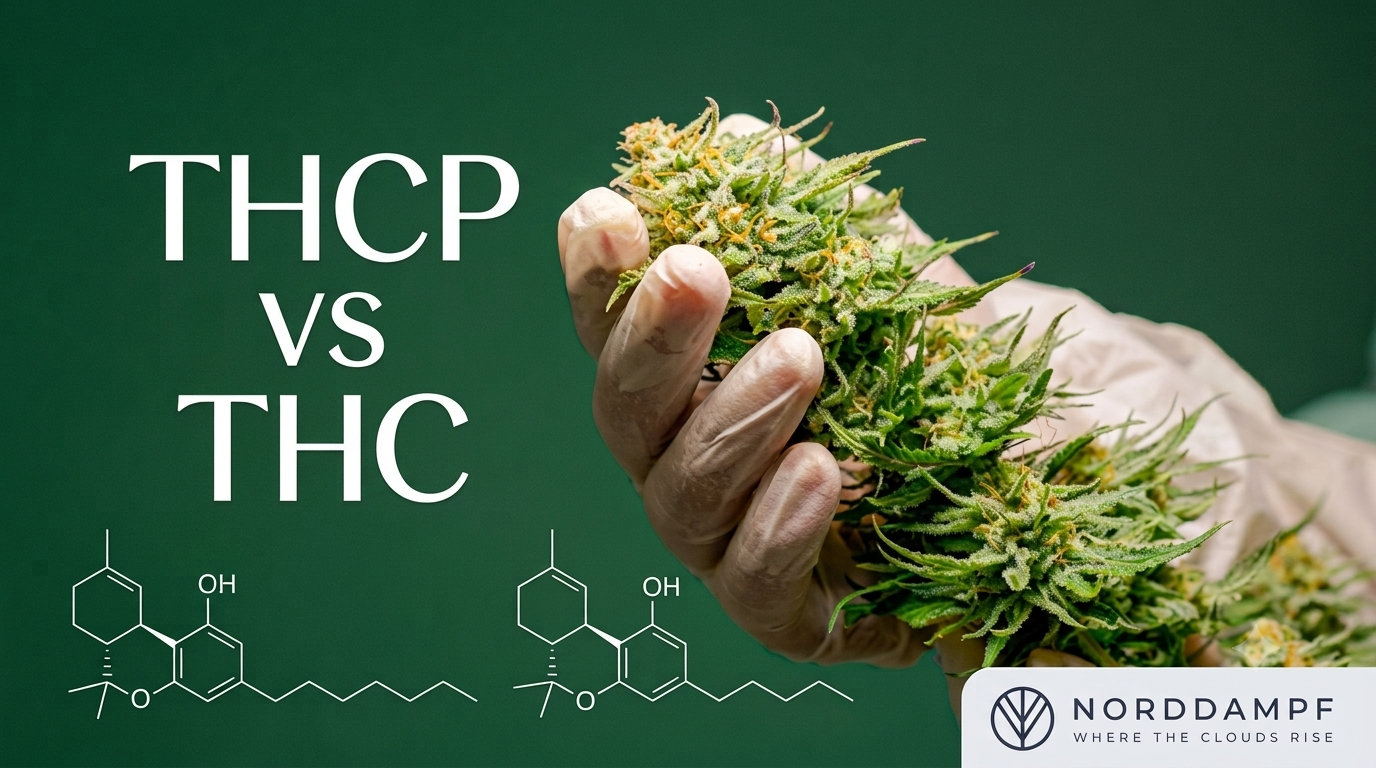
In late 2019, Italian researchers were studying a relatively unknown medical cannabis strain when they discovered a cannabinoid that no one had ever described before. They needed a name. Scientists aren’t exactly known for coming up with short, snappy terms that roll off the tongue easily. So they settled on the wonderfully catchy “tetrahydrocannabiphorol.”
Of course, ordinary people quickly shortened that to THCP.
In the lab, they had discovered that THCP binds to the CB1 receptors in the brain about 33 times more strongly than delta-9-THC. Predictably—and for good reason—cannabis users everywhere collectively lost their minds when they heard about it.
More than five years later, “33 times stronger than THC” is prominently displayed on gummies in every country where cannabis is legal. And that’s actually a shame, because the real story behind THCP vs. THC is quite interesting and is often overlooked by people who just want to get high.
That’s why we thought we’d explain this background in a short blog post—hopefully without boring anyone to death—and take a look at what we know about THCP vs. THC.
Key Points
- THCP is a naturally occurring cannabinoid that was identified by Italian researchers in 2019.
- In laboratory tests, it binds to CB1 receptors about 33 times more strongly than delta-9-THC.
- Binding affinity is not the same as subjective potency.
- To date, no clinical studies on THCP in humans have been published.
- Natural THCP is present in flowers only in trace amounts; commercial products are extracts or semi-synthetic products.
- The legal status varies across Europe. Check the regulations in your country.
What is THCP?
THCP is a phytocannabinoid. This means it is a compound naturally produced by the cannabis plant. It belongs to the same family as delta-9-THC but has a different molecular structure.
A common misconception that we should clear up right away: Contrary to popular belief, THCP is not synthetic—we’re looking at you, Redditors. It was found in a real cannabis plant and wasn’t invented in a lab.
However, most products labeled as THCP today are produced from CBD through chemical processes, because the natural concentration in the plant is microscopically low. So the Redditors mentioned above do have a point. Sort of.
Like THC, THCP binds to the CB1 and CB2 receptors, which are part of your endocannabinoid system. That’s exactly why it has garnered so much attention.

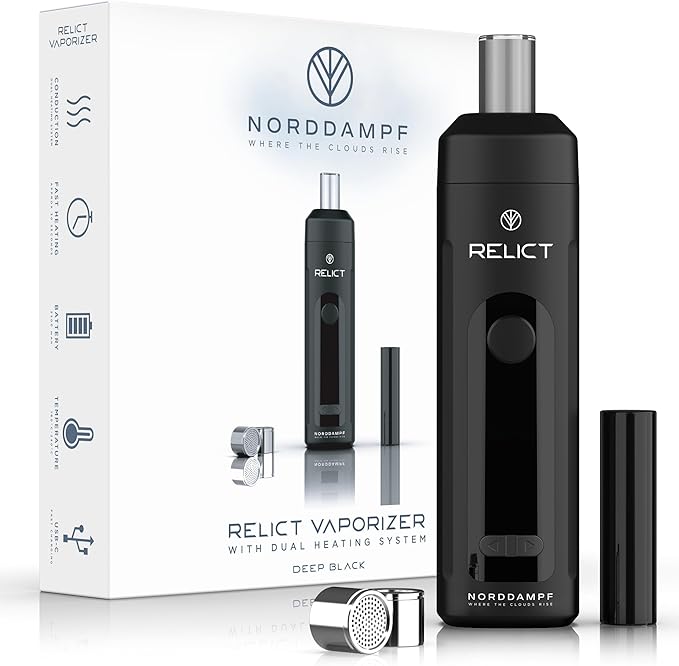
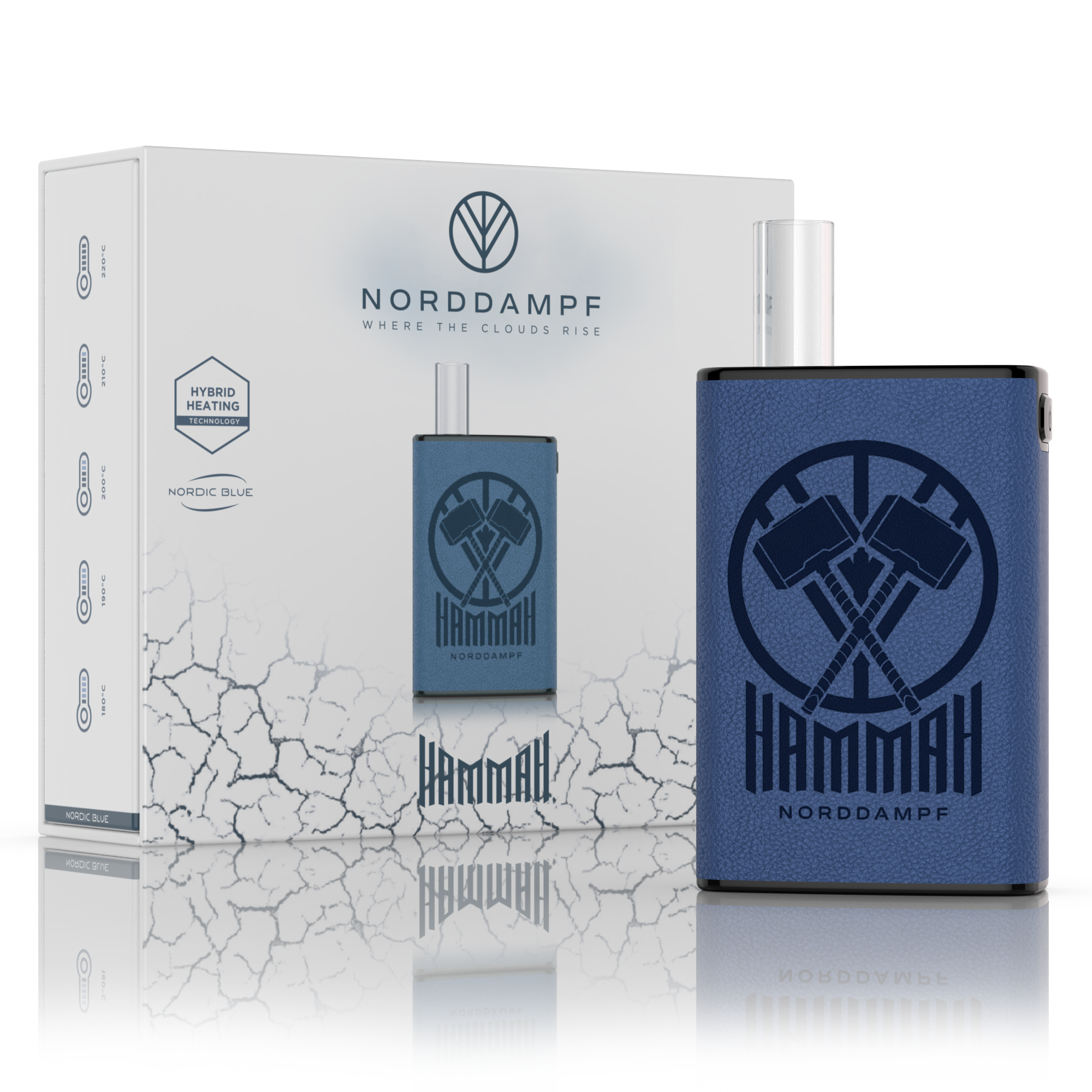
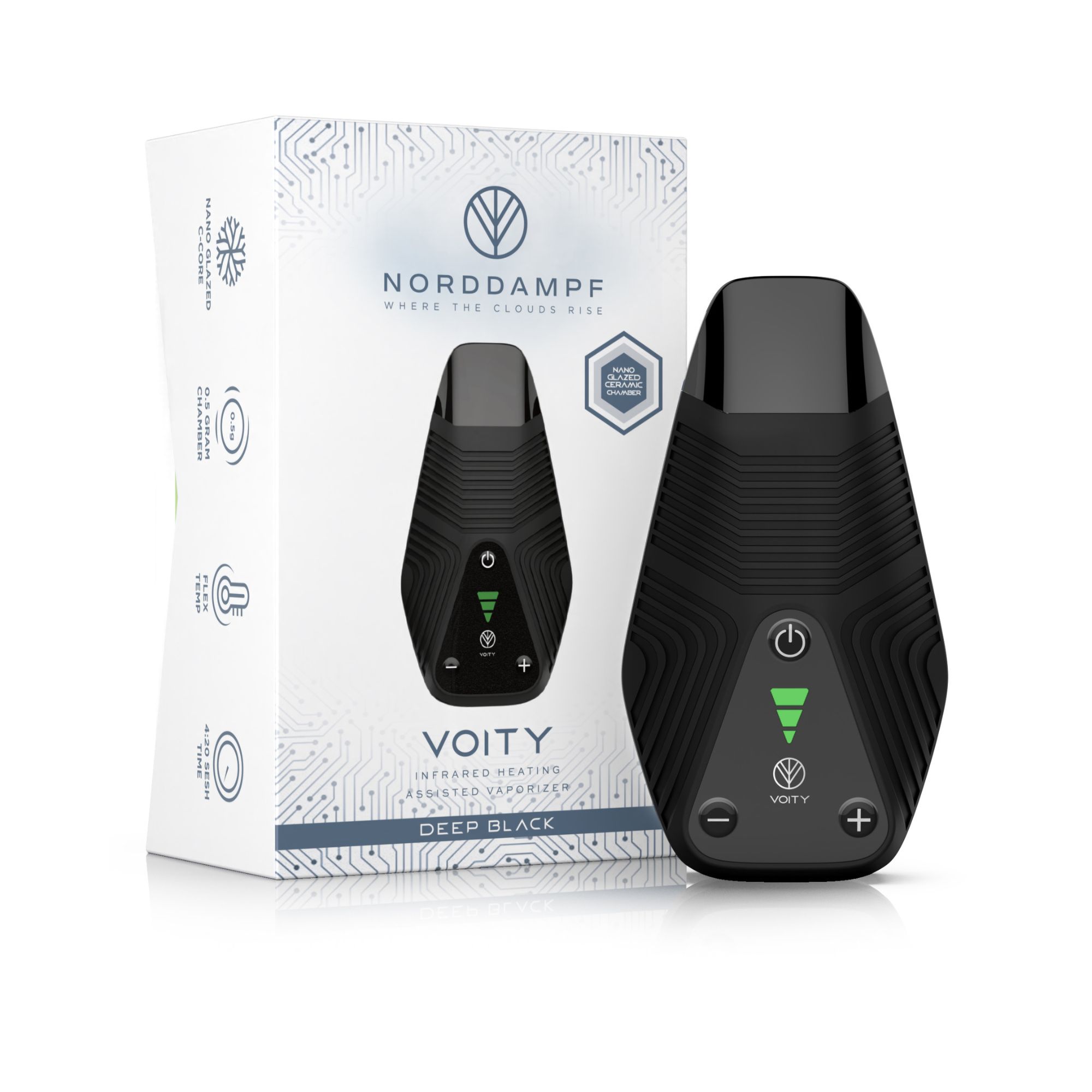
Our Best Sellers
Discover the most popular Norddampf products
How was THCP discovered?
You could call it a lucky coincidence. In 2019, a team from the University of Modena and Reggio Emilia, led by Cinzia Citti, conducted a full-spectrum analysis of a medical cannabis strain called FM2, which was produced by the Italian Military Chemical-Pharmaceutical Institute—of all places. They used high-resolution chromatography to map every compound in the plant. Yes, such a thing actually exists.
Of course, they weren't looking for THCP because they didn't know it existed. But they found it anyway, along with CBDP—cannabidiphorol, the CBD analog. The study was published in *Scientific Reports*, and cannabis researchers have been trying to catch up ever since.
THCP vs. THC: The Key Structural Difference
The whole THCP vs. THC debate boils down to a single detail: the length of a small chain of carbon atoms attached to the molecule. Stick with me for a moment.
Both have what chemists call an alkyl side chain. This is the part of the molecule that binds to a receptor. Generally, the longer this binding site is, the tighter the fit.
- Delta-9-THC has a side chain with 5 carbon atoms, i.e., pentyl.
- THCP has a side chain with 7 carbon atoms, i.e., heptyl.
Those two extra carbon atoms may not sound like much. In cannabinoid pharmacology, however, the length of the side chain is one of the most reliable indicators of the strength of the CB1 binding. THCP’s 7-carbon chain is the longest found to date in a naturally occurring cannabis phytocannabinoid.
Still with me? Great. Now let's move on to the exciting part: potency.
What does “33 times stronger than THC” really mean?
This is exactly where many people misunderstand the difference between THCP and THC.
The “33-times” figure comes from Citti’s study. THCP showed an affinity for CB1 receptors that was about 33 times higher than that of delta-9-THC. This is measured as a Ki value: the lower the number, the stronger the binding. THC was around 40 nM. THCP was 1.2 nM.
Binding affinity basically describes how well the key fits into the lock. To put it simply: THCP’s key fits better than THC’s. However, this does not mean that the effect is automatically 33 times stronger. Subjective effects depend on many other factors, such as how quickly the molecule crosses the blood-brain barrier, how it’s metabolized, how high your tolerance is—an extremely important factor—and how much actually enters the bloodstream.
The honest conclusion is this: THCP has a significantly higher CB1 binding affinity than THC. What that means for someone who vapes a cartridge is another question—and one that published research has not yet answered.
What We Know and Don't Know About the Effects of THCP
The 2019 study didn't stop at binding assays. The researchers also conducted a so-called tetrad test on mice—don’t worry, the mice probably had a wonderful time. This test measures four behavioral markers of cannabinoid effects: reduced movement, lowered body temperature, pain relief, and catalepsy. THCP produced these effects at lower doses than THC.
These are significant preliminary findings. But we’ll admit: they’re also “stoned mouse” data. And it’s certainly valid to question how meaningful it is to compare mice to humans. We don’t really know. So we’ll do what we always do when faced with uncertainty: we’ll distract you with a random table.
| Delta-9-THC | THCP | |
| CB1 binding affinity (Ki) | ~40 nM | ~1.2 nM |
| Length of the side chain | 5 carbon atoms | 7 carbon atoms |
| Effects Observed in Animal Studies | Well-documented | Effective at lower doses |
| Clinical data in humans | Extensive | None published |
| Natural Concentration | Main Cannabinoid | Just Traces |
You're welcome.
Exactly how THCP is metabolized in humans, how long its effects last, and whether its higher binding affinity translates into a noticeably different experience remain unclear. There is essentially no long-term data on its safety.
What we know: Like all cannabinoids, THCP reacts to heat. Different compounds are released at different vaporizer temperatures. If you do it wrong, you’ll waste the active ingredient. That’s why a good vaporizer is crucial. More on that later.
Is THCP legal in Europe?
Hmm… it depends. Hard to say. Annoyingly, the answer keeps changing.
The problem is that there is no EU-wide framework that specifically regulates THCP. Its legal status is determined on a country-by-country basis, and many countries have laws or regulations governing new psychoactive substances that may cover THCP, even if it is not explicitly mentioned.
In the United Kingdom, for example, the Psychoactive Substances Act 2016 uses a broad functional definition rather than a list of named compounds. THCP would likely fall under this definition. Meanwhile, in Germany, the CanG—which partially legalizes cannabis—went into effect in April 2024, but the rules regarding novel cannabinoids and semi-synthetic analogs remain unclear.
Check the current list of controlled substances in your country before buying anything labeled as THCP. That's the best we can do for now, since we don't know for sure. Would you like another table? No?
THCP and Vaporizers: What You Should Know
This part is important. Very important.
Most THCP products on the market are extracts or concentrates rather than flowers, because the natural concentration is too low to be commercially viable.
There are currently no precise data on the vaporization temperature of THCP. However, cannabinoids structurally similar to THC vaporize cleanly in the range of 170 °C to 210 °C. Combustion destroys sensitive compounds. Precise temperature control is therefore very important when working with this substance.
In other words: If you want to vaporize THCP, you really need a high-quality, reliable vaporizer.
Bottom Line
THCP is a genuine, scientifically significant cannabinoid discovery. It occurs naturally and binds more strongly to CB1 receptors than THC. It gets you high. That’s the short version, in a nutshell. If you need more details, PubMed and Scientific Reports are your go-to sources.
When it comes to THCP, the quality of your vape device is more important than ever. If you heat it the wrong way, you might be wasting your money. If you heat it the right way, you’ll get every drop of what you paid for. The entire Norddampf vaporizer range is designed exactly for that purpose.
Frequently Asked Questions
Is THCP natural or synthetic?
THCP was identified in cannabis by Italian researchers in 2019, so it occurs naturally. However, it exists in such minute concentrations that almost every commercial THCP product uses laboratory-produced material derived from CBD.
Does THCP give you a stronger high than THC?
The "33-fold" figure refers to the binding affinity at the receptor, not to the subjective potency. There is no peer-reviewed research on THCP in humans. Animal data suggest that effects occur at lower doses, but to extrapolate from mice to a Saturday night session in humans is, to put it mildly, quite a stretch.
Is THCP legal in the United Kingdom or Germany?
That depends, and the legal situation is constantly changing. The UK’s Psychoactive Substances Act 2016 likely covers its function. Germany’s legal framework under the CanG is still being clarified.
Can THCP be vaporized like regular cannabis?
Yes, but most THCP products are extracts, not flowers, and the quality varies depending on the source. The general principles of cannabinoid vaporization apply here as well: Lower temperatures help preserve the compounds.
This article is for informational purposes only and does not constitute medical advice. Always consult a qualified healthcare professional before using cannabis products for health-related purposes.