
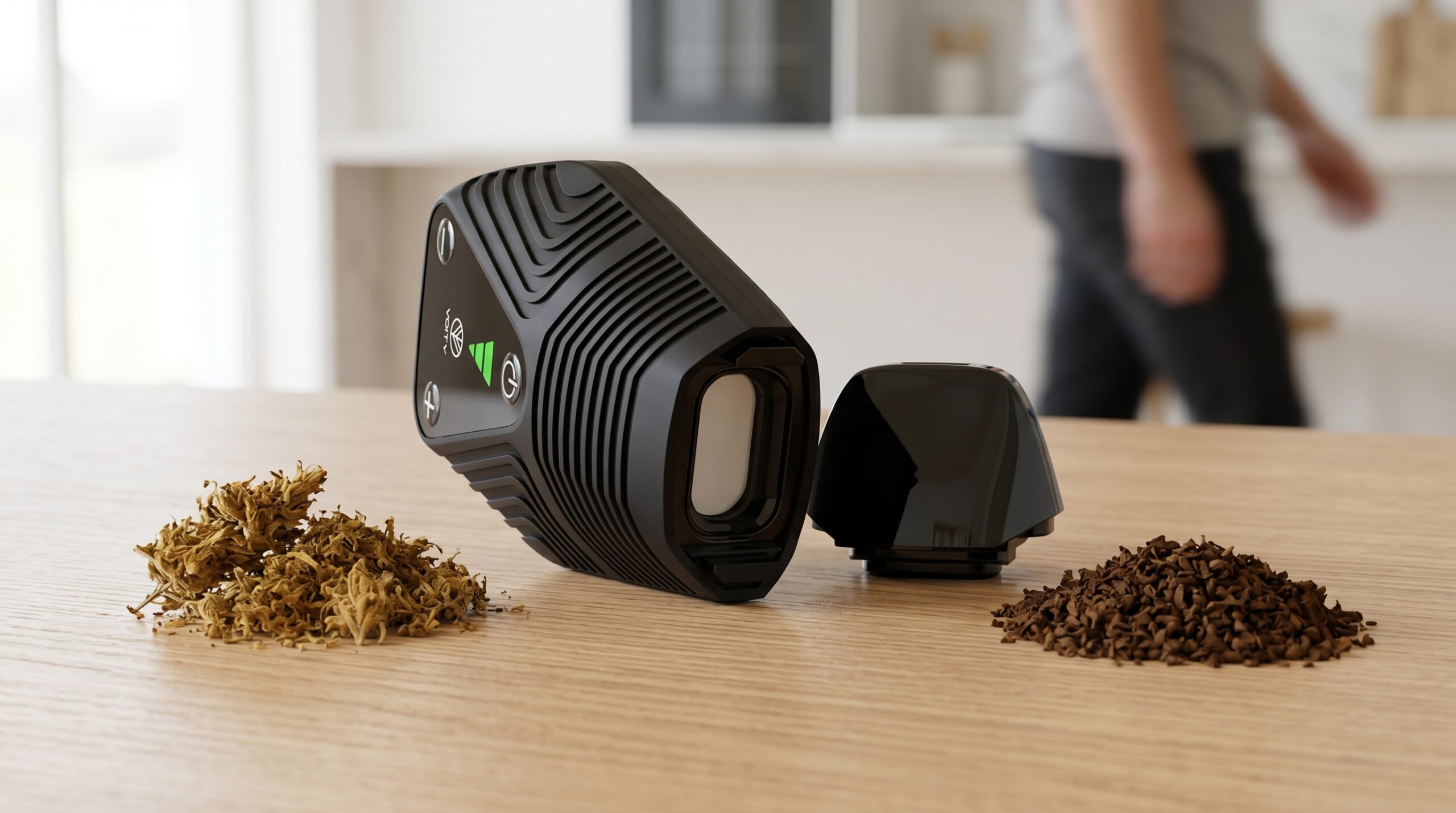
Already Vaped Bud—AVB for short—raises a key question for many users: Why does light AVB have a different effect than dark AVB? This article compares light and dark AVB in terms of their effects and color. The answer lies in the vaporization temperature and the resulting residual levels of active ingredients. This article explains the technical aspects without providing instructions for use.
In the table of contents below, you'll find an overview of all the topics covered in this article.
Key findings
- The effectiveness of the vaporization process depends directly on the vaporization temperature. The lower the temperature (approx. 165–195 °C), the more cannabinoids remain in the material.
- Light, golden to light brown AVB typically contains 20–30% of the original active ingredients. Dark AVB from sessions exceeding 210 °C often has less than 10% residual potency.
- The color serves as a handy quick indicator of the remaining potency—it’s not a substitute for laboratory testing, but it’s a helpful guide.
- Almost black AVB indicates the onset of combustion. This results in more decomposition products and a lower yield of active ingredients.
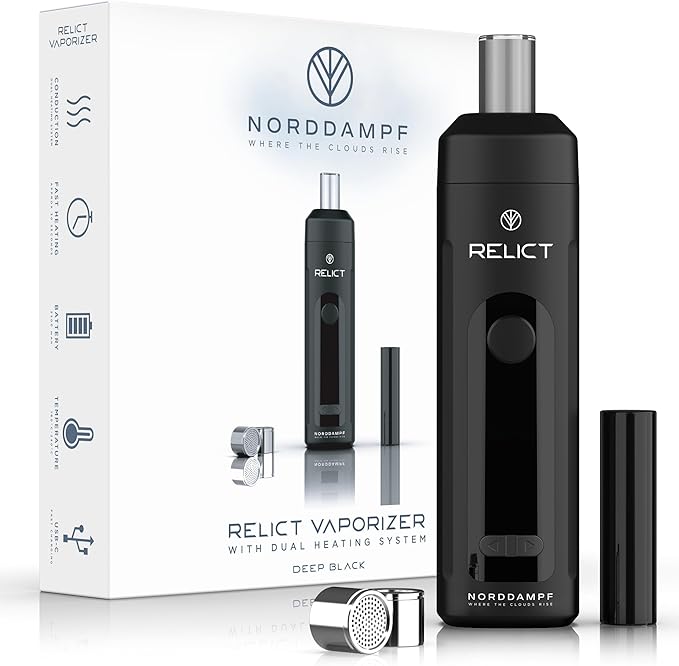
- High-quality vaporizers, such as the RELICT from Norddampf precise temperature control and thus the targeted production of high-quality, light-colored AVB.
An important point is that the specific temperature selected has a significant impact on the overall effect and the quality of the final product.
What exactly is AVB? (Definition & Basics)
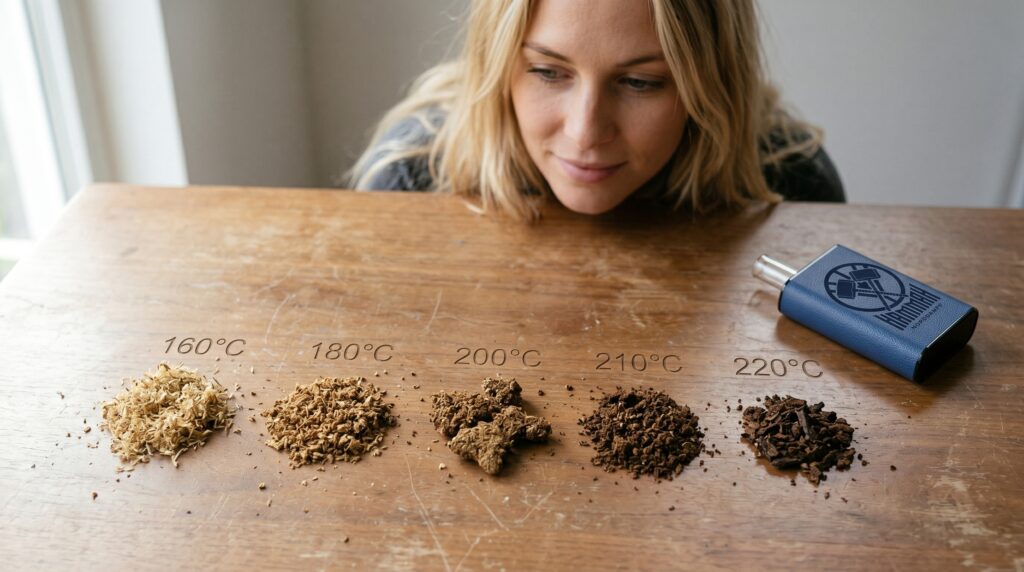
AVB refers to the plant material left in the chamber of your vaporizer after a vaping session. The translation of “Already Vaped Buds” into German is “bereits verdampfte Blüten,” where the term “translation” clarifies the meaning. Unlike other burnt material such as ash, AVB is not a burnt substance but still contains active compounds and remains recognizable as pieces or remnants of weed. Colloquially, this leftover material is often simply referred to as residue.
- Definition: AVB stands for Already Vaped Bud. Alternative terms include ABV (Already Been Vaped) or AVM (Already Vaped Material). AVB (Already Vaped Bud) refers to cannabis that has already been vaporized in a vaporizer. The cannabis residue left over after vaporization is often referred to as “weed” residue and may still contain a small amount of cannabinoids. The term became established in the early 2000s with the advent of modern dry herb vaporizers.
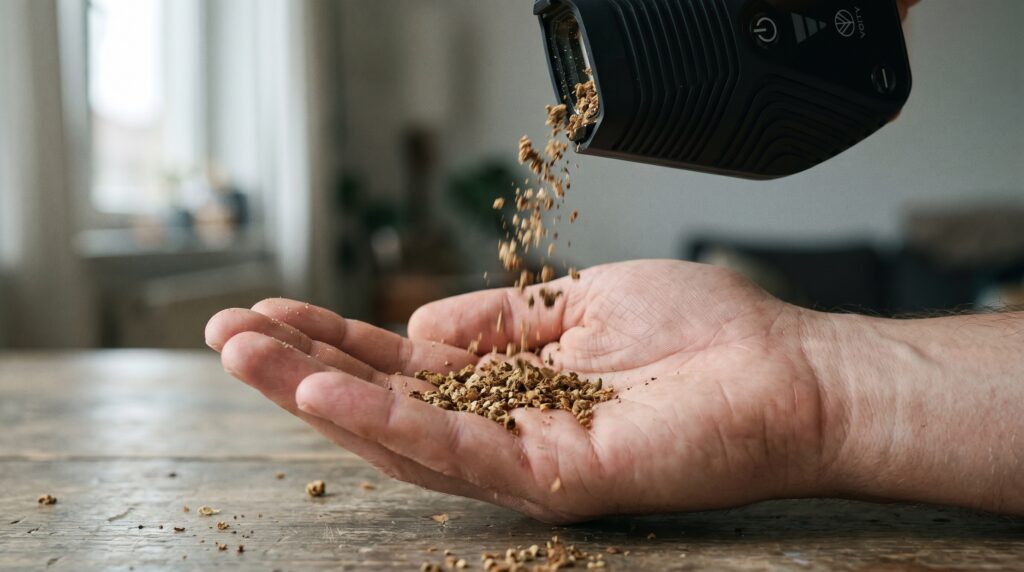
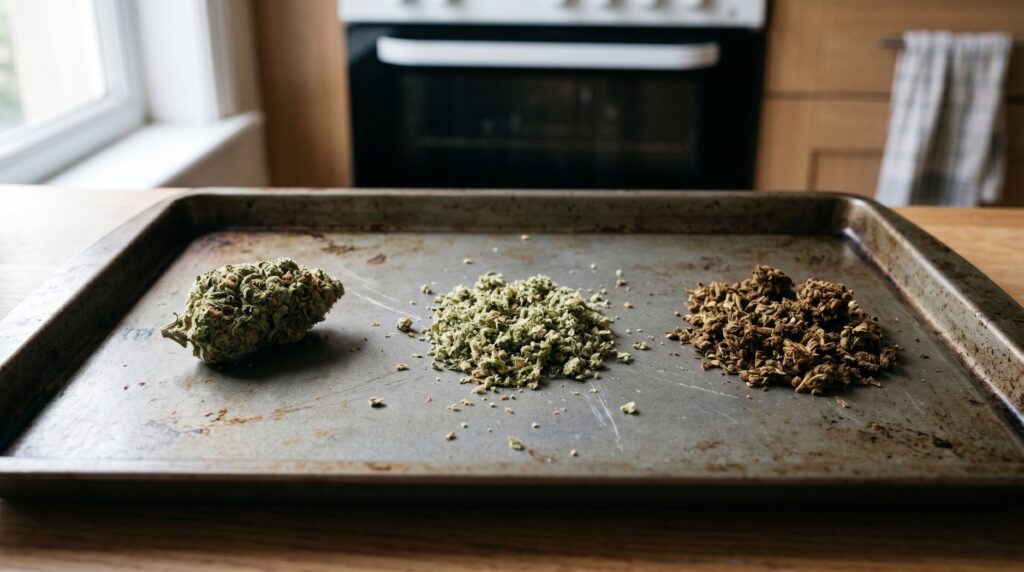
- Appearance: After vaporization, the material is dry and crumbly. Its color ranges from golden yellow through light brown and medium brown to dark brown or nearly black.
- Decarboxylation: Heating in the vaporizer has already converted THCA into THC and CBDA into CBD. As a result, the material is already bioavailable without any additional activation.
- Sustainability aspect: Many people systematically collect their AVB, often with the goal of sustainable use and cost savings. With a daily consumption of 0.5 g, 6–9 g of AVB can be collected each month—a way to maximize the overall yield. The idea of simply discarding leftovers is being replaced by reuse for many people, in order to conserve resources and avoid waste. You can collect your AVB and reuse it later.
- Additional uses: AVB is highly versatile for further processing. Popular options include making edibles such as cookies, firecrackers, or other cannabis-infused treats, since the decarboxylation process has already taken place. It can also be processed into cannabis oil or cannabutter, which concentrates the active compounds and makes dosing easier. AVB is suitable for making capsules as a discreet consumption option or for stirring into beverages like tea or coffee. Washing it with water can help mellow the often bitter taste. It is also possible to make spliffs or joints with AVB, though the taste and effects are significantly weaker. For medical patients, AVB offers a cost-effective option to prolong the effects of cannabis and save money. Especially in the medical field, AVB can serve as an affordable alternative for achieving therapeutic effects. Thus, AVB is not merely a byproduct but a valuable resource with a wide range of applications.
- Note: This post focuses on technology and understanding. It does not provide instructions for use.
Our Best Sellers
Discover the most popular Norddampf products
Color & Effect of AVB: Light vs. Dark Explained
The color of your AVB reveals more than just its appearance. It is a direct indicator of the thermal load during the session.
- Thermal stress: The darker the AVB, the higher the temperature or the longer the exposure to heat. Temperatures above 210–220 °C result in significant darkening.
- Cannabinoid Retention: Light-colored AVB produced at lower temperatures typically contains a higher amount of THC, CBD, and other cannabinoids. Although AVB is less potent, approximately 10–15% of the original cannabinoids may remain in the material, especially if it was vaporized at low temperatures. The potency of Already Vaped Buds (AVB) is generally significantly lower than that of fresh flowers, as most cannabinoids are extracted during vaporization. Compared to fresh cannabis, AVB is usually less psychoactive but has a stronger physically relaxing and sedative effect.
| Color | temperature range | Estimated remaining power |
|---|---|---|
| Gold to light brown | 165–190 °C | 20–30% |
| Medium brown | 190–205 °C | 10–20% |
| Dark brown to black | >210 °C | 5–10% |
- Combustion: Nearly black AVB indicates pyrolysis—a process in which undesirable breakdown products are formed, while the additional yield of active ingredients remains minimal.
- Practical tip: The color does not replace a laboratory analysis, but it does provide a quick assessment of the remaining potency.
Temperature and Active Ingredient Content: What Remains in the AVB?
Different cannabinoids and terpenes have different boiling points. This knowledge is key to understanding the quality of AVB.
Important boiling points:
- THC: at approximately 157 °C
- CBD: approx. 160–180 °C
- CBN: from approx. 185 °C
- Myrcene: 167 °C
- Limes: 176 °C
- Pine nuts: 155 °C
At 160–180 °C, primarily light terpenes and THC are released. If you raise the temperature to 190–210 °C, heavier cannabinoids are released as well. Thermal degradation begins above 220 °C.
At moderate temperatures (175–190 °C), a noticeable amount of active ingredients remains in the material. The resulting AVB is light to medium brown. Baking at temperatures near 220–230 °C produces dark AVB with little residual effect.
The duration of vaporization also plays a role. Longer sessions at the same temperature result in darker AVB and lower residual potency.
Depending on the temperature and remaining potency, there are various ways to reuse AVB, such as in food, cannabis oil, or other creative applications.
Why light-colored AVB is often stronger than dark-colored AVB
The apparent contradiction is quickly resolved: When smoking, darker tobacco may seem more intense. This is not the case when vaping.
- End of session: Light AVB is often produced during sessions that are ended at 170–190 °C as soon as the flavor begins to fade. Noticeable residual amounts of THC, CBD, and terpenes remain.
- Thermal degradation: When the AVB is heated to very high temperatures (above 210 °C for an extended period), nearly all active compounds are extracted. At the same time, THC converts to CBN, which reduces the clarity of the effects.
- A deliberate strategy: Experienced users deliberately select light to medium-brown AVB for further processing—such as the production of butter or oil.
Effect of the evaporation temperature on the residual effect
A typical three-step model illustrates the relationships:
- Start at 170 °C: Strong flavor, high terpene content, light-colored AVB with high residual potency
- Increase to 190–195 °C: Core extraction of THC/CBD, medium-brown AVB
- Optional: 205–210 °C: Finishing phase, darker AVB, minimal residual effect
Precise temperature control is essential for achieving the best results in AVB quality.
Users who want to retain potent AVB usually stay below 195 °C and end the session relatively early.
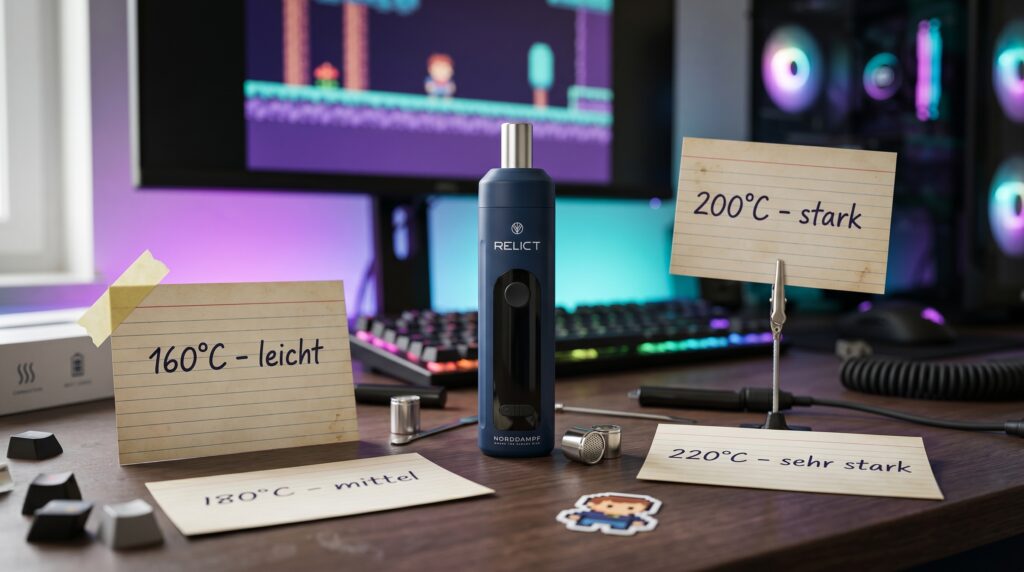
Precise temperature control is crucial. Fluctuations of ±10 °C are already visible in the color of the AVB. High-quality devices like the RELICT from Norddampf stable temperature control and even heating for consistent AVB quality.
Terpenes, Flavor, and Subjective Effects of AVB
Terpenes are volatile aromatic compounds that contribute to the so-called entourage effect —they modulate the effects of cannabinoids. AVB often has a roasted, nutty, or bitter taste that can be unpleasant and may cause a scratchy throat in some users.
- Early vaporization: Many terpenes vaporize at 130–180 °C. During longer or hotter sessions, they largely disappear. AVB then takes on a toasty flavor, like popcorn, and can leave a bitter aftertaste.
- Light AVB: Usually still contains slight traces of terpenes. This results in a more complex flavor profile and a subjectively clearer effect.
- Dark AVB: Smells bitter and harsh—a sign of terpene loss and undesirable breakdown products. Consumption may cause headaches or a sedative effect that some users perceive as “dirty.”
- CBN accumulation: At high temperatures, THC converts to CBN. This shifts the effect toward sedation rather than euphoria and produces a stronger physical effect, which is particularly appealing to users seeking a medicinal, relaxing effect.
Here’s a tip: To reduce the bitter taste, it’s recommended to soak the AVBs in cold water to remove any unpleasant particles. This process does not reduce the active ingredients. Those who use AVB in recipes can improve the taste by combining it with butter or oil to mask its inherent flavor. For AVB tea, adding honey can make the taste significantly more pleasant.
You can do almost anything with dried cannabis flowers that you can do with fresh ones—but the effects differ, as dried cannabis flowers are generally less psychoactive but have a more physically relaxing effect.
High-quality vaporizers with even heating (a combination of conduction and convection) produce more consistent AVB and thus a more predictable aftereffect.
Differences in taste between light and dark AVB
Taste is a practical indicator of AVB quality:
| Light AVB | Dark AVB |
|---|---|
| Mild, with light herbal and roasted notes | Intense, toasty to pungent |
| Reminiscent of roasted nuts | Like burnt coffee or popcorn |
| Gentle heating | High proportion of pyrolysis products |
| The smell provides initial clues as to how gently the material was handled—regardless of laboratory results. |
Common Mistakes When Vaping and Their Impact on the Effect of AVB
Differences in AVB color and potency are often due to application errors. With a basic understanding of the technology, these can be avoided.
- Incorrect grind size: Too coarse – the center of the buds barely heats up (patchy AVB). Too fine – blocked airflow, localized overheating.
- Overfilled chamber: Uneven heating results in a mottled appearance ranging from almost green to dark brown. Inefficient use of active ingredients.
- Incorrect draft technique: Rapid drafts overload the heating capacity of the convection unit and cause temperature spikes.
- Temperature too high: In the hope of achieving greater effectiveness, this primarily leads to an increase in the formation of undesirable degradation products.
- Maintenance: Clogged filters and air ducts impair heat distribution. Regular cleaning improves steam and AVB quality.
Additional tips for avoiding common mistakes when vaping will help you get the most out of the AVB effect.
How a good vaporizer improves the quality of the AVB
High-quality equipment is not only important for the steam—it also delivers reproducible AVB results.
- Precise electronics: Modern vaporizers maintain the temperature with pinpoint accuracy (e.g., in 1°C increments between 160 and 230 °C). This allows for precise control over the color of the AVB.
- Hybrid heating systems: Conduction and convection heat herbs more evenly. No more spots that are already dark brown while others remain greenish.
- Example: RELICT. The RELICT from Norddampf even heating, clean airways, and precise temperature control for consistent AVB quality.
- Experiment: Using high-quality equipment, you can deliberately compare temperature settings (e.g., 180 °C vs. 205 °C) and observe how color and residual effects change.
Understanding and Making Effective Use of the General Terms and Conditions (without a user guide)
For many users, it makes sense to compile their General Terms and Conditions and understand their potential.
- Sort by color: Separate light, medium, and dark AVB. Light AVB has higher residual potency.
- Versatile uses: Because it has already undergone decarboxylation, AVB can serve as a base ingredient for various products—from butter to cannabutter. Homemade AVB products, such as tinctures or edibles, can also be shared with others so you can experience the effects together.
- Surprising effects: Users report a noticeable aftereffect, especially with light AVB. This requires a cautious approach.
- Sustainability: Carefully controlled vaporization at moderate temperatures increases the overall yield of active compounds from your flowers.
- A twofold benefit: A good temperature strategy optimizes both the immediate vaping experience and the quality of the resulting vapor.
Storing it in a cool, dark, airtight glass container preserves its potency for weeks to months.
FAQ: Frequently Asked Questions About the Effectiveness of the General Terms and Conditions of Insurance
How can I tell if my general terms and conditions are “too restrictive”?
Very dark brown to nearly black AVB indicates temperatures above approximately 215–220 °C or sessions that are too long. This color indicates the onset of burning. The residual effect is usually minimal, and the flavor is strongly burnt. In the future, use a lower temperature and shorter sessions to achieve a uniform medium- to light-brown AVB.
Can AVB lose its effectiveness after a few weeks of storage?
Yes. Cannabinoids break down slowly when exposed to light, oxygen, and heat. Storing them in a cool, dark, dry place (in an airtight glass container in a cabinet) keeps their potency relatively stable for several weeks to months. Extreme heat—such as summer sun on a windowsill—significantly accelerates the breakdown process.
Why does my AVB look so different even though I always use the same variety?
Differences arise due to variations in temperature, brewing technique, dose size, or grind size. Even a difference of ±10 °C, an uneven dose, or rushed sips can noticeably alter the color of the brew and thus its aftertaste. Use consistent temperature settings and maintain a consistent routine to ensure reproducible brew quality.
Is light AVB always "better" than dark AVB?
Not necessarily. Light-colored AVB generally contains more residual cannabinoids and terpenes. Very dark AVB is more depleted. Which is better depends on the intended use. For maximum residual effects, light- to medium-brown AVB is preferable. A certain degree of browning is normal—only very dark to black patches indicate overheating.
Does the strain type (Indica/Sativa/hybrid) affect the AVB's effects?
Genetic heritage determines the original cannabinoid and terpene content. In principle, this character is also reflected in the AVB. When dark AVB is vaporized at very high temperatures, these differences become less distinct because terpenes and cannabinoids break down more rapidly. To preserve recognizable strain characteristics in the AVB, stick to moderate temperature ranges.