
Mold on cannabis isn’t just a cosmetic issue. It is a health risk. Mold poses an invisible threat and is a hidden enemy that must be detected early to prevent harm to your health. And it affects everyone—from growers to patients, from the black market to pharmacies. In this article, you’ll learn how to identify mold on cannabis, the dangers posed by mycotoxins, and how to store your buds safely.
Key Findings
- Mold spores and mycotoxins survive combustion and vaporization—when consumed, they go straight into your lungs
- Moldy cannabis should always be thrown away, whether it comes from your own garden, the black market, or a pharmacy
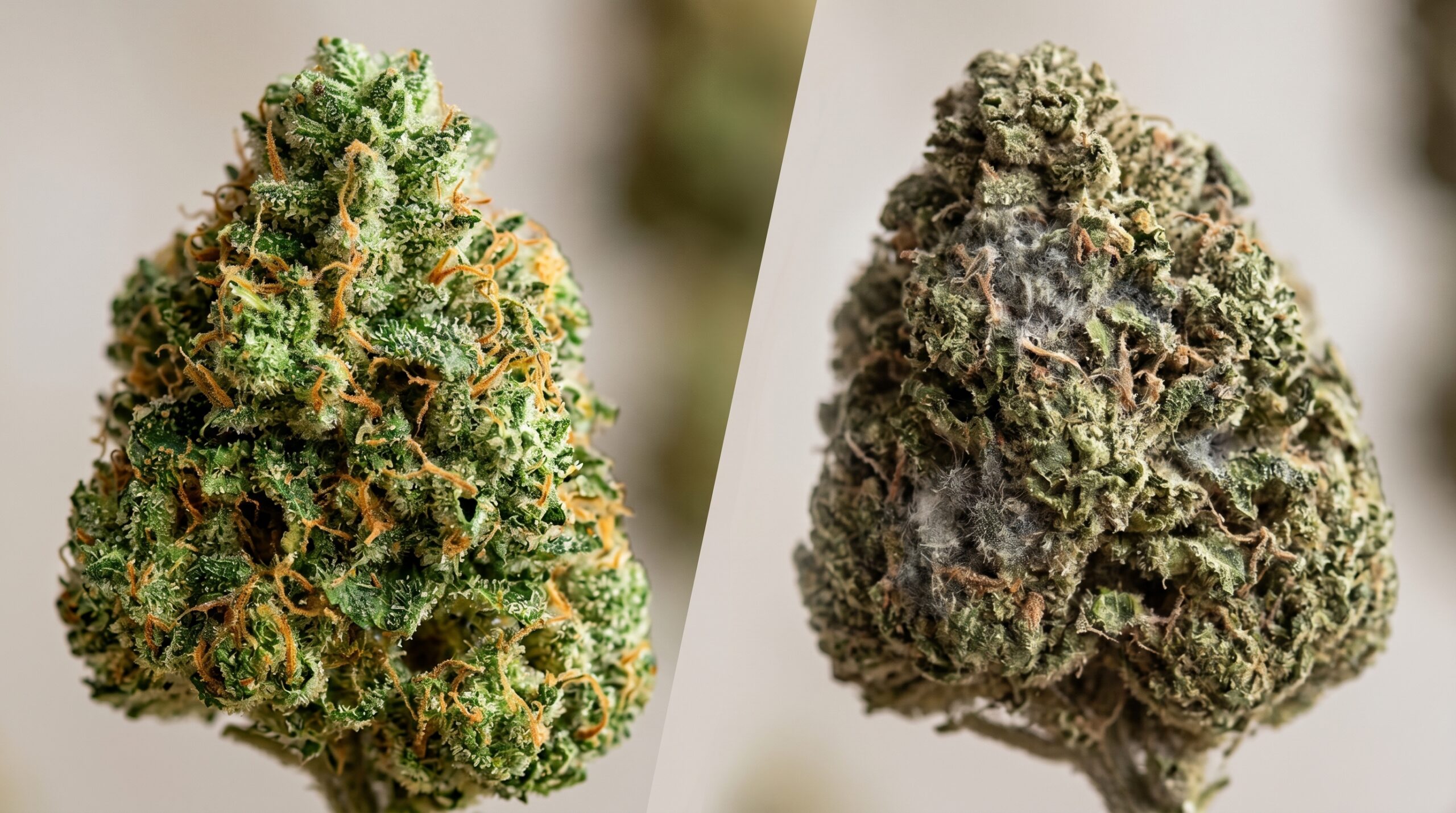
- Typical warning signs: a musty, damp odor; a grayish-white, fuzzy coating; a changed, damp, mushy texture
- Proper drying (10–14 days at 18–20 °C and 50–60% RH) and storage in amber glass at 55–62% RH significantly minimize the risk
- People with weakened immune systems are at risk of life-threatening infections such as invasive aspergillosis
What exactly is mold on cannabis?
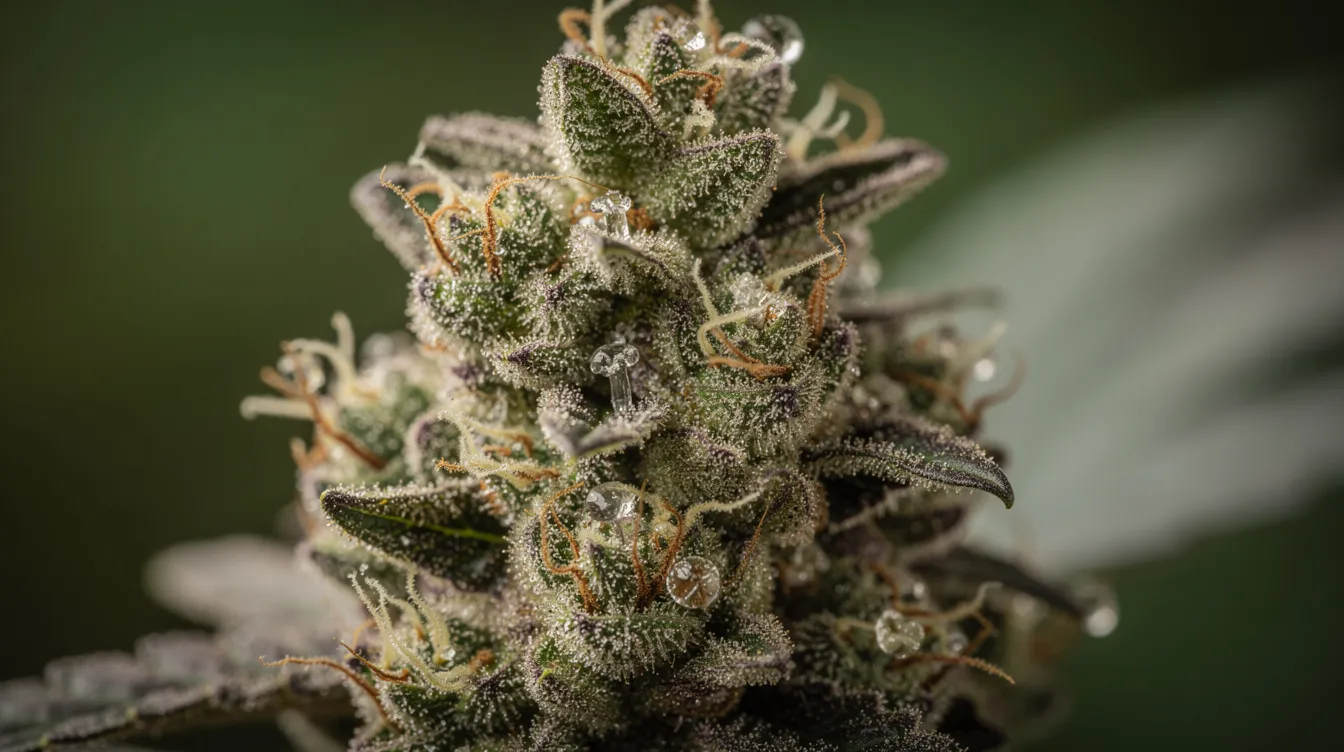
Mold refers to microscopic fungi that thrive in the dense, resin-rich structures of your cannabis flowers when conditions are warm and humid. Mold spores are present everywhere in the air. They are particularly drawn to sticky trichomes—the very places where the valuable cannabinoids are found.
The most common types of mold found on cannabis are various fungal species, each of which has its own characteristics and risks. Distinguishing between these fungal species is crucial for an accurate diagnosis and targeted treatment, as each species can have different effects on cannabis plants and the health of consumers.
| species of fungus | Common problem |
|---|---|
| Aspergillus | Invasive aspergillosis (often fatal in immunocompromised individuals); can cause severe pneumonia |
| Penicillium | Produces ochratoxins that can damage the kidneys |
| Botrytis cinerea | Gray mold causes fruit rot from the inside |
| Cladosporium | Causes dark spots on surfaces |
| Fusarium | May cause vomiting and immunosuppression |
These molds produce mycotoxins—heat-stable secondary metabolites that can be carcinogenic or neurotoxic. Mold infestation destroys the aroma, potency, and THC content. The cannabinoid content can drop by 30–50%. The product becomes inedible and dangerous.
Powdery mildew is one of the most common fungal diseases affecting cannabis plants. Powdery mildew, in particular, is characterized by a white or ashy, powdery coating on the leaves and stems. In the early stages, small, powdery spots appear, which spread and cause the leaves to turn yellowish and dry out. Powdery mildew usually remains superficial, but it weakens the plant by depriving it of nutrients.
In contrast, insects also damage cannabis plants by depleting their nutrients. While insects leave visible feeding marks, fungal infestations—such as powdery mildew—usually manifest as white coatings and discoloration. Both types of infestation compromise the health and quality of the plants, but require different countermeasures.

Our Best Sellers
Discover the most popular Norddampf products
How Does Mold Form on Cannabis? (Growing, Drying, Storage)
Mold growth follows a clear pattern: high humidity, warmth, and stagnant air create ideal conditions for fungal growth.
In Cannabis Cultivation
The critical phase occurs during the last 2–3 weeks of the flowering stage. Problematic conditions:
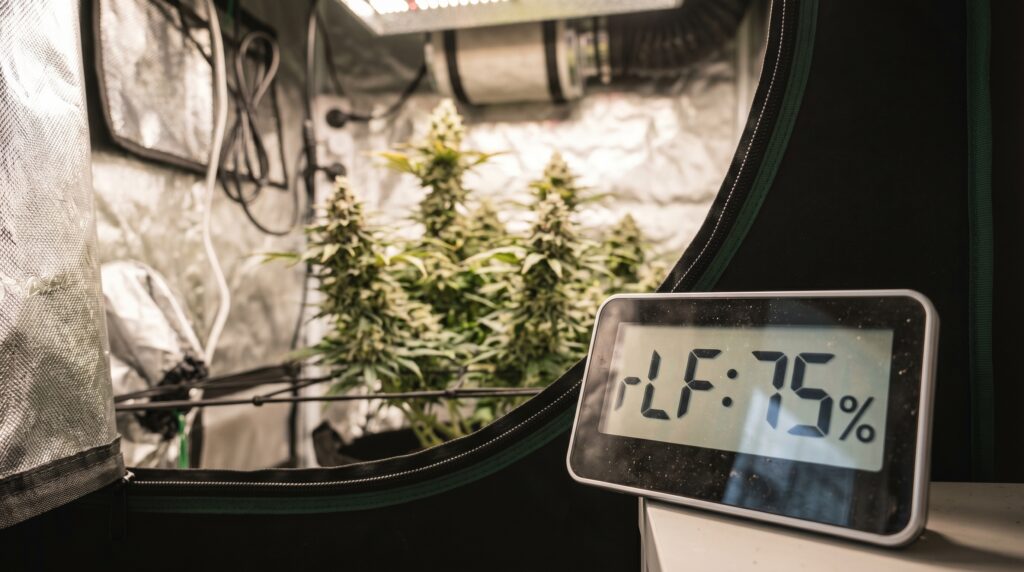
- Humidity above 55–60% RH
- Temperatures between 22 and 28 degrees Celsius
- Dense canopy with no air movement
- Substrate that is constantly damp due to overwatering
- Leaf moisture caused by spraying shortly before sunset
Outdoor cultivation poses additional risks due to uncontrollable weather conditions.
While drying
Ideal drying conditions:
- Temperature: 18–20 °C
- Relative humidity: 50–60% RH
- Duration: 10–14 days
- Environment: Darkness with light air circulation
Drying too quickly (in less than 10 days) or excessive humidity causes moisture to build up inside the flowers. Mold starts on the inside—invisible from the outside.
When storing
Even laboratory-tested medical cannabis can become moldy if stored improperly. The following are problematic:
- Plastic bags (cause sweating)
- Bathrooms and kitchens (high humidity)
- Window sills (temperature fluctuations, condensation)
- Unsuitable containers without humidity control
Studies show that 20–40% of samples develop mold after three months of improper storage.
How to Spot Mold on Cannabis: A Step-by-Step Guide Using All Your Senses
Detecting mold requires a systematic inspection. Combine visual inspection, smell testing, and tactile examination, and pay attention to any physical reactions when consuming the product.
Mold often starts inside compact buds—with Kush strains or Cookies hybrids, it remains unnoticeable on the outside for a long time. Perform a standard check on every new batch:
- Appearance (surface and fractured structure)
- Smell (before and after opening)
- Feel (moisture, texture)
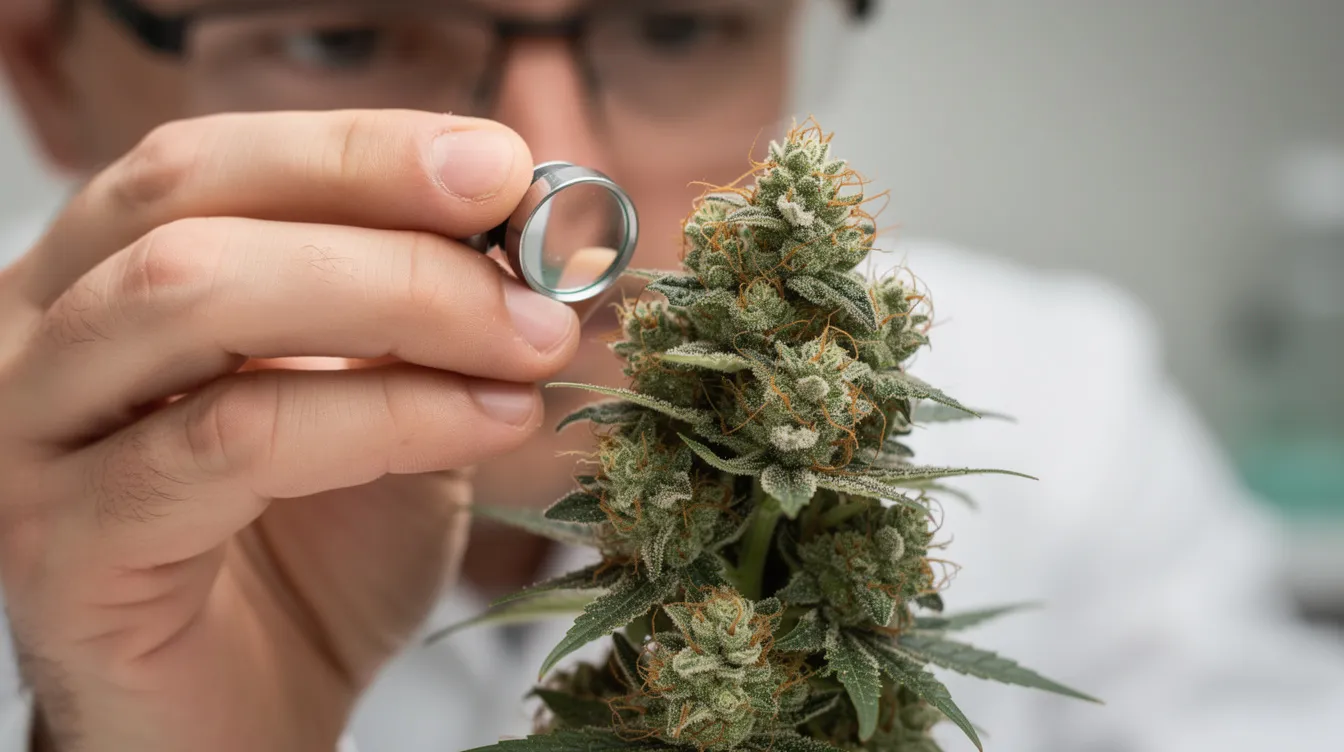
If you're unsure, break open the flower. Use a 30–60x magnifying glass or your smartphone's macro mode to see the details. It's easy to confuse mold with trichomes—the following characteristics will help you tell them apart.
Smell: When the scent goes off
Depending on the variety, healthy flowers have a citrusy, earthy, fruity, or spicy scent. The aroma is clear and vibrant.
You can recognize the smell of mold by:
- Dull, musty, and stale notes
- A smell like a damp basement or wet cardboard
- fermented, sweet undertones
- “Stale hay” aromas in older batches
Take a sniff of each bottle after opening it. If the aroma differs from the expected characteristics of the variety, do not consume it.
Appearance: Distinguishing Between Mold and Trichomes
This distinction is crucial:
| Feature | trichomes | Mold |
|---|---|---|
| Structure | Clear to milky crystal mushrooms | Fluffy, stringy, cottony |
| Surface | Sparkling, uniform | Dull, chaotic |
| Distribution | In a pattern of dots, arranged | Net-like, spreading |
| When knocking | Sticky resin | Clouds of dust |
Botrytis (gray mold) often starts inside the flower. It turns the flower brownish-gray from the inside out and causes the structure to become mushy. Break open any suspicious buds and look for stringy webs or discolored areas.
Texture and Color: Touch and Look
Healthy, well-dried flowers feel springy to the touch. The petals are slightly crumbly, but not mushy or slimy.
Signs of mold growth:
- A moist, rubbery texture
- A tough or lumpy texture
- Strands or a mushy consistency when pulled apart
- Gray, yellowish, reddish, or brown spots
- Buds that crumble to dust when pressed
Any deviation from the natural color pattern (green, orange, purple) is cause for concern.
Sore throat & physical symptoms
When consuming food, physical reactions may indicate contamination:
- A sudden, severe scratchy feeling in the throat
- An unusually severe cough
- A feeling of tightness in the chest
- Shortness of breath after use
These symptoms aren't proof, but they are a clear warning sign—especially if the weed already looked or smelled off. Stop using it immediately and check the rest of the batch.
Repeated complaints regarding the same variety or batch are a clear indication of contamination.
Health Risks Associated with Moldy Cannabis
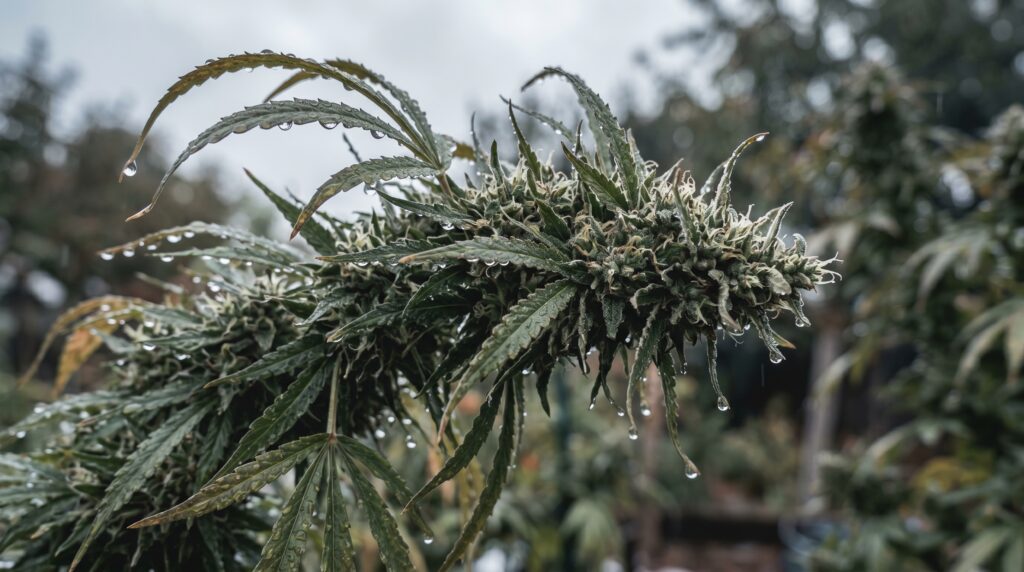
When burned or vaporized, spores and mycotoxins enter your body through your lungs and mucous membranes. The problem is that many mycotoxins are heat-stable.
Aflatoxin B1 can withstand temperatures up to 250 °C. Ochratoxin A also remains active. Joints, bongs, and vaporizers offer no protection.
Possible health consequences:
- Dry cough and bronchitis
- Allergic reactions
- Asthma attacks
- Fungal infections of the lungs
- Invasive aspergillosis (mortality rate of 30–50% in immunocompromised patients)
People with weakened immune systems, COPD, asthma, cystic fibrosis, or who have undergone organ transplants are at particularly high risk. For them, consuming moldy cannabis can be life-threatening.
The danger is real. The health risk outweighs any material loss.
Preventing Mold: From Plant to Glass
Prevention is the only effective strategy. Mold cannot be “cured”—only prevented.
For Cannabis Growers: Climate Control Is Everything
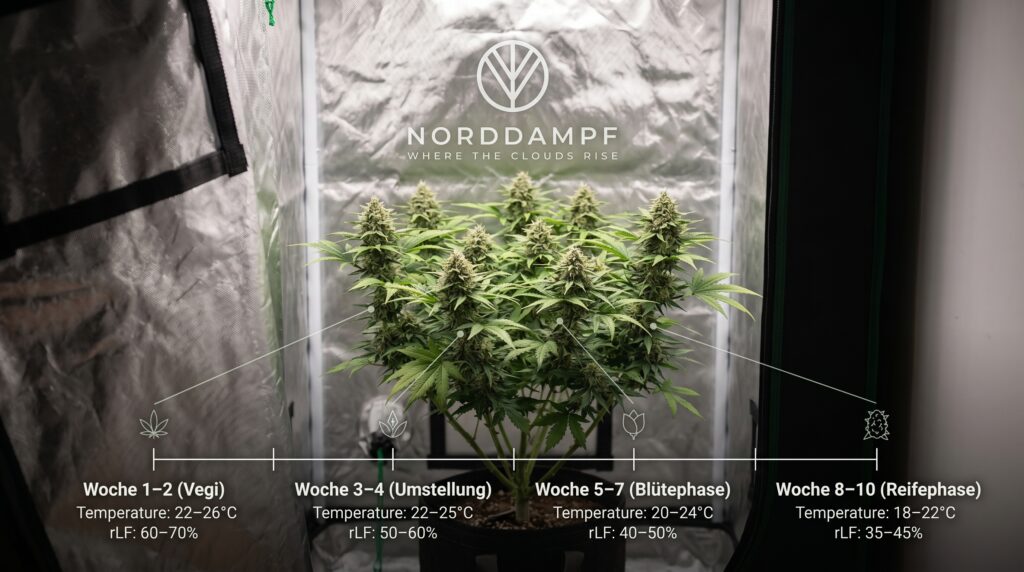
Growing season:
- Humidity: 40–70% RH
- Temperature: 20–26 °C
Flowering stage:
- Humidity: 40–55% RH
- Last few weeks: 40–50% RH
- Temperature: 20–26 °C
Essential steps for growing cannabis:
- Circulating fans for constant air circulation
- Exhaust air with an activated carbon filter
- Adequate air circulation indoors
- Regular defoliation for dense cannabis strains
- Allow ventilation through the canopy
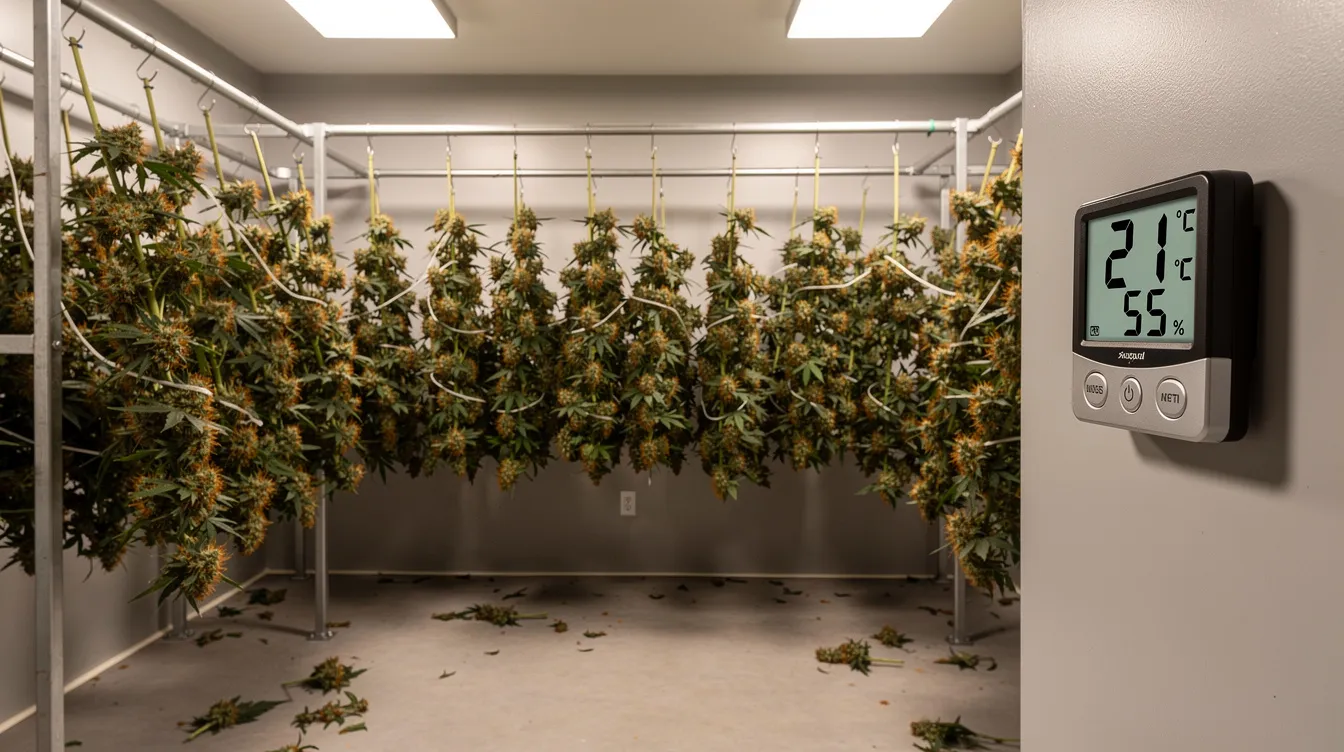
Drying: The Critical Moment
- Duration: 10–14 days
- Temperature: 18–20 °C
- Humidity: 50–60% RH
- Environment: Darkness
- Airflow: Light, no direct fan breeze on the buds
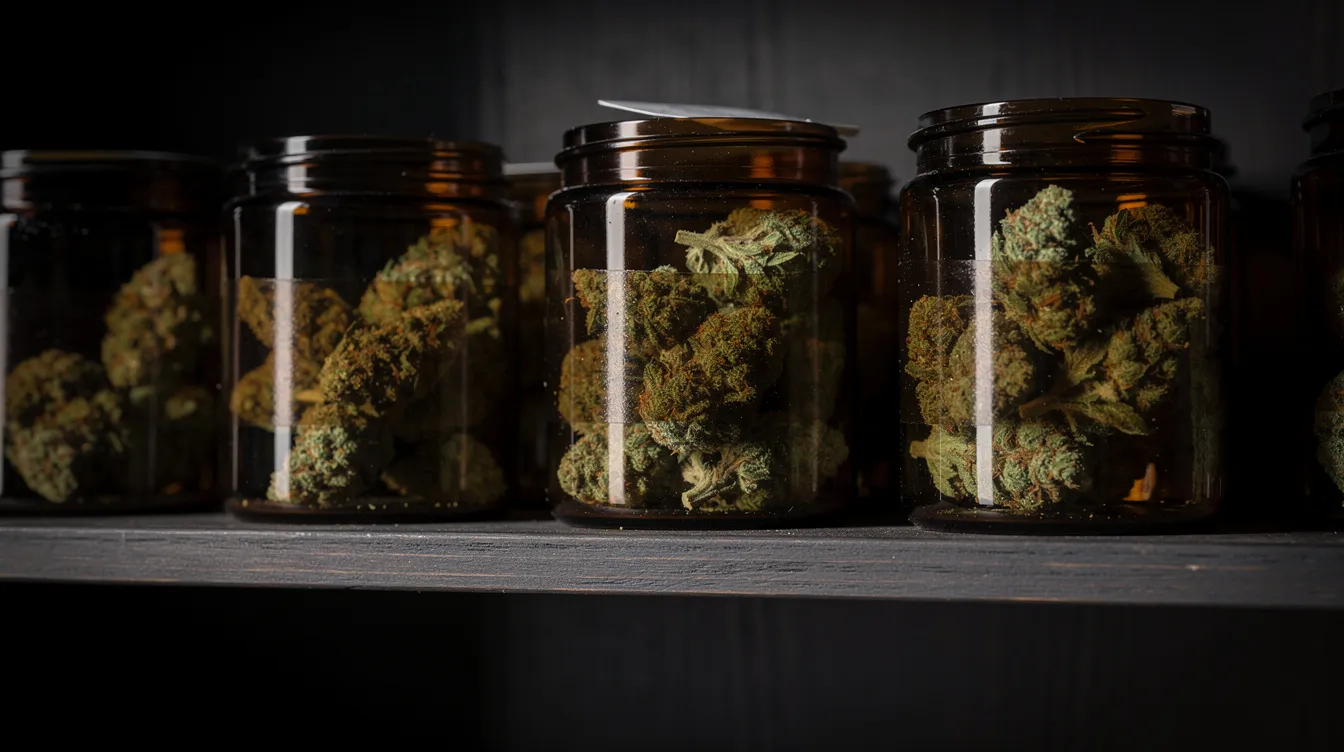
Storage: Preserving Quality
- Container: Dark glass containers (amber glass is ideal)
- Temperature: 15–20 °C
- Humidity: 55–62% RH
- Use humidity control packs (e.g., Boveda packs)
Avoid plastic bags—they cause sweating and the absorption of odors. The kitchen and bathroom are unsuitable due to temperature fluctuations and high humidity. Light accelerates the breakdown of terpenes—resulting in a loss of up to 20% per month.
Automated climate control using hygrometers can reduce infection rates by 90%.
What should you do if your cannabis has mold?
A clear statement: Moldy cannabis is a product that should be thrown away.
There is no foolproof method for rescue in a private setting.
What doesn't work:
- Scraping off visible mold spots – fungal spores and mycotoxins have already spread throughout the material
- Heating in the oven – Aflatoxins survive temperatures of 250 °C
- Processing into edibles – increased consumption raises the risk
- Water or alcohol wash – alcohol actually extracts toxins
What you should do:
- Dispose of affected flowers immediately in sealed bags with the rest of the trash
- Limiting the spread of spores in indoor air
- If mold keeps coming back: Check and clean your storage containers, grinder, and storage areas
- For legally obtained products (pharmacy products): File a complaint about the batch, and document it with photos and the batch number
The solution is simple: disposal. No compromises.
Medical Cannabis, Home-Grown Cannabis, and the Black Market: A Comparison
Origin has a massive impact on the risk of mold. Cannabis plants grown under controlled conditions and to high quality standards—as is the case with medical cannabis—have a significantly lower risk of mold contamination than plants from the black market, where such standards are often lacking.
Medical cannabis
- GMP-compliant cannabis cultivation under controlled conditions
- Standardized drying and storage
- Mikrobiologische Laborprüfungen mit klaren Grenzwerten (z.B. < 1000 CFU/g nach EU-/DACH-Richtlinien)
- When inspecting medical cannabis, special attention is paid to the lower parts of the plant and the flower clusters in order to detect mold growth early on and remove affected areas.
- There is still a risk of contamination due to improper storage at home or in pharmacies (10–20% contamination rate)
Homegrown
Common vulnerabilities:
- Inaccurate hygrometers (error ±5% RH)
- Drying in the basement or closet
- Poor air circulation
- Lack of climate control
black market
The load is highest:
- No transparency regarding cultivation, drying, and storage
- Studies show that 60–80% of samples show signs of microbial contamination
- Aspergillus detected in 75% of illegal markets
- No quality control, no regulations
For people with chronic illnesses and those with compromised immune systems, legally manufactured products reduce the risk by a factor of 5 to 10.
The Future of Cannabis Cultivation: Mold Prevention and Control
Cannabis cultivation.
A new approach.
Mold prevention meets high-tech.
Sustainable strategies meet innovation.
Are you a cannabis grower?
Then you know the risks.
Modern technology is changing everything.
For you.
For your harvest.
For the future.
Smart climate control.
This is the game-changer.
Precise sensors measure continuously.
Humidity. Temperature. Perfect balance.
Automatically adjusts to your cannabis strain.
You're not responding anymore.
You're being preventive.
Modern air circulation ensures even distribution.
No damp microclimates.
No breeding ground for mold.
Only optimal conditions.
. Developed for your plants.
Mildew-resistant varieties.
Breeding with a vision.
Carefully selected crossbreeding creates plants.
Naturally resilient.
High quality. Even under difficult conditions.
Biological prevention methods complement the system.
Beneficial microorganisms.
Natural fungal antagonists.
Organic pest control.
Fewer chemicals.
More sustainability.
Better results.
AI-powered image recognition.
Digital inspections.
Next-generation early warning system.
Cameras detect mold.
Before your eyes can.
Before it spreads.
Before it's too late.
Targeted treatment.
Timely removal.
Protection for the entire population.
That's modern cannabis technology.
High-tech meets sustainability.
Variety selection meets precision.
Innovation meets responsibility.
For you, this means:
Less risk.
Better prevention.
Consistently high quality.
Cannabis cultivation.
Safer. More efficient.
Designed for the future.
Bottom line: Only mold-free cannabis is safe cannabis
Smell, appearance, and texture are your most important tools. A musty smell, a fuzzy coating, or a mushy consistency—any of these signs means it’s time to throw it away.
When in doubt, choose the trash can over consumption.
The health consequences of moldy cannabis—ranging from respiratory infections to life-threatening aspergillosis—far outweigh any financial loss.
Your health is more important than your harvest.
FAQ: Frequently Asked Questions About Identifying Mold on Cannabis
How can I quickly tell if my weed is moldy?
Use all your senses for a quick check: Smell—does it smell musty or moldy? Look—is there gray or white fuzz? Feel—is it damp or mushy? If in doubt, break open a small flower and check the inner structure for stringy webs or discoloration. If you see any clear signs of mold, stop testing immediately and dispose of it right away.
Can I still use cannabis that has a slight moldy smell for edibles or oil?
No. Mycotoxins like aflatoxin B1 are heat-stable and are not destroyed by baking, cooking, or decarboxylation. The risk actually increases because you consume larger amounts at once when eating edibles. Never use moldy ingredients—dispose of them completely.
Does “disinfecting” weed with UV light or alcohol actually help?
UV light can damage only some of the surface spores, but it does not penetrate the interior of the flower. Mycotoxins are not removed or rendered harmless by UV light or brief contact with alcohol. These methods are not suitable for making moldy cannabis safe to consume.
How long can I store cannabis without it getting moldy?
Under ideal conditions (15–20 °C, 55–62% RH, a dark glass container with humidity regulators), storage is possible for several months to over a year. Open the jar briefly every 4–6 weeks to let the air circulate, and check the smell and appearance. Very old flowers aren’t necessarily moldy, but they do lose their potency and flavor.
Are there any varieties that are particularly prone to mold?
Dense, resin-rich cannabis strains such as Kush, Cookies, or Gelato hybrids are more prone to mold due to their compact structure. Loosely branched Sativa-dominant plants (e.g., Jack Herer-type strains) are less susceptible, but can also become infested under the wrong conditions. For mold-prone genetics: Pay special attention to ventilation, defoliation, and lower humidity during the late flowering phase.
Sources
- [1] “Cannabis Cultivation: Mold Prevention and Control”.
German Society for Cannabis as Medicine. - [2] “Mold on Cannabis: Causes, Symptoms, and Control”.
European Industrial Hemp Association. - [3] “Cannabis Mold: A Guide for Growers”.
International Association for Cannabis as Medicine. - [4] “Mold Prevention in Cannabis Cultivation”.
National Hemp Association. - [5] “Cannabis Cultivation: The Importance of Humidity and Temperature”.
Cannabis Research Society.
Accurate information.
In-depth expertise.
These resources provide clear insights into cannabis mold, mold on cannabis, and cannabis cultivation.
Humidity.
Grower know-how.
Causes.
Sustainable prevention strategies.
Modern farming.
Technically sound.