
The flowering phase of cannabis is the crucial moment when months of hard work pay off. The onset of flowering marks the transition from the vegetative to the flowering phase and is central to successful cannabis cultivation, as this is when the foundation for quality and yield is laid. During these weeks, your plants transform from green bushes into resinous, aromatic floral wonders. This article explains the cannabis flowering process week by week —from the first white hairs to perfect harvest readiness—and helps you, as a grower, fully understand the flowering phase of cannabis cultivation.
Key Findings
- For photoperiodic varieties, the flowering phase begins when the light cycle is switched to 12 hours of light and 12 hours of darkness—this signal simulates autumn and directs the plant’s energy toward flower formation
- The flowering phase for cannabis lasts between 7 and 14 weeks, depending on the strain, with Indica strains tending to flower faster than Sativa strains
- The flowering phase can be divided into three main stages: transition/elongation, flower formation, and flower maturation/swelling
- Most growers harvest cannabis when about 70% of the trichomes are cloudy, which indicates maximum THC production, while the remaining 30% are amber in color
- The ideal temperature for cannabis during the flowering phase is between 22 and 25 °C, with humidity below 45–50%
This article is not a guide to illegal cultivation. It explains biological processes and provides insight into the development of cannabis plants. Along the way, we’ll cover indoor vs. outdoor cultivation, photoperiod plants vs. autoflowering strains, and common problems during the flowering phase.
What is the cannabis flowering phase, and when does it begin?
The cannabis flowering phase is the final stage of development in the plant’s life cycle before harvest. After germination, the seedling stage, and the vegetative phase, female plants redirect their energy—from leaf growth to the production of flowers and resin. The flowering phase is the time when the plant shifts its energy from growth to flower production. High-quality cannabis seeds are crucial for ensuring healthy development and successful flowering with optimal yields.
For photoperiod varieties—that is, feminized or regular cannabis seeds —you trigger the start of flowering by switching to a 12/12 light cycle, which hormonally stimulates the plant to produce flowers. These 12 hours of light per day simulate the natural autumn signal that prompts the plant to flower.
How long does the flowering phase last? The flowering period can vary depending on the strain: Indica-dominant strains often take 7–9 weeks, while Sativa strains take 10–12 weeks or longer. Hybrids usually take 8–10 weeks.
Outdoor plants naturally begin to flower as the days get shorter in late summer—in Central Europe, for example, starting around August. Autoflowering seeds, on the other hand, are genetically programmed to flower about 3–4 weeks after germination, regardless of the light cycle.

Our Best Sellers
Discover the most popular Norddampf products


Stretch vs. True Flowering: Understanding the Phase Transition
Right after the light cycle changes, something surprising happens: your plants start shooting up rapidly. This stretching phase (weeks 1–2) isn’t a mistake—it’s the transition.
Characteristics of the stretching phase:
- Significant height gain (up to 50–150% of the initial height is possible); the plants will grow considerably larger—make sure they don’t get too big for the space you have available, as this will affect both yield and handling
- The distances between nodes are increasing
- Leaves often appear lighter
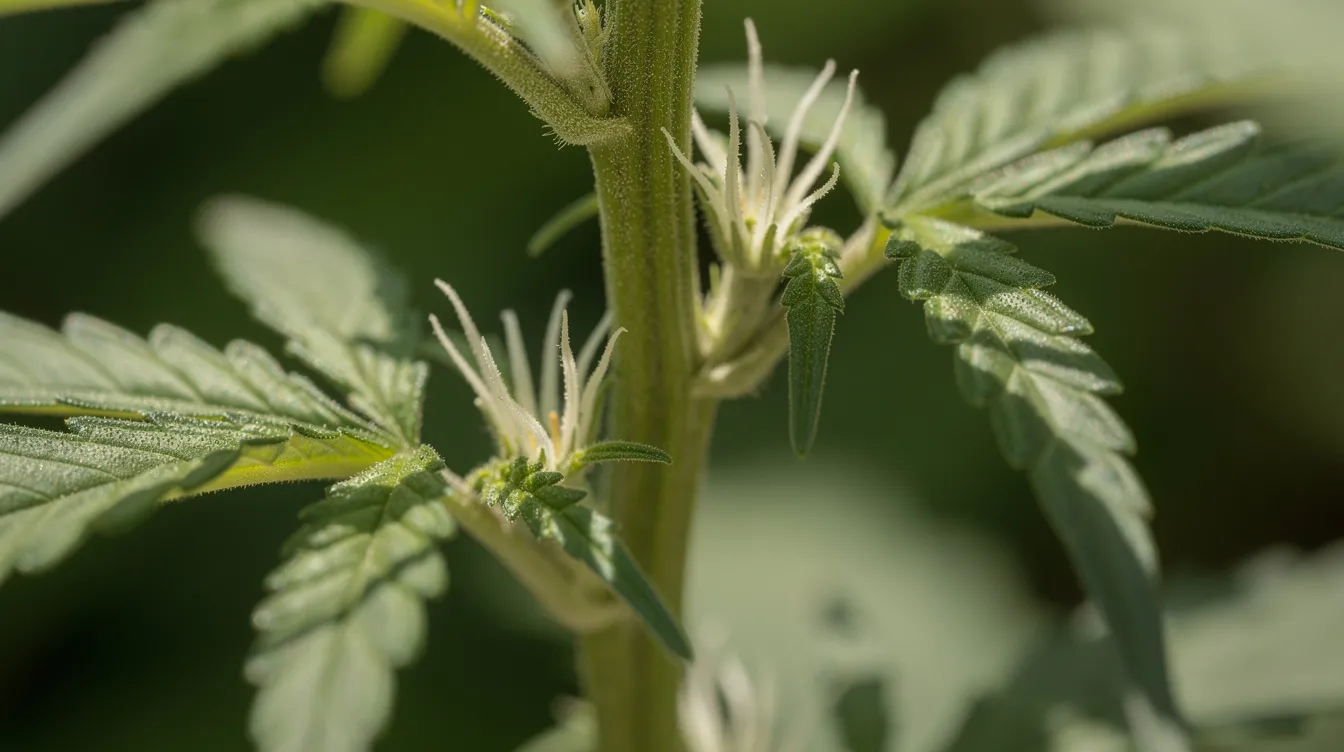
- The first pre-flowers with white pistils appear
During the transition phase (weeks 1–3), the plant grows rapidly in both height and width. Sativa-dominant hybrids can even triple in size during this time.
Around week 3, the stretching phase begins to wind down. You’ll notice the change when daily height growth drops to less than 1–2 cm. Now the actual flowering phase begins: energy is directed toward flower development rather than vertical growth.
Practical tip: You should use training techniques like LST or SCROG before or during the early stretching phase. Interventions at a later stage cause stress and can lead to hermaphroditism.
Cannabis Flowering Week by Week (Weeks 1–10+)
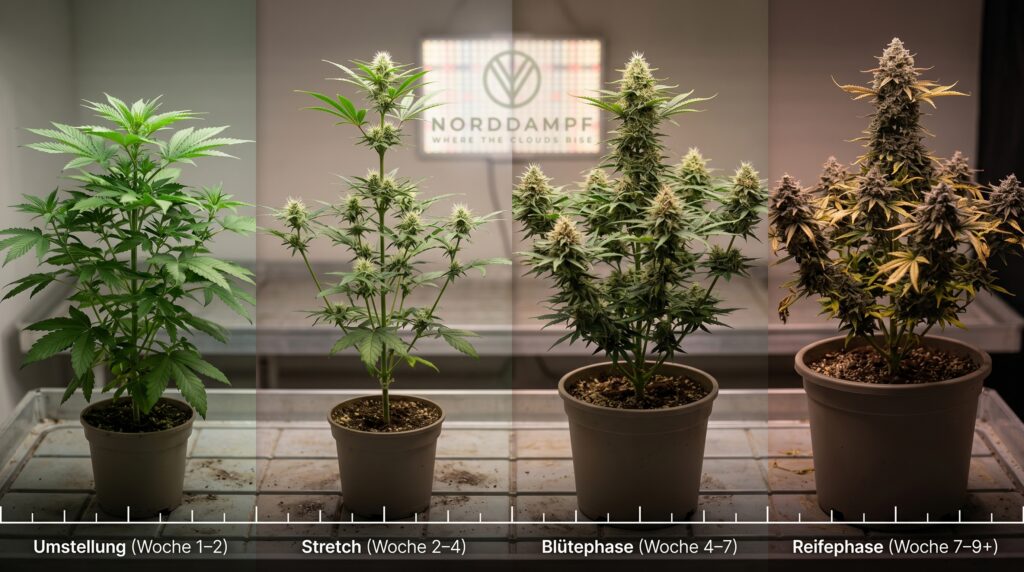
The following chart serves as a guide and describes a typical photoperiod indoor plant with a flowering phase of about 9–10 weeks. Keep in mind: Sativas take longer, while some Indicas are ready sooner. The flowering phase can be roughly divided into three stages: pre-flowering (weeks 1–2), main flowering (weeks 3–6), and ripening (weeks 7–12).
For optimal results, everything—light, water, temperature, and nutrients—must be tailored to the specific flowering stage.
Use this overview as a guide—not a strict set of instructions. Your plants will give you the real clues.
Weeks 1–2: Start of the flowering and stretching phase
The transition from an 18/6 light cycle to a 12/12 light cycle marks the beginning of the transformation. The plant detects the hormonal “autumn signal” and shifts its energy from leaf growth toward flowering.
What you see:
- Significant growth in height (the famous “stretching”)
- New internodes form quickly
- First white threads (pistils) at the nodes
- Male plants have pollen sacs
Lighting and climate:
- PPFD: 500–700 µmol/m²/s as a starting point
- Temperature: 24–27 °C during the day, 18–21 °C at night
- Humidity: 50–60% is still acceptable
Nutrients: Begin the gradual transition from nitrogen-rich vegetative fertilizer to bloom fertilizer. During the flowering phase, cannabis requires significantly more phosphorus (P) and potassium, while nitrogen requirements should be reduced. Avoid sudden changes—the plant needs time to adjust.
Odor: Starts off subtle but noticeable. It’s time to think about activated carbon filters and proper ventilation in the grow room. Ignoring odor control can lead to problems, as the smell intensifies significantly during the flowering phase and can become unpleasant without appropriate measures.
Weeks 3–4: Main flowering begins, buds start to form
Vertical growth slows down significantly. During the main flowering phase (weeks 3–6), the plant can gain up to 100% of its height from the vegetative phase while simultaneously intensifying flower formation. During the flower formation phase (weeks 3–4), the first small flower buds begin to form, and the characteristic cannabis odor develops.
What you see:
- Clusters of white pistils at the tips of all shoots
- Formation of colas (primary inflorescences)
- First thin layer of trichomes on sugar leaves
- The plants are nearly at their full height
Nutrient requirements: A typical NPK ratio for the flowering stage is around 5-15-10 or 4-10-7, indicating a higher need for phosphorus and potassium. Slightly reduced nitrogen. Using slow-release organic fertilizers can simplify nutrient management during the flowering stage.
Climate adaptation:
- Reduce humidity to 45–55%
- Keep the temperature and humidity as stable as possible
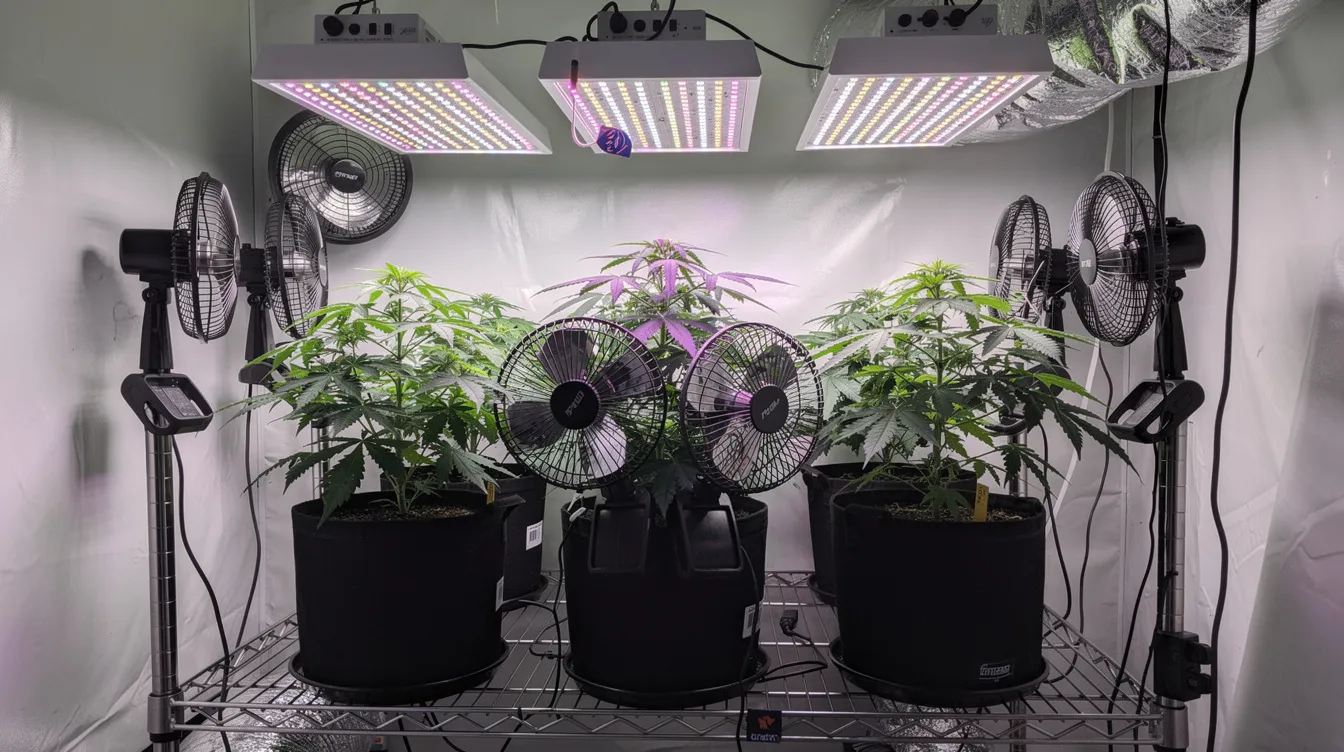
- Ensure good air circulation using fans
Practical tip: Light, selective pruning only when necessary. This improves air circulation and allows light to reach the lower buds.
Terpenes: The aromatic compounds that develop have a massive impact on the quality of the vapor later on. Starting in week 4, the buds begin to form and develop a more intense aroma.
Weeks 5–6: Buds become denser, resin production increases
The plant has almost finished growing in height. Now it's all about mass and resin.
What you see:
- Fatter buds with multiple layers of individual flower bracts
- Trichomes are clearly visible (usually still clear or milky-clear)
- Strong odor when opening the grow room
- Significant increase in the weight of the flowers
Fertilization: Continue using a bloom fertilizer containing phosphorus (P) and potassium (K). Watch for signs of deficiency (light-colored leaf veins) or over-fertilization (burnt leaf tips, dark green leaves).
Climate Management:
- Humidity: 40–50%
- Good air circulation to prevent damp spots
- Humidity should be kept at around 40–50% during the flowering phase to minimize the risk of mold growth
Important: Avoid any further major pruning. Stress during this phase can cause hermaphroditism and negatively affect the cannabinoid profile.
During the flowering phase (weeks 4–harvest), the plant focuses on producing flowers and resin. The increase in resin and terpene production is crucial for flavor, effect, and quality.
Weeks 7–8: Maturation phase and final touches
The buds' growth is slowing down. The focus is now on maturation—trichomes are maturing, and cannabinoid levels are reaching their peak.
What you see:
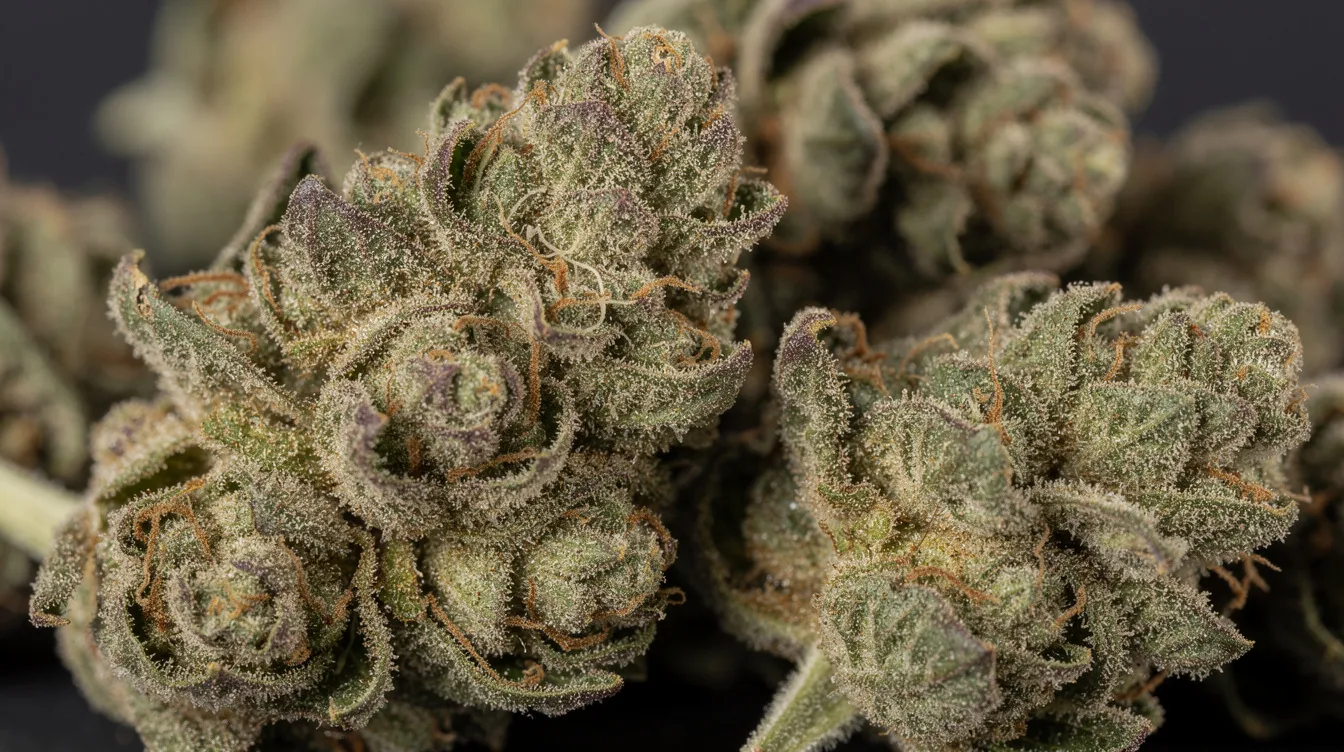
- Many pistils change color from white to orange/brown
- The buds are extremely sticky
- First yellow fan-shaped leaves (natural shedding)
- The color of the stigmas changes from white to orange/brown when the plant is ripe
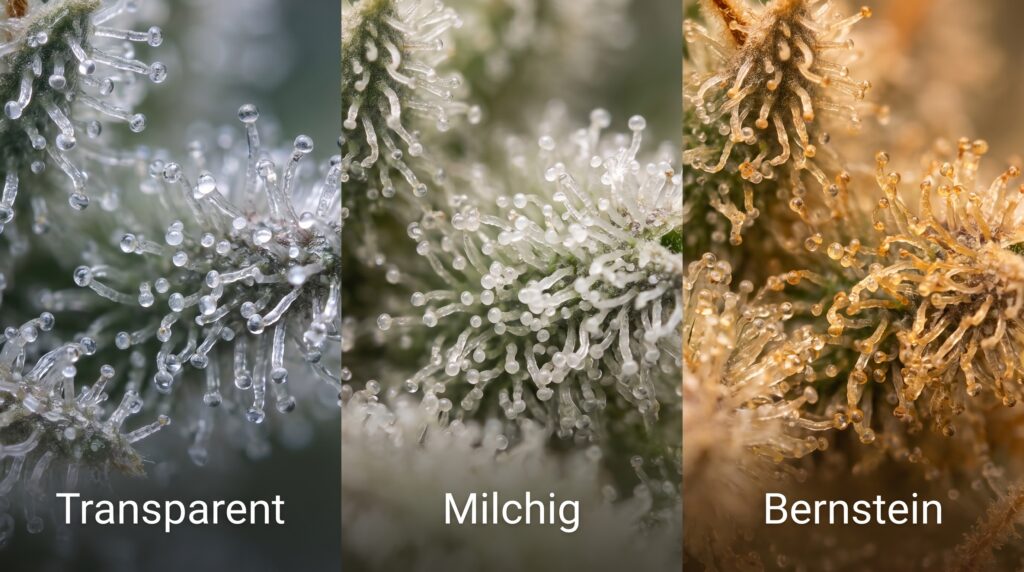
Checking the trichomes: Time to break out the magnifying glass (60x magnification). To determine the perfect harvest time, growers should examine the trichomes under a magnifying glass, as their color changes from clear to milky white and finally to amber, indicating the level of ripeness.
Nutrient supply: With mineral fertilization, the “flushing phase” begins now—a few weeks before harvest, the plants are flushed with plain water to improve the quality of the flowers. During this time, no more fertilizers should be used to reduce mineral residues and optimize flavor. In organic systems, the application of nutrients is gradually reduced.
Climate parameters:
- Minimum humidity: 35–45%
- A moderate day-night temperature difference of 6–10 °C promotes resin production and can enhance the coloration of certain varieties
- Cool nights can cause light purple hues
Some fast-growing Indica strains are already ready for harvest in this week's group.
Weeks 9–10+: Late flowering and harvest window
This phase varies greatly depending on genetics. Classic Haze hybrids require 10–14 weeks of flowering. Every decision made now affects the final flavor and effect.
Trichome maturity as a guide:
- Sure: too early, weaker effect
- Milky: Peak THC, energizing effect
- Amber: higher levels of oxidized cannabinoids (CBN), more physical effect
Most growers aim for 70–90% milky trichomes with 10–30% amber-colored heads.
Pistils: When 70–90% are dark orange, the harvest window is usually open—but this alone is not a reliable indicator.
Preparing for the harvest:
- Set up a drying room (dark, 18–20 °C, 50–60% humidity)
- Have clean cutting tools ready
- Labeling different phenotypes
Patience: One or two extra days can make the difference between “almost ready” and perfectly ripe. Pay special attention just before harvest.
Development of buds, inflorescences, and trichomes
Flower development is a fascinating process. Individual calyxes covered in white hairs develop into multi-layered, resinous colas.
Flower structure: | Component | Function | |————-|———-| | Calyx | Main carrier of trichomes; contains seeds when pollinated | | Pistils | White hairs for pollen capture | | Nectar leaves | Small, resin-covered leaves in the bud | | Fan leaves | Photosynthesis; low resin content |
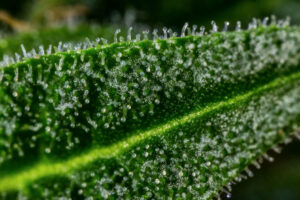
Terpenes and trichomes: These microscopic glands (1–100 µm) are found primarily on buds and small leaves. They produce cannabinoids such as THC and CBD, terpenes that contribute to aroma and effects, and flavonoids.
During the flowering phase, the cannabis plant focuses on producing flowers, resin, and terpenes, which makes this phase particularly vulnerable to mistakes.
Trichome development over the weeks:
- Early bloom: Clear, transparent – THC still low
- Mid-bloom: Milky – Peak THC, energizing effect
- Late-blooming: Amber – CBN content, sedative effect
Those who use vaporizers benefit from ripe, terpene-rich buds with a more intense aroma and a more potent effect.
Changes in odor, resin production, and nutrient requirements
As flowering progresses, the aroma becomes more intense—especially starting in weeks 4–5. Different strains exhibit distinctive terpene profiles: citrus, diesel, earthy, and pine.
Resin production: Peaks during mid- and late flowering. Recognizable by sticky buds and sparkling trichomes. Production can reach up to 20–30% cannabinoid content by weight in the trichomes.
Nutrient Shift:
| Phase | N | P | K | Focus |
|---|---|---|---|---|
| vegetation | High | means | means | Leaf growth |
| Early bloom | means | High | High | Transition |
| Mid-bloom | Poor | High | High | Flowering |
| Late bloom | Minimal | means | means | Aging |
Practical tip: Pay attention to leaf color, leaf tips, and growth habit rather than relying solely on the manufacturer’s instructions. Poor monitoring of pH levels and nutrient content can have harmful effects on plants, especially in hydroponic systems.
Scent and resin are biological expressions of the plant—relevant for medicinal and aromatic uses.
Optimal conditions during flowering: light, temperature, and humidity
During flowering, even small fluctuations can have a major impact on yield and quality.
Light:
- A stable 12/12 cycle for photoperiodic plants
- PPFD: 600–900 µmol/m²/s (optimal)
- A common mistake is incorrect lighting setup, where the light is positioned either too far away or too close to the plants, which can hinder growth
Temperature:
- The ideal temperature for cannabis during the flowering phase is between 22 and 25 °C
- At night: 18–21 °C
- Warning: Temperatures consistently above 30 °C can cause heat stress and foxtailing
Humidity by stage: | Stage | Optimal RH | |———|————-| | Early flowering | 50–60% | | Mid-flowering | 45–55% | | Late flowering | 35–45% |
To minimize the risk of bud rot and gray mold, the relative humidity should be kept below 45–50% during the flowering phase.
Ventilation: Circulating fans and fresh air intake are essential. Stagnant air promotes mold growth and limits CO₂ exchange.
Common problems during the flowering stage and how to identify them
A common source of problems is inadequate control of environmental conditions, as extreme temperatures and high humidity can cause stress to the plants.
Mold and gray mold (Botrytis):
- Symptoms: Gray or brown, mushy spots inside the bud
- Conditions: High humidity (>60%), poor air circulation
- Prevention: Lower RH, inspect regularly, prune to improve airflow
Nutrient Problems: | Problem | Symptoms | Cause | |———|———–|———| | N deficiency (early) | Yellow lower leaves | Too rapid transition | | N deficiency (late) | Yellow leaves | Normal during maturation | | P/K deficiency | Dark/necrotic tips | Undernourishment | | Overfertilization | Clawed leaves, burnt tips | EC too high |
Water Management: Cannabis plants require more water during the flowering phase, as they need additional moisture to support bud development. It is recommended to water only when the top two to three centimeters of soil are dry to prevent waterlogging, which can cause root rot. Another common mistake is overwatering, which can lead to root rot—a problem that is particularly harmful during the flowering phase.
Light stress: Interrupted periods of darkness can cause plants to become hermaphroditic or revert to a vegetative state. Check the room for light sources in the dark—even LED standby lights can be problematic.
Environmental stress: Extreme temperature fluctuations between day and night (more than 10 °C) significantly increase the risk of mold growth.
When is cannabis ready for harvest? Trichomes, pistils, and ripeness
The harvest time is primarily determined by the trichomes—not by the leaves or the calendar.
Trichome colors as an indicator:
- Of course: Too early—weaker effect, less potency
- Milky: Peak THC – energizing effect
- Bernstein: More CBN – a more physical, “couch-bound” effect
Most cannabis growers aim for about 70% cloudy trichomes to maximize THC production, while the remaining 30% are amber-colored for a more relaxing effect.
Pistils: A high proportion (70–90%) of white to orange/brown is an indicator, but this alone is not reliable—stress can affect the coloration.
Practical tip: Check several buds in different spots (top, middle). Outer buds may appear to be more mature than inner ones.
The right harvest time is crucial for flavor, potency, and quality when vaping or using other legal methods of consumption.
Indoor vs. Outdoor: Differences in Flowering
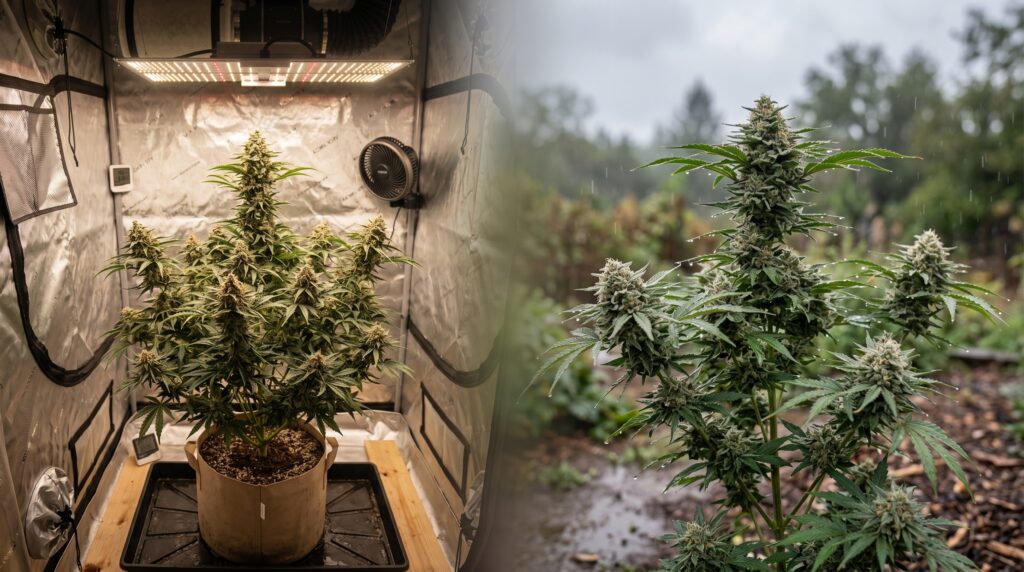
The biological processes are identical—but the light source, climate control, and time window differ significantly.
Indoors:
- Complete control over the light cycle, temperature, and humidity
- Flowering can be induced practically year-round
- Exact 12/12 setting available
- More consistent quality with good management
Outdoors:
- Flowering begins when the days get shorter (August/September in Germany)
- Weather conditions affect the risk of mold
- Early Indicas are often ready for harvest in late September or early October
- Sativas can take until November
Practical differences: Outdoor plants can develop different resin profiles due to natural UV light, but they are more susceptible to weather conditions. Indoor growers have more control, but they must manage all conditions themselves.
Photoperiod vs. Autoflowering Plants in Flowering
Photoperiodic plants:
- Flowering depends on the light cycle (12/12)
- You decide how long you'll stick to a vegetarian diet—and thus your final weight
- Typical total cycle: 3–5 months
- Greater flexibility in training and conditioning
Autoflower:
- Genetically determined transition 3–4 weeks after seed germination
- Regardless of the light cycle—usually 18/6 or 20 hours of light per day
- Total lifespan: 8–12 weeks, including 4–6 weeks of flowering
- More compact, ready faster
Differences in cultivation: With autoflower seeds, avoid aggressive training (topping, heavy pruning)—every week of growth is precious. Photoperiod cannabis plants can be trained for longer.
Trichome and bud development are essentially similar—the only difference is the timing (week x after germination vs. week x after 12/12).
Conclusion: Understand the flowering phase instead of blindly copying it
The flowering phase of cannabis is the crucial final stage in which the potential of your cannabis genetics is realized. From the stretch phase through the main flowering stage to maturity—each week brings visible changes.
Key information at a glance:
- Weekly schedule: Stretch → Main flowering → Maturation
- Continuously optimize climate, light, and nutrients
- Use trichomes as your harvesting guide
Keep a close eye on your plants instead of sticking to a rigid schedule. Every strain and every grow space reacts differently. Understanding the flowering phase of cannabis also pays off in later stages—drying, curing, and ultimately the quality of the vaporizer experience.
Whether you're a beginner or an experienced gardener, the plant will show you what it needs. You just have to look closely.
Frequently Asked Questions About the Cannabis Flowering Stage (FAQ)
Here we answer common follow-up questions that go beyond the weekly overview. These answers are general in nature and do not constitute an invitation to engage in unauthorized cultivation.
How does the flowering phase change in strains with a high sativa content?
Pure or predominantly sativa strains often have a flowering time of 12–14 weeks. They grow particularly vigorously during the stretch phase—sometimes tripling in height. The buds are typically airier and more elongated than those of Indicas. Such strains require more patience and vertical space, but often offer complex terpene profiles and unique effects. The basic principles (trichome observation, climate control) remain the same—only the timing shifts.
Is CO₂ enrichment during flowering beneficial?
Under professional conditions (high light intensity >1000 µmol PPFD, tightly sealed rooms, precise climate control), CO₂ enrichment can increase yields by 10–30%. For home growers, this is technically and safety-wise challenging. Without overall optimization, CO₂ usually offers no benefit. Basic factors such as light, temperature, and nutrients should be in order first before you even consider CO₂.
Is it okay for the temperature to drop significantly during the dark phase?
Keep the temperature difference between day and night moderate—no more than 8–10 °C. A slight drop in temperature at night is normal and sometimes desirable for resin production and color development. However, extreme fluctuations (e.g., from 28 °C to 10 °C) are problematic and increase the risk of mold by about 20%. During very cool nights outdoors, late-flowering strains may reach their limits, depending on the region.
Can I still repot or move plants around while they're flowering?
Repotting during late flowering is generally not recommended due to the stress it causes. In very early stages, it is possible in exceptional cases. Rearranging plants within the same room (rotating pots, making slight adjustments to their position) is usually not a problem, as long as the light and climate conditions remain similar. Drastic changes in location that involve changes in temperature or light can disrupt flowering and increase the likelihood of feminization.
How important are support nets or stakes during the flowering phase?
Heavy buds can pull the stems downward, especially during weeks 6–8. Support systems (SCROG nets, bamboo stakes, plant ties) help prevent breakage. Installing them early—ideally before or during the early stretch phase—is easier than trying to work around dense buds later on. Good support also improves light exposure to the flowers by about 25% and prevents mold through better air circulation.