

Key Findings (Brief Overview)
- CBN (cannabinol) is primarily associated with physical relaxation and drowsiness—without producing the classic THC “high.”
- CBN is formed as a breakdown product of THC when cannabis is exposed to light, air, and heat for weeks or months.
- Research (as of 2025) is still limited, but initial human studies suggest improved sleep and fewer nighttime awakenings.
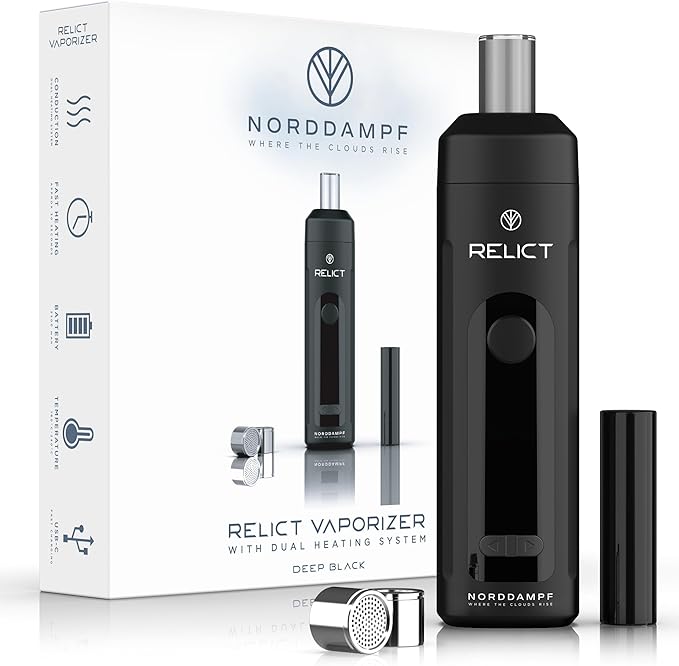
- Vaporizers with precise temperature control, such as the RELICT from Norddampf facilitate the controlled release of CBN, CBD, and THC.
- In Germany, CBN is not covered by the Narcotics Act and is considered legal; the potential of CBN for medical applications is currently being extensively researched.
What is CBN (cannabinol)?
CBN, short for cannabinol, is a lesser-known cannabinoid found in the cannabis plant. Unlike THC and CBD, it often takes a back seat—but it is gaining increasing attention, especially when it comes to sleep and relaxation.
CBN is a molecule produced through the conversion of THC. Chemically, CBN is closely related to THC, but its psychoactive effects are significantly weaker. Users describe the effects of CBN as “gently calming” rather than euphoric. CBN is often described as a lesser-known cannabinoid compared to CBD and THC, with CBD being known for its anxiety-relieving properties and THC for its psychoactive effects.
In fresh cannabis flowers, CBN is present only in trace amounts—typically less than 1%. It is only through aging and oxidation that the CBN content increases, while THC decreases. The cultivation of the cannabis plant has no direct influence on the CBN content; rather, processing and storage are decisive factors. Extracting CBN is a challenge, as the cannabinoid is present only in very small amounts in fresh plants, and the concentration in aged plants is often less than 1%.
All cannabinoids are initially present in the plant as acids (e.g., THCA, CBNA). Over time, exposure to oxygen and heat causes them to convert into neutral forms such as THC and CBN. CBG is considered the starting point for the synthesis of THC, CBD, and CBN.
Important: This article is for informational purposes only and is not a substitute for medical advice. No claims are made regarding healing.

Our Best Sellers
Discover the most popular Norddampf products


How is CBN formed? – From THC to the “sleep cannabinoid”
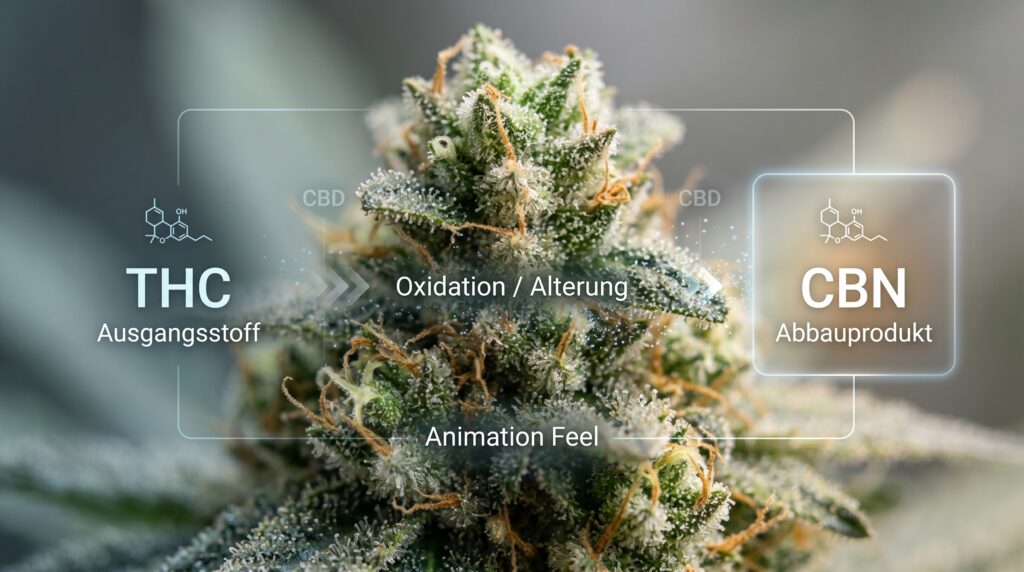
CBN is not primarily synthesized by the hemp plant. It is produced through the natural breakdown of THC—a process that is influenced by environmental factors.
The oxidation process
CBN is produced through the targeted extraction of the cannabinoid from the cannabis plant; CBN is a breakdown product of THC that forms when cannabis ages or oxidizes. Upon contact with oxygen, THC is first converted into cannabinoic acid (CBNA) and, following decarboxylation, into CBN.
The conversion of THC to CBN requires controlled oxidation, which is accelerated by factors such as oxygen, light, and heat, with the correct temperature being critical to the quality of the final product.
Practical example
Under ambient conditions (21°C, 60% humidity, exposure to air), THC degrades at a rate of about 0.1–0.5% per month. In a sample that originally contained 20% THC and is stored in a clear glass container for six months, the THC content can drop to about 12%—while the CBN content rises to 4%.
Storage conditions make all the difference:
| Factor | Effect on CBN formation |
|---|---|
| UV light | Doubles the mining speed |
| Heat (>30°C) | Triples the mining speed |
| Oxygen | Continuously accelerates oxidation |
CBN oil is produced using various extraction methods, with CO2 extraction being one of the most advanced and effective methods for extracting CBN of high quality and purity.
How does CBN work in the body? – The endocannabinoid system

The endocannabinoid system (ECS) is the body’s own regulatory system. It influences sleep, mood, appetite, and pain perception through specific receptors. CBN acts as an agonist by binding to the CB1 and CB2 receptors, though with varying affinities.
CBN is used in various areas, such as to promote sleep or relieve pain.
Receptor binding
CBN interacts with the endocannabinoid system by binding to the CB1 and CB2 receptors, which are responsible for regulating sleep, appetite, and the immune system.
Unlike THC, which binds strongly to CB1 receptors and produces psychoactive effects, CBN binds weakly to CB1 receptors and acts primarily through CB2 receptors, resulting in minimal psychoactive effects.
The binding of CBN to CB2 receptors may have anti-inflammatory properties, making it a promising candidate for therapeutic applications. CBN has a higher affinity for CB2 receptors than for CB1 receptors, resulting in fewer psychoactive effects compared to THC.
Preclinical data also show that CBN interacts with TRPV2 receptors—structures that have been linked to pain and inflammatory processes in animal models.
Subjective effects: relaxation instead of the typical high
The effects of CBN differ from those of CBD, as CBN tends to have sedative properties, while CBD is known for its relaxing and anxiety-relieving effects—in addition, some users report that CBN can promote overall well-being.
User reviews often describe CBN as:
- "Heavier" limbs
- Physical rest
- Less mental "going in circles"
- Rarely euphoria or changes in perception
CBN is used to reduce stress and promote deep physical relaxation. The difference from THC is clear: while THC produces a cerebral, sometimes jittery high, CBN focuses on physical sedation.
Many consumers describe CBN as an “evening cannabinoid”—one that helps prepare them for the night. Effects depend heavily on dosage, individual sensitivity, and the combination with other cannabinoids and terpenes.
CBN, THC, and CBD Compared
All three cannabinoids come from the same plant but have completely different effects. Full-spectrum CBD oils contain not only CBD but also CBN and other cannabinoids, which creates the so-called entourage effect, which can further enhance the plant’s efficacy.
Origins and Differences
CBN is a breakdown product of THC that forms when THC oxidizes or degrades, while CBD is synthesized directly from the cannabis plant. All three are derived from the “parent cannabinoid” CBGA.
| cannabinoid | Psychoactivity | Main effects | Origins |
|---|---|---|---|
| THC | Strong | High, euphoria, appetite | From THCA through heat |
| CBD (cannabidiol) | None | Balancing, anxiety-relieving | From CBDA through heat |
| CBN (Cannabinol) | Weak | Physical relaxation, sedation | From oxidized THC |
CBN is often combined with CBD to take advantage of the so-called entourage effect and enhance the relaxing effects. This entourage effect describes how cannabinoids and terpenes, when combined, produce different effects than when used in isolation.
Legal Notice: Strict regulations apply in the EU and Germany depending on THC content. This article is not a substitute for legal advice.
Why is CBN referred to as the “sleep cannabinoid”?
The term “sleep cannabinoid” stems more from marketing and user experiences than from established research. CBN is often referred to as the “sleepy cannabinoid,” but recent studies suggest that its sedative effects may depend on its combination with other cannabinoids.
As early as the 1970s, observations linked aged, CBN-rich cannabis to increased drowsiness. CBN can be used to treat insomnia and promote uninterrupted sleep—at least according to the reports of many users. In addition, there is also interest in CBN in relation to loss of appetite, as it could potentially stimulate appetite, even though its effects in humans have not yet been conclusively researched.
The sedative effects are likely caused by the interaction between CBN, residual THC, and certain terpenes such as myrcene and linalool. While these findings are interesting, they are not sufficient to classify CBN as a “sleep aid.”
Current State of Research on the Effects of CBN
Unlike THC and CBD, CBN has been studied much less extensively from a scientific perspective. Research on CBN is still in its early stages, and many studies are preclinical.
Preclinical data
Animal studies provide evidence of:
- Anti-inflammatory effect (50% reduction in TNF-alpha in macrophages)
- Pain modulation
- Appetite modulation (20–30% increase in cachectic rats)
- Antibacterial effect
CBN exhibits antibacterial properties, particularly against resistant bacteria—in vitro data show efficacy against MRSA at concentrations as low as 1–2 μg/mL. Similar to CBN, CBG also exhibits potential anti-inflammatory and antimicrobial effects, as demonstrated by scientific studies.
Human studies
A 2023 study suggests that 20 mg of CBN may have a potentially positive effect on sleep quality compared to a placebo by reducing nighttime awakenings. This double-blind crossover study (n=24) showed a 28% reduction in nighttime wakefulness and a 45-minute increase in total sleep time.
Studies show that CBN may have a calming and sleep-inducing effect, which could be particularly helpful for people with sleep disorders.
Important: These results are promising, but not sufficient to support specific treatment recommendations.

Potential benefits according to studies and models
CBN shows promising potential for pain relief, anti-inflammatory effects, and as an appetite stimulant. Potential applications include:
- Sleep: Subjective readiness to fall asleep, fewer awakenings
- Inflammation: Reduction of certain markers in animal models
- Antibacterial: Effective against resistant bacteria in vitro
- Appetite: Increase in preclinical models
No treatment recommendations should be derived from this data. Its relevance to humans must be confirmed in further studies.
Effect of aging and storage on CBN content
The CBN content in cannabis products is not static. It changes over the course of months or years, depending on storage conditions.
Accelerating factors
| Factor | Effect |
|---|---|
| Open containers | Exposure to oxygen accelerates degradation |
| UV light | Window sill, clear glass |
| Heat | Warm rooms increase oxidation |
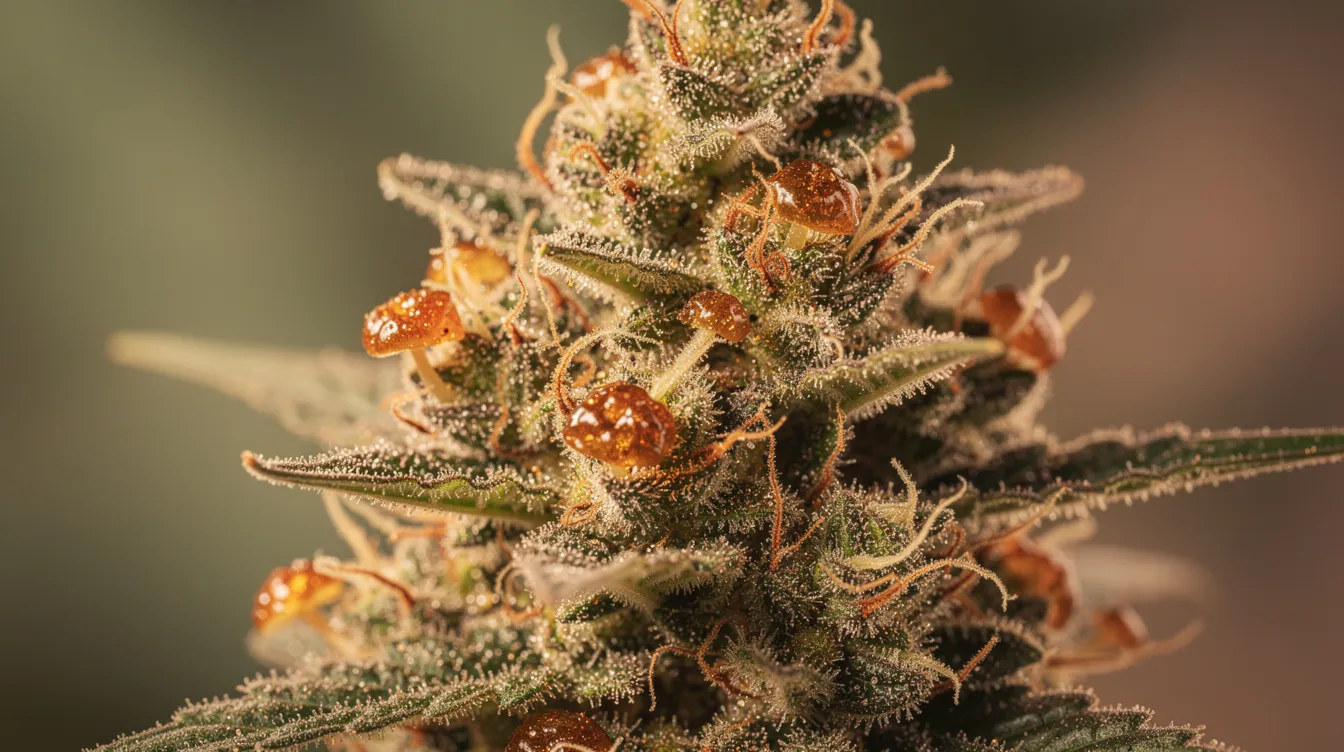
The color of aging flowers often changes from a rich green to browner tones—a visual indicator of rising CBN levels.
For consumers, lab analyses (certificates listing CBN, CBD, and THC levels) are the best indicator of a product’s composition.
Why fresh cannabis feels different from aged cannabis
Fresh, THC-dominant products are described as “clearer” and “more energizing.” Aged material with a higher CBN content tends to have a “heavier” and “more sedating” effect.
This difference isn’t just due to CBN. The loss and alteration of terpenes over time also play a role. Alpha-pinene (which has a brightening effect) evaporates first, leaving behind a myrcene-dominant profile.
Important: Improper storage or storage for too long (heat, moisture, mold) reduces quality regardless of the CBN content.

The Effects of CBN in Everyday Life: Practical Examples (without usage instructions)
Example 1: The Stressed-Out Working Woman
One person who feels physically tense in the evening after a long day reports that using a combination of CBD and CBN results in fewer nighttime awakenings, a calmer physical sensation, and no “high” feeling like that associated with pure THC.
Example 2: The experienced cannabis user
An experienced user describes the difference between THC-dominant products (creative, sometimes jittery energy) and CBN-rich products (physical heaviness, quicker onset of sleepiness).
Results may vary from person to person. It is advisable to consult a healthcare professional before using products containing CBN in combination with medications.
Benefits of Vaporizers for the Release of CBN and Other Compounds
The method of heating makes a difference. Different cannabinoids and terpenes vaporize at different temperatures—CBN at around 185°C.
High-quality vaporizers with precise temperature control help release CBN, CBD, and THC in a more controlled manner than uncontrolled combustion processes. Studies show that vaporizing at 185°C achieves 90% CBN efficiency with 70% terpene retention.
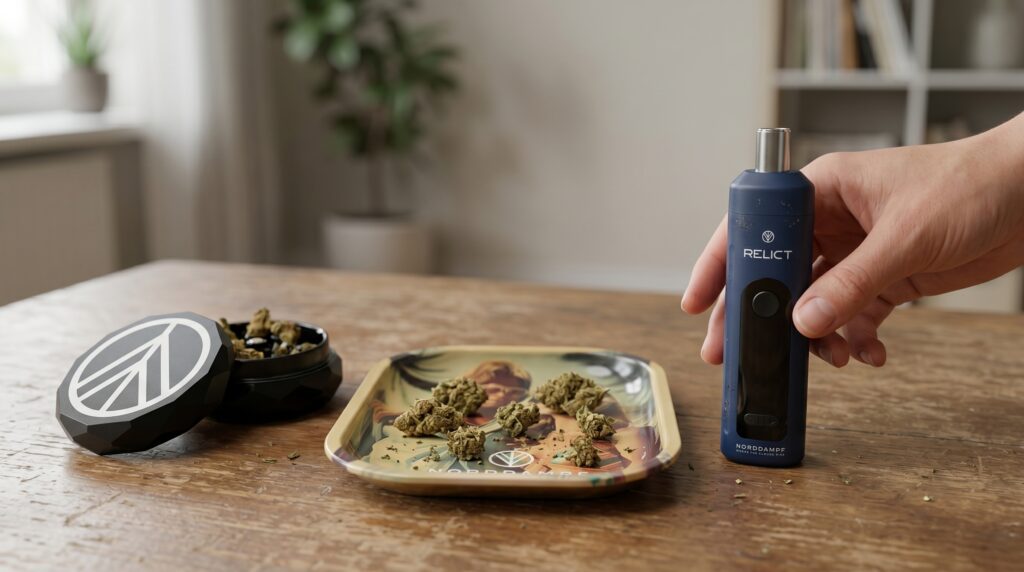
The RELICT from Norddampf offers:
- Temperature adjustable in 0.5°C increments
- Uniform convection heating
- Glass pathways for purity of flavor
Controlled vaporization addresses not only the CBN content but also its interaction with sedative terpenes such as myrcene and linalool—resulting in nuanced relaxation profiles.
Safety, Side Effects, and Classification
Based on current research, CBN is described as being relatively well tolerated. However, long-term data are lacking.
Common side effects at higher doses
The most common side effects of CBN are fatigue, drowsiness, and a dry mouth. In higher doses, CBN can cause excessive fatigue, especially if taken late in the evening.
An overdose of CBN does not usually lead to serious health consequences, but it can cause a feeling of heaviness or lethargy that lasts until the next morning. In rare cases, users report mild dizziness or stomach discomfort after taking CBN, but these effects are generally mild and subside once the dosage is adjusted.
Be aware of interactions
CBN can enhance the sedative effects of other centrally depressant substances (alcohol, sleeping pills). CBN is metabolized by liver enzymes (including CYP3A4 and CYP2C9)—potential drug interactions are possible.
Recommendation: Consult a doctor before combining with medications.
Legal Framework in Germany (Brief Overview)
In Germany, CBN is legal because it is not covered by the Narcotics Act. The legal status is determined by its origin (hemp plant, THC content) and product type.
Products made from industrial hemp with very low THC content are treated differently under the law than THC-rich medical or recreational products. It is advisable to check the current legal situation before purchasing or possessing such products.
Note: This article does not constitute legal advice.
Conclusion: Understanding the effects of CBN
CBN is a fascinating cannabinoid with a unique profile. It is produced from THC through natural oxidation and offers mild psychoactivity with a focus on physical sedation.
The term “sleep cannabinoid” is widely used, but it is not yet backed by extensive research like THC or CBD. Initial human studies show promising results—especially when combined with other cannabinoids and terpenes.
Modern, temperature-controlled vaporizers, such as the RELICT from Norddampf help you experience the interplay of CBN, CBD, THC, and terpenes more fully. Precise temperature control allows for targeted release without combustion.
The coming years will provide more clarity. Further human studies on the benefits and limitations of CBN are already planned. Until then, the following principles remain paramount: mindful use, staying informed, and consulting with experts when necessary.
Frequently Asked Questions (FAQ)
This section answers additional questions that were only briefly mentioned in the article. The answers are practical in nature and are not intended to replace medical or legal advice.
How long does CBN stay in the body?
Specific data on CBN is limited. Like other cannabinoids, CBN is stored in fatty tissue and released slowly. After a single dose, traces may remain detectable for several days—and longer with regular use.
Standard drug tests do not usually detect CBN separately. However, THC metabolites may play a role. Particular caution is advised for workplace drug testing.
Can CBN be used during the day, or does it always make you feel sleepy?
Many people associate CBN with the evening and nighttime, as drowsiness is common. Sensitivity varies greatly from person to person. Some report significant drowsiness even at low doses, while others experience mild relaxation.
Activities that carry a risk of accidents (such as driving or operating machinery) should never be performed while under the influence of sedatives.
Can CBN be addictive?
Based on current knowledge, CBN does not appear to have classic addictive potential. However, as with all substances that promote relaxation, habits can develop—psychological habituation rather than physical dependence.
It is advisable to take breaks and regularly reflect on one’s own behavior. Individuals with substance use disorders should use cannabinoids with caution and, if necessary, under professional supervision.
Is CBN suitable for everyone?
People react very differently to cannabinoids. Special caution is advised for pregnant women, breastfeeding women, adolescents, and people with severe heart, liver, or psychiatric conditions.
“Natural” doesn’t automatically mean “harmless.” It’s important to make conscious, informed decisions.
How important is the quality of the hardware to the CBN experience?
The method of heating has a significant impact on the composition of the inhaled substances. Uncontrolled combustion at 400–900°C produces pyrolysis products such as benzene.
Devices like the RELICT from Norddampf its precise temperature control, help release CBN, CBD, and THC at gentle temperatures. Consistent temperatures also influence the terpene profile and, consequently, the user’s experience. Hardware quality isn’t just about efficiency—it’s also about minimizing potential exposure to harmful substances.