
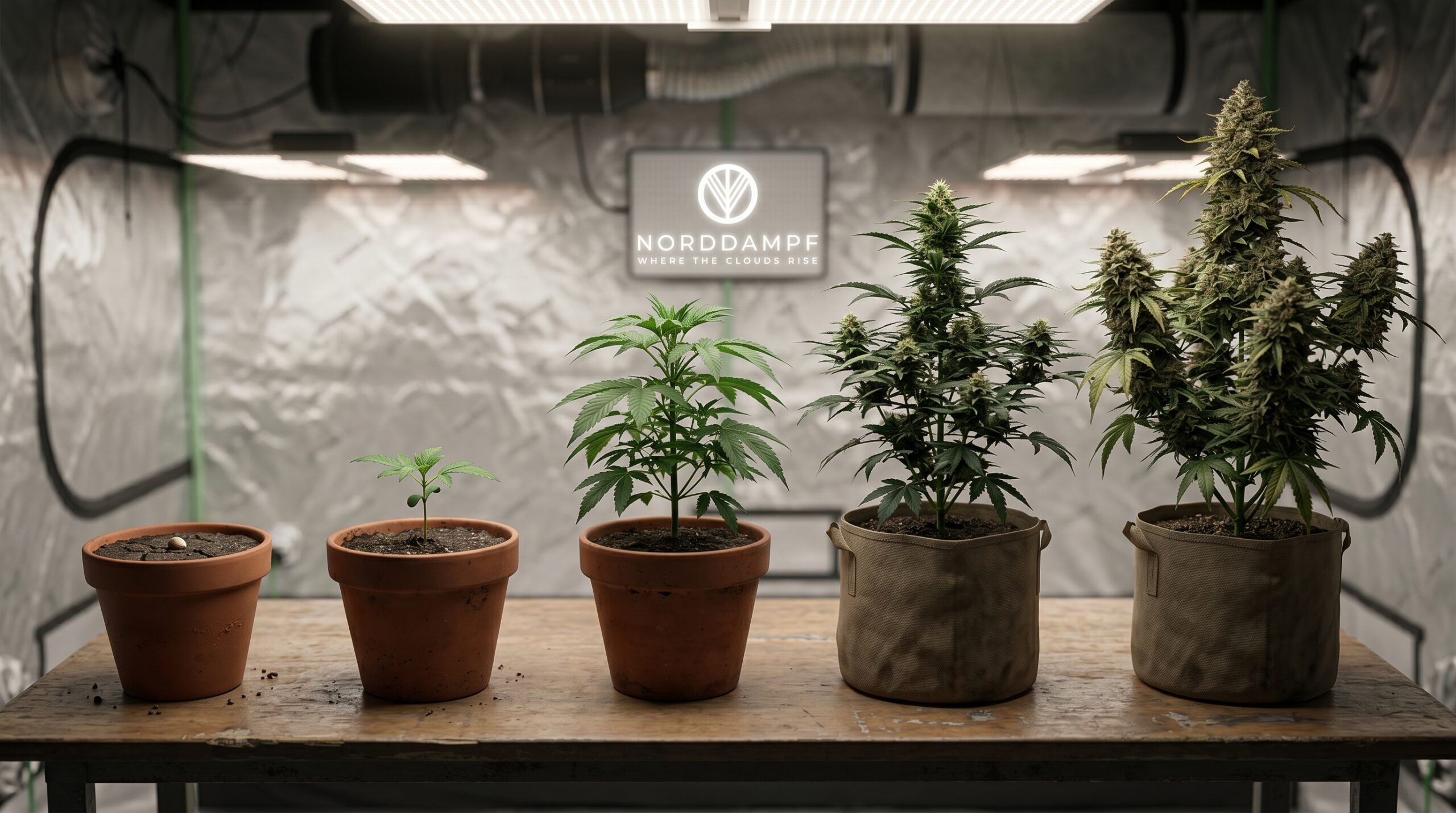
The cannabis growth phase is the critical stage during which your plant establishes its foundation. The various stages of cannabis growth—germination, vegetative phase, and flowering—play a key role in determining the plant’s entire life cycle and influence both healthy growth and yield.
The starting point for all growth phases is the germination of cannabis seeds; selecting the right seeds and treating them properly are crucial for a successful grow. In this guide, you’ll learn everything you need to know about the vegetative phase—from the biological basics to general environmental conditions like temperature, humidity, and light, which are essential for healthy growth, all the way to the key differences between photoperiodic strains and autoflowering seeds.
For more information and detailed tips, check out our related article on cannabis growth stages.
Key Findings (At a Glance)
The vegetative phase is more than just a waiting period. It lays the foundation for everything that happens later during flowering. Here are the key points of this article:
- The vegetative phase begins immediately after the seedling stage (approximately 2–3 weeks after germination) and ends with the transition to flowering. The vegetative phase is a critical growth period during which the plant develops its structure and lays the foundation for later flowering and yield.
- During this growth phase, the plant develops only roots, stems, branches, and leaves—no flowers yet
- For photoperiod varieties, the light cycle (e.g., 18 hours of light/6 hours of darkness vs. 12 hours of light/12 hours of darkness) determines the length of the vegetative stage; autoflowers automatically transition to flowering due to their genetics
- Temperature, humidity, light intensity, spectrum, and balanced nutrients determine yield and plant health
- Common mistakes: overwatering, over-fertilizing, incorrect light cycle, starting the flowering phase too early or too late
Table of Contents
- What is the "cannabis-vegetarian" phase?
- Difference: Growth phase vs. flowering phase
- Photoperiod vs. Autoflowering Strains
- How long does the vegetarian phase last?
- Factors that influence growth: light, climate, and nutrients
- Foundations for Healthy Growth
- Common Mistakes and How to Avoid Them
- Practical differences for growers
- Conclusion
- Frequently Asked Questions

Our Best Sellers
Discover the most popular Norddampf products
What is the "cannabis-vegetarian" phase?
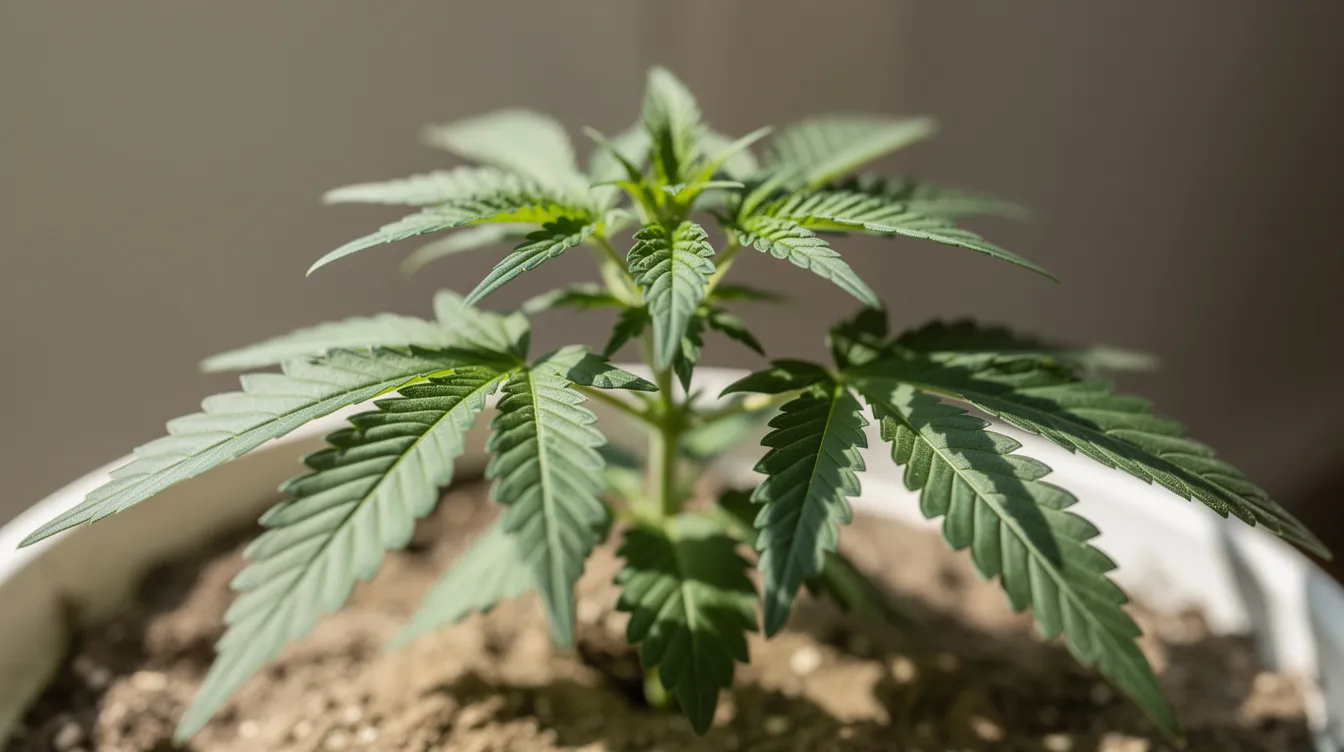
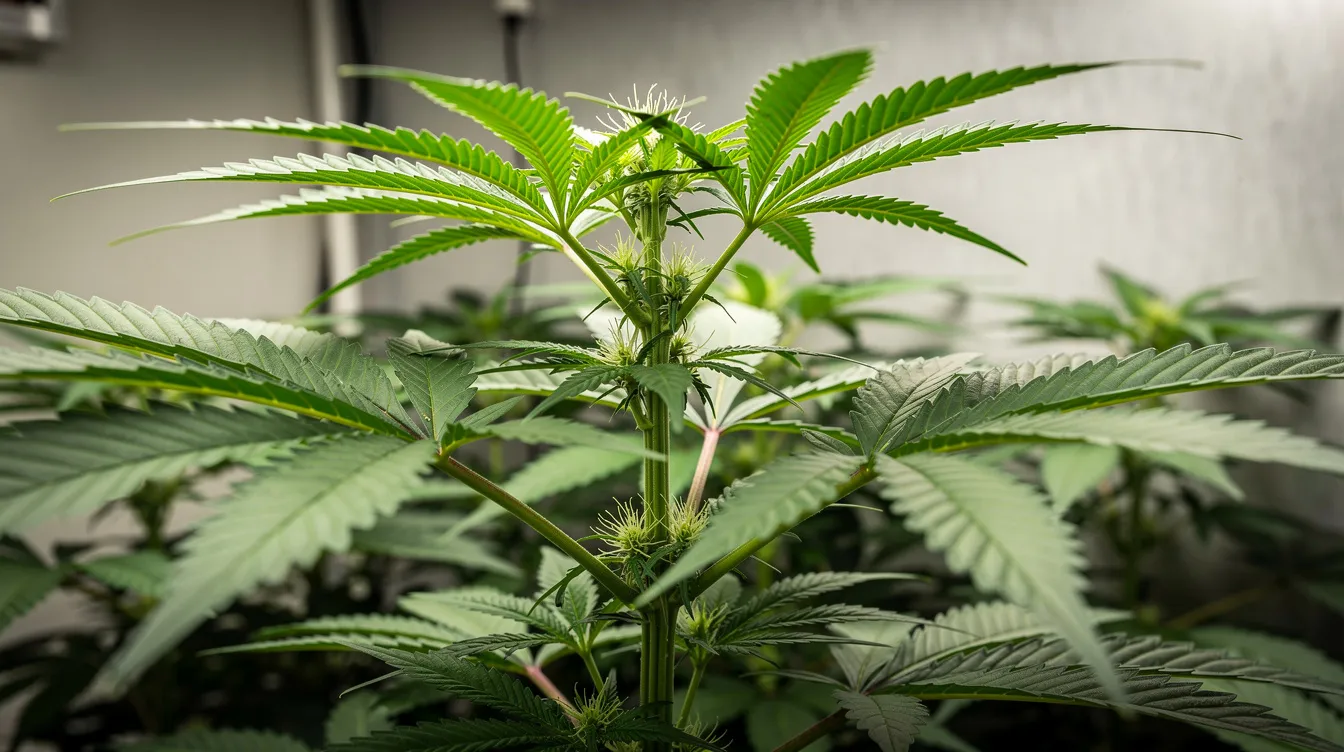
The vegetative phase—often referred to as “veg”—is the stage in the cannabis plant’s life cycle between the seedling stage and flowering. After successful germination and about 2–3 weeks as a seedling, the actual growth phase begins. The duration of the vegetative phase can vary greatly depending on the strain and growing conditions and typically ranges from 2 to 16 weeks. The grower’s goals, such as desired plant size or yield, also play a role in determining the length of this phase.
What happens inside the plant during this phase:
- Intense cell division and longitudinal growth
- Development of a branched root system, which is crucial for efficient nutrient uptake and vigorous growth at each stage of development
- Development of robust foliage for maximum photosynthesis
- Building up the plant's defenses and storing energy for later flowering
- Hormonal regulation via auxins promotes shoot and leaf growth
Cannabis growers and breeders play a crucial role in successful cultivation, as their expertise and control over growing conditions significantly influence plant growth and yield. During the vegetative phase, cannabis plants require between 18 and 24 hours of light per day to promote optimal growth. The ideal temperature for vegetative growth is between 20 and 30°C, and humidity should not fall below 40%. During this phase, a higher nitrogen content in the nutrient mix is required, though the nutrient supply should be balanced to avoid over-fertilization. Good air circulation is also crucial to prevent mold growth and promote plant health.
The duration varies depending on genetics and cultivation methods:
- Photoperiod varieties grown indoors: typically 3–8 weeks
- Autoflower: approximately 3–5 weeks of vegetative growth within a total cycle of 9–12 weeks
- Outdoor activities in Central Europe: typically 8–16 weeks, depending on the season
Different growth patterns define their appearance: Indica-dominant strains grow compact and bushy, with shorter internodes. Sativa strains tend to grow taller, with longer distances between nodes. Hybrids fall somewhere in between.
During the vegetative phase, the focus is not yet on flower resin and terpenes. The smell is usually much weaker than during flowering.
Difference: Growth phase vs. flowering phase
The vegetative and flowering phases serve fundamentally different purposes in the growth cycle. If you understand these differences, you understand the entire process.
Growing season – Focus on growth:
- Development of roots, stems, branches, and fan-shaped leaves
- Hormones (especially auxins) promote shoot and leaf growth
- Nutrient requirements: higher nitrogen (N) for leaf mass
- Boosting the immune system
Flowering stage – Focus on reproduction:
- Formation of inflorescences, resin, cannabinoids (THC, CBD), and terpenes
- The nutrient balance is shifting toward higher levels of phosphorus (P) and potassium (K)
- Visible pre-flowers, white stigmas, later dense buds
Visual differences:
| feature | Veggie phase | flowering stage |
|---|---|---|
| Publication | Only leaves and new shoots | Pre-flowers, pistils, buds |
| smell | Mild to moderate | Intense, terpene-rich |
| Growth | Primarily height and width | “Stretch,” then flower formation |
Practical tip for growers: During the vegetative stage, you can still prune, pinch back, and repot your plants intensively. During the flowering stage, you should minimize stress. Mistakes made during the vegetative stage—such as weak roots or nitrogen deficiency—are almost impossible to correct during flowering.
Photoperiod vs. Autoflowering Strains During the Veg Stage
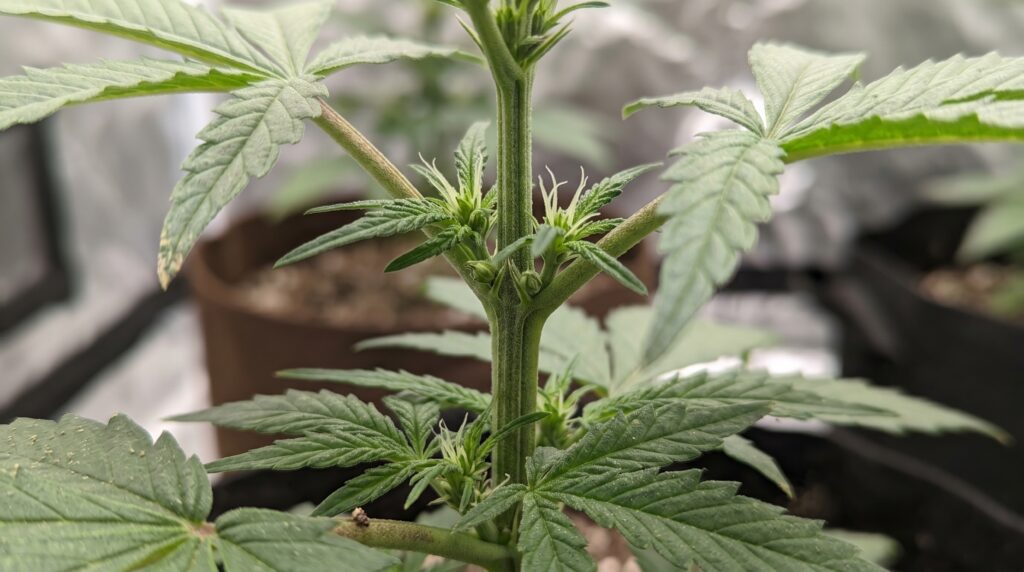
The biggest practical difference between the two types of strains lies in the ability to control the vegetative stage. Understanding the different growth phases of photoperiod and autoflowering strains is crucial for planning and managing your grow, as each strain has different requirements and offers different ways to control its developmental stages. The answer to the question “How much control do I have?” will determine the entire course of your grow.
Photoperiod cannabis strains
The plant will remain in the vegetative stage for as long as desired under ≥18 hours of light (e.g., 18/6 or 20/4). Only switching to a 12/12 light/dark cycle triggers flowering.
- Maximum control over plant size and development
- Growing techniques such as topping, LST, or SCROG can be easily implemented
- Typical indoor grow: 4–6 weeks of vegetative growth under an 18/6 light cycle, then switch to 12 hours of light for flowering
- With SCROG, intentionally extend the vegetative stage (10–12 weeks) until the net is full
Autoflowering Cannabis Seeds
The transition to flowering occurs automatically based on age—a trait determined by the introduction of Ruderalis genetics. This usually happens about 3–5 weeks after germination, regardless of the number of hours of light.
- Flexible light cycle: 18/6, 20/4, or even 24/0 are possible
- A tight schedule, less room for error when under stress
- Ideal for quick cycles (3–4 harvests per year)
- Less exercise is recommended—time is limited
Mixed setups (autoflowers and photoperiod plants in the same grow room) work, but require a well-thought-out lighting plan. Autoflowers do not interfere with photoperiod plants as long as they receive ≥18 hours of light.
How long does the vegetarian phase really last?
Calendar weeks alone don’t tell the whole story. Plant size, structure, and health are more important. However, the length of the vegetative phase can vary greatly depending on the strain, growing conditions, and the grower’s goals—it typically ranges from 3 to 16 weeks. Nevertheless, there are typical ranges to serve as a guide:
- Indoor photoperiod: Usually 3–6 weeks of vegetative growth, depending on the desired final size
- Outdoor photoperiodic: Start in April/May, vegetative growth until July/August in Central Europe – day length determines the natural transition
- Autoflower: Approximately 3–4 weeks of pure vegetative growth within a 9–12-week “seed-to-harvest” cycle
Factors that determine the duration:
- Genetics (Indica/Sativa ratio)
- Desired final size and plant size
- Pot size – a larger pot allows for longer growth
- Light intensity
- Nutrient supply
- Planned training methods
Practical tip: It’s better to base your decisions on “X strong leaf nodes + sturdy structure” rather than on rigid timelines. Be sure to factor in the growth spurt during flowering—Sativa strains can grow to 2–3 times their vegetative height.
Factors affecting the growth phase: light, climate, and nutrients
Success in vegetable gardening depends on the interplay of several factors: light, temperature, humidity, water, and nutrients. None of these factors acts in isolation. To ensure healthy plant growth, it is essential to maintain stable environmental conditions—such as a constant temperature, optimal humidity, and sufficient light—and to provide proper care.
This is about the basics and how things work—not a detailed step-by-step guide, but an understanding of what the plant needs and why.
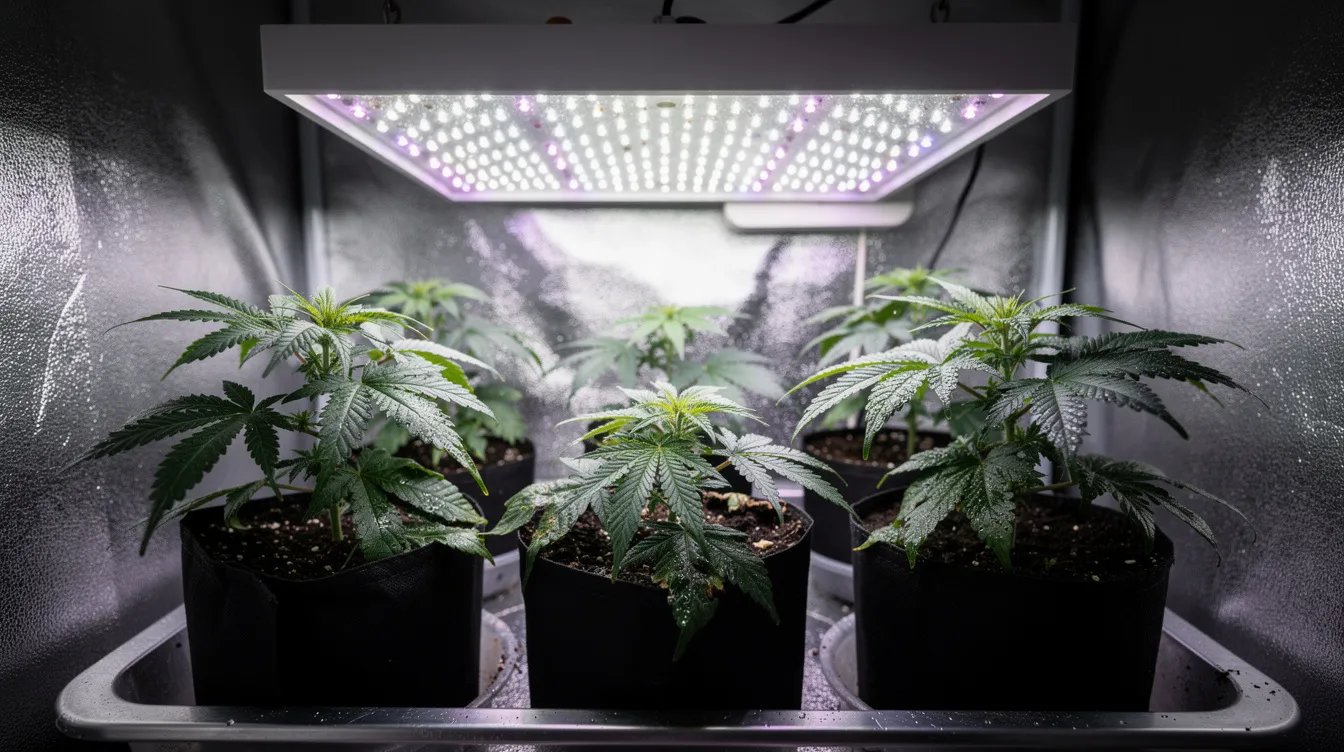
Light in the Vegi: Duration, Intensity, and Spectrum
Light is the primary energy source for photosynthesis. It directly influences growth rate and internode length.
Typical light cycles:
- 6/18: The standard for most growers – energy-efficient, allows for a recovery phase
- 4/20: For approximately 10–20% faster vegetative growth
- 24/0: An aggressive approach, maximum growth, but higher energy consumption and a risk of stress
Light intensity (PPFD guidelines):
- Seedlings: approx. 200–400 µmol/m²/s
- Vegetarian: 400–600 µmol/m²/s
Spectrum: Blue-rich light (400–500 nm) promotes compact growth with short internodes. Modern full-spectrum LED grow lights are energy-efficient and generate less heat than HPS systems.
Common mistakes:
- Light too close: burns, “bleaching”
- Light too far away: stunted, spindly growth of the plant
Temperature & Humidity During the Growth Phase
The climate affects every aspect of plant growth. The right conditions lay the foundation for robust development.
Ideal ranges:
- Daytime temperature: 22–26°C
- Nighttime temperature: 18–22°C (variation of no more than 5°C)
- Humidity: 60–70% relative humidity
Why this matters: Warm air combined with moderate humidity promotes active metabolism. A vapor pressure deficit (VPD) of approximately 0.8–1.2 kPa encourages transpiration and growth. If the air is too dry, the plant closes its stomata—and growth slows down.
Common problems:
- Below 40% relative humidity: Leaf edges curl inward; the plant appears stressed
- Over 70% relative humidity at cool temperatures: risk of mold and mildew
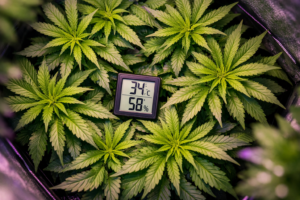
A thermometer and hygrometer are essential in the grow room. Keep an eye on the readings throughout the day.
Water & Irrigation: Basics Without a Watering Schedule
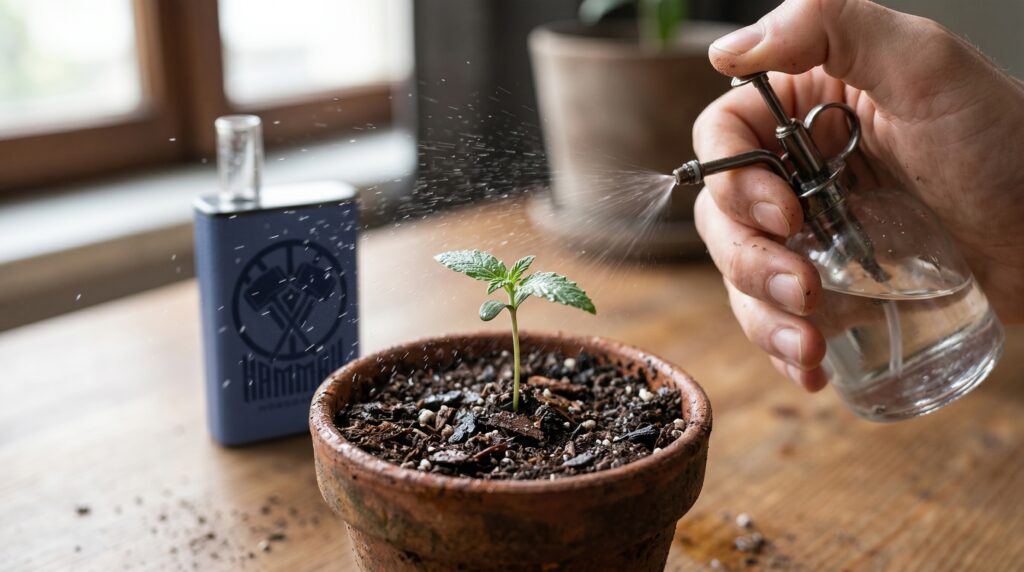
Water transports nutrients and maintains intracellular pressure (turgor). Without proper water management, nothing works.
Overwatering – the most common beginner's mistake:
- Leaves are drooping even though the soil is wet
- Musty smell
- Slow growth
- In the worst-case scenario: root rot
The basic rule: It’s better to let the soil get thoroughly wet and then allow it to dry out slightly. Don’t constantly “water at night” or leave the pot standing in water all the time. The roots need oxygen.
What determines the interval:
- Pot size
- Growing medium (loose soil vs. coconut coir)
- Temperature and Humidity
- Stage of plant development
Water quality: The ideal pH range for the soil is 6.0–6.5. Extreme deviations from this range can inhibit nutrient uptake—even if you use fertilizer.
Nutrients in Vegetables: Focus on Nitrogen
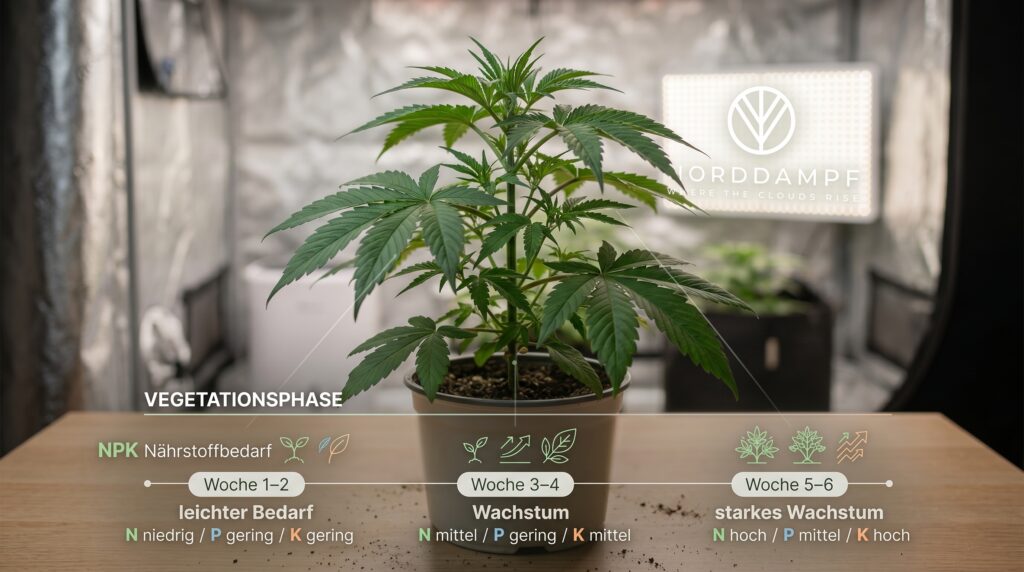
Nutrient requirements during the vegetative stage differ significantly from those during flowering. The focus is clearly on nitrogen (N).
Macronutrients N-P-K:
- Nitrogen (N): A primary nutrient for leaf and shoot growth—essential during the vegetative stage
- Phosphorus (P): Important for root development and energy transfer
- Potassium (K): Supports general plant functions
Typical organic fertilizers have a ratio such as 3-1-2 or 4-2-3.
Recognizing over-fertilization:
- Dark green, “claw-like” leaves
- Burnt leaf tips
- Young seedlings are particularly sensitive
Recognizing nitrogen deficiency:
- Light green/yellow older leaves
- Starts at the bottom
Practical tip: Fertilize moderately and consistently. If in doubt, start with a low dose. Pre-fertilized organic potting mixes often last 2–4 weeks without additional fertilization.
Air Movement & Environment
Fresh air isn't a luxury—it's essential for healthy plant growth.
Why air circulation is important:
- Strengthens stems through thigmorhombogenesis (mechanical stimuli)
- Improves the microclimate around the leaves
- Prevents pest infestations (spider mites thrive in stagnant air)
- Reduces the risk of mold
The right airflow: gentle. The leaves should be allowed to “dance,” but not be constantly blown away horizontally. Too much wind causes windburn.
For indoor growing: Supply and exhaust air (with filters) help control odors as well as regulate temperature and humidity.
Outdoors: The choice of location makes all the difference. An open, airy spot without any completely sheltered corners is ideal.
Common problems:
- Condensation on tent walls
- Heat buildup under lights
- Musty smell when the air isn't circulating
The Basics of Healthy Growth in Vegi
A solid foundation beats fancy tricks. Every time.
The root zone as the foundation: A healthy, loose, well-aerated root zone free of waterlogging is the foundation of every vigorous plant. A growing medium containing 20–30% perlite improves aeration.
Regular inspection:
- Check the leaves daily (color, texture)
- Check for new shoots (any new growth?)
- Check the substrate (moisture?)
- But: not rushed, but attentive
Understanding genetics: Indica, Sativa, hybrids, and the Ruderalis content in autoflowers all influence their appearance and needs. Not every strain reacts the same way to identical conditions.
Avoiding stress: Environmental stress (heat >28°C, cold, extreme dryness) increases susceptibility to pests and diseases.
Keep a record: Dated photos and notes on the weather and your observations will really help you learn faster. What worked? What didn't?
Common Mistakes During the Cannabis Growing Phase – and How to Avoid Them
Mistakes made during the vegetative stage will come back to haunt you later during flowering. But if caught early, they’re easy to fix.
The most common problems:
- Overwatering or underwatering
- Over-fertilization (especially during early growth stages)
- Incorrect light spacing
- Extreme climate fluctuations
- Not enough fresh air
- Impatience
The most important rule: Change only one variable at a time. First the light distance, then the fertilizer. That way, you’ll understand cause and effect.
Plants often need several days to respond to changes. Taking immediate corrective action often leads to a “ping-pong” effect of overcorrections.
Vegetative stage that is too short or too long
Too short, Vegi:
- Plants remain small
- Few side shoots have developed
- Fewer varieties of inflorescences
- Typically a 20–30% loss in yield
Too long as a vegetarian:
- Plants are growing too tall or too bushy
- Indoors: Light source interference or mutual shading
- Control over the grow room is lost
A unique feature of autoflowers: The vegetative growth period is genetically determined. It is virtually impossible to “extend” it by increasing the number of light hours. Over-training disrupts the fixed schedule and reduces the yield by 20–40%.
Outdoors in Central Europe: Nature (day length, sun’s position) determines when flowering begins. Plan your spring planting dates well in advance.
Over-fertilization, nutrient deficiencies, and improper watering
Recognizing over-fertilization:
- Dark green, curling leaves
- Burnt ends
- “Harsh,” unnatural appearance
- Often due to excessive nitrogen application in pre-fertilized soil
Common issues at Vegi:
- N deficiency: Light green/yellow from the bottom up
- Magnesium deficiency: Yellow areas between the veins, green veins (interveinal chlorosis)
Incorrect watering:
- Constantly wet: lack of oxygen, root rot
- Chronically dry: Slowed growth, wilted leaves
Poor air circulation & hidden stressors
How to spot poor air circulation:
- Stagnant, warm layers of air
- Condensation on tent walls
- Musty smell
- The leaves aren't moving at all
Risk of mold/powdery mildew: When watering, damp “pockets” can form in dense canopies—the perfect conditions for fungal growth.
Hidden stressors:
- Constantly rearranging the plants
- Loud vibrations
- Sudden changes in temperature (opening and closing windows in winter)
Design the grow room to be as stable and quiet an environment as possible. Minor daily fluctuations are normal—avoid extreme spikes.
Practical differences for growers: control vs. fixed schedule
The difference in a nutshell: Photoperiod means you can control the length of the vegetative stage. Autoflower means it has a genetic clock.
Photoperiodic strategies:
| Method | Duration of vegetarian diet | Plants per square meter | Typical yield |
|---|---|---|---|
| SOG (Sea of Green) | 10–14 days | 12–18 | 400–500 g/m² |
| SCROG (Screen of Green) | 8–12 weeks | 1–4 | Up to 700 g/m² |
| standard | 4–6 weeks | 4–9 | 400–600 g/m² |
Autoflower Strategy: A relatively consistent light cycle (18/6 or 20/4) throughout the entire life cycle. Minimal training is recommended—only LST, no aggressive topping. The limited growing time makes every stressor critical.
For beginners: Hardy autoflowers are ideal for quick grow cycles and easy cultivation. Typically 70–100 g per plant indoors.
For advanced growers: Photoperiod systems offer more flexibility for experimenting with growing techniques and higher yields (up to 200–500 g per plant).
To achieve optimal results during the cannabis growth phase, choosing the right equipment and providing careful maintenance are crucial—especially when it comes to lighting and managing growing conditions.
When choosing a strain: Don’t just think about yield, but also consider the time you have available, ceiling height, and your experience with climate and light control.
Conclusion: Vegetables as the foundation for healthy plants
The vegetative phase is the “foundation” of the entire life cycle. What you build up during this phase determines everything that happens later during flowering and harvest.
The key points at a glance:
- Build strong roots and lush foliage
- A balanced climate and careful nutrient management
- Identify and correct errors early on—not frantically, but attentively
The difference between photoperiod and autoflower in a nutshell: controllable duration vs. a fixed genetic clock—both have their place in cannabis cultivation.
Don’t think of the vegetative stage as just “waiting until flowering.” It’s an exciting phase for learning and observation. As you gain more experience, you’ll start to recognize the signals from your cannabis plants earlier and earlier. And that will improve the quality of every subsequent harvest.
The effort you put into this phase pays off. Every time.
FAQ on the Cannabis Growth Phase (Vegetative)
When exactly does the vegetative phase of cannabis begin?
The vegetative phase begins after the seedling stage—usually about 10–20 days after germination. You can tell the transition has occurred when several pairs of “true” serrated leaves have developed (3–5 leaves, not the round cotyledons). There is no fixed cutoff date. More important than the date is the stage of development: a sturdy little bush rather than a delicate seedling.
Does cannabis already have a strong smell during the vegetative phase?
Most strains have only a subtle to moderate odor during the vegetative stage. Terpene and resin production (THC, CBD) doesn’t increase significantly until flowering—often reaching only 10% of the later flowering levels. However, some aromatic strains, such as Skunk hybrids, can develop a noticeable odor even during the vegetative stage, especially in enclosed spaces. A carbon filter isn’t a bad idea even during the vegetative stage.
Can I easily carry out the vegetative phase during indoor grows in the winter?
Winter growing is possible, but it requires more attention. Heating and ventilation must be well balanced to maintain a temperature of 22–26°C and stable humidity. Common problems: cold intake air, dry heated air, significant temperature fluctuations between day and night. Simple solutions: preheated intake air, humidification, heating mat for the root zone (>20°C). Expect energy costs to be about 30% higher.
Why is my plant growing so slowly during the vegetative phase?
Langsames Wachstum (<0.5cm/Tag) hat mehrere typische Ursachen: zu wenig Licht (<300 PPFD), Wurzeln ständig nass oder kalt, Nährstoffmangel, blockierter pH-Bereich (außerhalb 5.5-7.0) oder zu niedrige Temperaturen. Denke nicht nur an Dünger. Prüfe zuerst Licht, Klima und Substratzustand systematisch.
Can I extend the vegetative phase multiple times by maintaining the 18/6 light cycle?
For photoperiod varieties: yes, in principle indefinitely. Cannabis plants will remain in the vegetative stage indefinitely with ≥18 hours of light, as long as there is sufficient space, pot volume, and the plants are healthy. However, extremely long vegetative periods result in very large plants that are difficult to control. This does not work with autoflowers—their genetic timer runs independently of the light cycle.