
Cannabis edibles have gained a lot of attention in recent years. Whether it’s brownies, gummy bears, or beverages—edible cannabis products work fundamentally differently from smoking or vaping. In this comprehensive overview, you’ll learn what makes edibles unique, how they affect the body, and what you need to know.
Key Findings
Edibles are food products that have been infused with active cannabis compounds—primarily THC and, in some cases, CBD. Unlike when inhaled, the effects of edibles take significantly longer to kick in but last considerably longer. This makes them a unique form of consumption with its own set of benefits and risks, both as a recreational drug and as a medicine. The risks and benefits vary depending on how they are used.
- What are edibles? They are foods containing cannabis compounds such as THC or CBD; typical examples include brownies, gummy bears, chocolate, and infused beverages. THC is the primary active ingredient in edibles.
- How do edibles work? THC is absorbed in the digestive tract and converted in the liver into 11-hydroxy-THC—a metabolite that crosses the blood-brain barrier more efficiently and often has a stronger and longer-lasting effect than inhaled THC. The amount consumed is crucial in determining the effects and the risk of unwanted side effects.
- Edibles vs. Vaporizers: With vaporizers, the effects kick in within minutes with immediate feedback, whereas with edibles, it can take up to two hours. Vaporizers therefore allow for much finer control and are considered a more efficient alternative.
- Law & Safety in Germany 2026: Under the 2024 Cannabis Act, the possession of cannabis is legal subject to certain conditions; however, the sale of THC-containing edibles remains prohibited. Common mistakes, such as taking another dose too soon due to a delayed effect, regularly lead to unpleasant experiences.
An important rule when consuming edibles is to start with a low dose and wait at least two hours before taking another dose to minimize risks.
What Are Edibles? Basics, Definition, and Classification
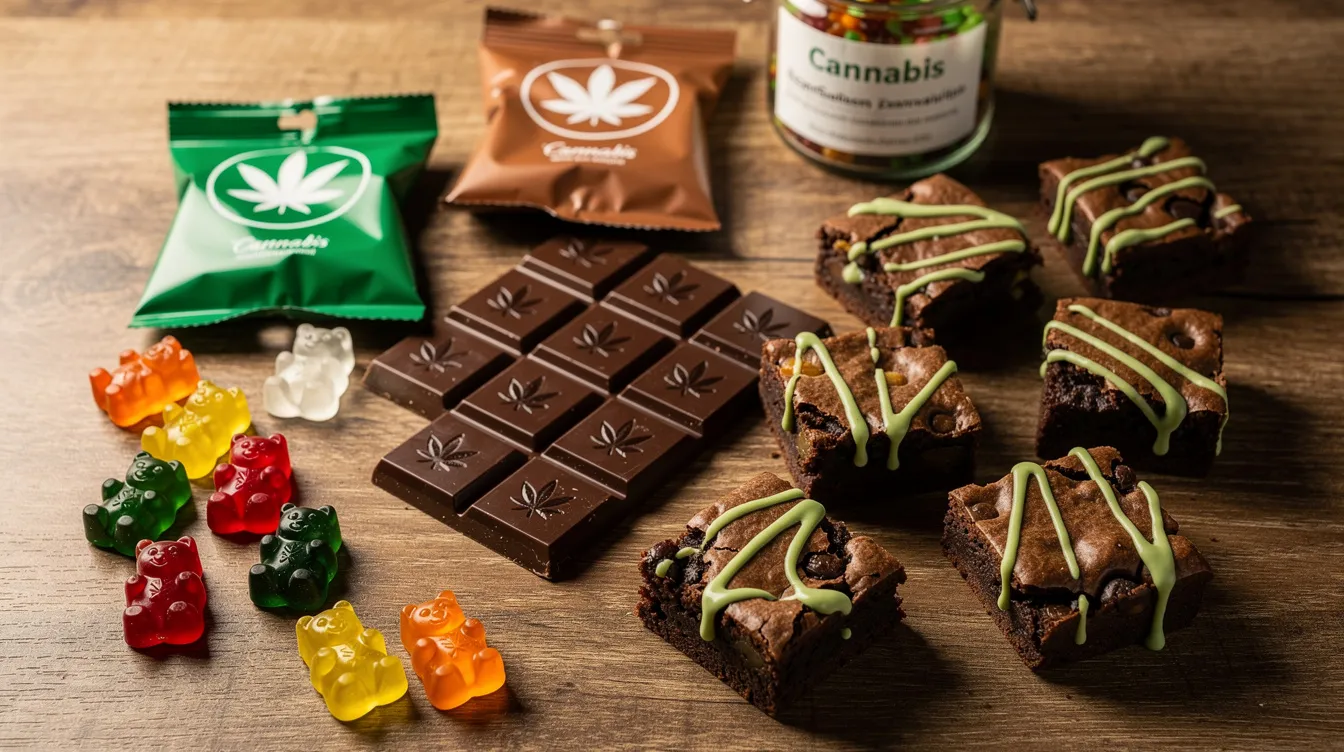
The term “edibles” comes from English and simply refers to edible cannabis products. This includes all foods and beverages that have been infused with cannabinoids. The range is vast: it includes classic baked goods like brownies and cookies, sweets like gummy bears and chocolate, as well as beverages, capsules, and savory snacks.
Cannabis edibles have a long history and have been used in various cultures and eras for both medicinal and ritual purposes. The social significance and perception of these products have changed significantly over time.
In practice, the term is almost always associated with products containing THC. Strictly speaking, CBD snacks or hemp products without psychoactive THC fall into a different category, even though they are technically also “edible.”
- Active ingredients: Edibles typically contain natural THC derived from cannabis flowers or extracts, often combined with CBD, terpenes, or other cannabinoids. The active ingredient THC is responsible for the psychoactive effects, while cannabidiol (CBD) is being studied in scientific trials, particularly for its therapeutic efficacy and safety. In some unregulated markets, semi-synthetic substances are also found.
- Context of use: Applications range from recreational use to self-medication and medically supervised therapy—the form remains the same, but the context varies considerably.
- Distinction from other forms: Capsules, standardized oils, and oral sprays work in a similar pharmacological way, but are not always referred to as “edibles” in the medical field.

Our Best Sellers
Discover the most popular Norddampf products
The Legal Status of Edibles in Germany (as of 2026)

The Cannabis Act of 2024 legalized cannabis possession for adults under certain conditions. However, edibles remain a special legal case with clear restrictions.
- Sale prohibited: The regular sale of THC-containing edibles will still not be permitted in Germany in 2026. The main reasons are: the protection of minors, the risk of confusion with regular candy, and documented risks of poisoning in children.
- Medical Use: Patients with a valid prescription can obtain standardized cannabis extracts, oils, or specific preparations at pharmacies. These products function similarly to edibles but are subject to strict quality and dosage requirements.
- Homemade Edibles: The legal gray areas surrounding homemade edibles are complex. The law takes a much more restrictive approach to the production and distribution of THC-infused foods than it does to the mere possession of flower.
- International comparisons: In Canada, detailed guidelines on the maximum THC content per edible unit have been in place since 2018. Germany is taking a deliberately more cautious approach in this regard.
- Focus on Education: Regulatory debates center heavily on protecting children, reducing emergencies, and improving consumer education.
How Edibles Affect the Body: From THC to 11-Hydroxy-THC
The effects of edibles differ fundamentally from those of smoking or vaping. A key difference is that, compared to other methods of consumption such as joints or vaporizers, edibles produce a significantly stronger and longer-lasting effect because they follow a different metabolic pathway. The reason lies in the metabolic pathway: While inhaled cannabinoids enter the bloodstream directly through the lungs, edibles take a detour through the digestive system.
After consuming edibles, the THC they contain is released into the stomach and intestines. It passes through the intestinal lining into the portal vein and from there directly into the liver—before it reaches the rest of the body.
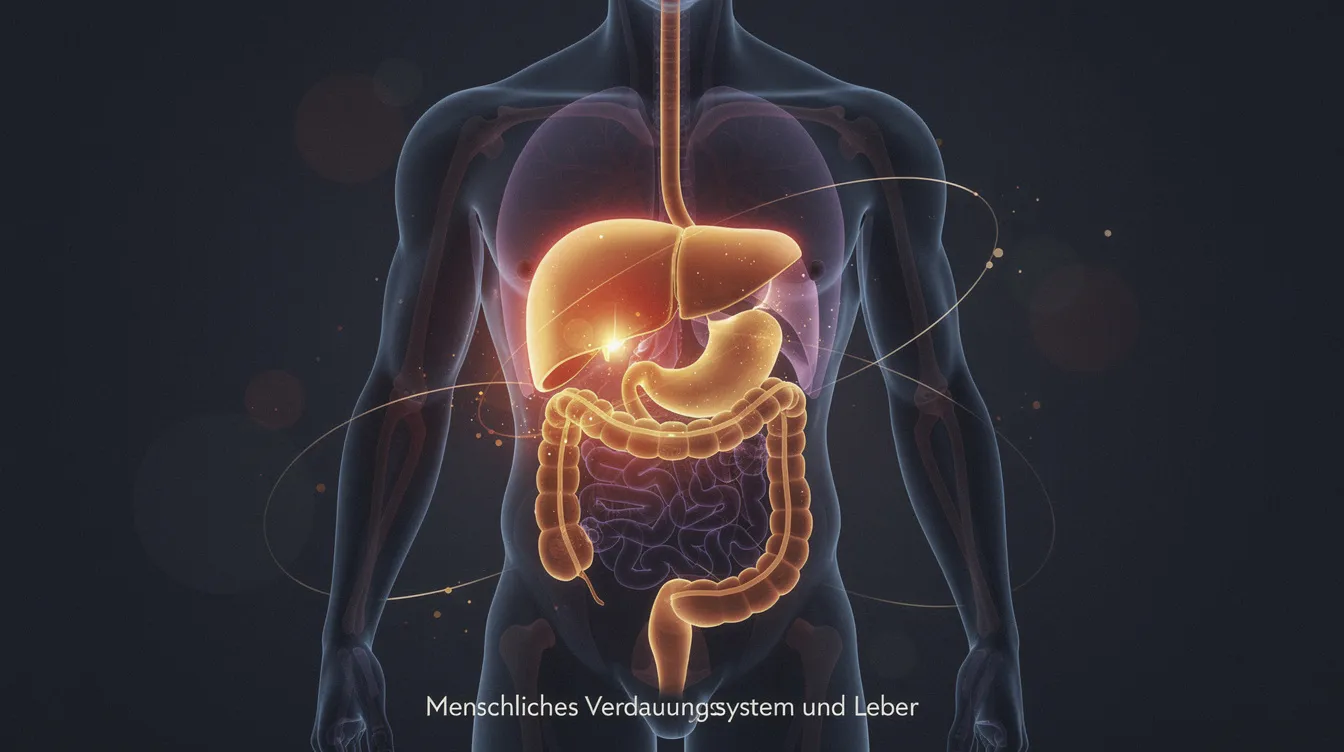
- The path through the body: THC from the edible is released into the digestive tract, absorbed through the intestinal lining, and transported to the liver via the portal vein.
- 11-Hydroxy-THC as a metabolite: In the liver, the enzyme CYP2C9 converts THC into 11-hydroxy-THC. Studies dating back to the 1970s show that this metabolite crosses the blood-brain barrier more efficiently and is often perceived as having a more intense effect. The conversion of THC to 11-hydroxy-THC in the liver causes edibles to have a stronger effect than smoked cannabis, which increases the risk of unwanted side effects and necessitates special precautions and care when consuming them.
- Onset of effects: Edibles typically take effect within 30–120 minutes. The peak usually occurs after 2–4 hours, and the total duration can last 6–12 hours. Stomach contents, metabolism, and tolerance significantly influence these time frames.
- Subjective effects: The high from edibles is often described as more physical—a “body high” characterized by deeper introspection, but also less control than a brief peak from inhalation. However, the effects can vary from person to person, as individual sensitivities, personal mindset and environment, and metabolism all play a significant role.
- Effect of CBD: When taken orally, CBD can inhibit liver enzymes, thereby slowing the breakdown of THC. As a result, the effects of cannabis may last longer rather than being reduced.
A helpful comparison: With smoking, the effect is like a rapid rise and fall. With edibles, it’s more like a long, flat curve with a significantly longer plateau. Edibles also offer advantages from a medical perspective, as they provide a more consistent and longer-lasting effect, which is particularly relevant for therapeutic applications.
Edibles vs. Vaporizers: Differences in Effects, Control, and Technology
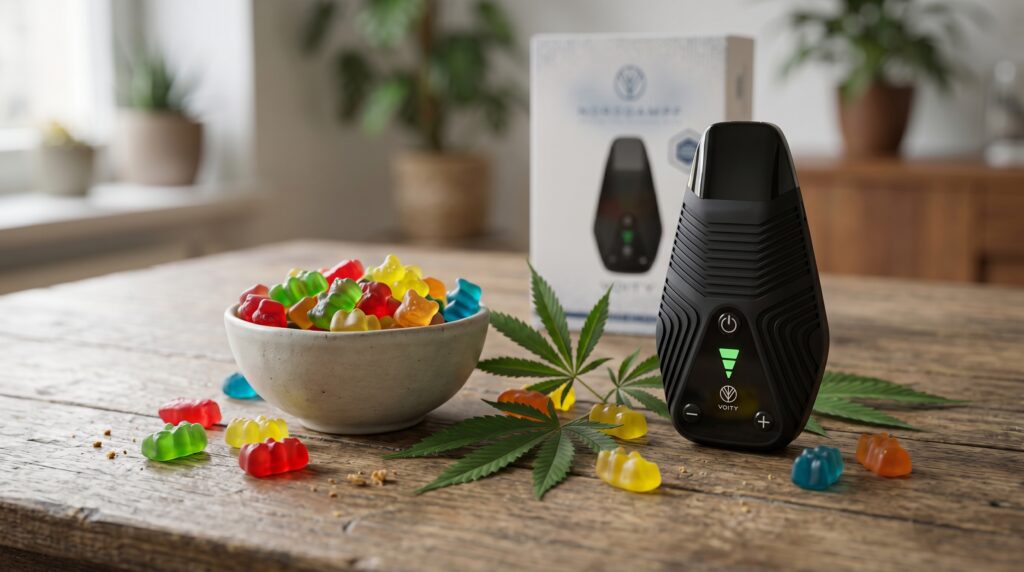
Both methods are smoke-free alternatives, but they differ significantly in terms of technology and user experience. For many people, the question is which method better suits their needs.
- Onset of effects: With vaporizers, the effects are usually noticeable within 1–10 minutes—this rapid response allows for precise adjustment. With edibles, it often takes 30–120 minutes for the effects to become noticeable.
- Duration of effects: Vaporizer effects typically last for 1–3 hours. Edibles can last for 4–12 hours or longer, which is significantly longer than when smoked, with effects wearing off gradually.
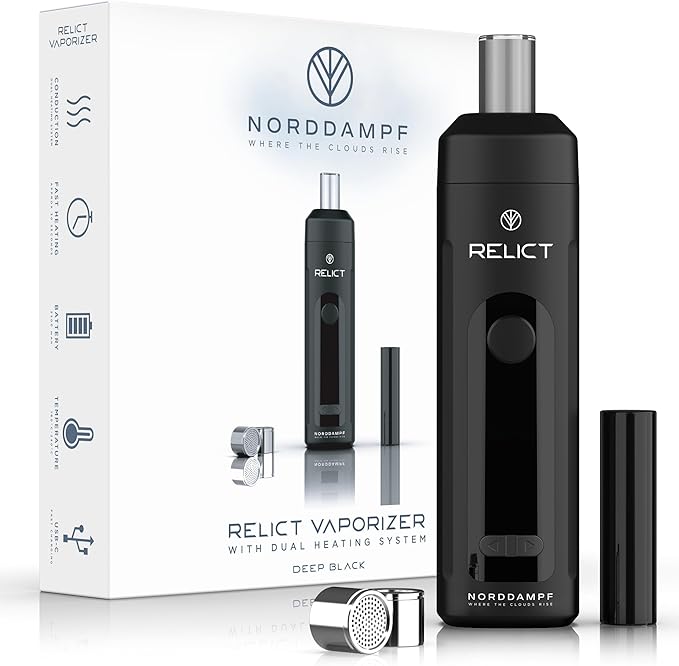
- Controllability: Modern vaporizers with temperature control—such as the RELICT —allow for gradual dosing and the selection of specific temperature ranges. Edibles, on the other hand, are usually available in fixed portions, making the exact amount of THC per portion crucial. Determining the correct amount is particularly important with edibles to avoid unwanted side effects.
- Efficiency and Health: Vaporizing at temperatures between 160–220°C releases cannabinoids without producing combustion byproducts such as tar. This puts significantly less strain on the lungs than smoking.
- The risk of edibles: Unclear dosages and a delayed onset often lead to “dose stacking” with edibles—the tendency to take another dose too soon, resulting in uncomfortably intense experiences. Data from Canada and the U.S. show a significant increase in emergency room visits following legalization.
- Usage scenarios: Edibles are better suited for situations where a long-lasting, consistent effect is desired. Vaporizers are ideal for finely adjustable effects that can be tailored to the situation.
An important rule for safely consuming edibles is: Always start with a low dose, wait for the full effects to kick in, and only increase the amount after enough time has passed.
Decarboxylation: Why It Is (Theoretically) Crucial for Edibles
Raw cannabis plants contain mainly THCA and CBDA—the acidic precursors of the well-known active compounds. It is only when heated that these are converted into active THC and CBD, respectively. This process is called decarboxylation.
- The science behind it: During decarboxylation, a carboxyl group (CO₂) is removed. This alters the molecular structure, allowing THC to bind more effectively to cannabinoid receptors in the brain.
- Natural sources of heat: Decarboxylation occurs during smoking, vaping, or industrial manufacturing processes. Temperatures of approximately 105–120°C over a period of 30–60 minutes are typical.
- Relevance for edibles: Without prior decarboxylation, edibles would be significantly less potent. The body has only a very limited ability to convert raw THCA into psychoactive THC.
- Temperature-related factor: Even slight preheating in the vaporizer leads to decarboxylation. As a result, the resulting “Already Vaped Bud” (AVB) has different properties than raw material.
Here’s a helpful comparison: Green coffee doesn’t taste like coffee—it’s only when it’s roasted that its characteristic flavors are released. The same is true for cannabis and decarboxylation.
AVB vs. Fresh Plant Material: Differences in the Context of Edibles
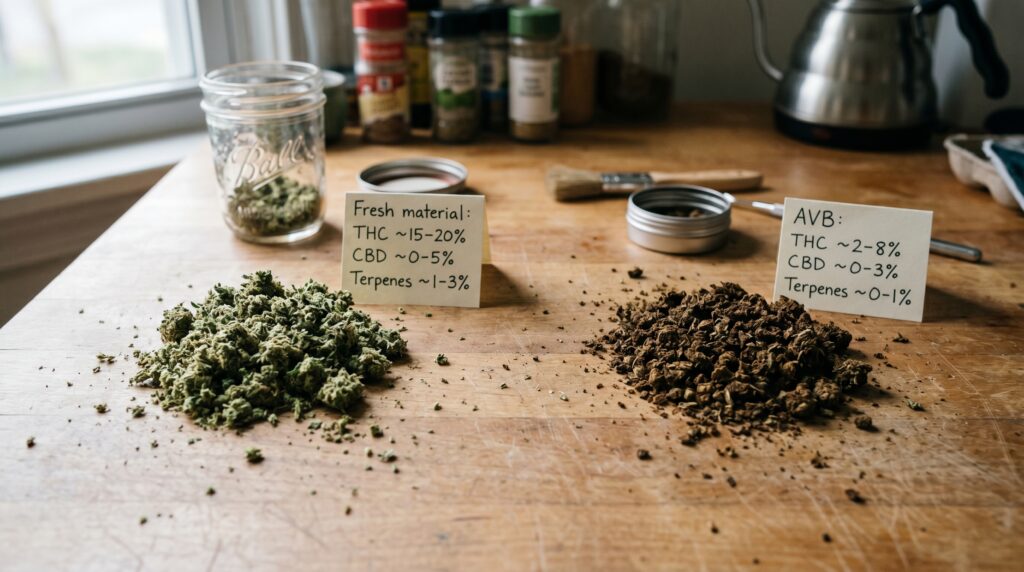
AVB stands for “Already Vaped Bud”—cannabis that has already been used in a vaporizer. This process has significantly altered its active ingredient profile.
- THC content: Depending on the temperature and duration used, AVB has already released a large portion of its THC. The remaining content varies, but is often between 10–30% of the original content.
- Cannabinoid profile: The AVB contains more oxidized breakdown products, such as CBN, while the volatile terpenes have largely evaporated. This tends to result in more sedative, less “clear-headed” effects.
- Decarboxylation has already taken place: Material used in a modern vaporizer such as the RELICT typical operating temperatures is typically largely decarboxylated. The remaining THC is therefore already in its active form.
- Uncertainty regarding potency: It is extremely difficult to determine the exact potency of AVB, as it depends on temperature, duration, and the source. This poses a problem for precise medical applications.
- Comparison with fresh material: Fresh cannabis flowers have a different terpene profile and cannabinoid spectrum. For this reason, standardized extracts are preferred in the medical field.
- The role of high-quality vaporizers: Precise temperature control makes it easier to gauge just how "exhausted" the material actually is—a benefit for anyone who values transparency.
Some consumers prefer AVB because of its milder and often more relaxing effects, while others choose fresh plant material for a more intense experience.
Effects, duration, and typical expectations with edibles
Many unpleasant experiences with edibles stem from unrealistic expectations. The appeal of cannabis edibles often lies in the pleasant, controlled experience characterized by flavor and mindful consumption. The effects of edibles differ fundamentally from those of smoking or vaping.
- Onset of effects: The effects of edibles often take time to kick in, usually after 30–90 minutes, and can last up to 12 hours. “Not feeling anything after 30 minutes” does not automatically mean “no effect.” This delay increases the risk of an overdose if impatient users consume more before the effects set in.
- Effect profile: Edible effects are often described as physical, heavy, and introspective. The experience is less easily controlled than the fleeting highs experienced when inhaling.
- Duration: The subjective high can last 4–8 hours. Aftereffects such as fatigue or residual drowsiness may persist into the next day, especially at higher doses.
- Individual factors—such as age, body weight, metabolism, stomach contents, the amount consumed, and previous experience—significantly influence when the effects set in and how intense they are. Everyone reacts differently to edibles, which is why the effects can vary greatly from person to person.
- Tolerance and cross-tolerance: People with a high tolerance to inhalation cannot automatically predict how they will react to oral doses. Metabolism via 11-hydroxy-THC produces a different profile.
- Mindset: A calm environment, ample time, and realistic expectations have a huge impact on whether the experience is perceived as enjoyable or overwhelming.
Recommendation: Always start with a low dose and wait at least two hours before increasing the amount, so you can properly gauge the effects and avoid overdosing.
Common mistakes, misunderstandings, and risks associated with edibles

Following legalization in North America, a significant increase in emergency room visits related to edibles has been documented. Colorado saw a 2.7-fold increase in emergency room visits related to edibles between 2010 and 2015. Most cases are due to misjudgments. Edibles account for about 10% of cannabis-related emergencies, even though they make up only a small portion of the total THC sold. Children are particularly at risk, as edibles often look like regular candy, which can lead to accidental poisoning. Therefore, the rule is to always store edibles in a child-proof container and separate from regular food to prevent accidental ingestion. Ensure that edibles are stored out of the reach of children and uninformed individuals.
- Dose Stacking: Taking another dose too soon—within 30 to 60 minutes—can lead to a severe overdose because the effects of both doses are cumulative. This is one of the most common mistakes.
- Mistaken for candy: Edibles often look like ordinary snacks. Canadian data shows that edibles account for about 70% of pediatric cannabis exposures—a significant risk for children and uninformed individuals.
- Uncertainty regarding ingredients: In unregulated markets, products can have widely varying THC levels. Synthetic cannabinoids are also occasionally found, which are significantly more dangerous than natural THC. With homemade edibles, the dosage can be unpredictable because the active ingredient isn’t always evenly distributed, which can lead to unintended overdoses.
- Typical symptoms of an overdose include rapid heartbeat, dizziness, severe anxiety, disorientation, and subjective perceptual disturbances, including hallucinations. These side effects are usually temporary but can be very distressing. Overdoses from edibles are generally not physically life-threatening, but it is important to remain calm.
- A common misconception about CBD: CBD does not reliably "slow down" the effects when taken orally; rather, it can influence metabolic pathways and prolong the duration of THC effects.
- Combined use: Consuming alcohol or other substances at the same time can intensify the effects and make them unpredictable. As a general rule, you should avoid combining edibles with alcohol, as this can intensify the effects in unpredictable ways.
- Before consumption: It is recommended that you eat a light snack before consuming edibles; however, you should avoid fatty foods, as they can delay the effects.
- Long-term risks: Regular, heavy cannabis use poses risks to learning and memory, especially among adolescents. If in doubt, seek medical advice.
Overview: What types of edibles are there?
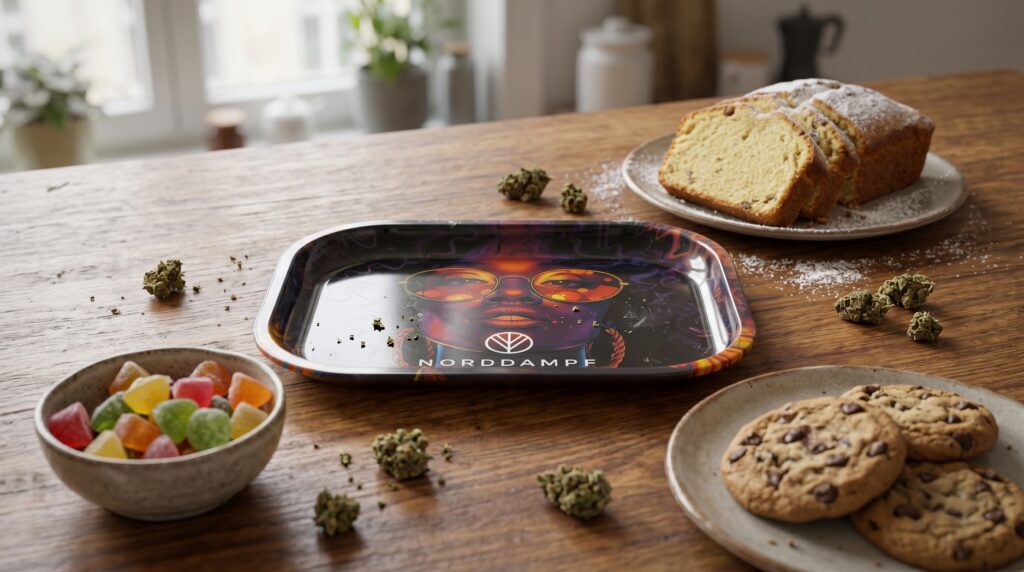
This section provides an overview of common edible categories—without specific recipes or dosage guidelines.
- Baked goods: brownies, cookies, cakes, muffins, and savory pastries. In legal markets, they are often sold in pre-portioned units.
- Confectionery: gummy bears, soft candies, chocolate, hard candies, and lollipops. These are particularly popular, but there is an increased risk of confusion due to their similarity to regular candy.
- Beverages: THC-infused sodas, teas, or tinctures. The absorption of the active ingredient can vary depending on the form—some products use nano-emulsified active ingredients for faster onset of effects.
- Capsules and medical formulations: Standardized capsules, oils, and solutions for medical therapy, containing as consistent and predictable amounts of active ingredients as possible. On the medical side, these edibles offer a consistent and long-lasting effect, particularly for chronic conditions such as multiple sclerosis, cancer, or post-traumatic stress disorder (PTSD), which many patients find more pleasant than inhaling cannabis. Some patients prefer these types of edibles because the slow and consistent effect offers therapeutic benefits, particularly for those who need stable relief over several hours.
- Sublingual forms: lozenges, melt strips, or certain types of chocolate, in which some of the cannabinoids are absorbed through the oral mucosa, resulting in a faster onset of action.
The wide variety of edibles appeals to a range of audiences—from occasional users to patients with chronic pain to people who are actively seeking smoke-free options. In Germany, availability remains severely restricted for legal reasons.
Vaporizers as a controlled alternative to edibles
For many people, vaporizers are a practical alternative when they want to avoid the risks associated with edibles—whose dosage is difficult to gauge—while still enjoying a smoke-free experience.
- How it works: Vaporizers heat dried flowers or extracts to a specific temperature. The cannabinoids vaporize without burning.
- Temperature control: High-quality devices such as the RELICT from Norddampf precise temperature selection. This makes it possible to influence the ratio of cannabinoids to terpenes.
- Dosage control: Vaping allows for small, repeated inhalations. The effects can be assessed after just a few minutes—unlike the fixed single dose found in many edibles.
- Efficiency: Vaporizers extract active compounds very efficiently. Studies show that 40–70% more active compounds can be extracted than through combustion.
- Health considerations: Avoiding smoke and combustion products reduces the strain on the lungs and respiratory tract.
- Role in the overall spectrum: Edibles, vaporizers, and traditional consumption methods each have their own advantages and disadvantages. Making well-informed decisions—ideally in consultation with healthcare professionals—is essential.
FAQ – Frequently Asked Questions About Edibles, Effects, and Techniques
How long do edibles remain detectable in the body?
The psychoactive effects usually wear off after 6–12 hours. However, THC metabolites remain in the body for much longer and can be detected in urine tests—depending on the frequency of use—from a few days to several weeks. Metabolism, body fat percentage, and the testing method used significantly influence the detection time.
Are edibles generally unsuitable for beginners?
Because of their delayed onset and long-lasting effects, edibles are particularly difficult for inexperienced users to gauge. This increases the risk of unpleasant experiences. Beginners should thoroughly research the product before use, be aware of the legal framework, and seek medical advice if in doubt.
Why do some people have such a strong reaction to small amounts of edibles?
Genetic differences in liver enzymes, individual sensitivity of the endocannabinoid system, stomach contents, and mental state can cause even small amounts to be experienced as very intense. Pre-existing medical conditions, medications, and the use of multiple substances also play a role.
Are there edibles that don’t get you high from THC, but only contain CBD?
Internationally, there are numerous CBD-containing snacks and beverages with negligible THC content. These do not produce a traditional high, but may cause side effects such as drowsiness. In Germany, only products with defined THC limits are permitted for sale.
Are medical cannabis capsules and oils the same as edibles?
These preparations have similar pharmacological effects—oral administration, metabolism in the liver, and a slow onset of action. In a medical context, however, they are classified as pharmaceutical preparations, with standardized active ingredient concentrations and clear documentation. In Germany, they are available only by prescription at pharmacies.
Edibles are a complex topic with their own set of rules. Research is providing increasingly better insights, but individual variability remains a key factor. Whether it’s edibles, vaporizers, or other forms—solid knowledge is the foundation for making informed decisions.