
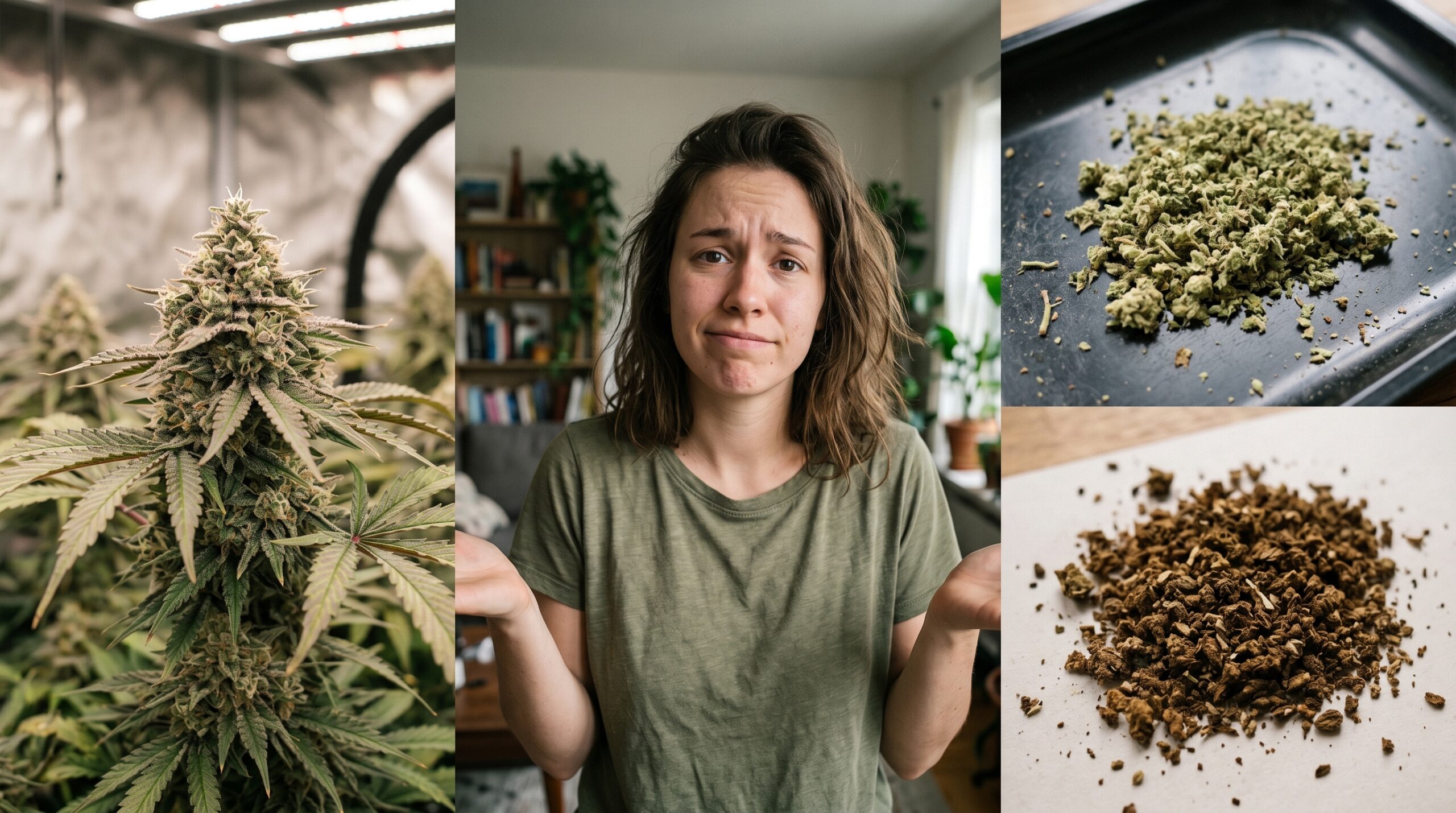
What actually happens to your cannabis after it goes through the vaporizer? And how does this material fundamentally differ from fresh flowers—especially when it comes to edibles and their effects? This article explains the technical, chemical, and sensory differences between AVB and fresh cannabis. The term “decarboxylation” is a key chemical concept that helps explain how the active compounds in cannabis are activated. Incidentally, the term AVB is also used in the construction industry, where the key distinction lies between fresh material and processed fillers and building materials (AVB).
Key Findings (Brief Overview)
AVB vs. new material – here are the key differences you should know:
- AVB (Already Vaped Bud) refers to plant material that has already been heated in a vaporizer, is fully decarboxylated, and, depending on the vaporization temperature, still contains 10–30% of the original cannabinoids
- Fresh cannabis flowers have significantly higher THC levels (typically 15–22% in Germany in 2024) and retain their full terpene profile—but must first be decarboxylated before oral consumption
- Edibles containing AVB are often described as having a more physical, mild, and sedative effect, while fresh material delivers more intense, complex effects due to the full entourage effect
- The difference in taste is striking: AVB has a roasted, nutty flavor, while fresh coffee has a variety-specific aroma
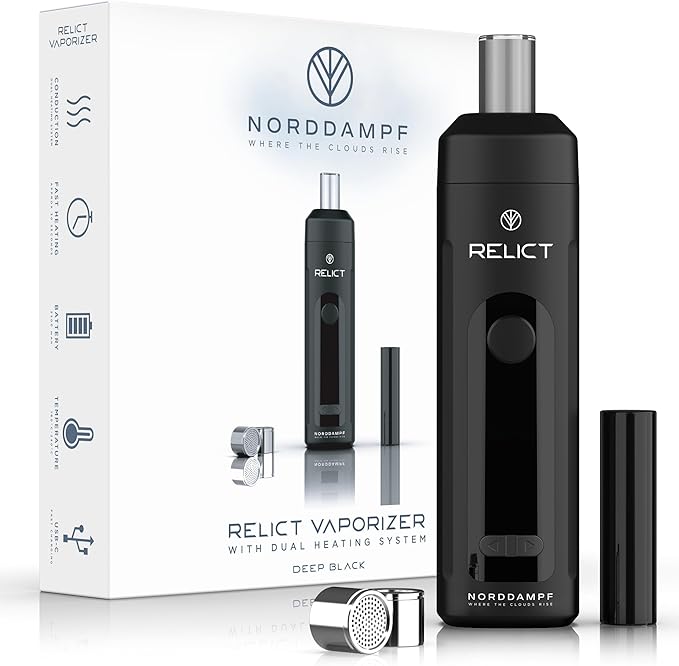
- Modern vaporizers with precise temperature control, such as the RELICT , enable controlled extraction and directly influence the quality of the resulting AVB
What is AVB, and how does it differ from fresh cannabis?
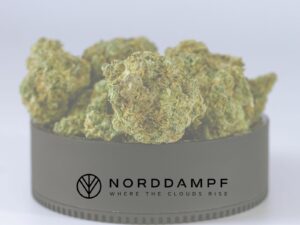
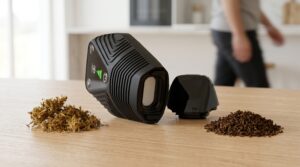
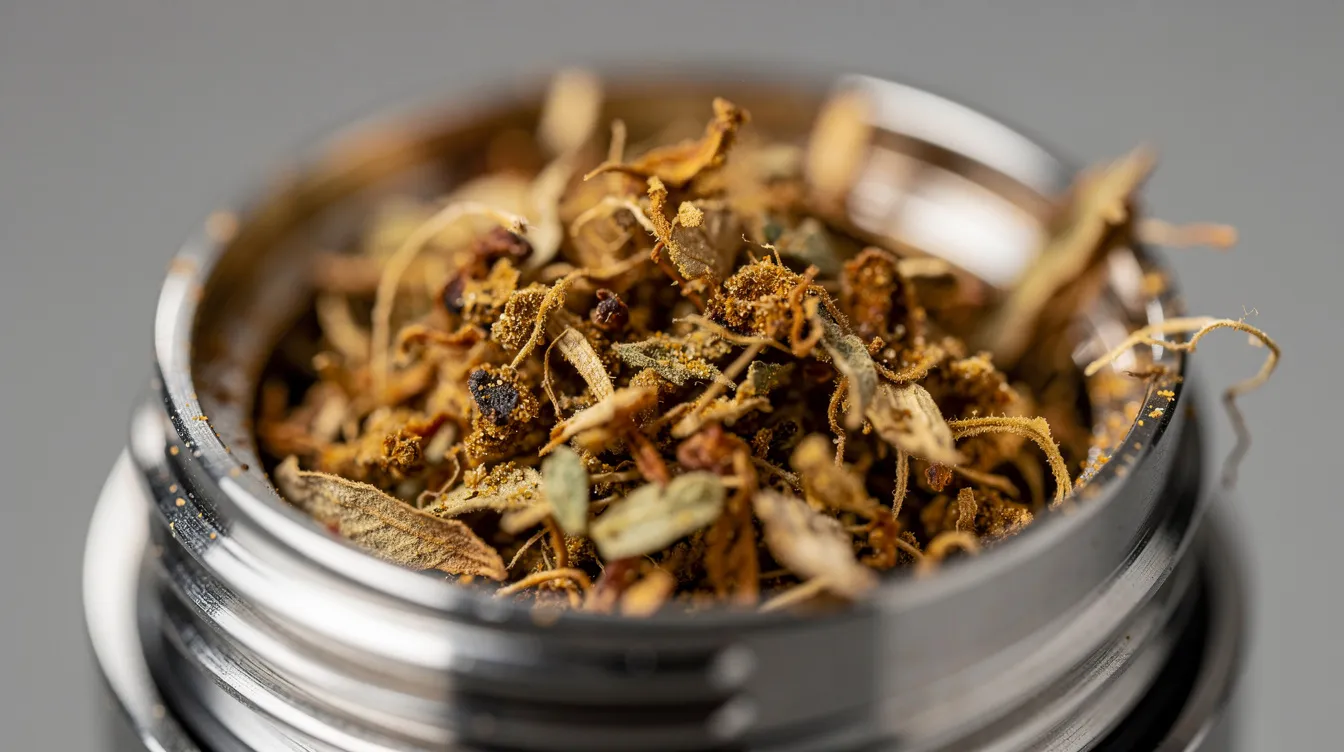
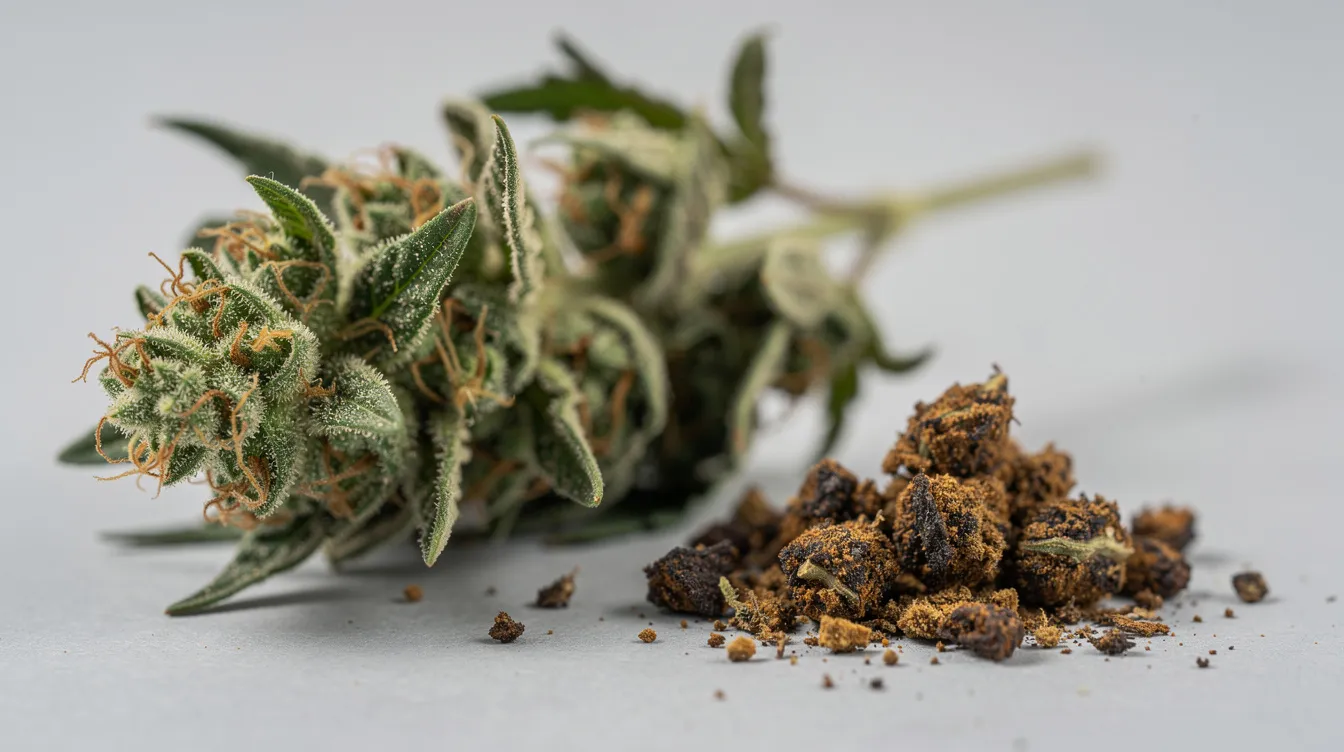
AVB stands for Already Vaped Bud—sometimes also referred to as ABV (Already Been Vaped). It refers to the plant material left in the chamber after a session in a dry-herb vaporizer. Unlike the ash produced when smoking or rolling joints, AVB remains structurally intact because vaporization heats the material without burning it.
Visual and sensory differences:
| feature | Fresh flowers | General Terms and Conditions |
|---|---|---|
| Color | Lush Greenery | Light brown to dark brown |
| texture | Resinous, sticky | Dry, brittle |
| smell | Intense, characteristic of the strain (skunky, citrusy) | Roasted, nutty, steamed |
| resin sheen | Clearly visible | Hardly any |
AVB typically forms at temperatures between 170–220 °C in a vaporizer. The color varies depending on the settings and duration of the session: golden-brown material usually results from lower temperatures below 185 °C, while dark brown to black AVB indicates intense extraction at temperatures above 200 °C.
The key point: AVB still contains cannabinoids —but not all of them. Some were already extracted and inhaled during vaporization.
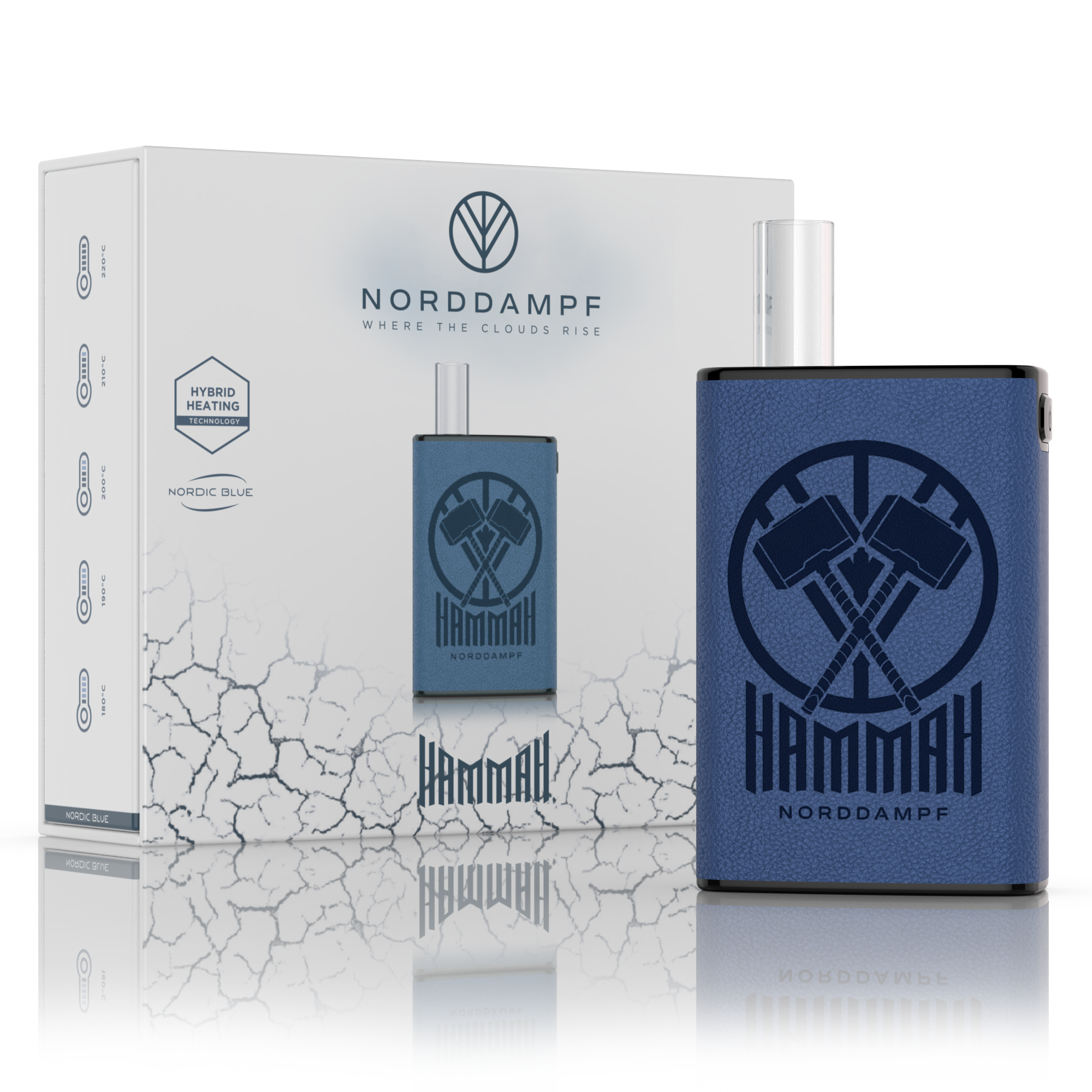
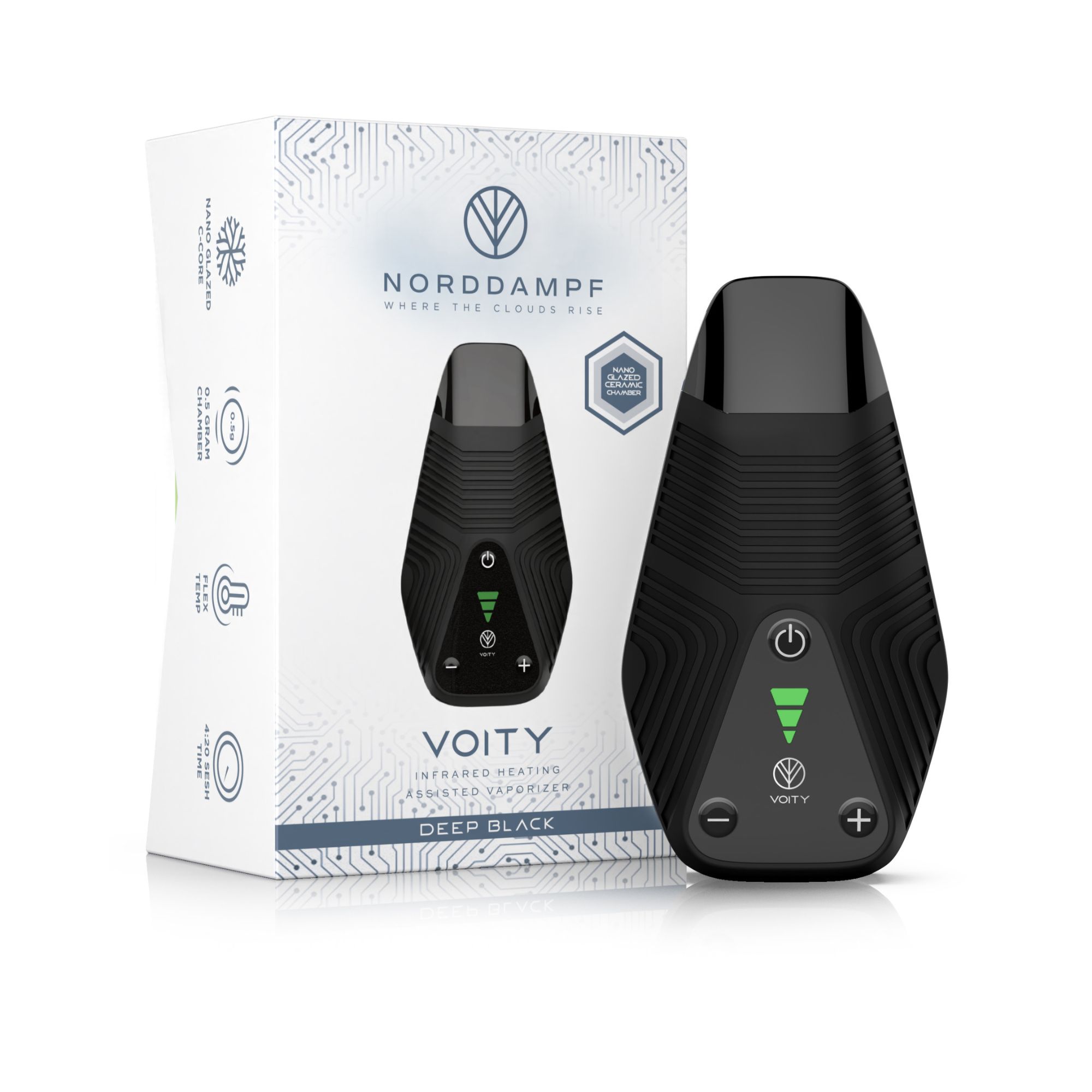
Our Best Sellers
Discover the most popular Norddampf products
Decarboxylation: Why AVB is already "activated" and fresh material is not
Decarboxylation is a heat-induced process in which non-psychoactive THCA ( tetrahydrocannabinolic acid) is converted into active THC through the release of CO₂. This chemical concept is central to understanding the activation of cannabis’s active compounds and forms the scientific basis for its effects when consumed orally. This step is crucial for any form of oral consumption.
Fresh and dried cannabis flowers mainly contain:
- THCA (non-psychoactive)
- CBDA (cannabidiolic acid)
- Other cannabinoid acids
Without heating, these compounds remain largely inactive. The conversion only begins at temperatures of around 105–120 °C; in an oven, this process typically takes 30–60 minutes for fresh material. The optimal temperature for the decarboxylation of THCA to THC is between 105°C and 120°C; the duration of heating is also crucial for maximizing activation while minimizing the loss of terpenes.
When vaporizing, this activation happens automatically:
Heating the chamber to 160–210 °C causes THCA to gradually convert to THC. By the end of a session, the AVB is fully or largely decarboxylated—a technical advantage that eliminates the need for an additional oven step.
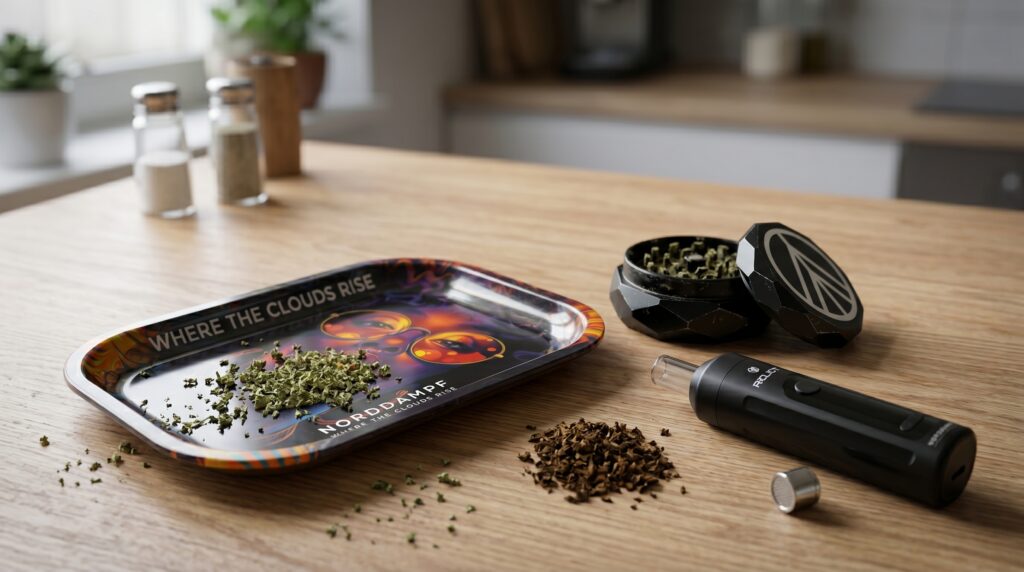
Modern vaporizers with precise temperature control, such as the RELICT from Norddampf hybrid heating systems Norddampf even heating without hot spots. The result: more consistent decarboxylation and higher-quality AVB compared to uneven manual methods.
THC Content & Potency: How strong is AVB compared to fresh material?
The potency of edibles depends primarily on the THC content of the source material —supplemented by other cannabinoids such as CBD and CBN.
Comparison of typical power ratings:
| Material | THC content | Residual cannabinoid content |
|---|---|---|
| Fresh Pharmacy Flowers (Germany 2024) | 15–22% | 100% (originally) |
| Baking temperature: 170–185 °C | On sale | 20–30% remaining |
| AVB at 200–220 °C | Heavily discounted | 5–15% remaining |
The loss of potency occurs because THC vaporizes at around 157 °C and is inhaled along with the vapor. The hotter and longer the session, the less active ingredient remains in the material.
Color as an indicator:
- A golden-brown AVB indicates higher residual potency
- Dark brown to black material is largely depleted
For some users, this reduced potency is actually an advantage. The milder profile may be more pleasant for sensitive users or those using it for medical purposes than the full intensity of freshly decarboxylated material. However, without laboratory analysis, it is difficult to determine the exact active ingredient content and quantity.
Differences in effects: Edibles containing THC vs. fresh cannabis
Cannabis edibles generally take time to take effect—typically 30–120 minutes—and last for 4–8 hours. This applies to both dried and fresh cannabis. After ingestion, THC passes through the gastrointestinal tract and is converted in the liver into 11-hydroxy-THC, which intensifies and prolongs the effects. Many users think nothing is happening after a short waiting period, even though the active ingredient is already taking effect in the body, which can often lead to an overdose.
Typical user descriptions of AVB Edibles:
- A physical high
- Calming, relaxing
- A “gentle” start
- Generally milder than expected
- A longer-lasting "couch-lock" effect
When consuming edibles, many users report feeling as though they are entering another world, which underscores the intense effects and altered perception.
New items at Edibles:
- A more intense, stronger effect
- More cerebral, euphoric elements
- The varietal nuances remain distinct
- A more complex profile of effects due to intact terpenes
The difference lies in the altered cannabinoid profile: AVB often contains a higher proportion of CBN (cannabinol), which is produced by the oxidation of THC and has calming properties. At the same time, many volatile terpene compounds are absent, which enhance the cerebral effects in fresh material.
The entourage effect—the interaction between cannabinoids and terpenes—is much more pronounced in edibles made from fresh flowers. Myrcene enhances sedation, while limonene has a mood-lifting effect. These synergies make the subjective experience more complex and nuanced.
Especially with THC-containing cookies and other edible cannabis products, there is an increased risk of uncontrolled dosing and overdose, which can lead to mental health crises and physical discomfort.
Temperature, Evaporation, and Residual Compounds: What Determines the Quality of AVB?
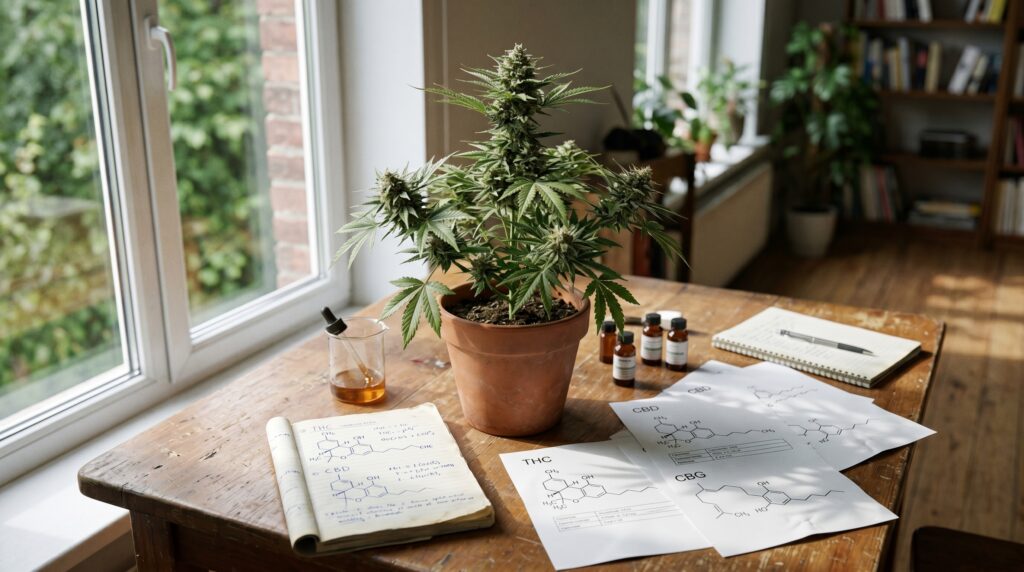
The evaporation temperature is the most important factor affecting the quality of the residue.
Boiling points of important compounds:
| Connection | boiling point |
|---|---|
| pinene | approx. 155 °C |
| THC | approx. 157 °C |
| myrcene | approx. 167 °C |
| CBD | about 180 °C |
| CBN | about 185 °C |
Temperature strategies and their effects:
- 170–190 °C: Moderate extraction, higher residual potency in the AVB, lower total vapor yield
- 200–225 °C: Maximum extraction, darker AVB with minimal residues
Convection-dominated systems draw hot air evenly through the material, producing a uniform, light-brown AVB. Pure conduction heaters tend to create hot spots with unevenly colored areas.
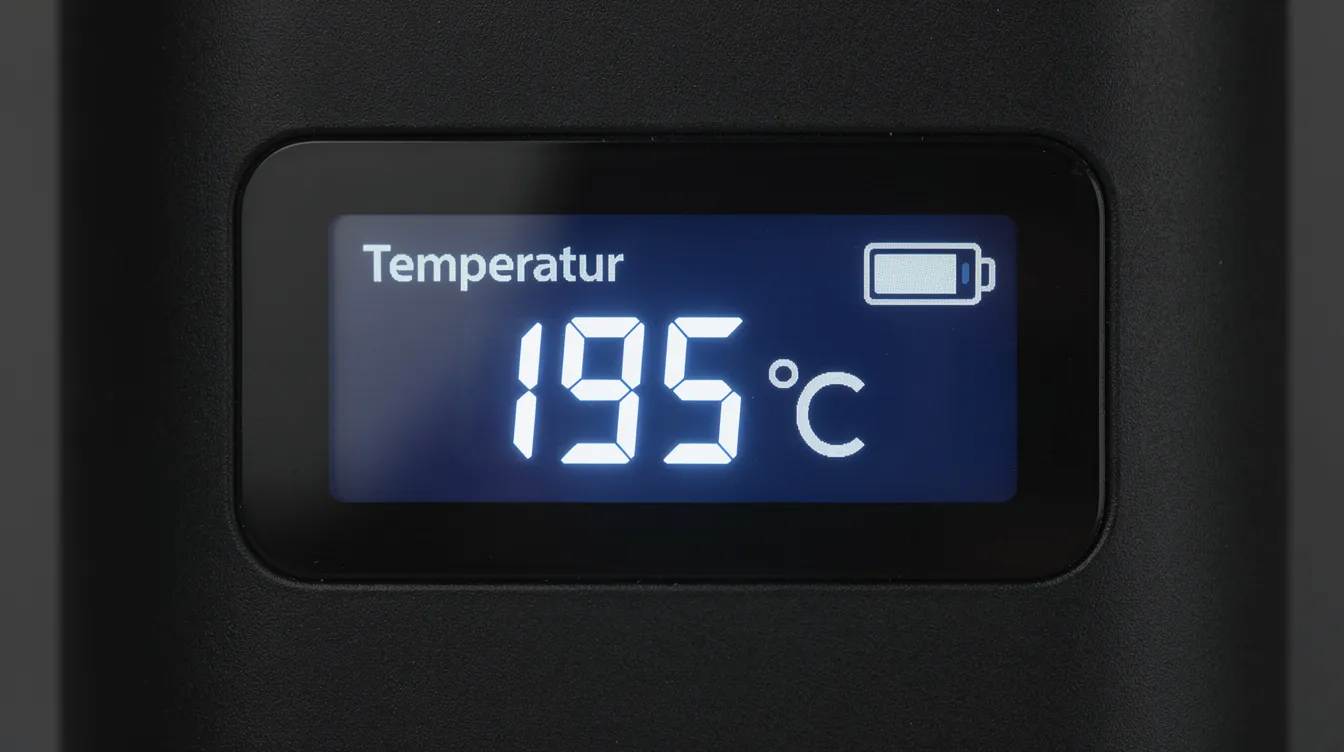
Visual indicators as a proxy for quality:
- Golden brown: Edible, higher residual potency
- Medium brown: Moderately extracted
- Dark brown to black: Largely depleted, often with a burnt taste
High-quality vaporizers like the RELICT gradual temperature profiles—for example, starting at 180 °C to release terpenes, then rising to 200 °C for maximum THC extraction. This optimizes both the vaping experience and the quality of the resulting ash.
Flavor & Terpenes: Why Fresh Ingredients Make Edibles More Aromatic
Terpenes are responsible for the characteristic aroma of cannabis and influence its effects through the entourage effect. The problem is that many terpenes vaporize at temperatures as low as 130–180 °C—which is earlier than THC.
Typical terpene profiles in fresh material:
- Myrcene: Earthy, musky (typical of Indica strains)
- Limes: Citrusy, fresh
- Pinene: Resinous, piney
- Caryophyllene: Peppery, spicy
When vaporized, a large portion of these herb-like aromas are lost to the vapor. Community tests confirm a 50–80% loss of terpenes in the vapor. The result: a roasted, somewhat bitter-nutty flavor lacking the nuances typical of the strain.
Taste comparison of edibles:
| Based on the General Terms and Conditions | New material |
|---|---|
| Neutral, nutty | Characteristic aroma of the variety |
| Slightly bitter | Complex, nuanced |
| Muted cannabis flavor | Full terpene profile |
Some users prefer the more neutral taste of AVB because it blends more easily into foods like chocolate or gummy bears. Others specifically appreciate the full flavor profile of fresh flowers.
Precisely controlled vaporization temperatures help preserve terpenes as much as possible during vaping—striking a balance between immediate vapor enjoyment and preserving the cannabis flavor. Decarboxylation and gentle processing also help unlock the full potential of the cannabis plant for edibles.
AVB vs. fresh material in the context of technology and vaporizer quality
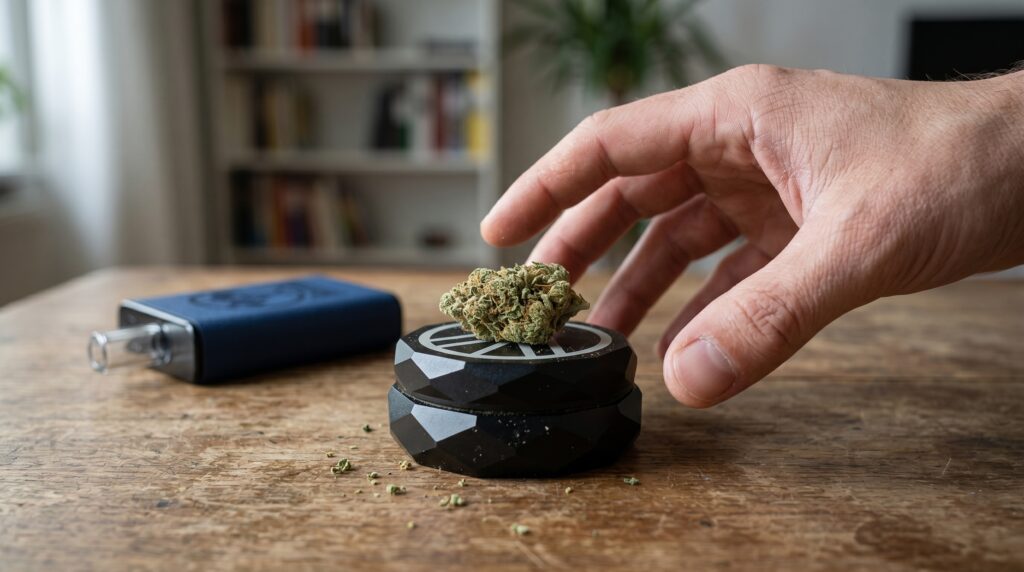
The technology of the device plays a key role in determining the quality of the vapor. The more precise your vaporizer is, the easier it is to control how much potency remains in the material.
Heating Systems Compared:
| Method | benefits | disadvantages |
|---|---|---|
| Convection | Uniform heating, homogeneous AVB | Longer heating time |
| Conduction | Quick heating | Hotspots are possible |
| Hybrid (conduction + convection) | Optimal control, consistent results | More complex technology |
Modern devices like the RELICT from Norddampf hybrid heating systems with digital temperature control. This allows for gradual temperature profiles: starting at 180 °C for terpene-rich vapor, then gradually increasing to 200 °C.
Practical considerations for high-quality AVB:
- A consistent grind prevents clumping
- An adjusted fill level optimizes airflow
- Digital displays enable precise repeatability
Comparisons show that high-end devices deliver 20–30% more residual potency than inexpensive conduction models. Uneven heat burns off terpenes prematurely and produces inconsistent, sometimes charred AVB.
Technology is no substitute for knowledge—but it makes all the difference.
For more information about vaporizers, terms and conditions, and product details, visit the manufacturer's website.
Legal and Health Framework (Germany 2024/2025)
This article is for informational purposes only and does not contain any recommendations regarding consumption or preparation.
Legal situation in Germany:
- Edibles containing THC are available only through pharmacies for medical use
- Standardized dosing guaranteed for mail-order pharmacies
- Homemade THC edibles remain legally problematic
- The cannabis law reforms allow personal cultivation, but not unregulated edibles
- Since July 2023, the Alternative Building Materials Ordinance (EBV) has established uniform federal regulations governing the conditions under which alternative building materials (AVB) may be used. This regulation is designed specifically to protect soil and groundwater and sets strict guidelines for the use of AVB. Depending on the pollutant class, AVB may not be used in all locations; for example, they are prohibited in water protection areas. Information on these legal requirements can be found on the relevant product and information pages.
- AVB can also be used in capsules to allow for discreet and precise dosing.
Health Information:
- Edibles result in delayed effects that are difficult to predict
- The long duration of action (4–8 hours) poses risks for inexperienced users
- AVB's variable profile makes dosing even more difficult
- Without standardized products, potential side effects are difficult to predict
Recycled construction materials conserve natural resources, promote the circular economy, and require less energy to produce than virgin materials. While virgin materials come directly from raw material sources and are processed from scratch, recycled construction materials consist of processed construction waste or excavated material that is returned to the building materials cycle. The use of virgin materials often leads to high CO2 emissions and high resource consumption, whereas AVB reduces landfill volume. AVB may vary in quality due to impurities and is often limited to specific applications. The use of AVB is also often more cost-effective than that of primary building materials. However, there remain preconceptions regarding the technical quality of AVB compared to new construction.
For medical questions, consult a healthcare professional. Laboratory-tested pharmacy preparations are the only way to ensure controlled dosing and active ingredient content.
Conclusion: When AVB makes sense—and when fresh material is superior
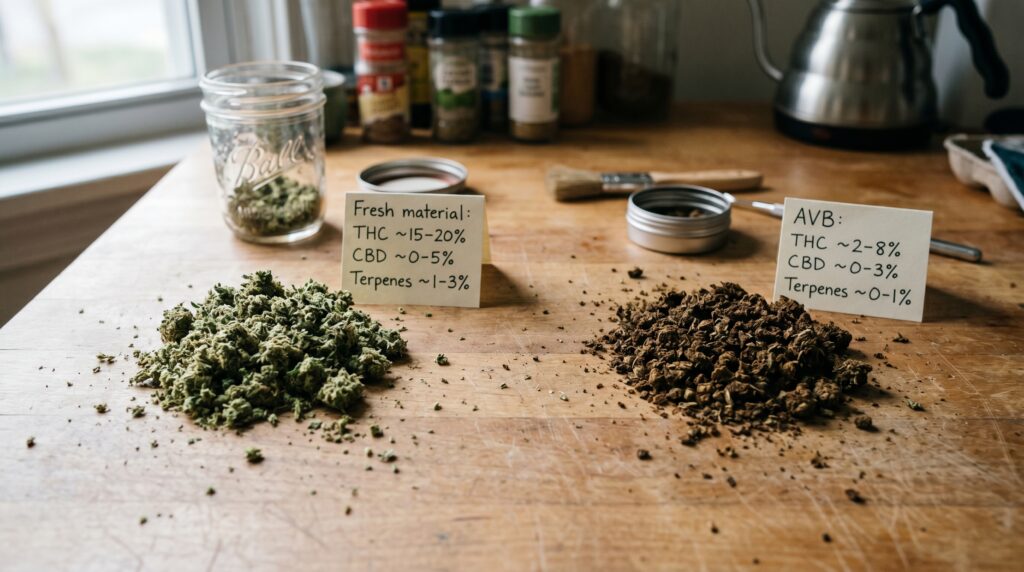
AVB isn't just an alternative to waste—it's a technically interesting resource with its own unique characteristics. The choice between AVB and fresh material depends on your priorities.
AVB is suitable when:
- You prefer pre-decarboxylated material that doesn't require baking
- Milder, more subtle effects are desired
- The more neutral flavor is better suited to your needs
- Resource efficiency is a top priority
- You want to save money because AVB is a recycled material
Homemade products made from AVB, such as tinctures or edibles, are also easy to share with others.
Fresh material is superior when:
- Maximum potency and the full entourage effect are desired
- Varietal aromas are important
- The goal is to achieve precise, reproducible results
The quality of both options starts with the vaporizer. Precise temperature control and even heating systems—such as those found in RELICT Norddampf optimize both the immediate vaping experience and the resulting quality of the AVB.
Technology, knowledge, and informed decisions make all the difference.
FAQ – Frequently Asked Questions About AVB, Fresh Cannabis, and Edibles
Will the AVB lose its effectiveness over time if I keep it?
Yes. Even decarboxylated material continues to age. THC can oxidize into CBN, terpene residues evaporate, and the overall potency slowly decreases over the course of months. Storing it in a cool, dark, and airtight place slows down this process. Interestingly, fresh flowers are even more sensitive to light, heat, and oxygen because their terpene profile is more complete.
Is AVB automatically "more medicinal" or "milder" than fresh material?
No. AVB is not medical in and of itself—it simply offers a different profile with a lower THC concentration, potentially a higher CBN content, and fewer terpenes. Some patients subjectively find this milder, more physically oriented profile more pleasant. For medical use, however, standardized pharmacy preparations with a defined active ingredient content in oil or capsules remain the safer option. Always consult with a healthcare professional.
Can I mix AVB and fresh flowers to create an "intermediate blend"?
Technically yes—but practically problematic. Blending results in a profile that combines potency and aroma, but it makes it much harder to predict the overall effect. Variations in decarboxylation levels, THC content, and terpene profiles complicate the planning process. Without laboratory analysis, it is difficult to estimate the exact active ingredient content—a critical factor for anyone who needs to dose carefully.
Does the cannabis strain (Indica, Sativa, hybrid) still matter when it comes to AVB?
The differences between strains remain, but are significantly less pronounced. A large portion of the strain-specific terpene profile has already been inhaled with the vapor. The cannabinoid profile (e.g., THC/CBD ratio) can still produce certain differences in effect with comparable vaporization—just less pronounced than with fresh flowers. Don’t rely solely on strain names, but rather on lab-tested analysis data and your own tolerance.
What role do grind size and chamber fill play in AVB quality?
A key factor. Material that is too coarse or packed too tightly leads to uneven heating: some parts become overheated (dark AVB), while others remain under-extracted (light-colored pieces). A consistent grind size and appropriate fill volume—supported by a well-designed heating system like the one in RELICT —are essential for good vapor and uniform AVB. A clean setup significantly facilitates the subsequent assessment of color, smell, and residual potency.