
Skullcap is one of those plants that’s gaining more and more attention in modern herbal culture. But what’s really behind it? In this article, you’ll learn what skullcap is, what compounds it contains, and why vaporizing it is an interesting alternative to traditional tea.
Key findings
- Effects of skullcap: The plant is known for its calming, anti-inflammatory, and antioxidant properties, which are primarily attributed to flavonoids such as baicalin, wogonin, and scutellarin, and has a long history of use across various cultures.
- Interaction with the nervous system: Skullcap (Scutellaria lateriflora & Scutellaria baicalensis) is traditionally used to promote calmness, balance, and sleep—without any claims of healing.
- Vaping vs. Tea: Vaping at approximately 130–160 °C allows for the gentle extraction of plant compounds without producing combustion byproducts.
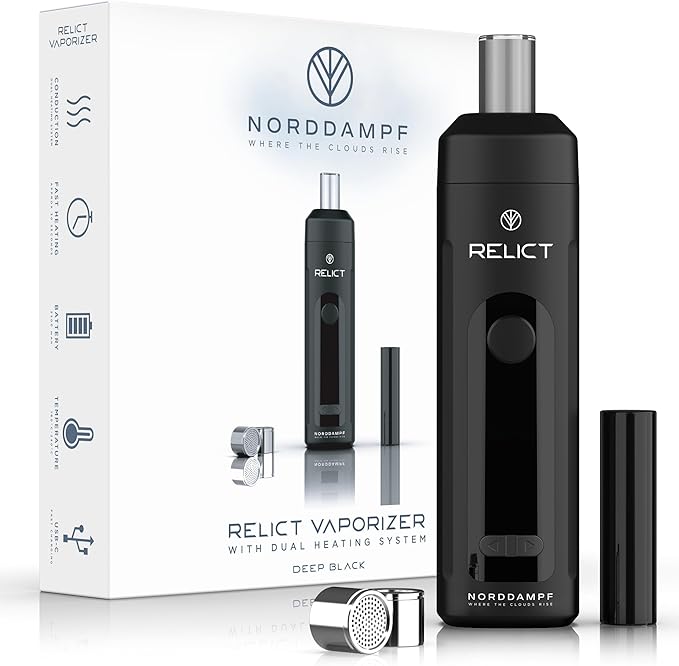
- Temperature control: Modern vaporizers like the RELICT Norddampf precise control for a nuanced herbal experience.
- Disclaimer: This article is not intended as a guide to consumption or medical advice, but rather as a resource for those interested in herbs and vaporizers.
What is skullcap? Origin, types, and traditional uses
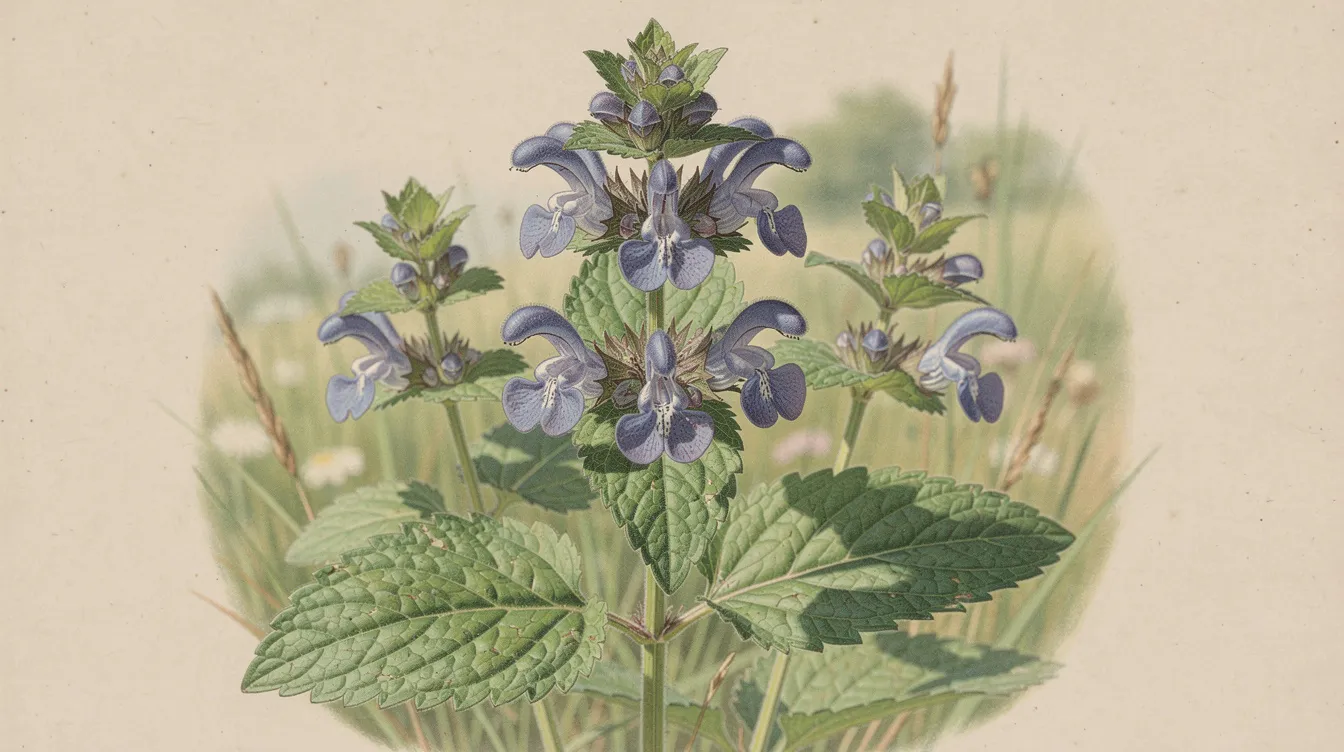
Skullcap is a traditional medicinal plant that has been used for centuries in North America, Europe, and Asia. The plant belongs to the genus Scutellaria and the mint family (Lamiaceae)— related to well-known herbs such as mint, sage, and lemon balm. There are various species of skullcap, notably American skullcap (Scutellaria lateriflora) and Chinese Baikal skullcap (Scutellaria baicalensis), each of which has a long history in the herbal medicine of its native countries.
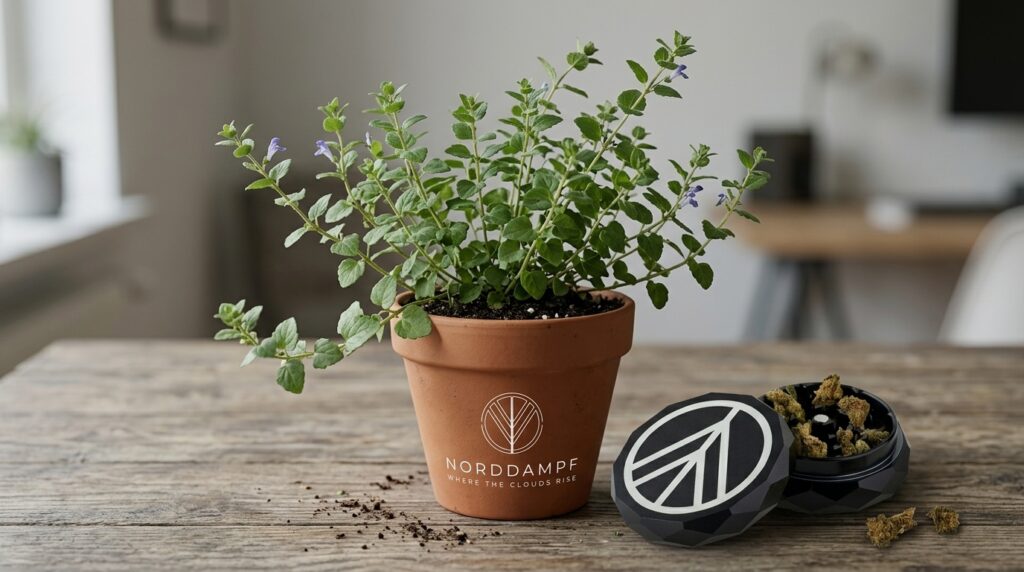
Visually, helmet flower typically grows to a height of 30–80 cm, with slender stems and small blue-violet flowers arranged in a characteristic “helmet shape.” This resemblance to a helmet gave the plant its name.
Two main types are particularly relevant:
| Type | Focus | Traditional use |
|---|---|---|
| American skullcap (Scutellaria lateriflora) | Leaves and flowers | For nervousness and restlessness, especially in North America |
| Baikal skullcap (Scutellaria baicalensis) | Root | Known as “Huang Qin” in China since the Han Dynasty (ca. 200 B.C.) |
Baikal skullcap is used in Traditional Chinese Medicine (TCM) to treat inflammation, allergies, and infections, with a history dating back to the Han Dynasty. In North America, too, American skullcap has a long history of use by Indigenous peoples and settlers. American skullcap is primarily used to treat nervous disorders. This article focuses primarily on the use of skullcap to promote relaxation and mental balance, as the plant is valued today in many parts of the world as a medicinal herb.

Our Best Sellers
Discover the most popular Norddampf products
The active ingredients in skullcap and their importance for the nervous system
The presumed effects of skullcap are attributed to certain plant compounds, particularly flavonoids. These phytochemicals are not produced by chance, but are specifically synthesized by the plant.
Key ingredients:
- Baicalin and baicalein (found in particularly high concentrations in Baikal skullcap)
- Wogonin and related flavonoids
- Scutellarin (characteristic of various Scutellaria species)
- Components such as tannins and essential oils
- Oroxylin A, an alkaloid with a potential effect on the dopamine system
Flavonoids such as baicalein and wogonin are the main compounds responsible for the health benefits of skullcap, along with other natural co-ingredients such as antioxidants, which are commonly found in herbal plants and help enhance these effects. Skullcap can help with stress, nervousness, and sleep problems by modulating the GABA (gamma-aminobutyric acid) system in the brain. GABA is the most important calming neurotransmitter in the central nervous system.
The plant contains large amounts of antioxidants, which can have a positive effect on the immune system and possess anti-inflammatory properties. Studies have shown that skullcap can be effective in treating inflammatory conditions such as allergic rhinitis.
Important: The research evidence is limited. Small-scale human studies provide some indications, but are not considered proof of a treatment’s effectiveness. No guarantees of a cure.
What are the subjective effects of skullcap? Relaxation, stress, and sleep
Why are people interested in skullcap? Often, it’s about finding inner peace after a busy day, “winding down,” or unwinding in the evening.
Subjectively perceived effects (no guarantees):
- A sense of mental relaxation and inner calm
- Less "mental chatter," more focus and clarity
- Gentle physical relaxation and stress relief after mental strain
- Getting ready for bed as part of an evening routine
A 2013 study found that participants who received skullcap showed a significant reduction in “overall mood disturbance” compared to those who received a placebo. A double-blind study conducted at the University of Westminster found that skullcap improved participants’ overall mood without adversely affecting their energy levels or cognitive function.
Skullcap has antispasmodic properties and can help relieve muscle tension. When used topically, skullcap can provide relief from itching, eczema, or hives. The use of skullcap in shampoos promotes hair growth and reduces hair loss.
The effects vary depending on the individual, their current state, and the quality of the plant material. Skullcap is not described as having a strong sedative effect, but rather as having a calming effect without causing a loss of mental clarity. For persistent symptoms such as anxiety, mood swings, or sleep disturbances: seek medical help. If unusual symptoms such as a rash, shortness of breath, or stomach discomfort occur after taking skullcap, seek medical help immediately.

Skullcap as tea vs. in a vaporizer: Differences in the experience
Tea is the traditional method; vaporizers are the modern, technology-based alternative. Both have different characteristics.
Skullcap as a tea:
- A warm drink, often part of an evening ritual, made with lemon balm or lavender
- The effects take time to kick in
- Water is used as a solvent to extract the water-soluble active ingredients from skullcap
- Skullcap can be purchased as dried plant material that can be used to make tea
Skullcap in a vaporizer:
- Controlled temperature without smoke
- Volatile ingredients and fragrances are specifically dissolved
- Often described subjectively as more direct and clear
- No typical smoke exposure
Skullcap can be taken in various forms, including as tea, in capsules, or as a liquid extract. The most popular forms of skullcap are powdered extracts and capsule supplements, as they offer an easy way to incorporate the herb into daily life. Liquid extracts of skullcap often come with a dropper or in drop form, making them easy to add to food and drinks.
A vaporizer with precise temperature control, such as the RELICT from Norddampf consistently set the desired temperature ranges.
Advantages of vaporizing skullcap compared to traditional use
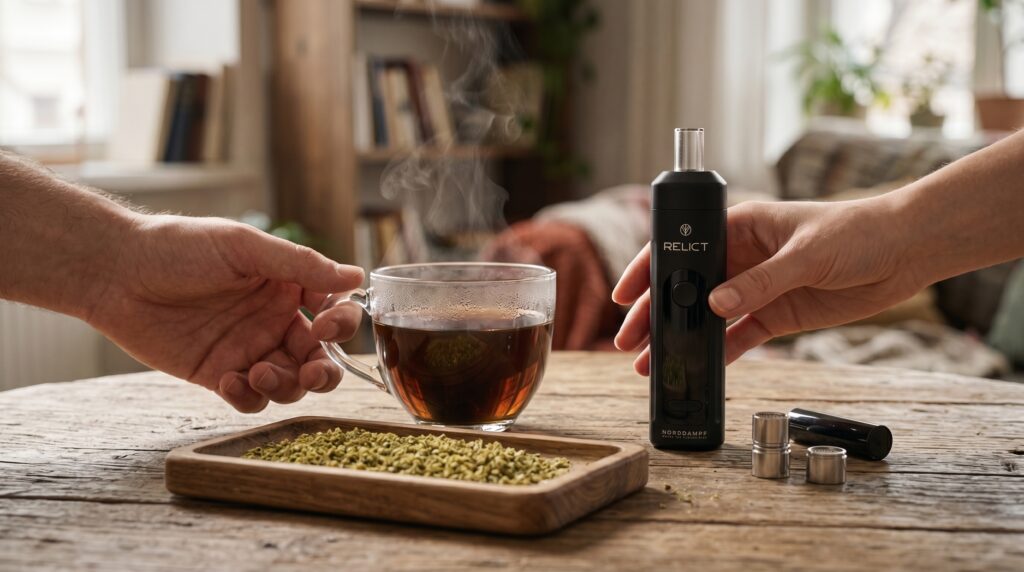
Why is skullcap becoming increasingly popular among herbal enthusiasts interested in health and technology?
Gentle extraction:
- Vaporizers operate at approximately 100–230 °C, well below the combustion temperature
- Temperatures of around 130–160 °C allow for release without burning
No combustion products:
- No typical byproducts such as tar or soot
- Gentle, plant-based treatment
More responsive handling:
- Modern herbal vaporizers allow for precise temperature control
- An experimental approach to identifying personal preferences is possible
Efficiency & Flavor:
- Plant-based flavors become clearly noticeable
- The flavor is often "cleaner" and more nuanced than that of tea or tobacco
The plant is also traditionally used to treat chronic inflammation. Its antioxidant properties are better preserved when vaporized gently.
Optimal temperatures for skullcap in a vaporizer (130–160 °C)
Temperature control is a key consideration when vaporizing herbs.
General temperature range: Approx. 130–160 °C as a practical guideline.
| Temperature | Characteristics | Subjective experience |
|---|---|---|
| 130–145 °C | Lighter, more volatile components | Gentle, clear mental relaxation |
| 145–160 °C | More ingredients dissolved | Deeper physical relaxation, a "fuller" profile |
There is no single “perfect” temperature. People react differently. High-quality devices like the RELICT flexible settings to suit personal preferences.
Note: This section provides information about temperatures for informational purposes only and does not include specific instructions.
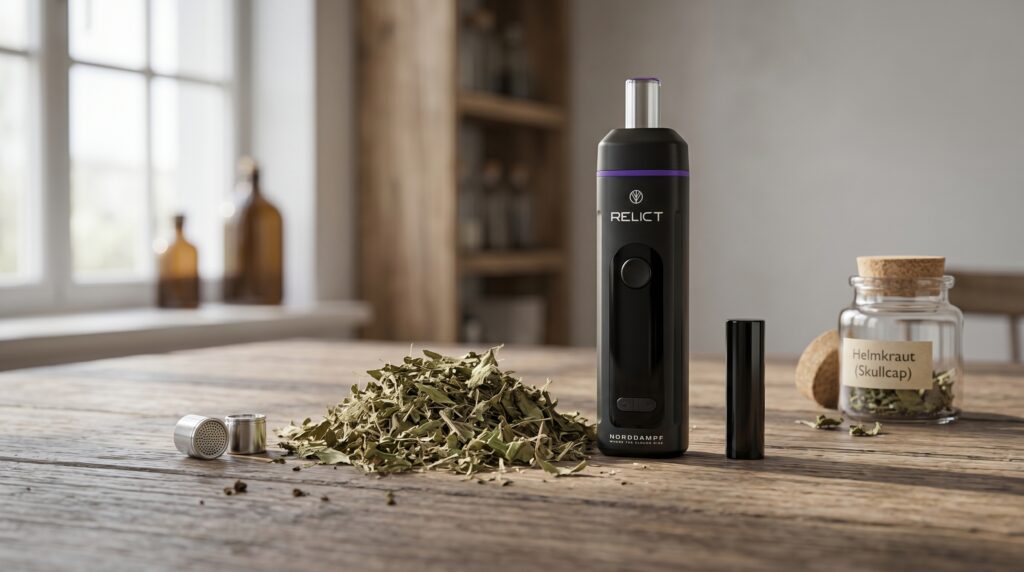
Common Mistakes When Vaporizing Herbs (and How to Avoid Them)
Many beginners encounter similar obstacles:
Temperatures too high:
- Unpleasantly hot steam that stings the throat
- If in doubt, start on the low to medium side
Plant material that is too damp or old:
- Too wet: uneven evaporation
- Too old: barely perceptible scent
Incorrect fill level:
- Too crowded: obstructs airflow
- Not enough: just a wisp
Lack of care:
- Residues distort the taste
- Regular cleaning is important
There have been reports of liver damage associated with the use of skullcap, particularly when taken in high doses or when using low-quality products. Quality and purity are crucial. It is important to purchase skullcap only from trusted sources to avoid the risks associated with low-quality or contaminated products. High-quality devices like the RELICT make handling easier thanks to their well-designed chamber.
Who might be interested in Helmkraut? Beginners and experienced vaporizer users
If you're interested in natural herbs and find modern technology like herbal vaporizers exciting, Helmkraut might be just the thing for you.
For beginners:
- People who want to try gentle, soothing herbs for the first time
- Readers who are only familiar with tea and are wondering what makes vaping different
For advanced users:
- Users who have already vaped chamomile, lavender, or valerian
- People who want to add some variety to their herb setup
Skullcap fits well into a holistic relaxation routine. It isn't a standalone solution, but rather part of a mindful approach to managing stress and sleep.
Important: Special precautions apply to pregnant and breastfeeding women, as well as to those with existing liver conditions. Pregnant and breastfeeding women should avoid taking skullcap, as there are no reliable studies on its effects during these stages of life. If you are taking medication (e.g., sedatives, benzodiazepines), consult your doctor first.
Context & Conclusion: Helmkraut in Modern Herbal Medicine
Skullcap is a traditional medicinal plant with modern applications for relaxation, the nervous system, and sleep hygiene. Its effects are attributed to flavonoids and antioxidants—with a growing body of research, though it is not yet conclusive.
Depending on the species, they are used for different health purposes: Baikal skullcap is primarily used for its anti-inflammatory properties, while American skullcap is used for its calming effects.
Skullcap is not a medication and is not a substitute for professional treatment. It serves as a potential herbal supplement and tonic for people who want to take a proactive approach to their well-being.
Vaporization is a gentle, technically precise method for extracting plant-based compounds. Temperature control (130–160 °C) is crucial—high-quality devices like the RELICT offer clear advantages in terms of control and reproducibility.
Responsible use: Pay attention to quality, listen to your body, and consult professionals such as doctors or alternative practitioners if you have any concerns.

FAQ on Skullcap: Effects & Vaping
Is skullcap legal and freely available?
Helmkraut is generally available in Germany and many EU countries as a herbal product or dietary supplement (as of the mid-2020s). There is no uniform global legal framework. Always check the current status in your own country. Skullcap is not intended as a substitute for prescription medications. You can often find products in the shopping carts of specialized natural medicine stores or on their websites.
How does skullcap differ from more well-known herbs like valerian or St. John's wort?
Valerian has traditionally been strongly associated with sleep and inner peace, while St. John’s wort is primarily linked to mood and depressive symptoms. Skullcap is a relatively mild, nerve-calming remedy that is gaining increasing attention in ethnobotanical literature and medicine. Skullcap generally has fewer interactions than St. John’s wort—but caution is still advised when taking it alongside medications.
Are there any known side effects of skullcap?
Skullcap is generally considered safe, but some side effects may occur. At high doses, gastrointestinal discomfort, drowsiness, or allergic skin reactions may occur; for example, a skin rash may develop as a result of an allergic reaction. Liver problems and pulmonary edema are rare. Some people may be allergic to skullcap, especially if they are already allergic to other plants in the Lamiaceae family. If you have pre-existing medical conditions or are taking sedatives at the same time, be sure to seek medical advice.
Can I combine skullcap with other herbs?
Herbal blends containing lemon balm, lavender—a traditional medicinal herb known to promote relaxation—or passionflower are popular choices for creating a personalized relaxation regimen. The effects can be cumulative, so start with low doses. If you have any existing medical conditions or are taking medication, consult a healthcare professional before trying more complex combinations. Different varieties and extracts have different properties.
Is skullcap suitable for daily use?
There are no comprehensive long-term studies on daily use over several years. Recommendation: Use skullcap in phases or on particularly stressful days, and allow your body time to rest. Individual tolerance varies. If you experience any unusual reactions, discontinue use and seek medical advice. The choice of the right form (tea, capsules, vaporizer) depends on your personal goals and preferences.