

Among connoisseurs, bubble hash is considered one of the purest cannabis concentrates available. The gentle ice-water extraction process produces concentrates with an intense aroma and high potency—completely free of chemical solvents. In this article, you’ll learn everything you need to know about its origins, quality characteristics, and the key differences from other methods.
Key Findings
Bubble Hash (also known as Ice-O-Lator) is a fascinating cannabis concentrate that stands out for its purity and full terpene profile. Here are the key points:
- Bubble hash is a solvent-free cannabis concentrate in which trichomes are separated from the plant material using ice water and controlled agitation
- Quality depends largely on three factors: high-quality raw materials, precise temperature control near 0°C, and gentle agitation
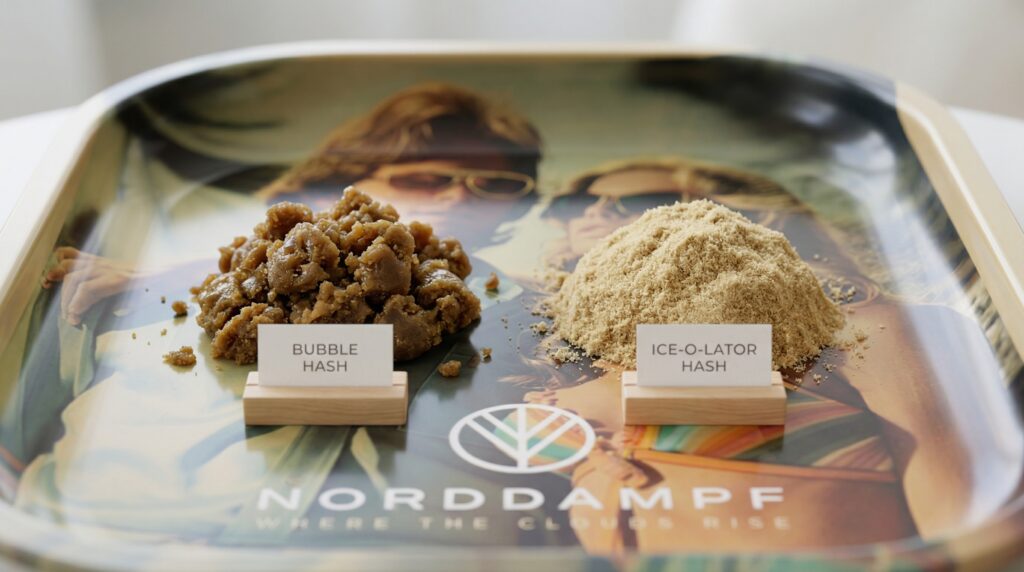
- Compared to dry sift and traditional hashish, bubble hash differs significantly in color (lighter), texture (oilier), and melting behavior (full melt)
- This article explains the basics, differences, quality levels, and common mistakes—without providing specific step-by-step instructions for making it
Introduction: What is Bubble Hash / Ice-O-Lator?
Bubble hash is a high-quality cannabis concentrate that has gained international recognition since the 1990s. The method became popular largely due to Dutch innovations such as the Ice-O-Lator bags, which enabled systematic micron-level sieving.
The name “Bubble” comes from the characteristic bubbling sound that high-quality material makes when heated. This foaming indicates that the material melts with virtually no residue—a process known in the scene as a “full melt.”
Ice-water extraction, as its core principle, uses only water and ice to mechanically separate trichome heads. In legal markets such as Canada and California, this extraction method is used professionally, and the end product is sold as a premium solvent-free concentrate.
The rest of this article discusses the differences between dry sift, kief, and traditional types of hash, how ice-water extraction works, as well as quality grades and common pitfalls.

Our Best Sellers
Discover the most popular Norddampf products


Basics: Trichomes and the Principle of Ice-Water Extraction
Trichomes are microscopic resin glands on the cannabis plant that produce cannabinoids and terpenes. These tiny structures are found on the flowers, leaves, and stems—and are the source of all potency.
Why Trichomes Are in the Spotlight
Particularly relevant are stalked, glandular trichomes with a head diameter of 25–150 µm. This trichome head contains the majority of the active compounds: THC and CBD, as well as the aroma-producing terpenes and flavonoids.
The physical principle of extraction is based on differences in density:
| Factor | effect |
|---|---|
| Temperature near 0°C | Trichome heads harden and become brittle |
| Controlled movement | Hard heads break off from the plant material |
| Water as a carrier | No chemical solution, purely mechanical separation |
At low temperatures, the wax and resin structure of the trichomes changes. They become harder than the surrounding plant tissue and detach when subjected to gentle vibration or airflow. Water serves only as a transport medium—which is why the method is considered solvent-free.
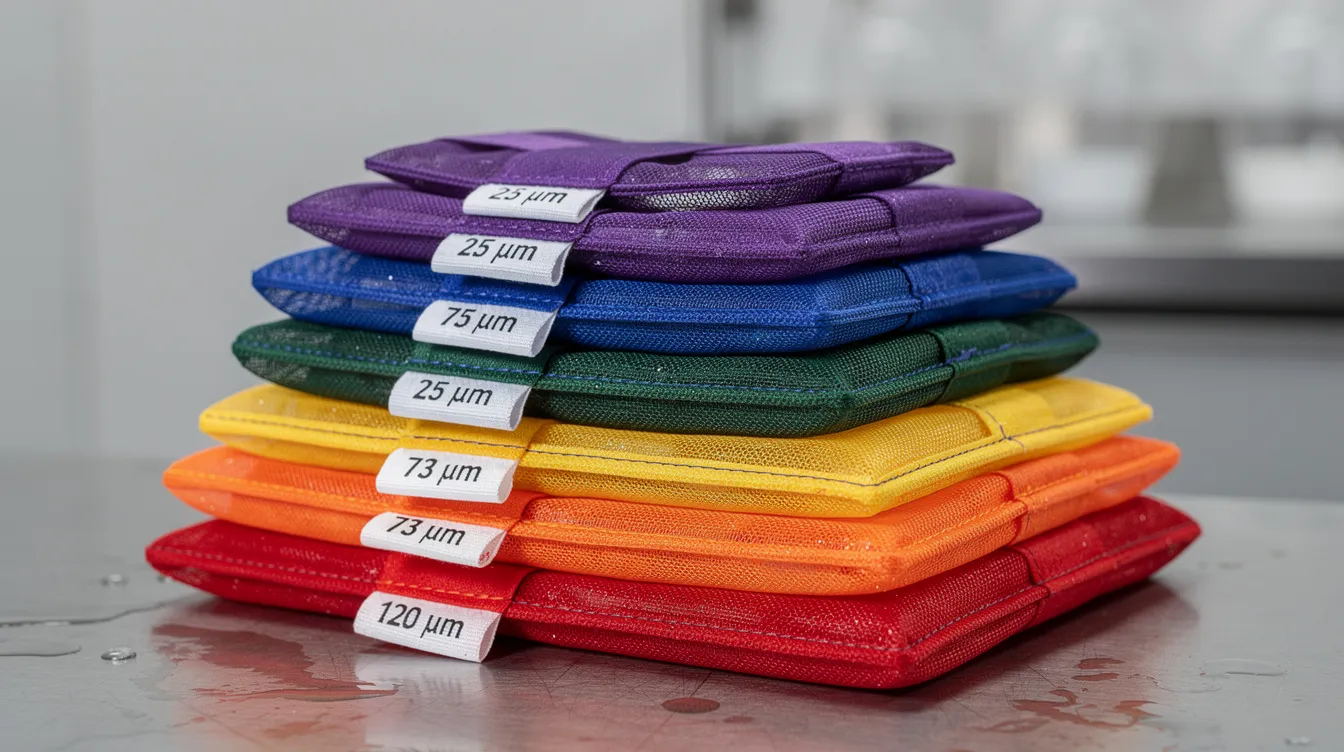
After agitation, stacked screens (bubble bags) separate the fractions by size. Coarser mesh traps plant debris, while finer mesh collects the pure trichome heads.
Bubble Hash, Ice-O-Lator, and Other Types of Hash: Key Differences
The world of cannabis concentrates is diverse. A clear classification helps to understand the unique characteristics of bubble hash.
Bubble Hash vs. Classic Hash
Traditional hashish—such as Moroccan blond hash or Afghan sieve hash—is produced by hand-rolling or dry-sifting. It is pressed, often has darker colors, and typically contains 20–40% THC.
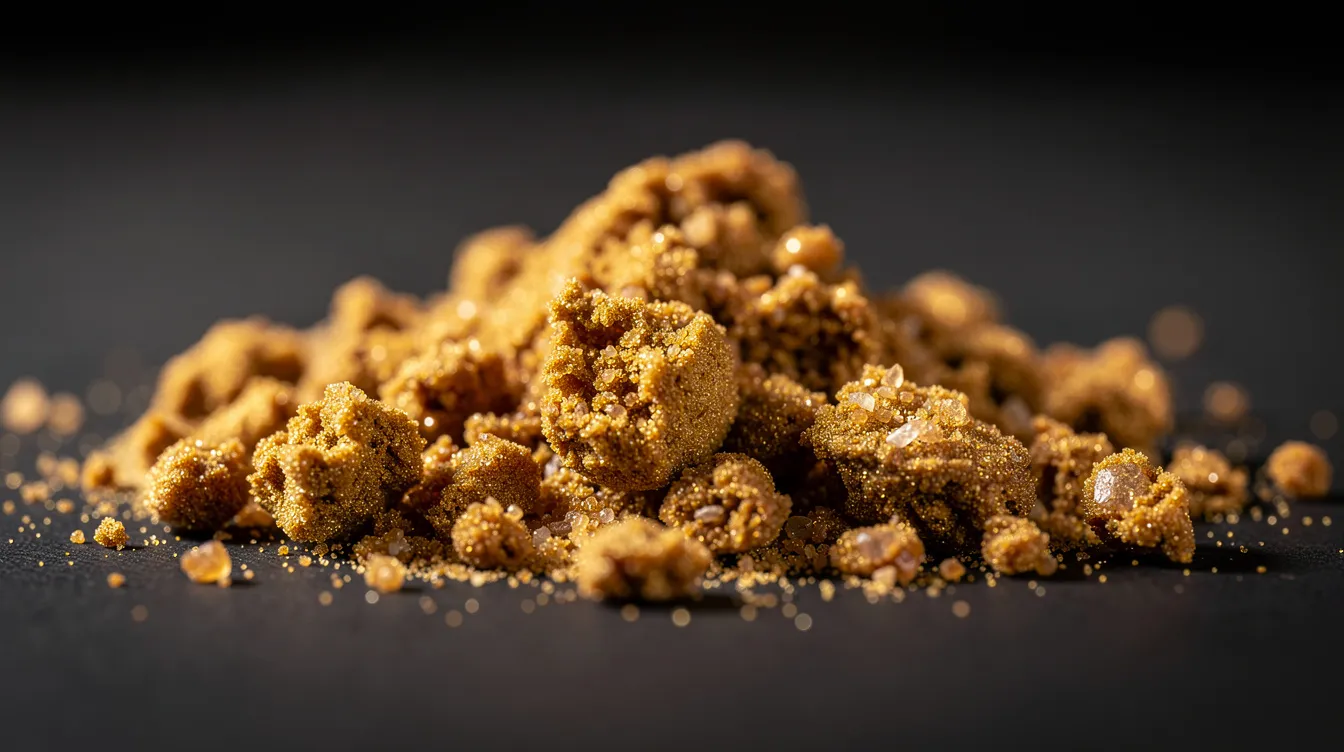
Bubble Hash, on the other hand, uses the Ice-O-Lator method with ice water and micron screens. The result: higher purity (up to 60% THC), lighter colors, and a characteristic bubbling sound when heated.
Dry Sift and Kief
Dry Sift is produced by dry sifting through fine screens (100–160 µm). Its texture ranges from sandy to powdery, and its purity varies greatly. Kief consists of loose trichomes from the grinder—unfractionated and often mixed with noticeable plant debris.
Comparison with solvent-based extracts
| Feature | Bubble Hash | BHO/CO₂ extract |
|---|---|---|
| Solvent | None (water only) | Butane, CO₂ |
| THC content | 30–60% | 70–90%+ |
| Terpene profile | Full spectrum | Varies |
| Arrears | None | Possible |
Bubble hash retains a full spectrum of cannabinoids and offers milder flavor profiles than many chemical extracts.
How does the Ice-O-Lator method work? (General principle)
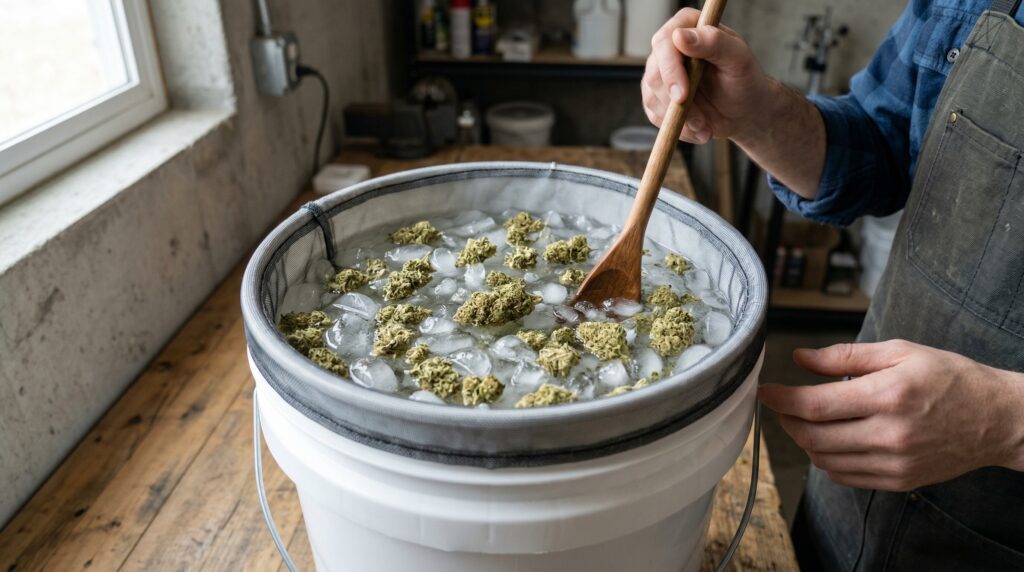
The method involves purely mechanical extraction. Chilled plant material is suspended in very cold water with ice and gently agitated. The controlled agitation detaches the brittle trichome heads from the flower material.
The process follows a clear principle:
- Plant material and ice are combined in water
- Gentle movement separates the trichomes from the tissue
- Stacked filters separate particles by size
- Gentle drying removes residual moisture
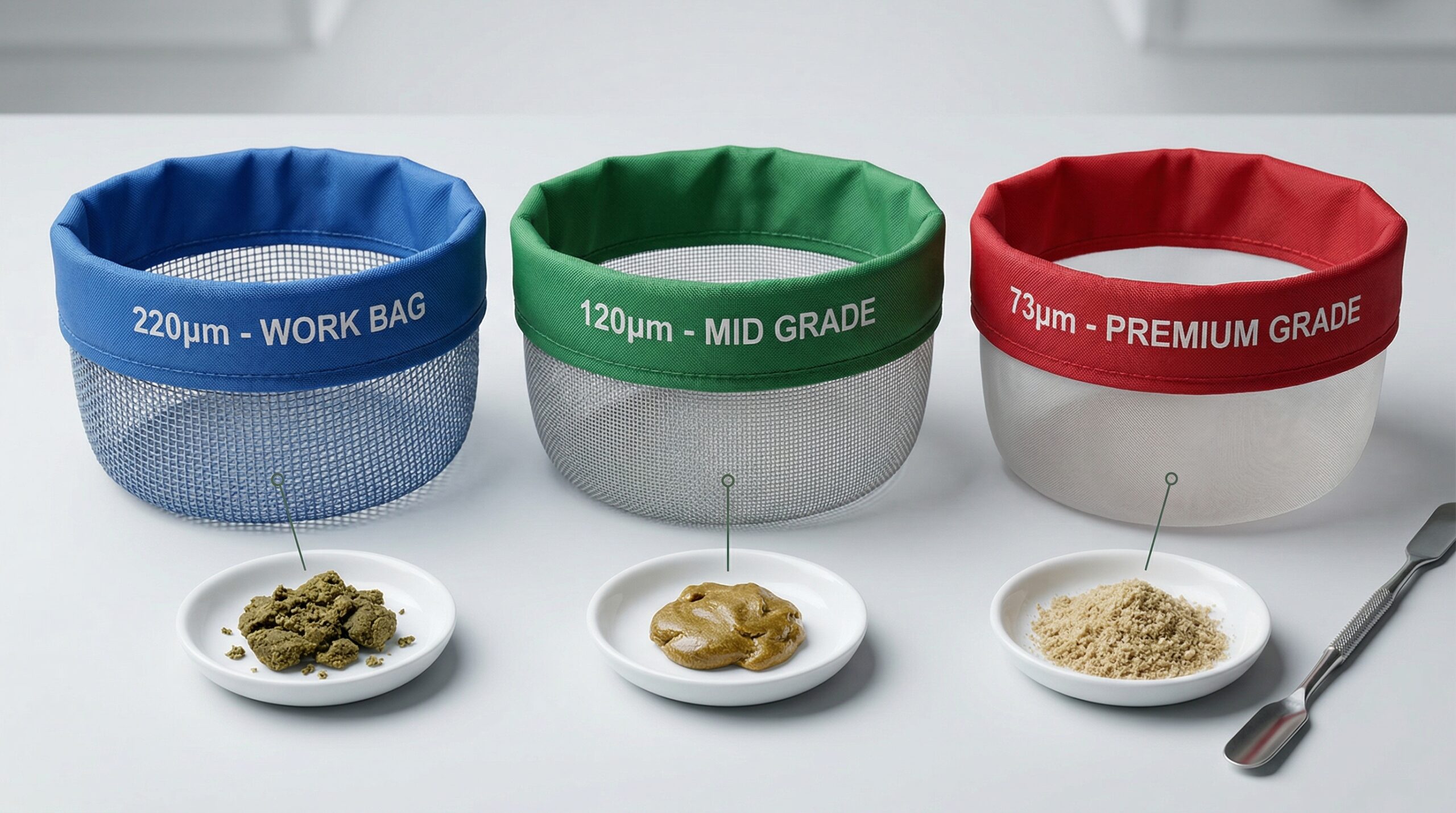
Coarser filters (160–220 µm) trap plant material and stem fragments. Finer bags (90, 73, 45 µm) collect the actual trichome fractions. The finer the mesh, the purer the product.
Filtration is followed by a critical phase: drying. This process has a significant impact on quality, flavor, and microbiological safety. Freeze dryers are often used in professional settings.
Tools and materials needed (clear overview)
The following overview shows typical equipment used in the bubble hash process—this is for informational purposes only and does not constitute specific instructions.
Filtration:
- Bubble bag sets with various micron sizes (e.g., 220–25 µm)
- Several bags are stacked inside a bucket
Containers and cooling:
- Food-safe buckets or tanks (20–50 L)
- Enough ice for consistent cooling
- Filtered water (RO water) for a neutral taste
Agitation:
- Wooden or plastic paddles
- stirring spoon
- In production: specialized bubble hash machine
Drying:
- Fine sieves and non-stick liners
- Spatula for handling
- Hygrometer for humidity monitoring
The quality of the raw material—whether hand-picked flowers or trimmings, fresh-frozen or dried—plays a key role in the final result.
Quality Levels of Bubble Hash: Appearance, Texture, Color, and "Melt"
Visual and sensory criteria are extremely important when it comes to bubble hash. A trained eye can often spot quality at first glance.
The Star System
Modern producers use a 1- to 6-star rating system:
| Stars | Quality | Melting behavior |
|---|---|---|
| 5–6 | Full Melt | It's bubbling away, hardly any residue |
| 3–4 | Half Melt | Partial evaporation |
| 1–2 | Cooking Grade | Heavy charring, lots of ash |
Color: High-quality material exhibits light, golden to amber hues. A greenish or very dark color indicates the presence of plant matter or oxidation—though the variety and degree of ripeness also play a role.
Texture: The range varies from sandy and powdery to waxy to oily and sticky. Full Melt Hash often has a greasy, shiny surface.
Aroma: An intense, variety-typical terpene profile characteristic of top-quality product. A musty or grassy odor indicates contamination.
Laboratory tests (e.g., HPLC) remain the gold standard for determining precise THC/CBD levels and ensuring the absence of contaminants.
Effect of particle sizes and fractions
No single micron size is “the best”—each fraction has its own specific properties.
| Political party | purity | Yield | Usage |
|---|---|---|---|
| 120–160 µm | Lower | Higher (15–20%) | Edibles, blended products |
| 73–90 µm | Premium | Moderate (5–10%) | Dabs, Vaping |
| 25–45 µm | Very high | Poor | Special Applications |
Connoisseurs evaluate fractions separately based on color, aroma, and melt—and blend them specifically to achieve the desired profiles. The 73–90 µm fraction is often considered the sweet spot between potency and terpene profile.
Advantages and Disadvantages of the Bubble Hash Method
Ice-water extraction is a high-quality but demanding technique. An honest assessment of its characteristics helps in evaluating it.
benefits
- Solvent-free: No chemical residues
- Full-Spectrum: Preserving cannabinoids and terpenes for the entourage effect
- Clean aroma: Pure, varietal flavor
- Artisanal character: Authentic production without industrial chemicals
- Higher purity: Up to 95% trichome content in top-grade products
disadvantages
- Low yield: Only 3–20% of the starting material
- Labor-intensive: 4–10 hours per batch in practice
- High standards: Temperature control and hygiene are critical
- Risk of mold: If dried improperly (humidity above 60%)
- Depends on the material: Poor-quality trim yields a maximum of 30% THC in the final product
The method is also considered legally complex in many jurisdictions. Local laws should always be reviewed.
Temperature, Material Quality, and Common Mistakes
Bubble hash is extremely sensitive to process errors. Even minor deviations can drastically impair the results.
Temperature as a key factor
The water should be as close to freezing as possible (ideally 0–4°C). At higher temperatures:
- Does more chlorophyll dissolve?
- The hash is becoming greener and more bitter
- More plant particles end up in the final product
Material quality
| Material | terpene content | Handling |
|---|---|---|
| Fresh Frozen | Higher (+20% terpenes) | More demanding |
| Dried | standard | Easier to store |
| Elite Blooms | maximum | Top results |
| Reiner Trim | Lower | Lower quality |
Common Mistakes
- Over-stirring: Excessive or prolonged stirring breaks down the plant material
- Uneven drying: Leads to mold growth
- High humidity: Over 60% RH increases the risk of contamination
- Contaminated equipment: Cross-contamination reduces purity
Myths and Misconceptions About Bubble Hash
Some myths in the scene just won't go away:
“Lighter is always better” – Wrong. The color depends on the strain. Indica-dominant strains often have darker, amber hues.
“More THC = better” – Not necessarily. Terpenes significantly influence the effects. A balanced profile can be more effective than sheer potency.
“Bubble hash is always superior to other concentrates” —even high-quality dry sift or rosin can deliver excellent quality.
“Homemade is automatically safe” —without laboratory analysis, pesticides and microbes go undetected. Third-party testing is the gold standard.
Sensory characteristics: color, texture, potency, and effects
Bubble hash often differs significantly from traditional brown hash. Its sensory characteristics reveal a lot about its quality.
Color: The spectrum ranges from light cream to deep gold. Factors such as strain, oxidation, and drying method influence the color. Sativa-dominant strains tend to have lighter hues.
Texture: Ranging from dry, glassy crystal granules to “greasy” (oily and sticky) to pressed balls. The terpene content (typically 2–4%) directly influences the consistency.
Potency: Typical THC levels range from 30% to 60%, depending on the strain and production method. CBD levels vary widely depending on the genetics (5%–15%).
Effect: The effect sets in quickly and is intense. Indica-dominant products tend to have a sedative effect, while Sativa-dominant products are more energizing. For inexperienced users, a starting dose of about 0.05 g is recommended.
Possible Applications & Classification Compared to Other Concentrates
Bubble hash is a versatile product with various applications—depending on the legal jurisdiction.
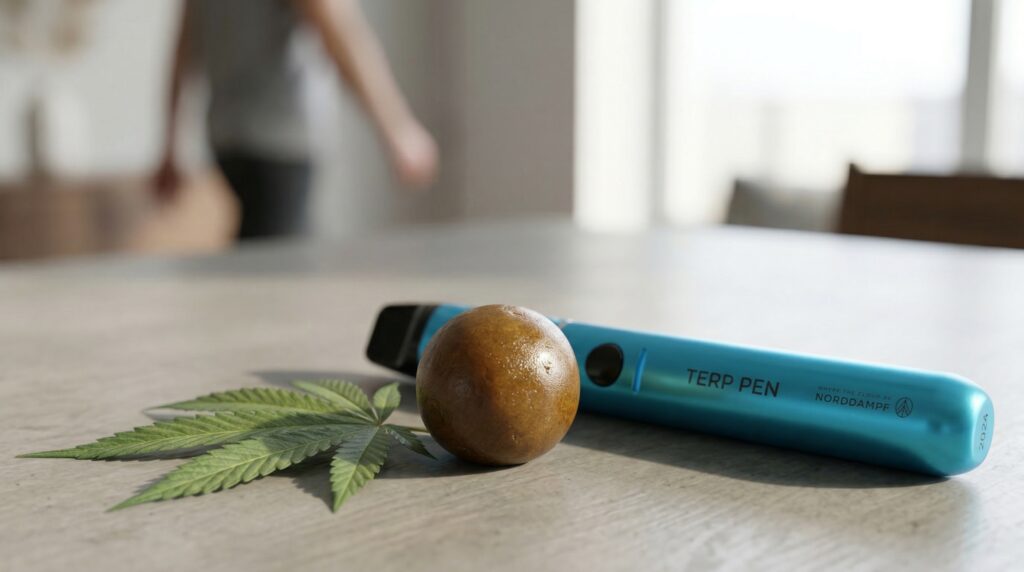
In legal markets, bubble hash is commonly used for:
- Addition to dried flowers
- Vaporization at controlled temperatures (300–400°C)
- Further processing into hash rosin (70%+ THC)
Connoisseurs particularly appreciate the full terpene profile when dabbing or vaporizing. Lower-quality grades with a higher plant content are better suited for blended products or edibles.
Comparison with other solvent-free methods:
| concentrate | Texture | Handling | Terpene retention |
|---|---|---|---|
| Bubble Hash | Variable | means | High |
| Dry Sift | Powdery | Easy | means |
| rosin | Liquid-waxy | Challenging | Very high |
Legal and Safety Information
The legal framework varies greatly from country to country and is evolving rapidly—especially in Germany and the EU since 2024.
In some countries, possession of small amounts of cannabis has been decriminalized, while the production of concentrates such as bubble hash is treated separately and often remains prohibited.
Important: Always check the current legal situation in your country of residence. This article is intended solely for educational purposes and does not constitute an invitation to engage in illegal activity.
Conclusion: Why Bubble Hash Is Considered by Many to Be the "King" of Solvent-Free Extracts
Bubble Hash combines craftsmanship with precision technology. Through gentle ice-water extraction and careful sifting, it produces concentrates of exceptional purity and aromatic intensity.
The key factors for top quality are clearly defined: temperature control close to freezing, high-quality raw materials, gentle handling, and careful drying. Everything works together.
In terms of sensory characteristics, bubble hash differs significantly from traditional hash—its lighter colors, oilier texture, and the characteristic bubbling sound when heated make it unmistakable. No wonder it is prized by connoisseurs worldwide as a premium concentrate.
Learn more, use laboratory analyses whenever possible, and ensure that your use of cannabis and its concentrates is responsible and in compliance with the law.
FAQ on Bubble Hash / Ice-O-Lator
Is bubble hash legal in Germany?
The legal situation regarding cannabis and concentrates in Germany is complex and has changed since 2024. While possession of certain amounts of cannabis may be decriminalized under certain circumstances, the production of concentrates such as bubble hash is treated separately under the law and often remains prohibited. Always check current legislation and official information, or seek legal advice. This article does not constitute legal advice.
How long does bubble hash last?
Shelf life depends heavily on storage conditions: light, air, temperature, and humidity all play a crucial role. Bubble hash that has been properly dried and stored in an airtight container in a cool place can retain its aroma and potency for several months to over a year. Terpenes evaporate more quickly at room temperature—cooling slows this process. Store smaller portions separately and avoid frequent temperature fluctuations.
How can I tell if my bubble hash is still good?
Pay attention to visual, olfactory, and tactile cues. Unpleasant musty or moldy odors, visible discoloration with a fuzzy coating, or lumpy, damp spots indicate microbial issues. Even without visible mold, a strongly stale or rancid aroma can signal a significant loss of quality. If in doubt, do not consume the product—especially in a medical context, consult a healthcare professional.
How does “fresh frozen” bubble hash differ from hash made from dried material?
Fresh-frozen material is flash-frozen immediately after harvest, preserving many volatile terpenes. The hash produced from it often has a more intense aroma and fresher flavor profiles. Hash made from dried material has a more “classic” aroma with fewer volatile top notes, but it is easier to store and process. Both methods can produce high-quality results.
Can bubble hash be processed into rosin?
Yes, in legal markets, high-quality bubble hash is often used as the starting material for hash rosin. In this process, the resin is extracted using pressure and moderate heat—without solvents. Full-melt grades (5–6 stars) are particularly popular for this step, as they produce clean, terpene-rich results. This process is also subject to legal regulations.