
One tall cola over a few shaded branches, or a wide bush covered in bud sites? Either way, topping cannabis is the technique that decides which one you get.
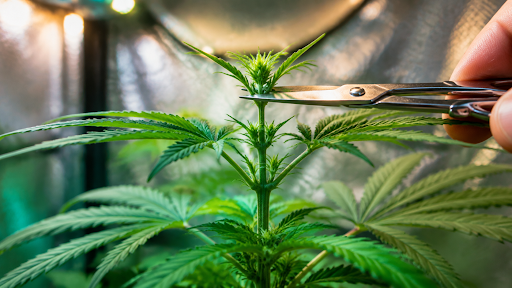
Topping cannabis means cutting off the growing tip of the main stem, which redirects the plant's energy into two new branches instead of one. The usual result is a bushier plant with more bud sites and, done right, bigger cannabis yields.
This guide explains the key topping and cannabis training techniques, including when to top by node count, how to top a weed plant cleanly, how it recovers, and how the approach changes for autoflower versus photoperiod strains.
Yes, it's technical stuff, but surprisingly simple to follow even for newbies.
| ⚠️Disclaimer: Home cultivation rules vary from country to country. In Germany, adults may grow a limited number of plants for personal use under the Cannabis Act (CanG), but many countries prohibit home growing entirely. Check your local regulations first. |
Key Points
- Topping cuts off the main stem's growing tip, prompting the plant to grow two new branches instead of one.
- Most growers top at 4 to 6 nodes: too early risks stunting, while too late wastes upward growth.
- Plants usually recover within 3 to 7 days, depending on health and conditions.
- Only top during the vegetative stage. Cutting during flowering reduces yield.
- Photoperiod strains handle several rounds of cutting; autoflowers need gentler, less frequent cuts.
- FIM removes only part of the growth tip, a lighter-touch alternative with faster recovery.
What Topping Actually Does to a Plant
Cannabis grows with apical dominance, meaning the main stem chemically suppresses the branches below it, so the plant pours its energy upward into one dominant tip. Cut that tip off, and the suppression lifts. The plant reroutes energy into the two next-highest growth points, which grow into a pair of new main stems. That is where the yield logic comes into the fold.
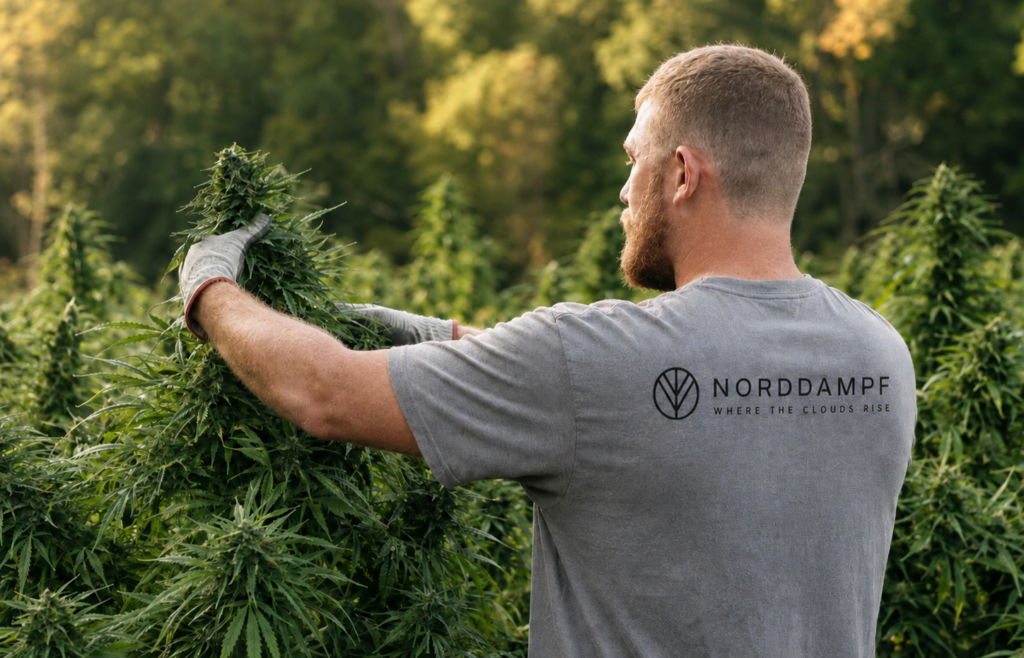
On photoperiod plants, topping can create several similarly developed main branches and improve light distribution across the canopy. This can lead to more evenly sized buds and may improve usable yield, rather than one tall cola with everything beneath it shaded.
But topping alone does not guarantee a higher total yield; the training and canopy management that follow matter just as much for making full use of the additional growth sites.

Our Best Sellers
Discover the most popular Norddampf products



When to Top: Timing by Node Count
Knowing when to top cannabis is less about intuition and more about numbers. The rule most experienced growers converge on is to top the cannabis plant once it has developed 4 to 6 nodes. That's enough established growth to absorb the stress, but early enough that the plant hasn't sunk weeks of energy into a single tall stem.
Both failure modes are easy to picture. Top too early, before the fourth node, and you risk stunting a plant that isn't robust enough yet. Top too late, past node six or seven, and you waste growth already committed to that main stem and stretch out recovery for no benefit.
Strain type shifts the timing, as autoflowers run on a fixed, much shorter clock, without the buffer photoperiod plants have.
| ℹ️Cannabis Topping Tip: If you top an autoflower at all, do it early, gently, and once. Our guide to autoflower vs photoperiod covers how each handles training. |
How to Top a Cannabis Plant: Step by Step
Learning how to top a weed plant is pretty simple once you know how. It mostly comes down to a clean cut and good timing:
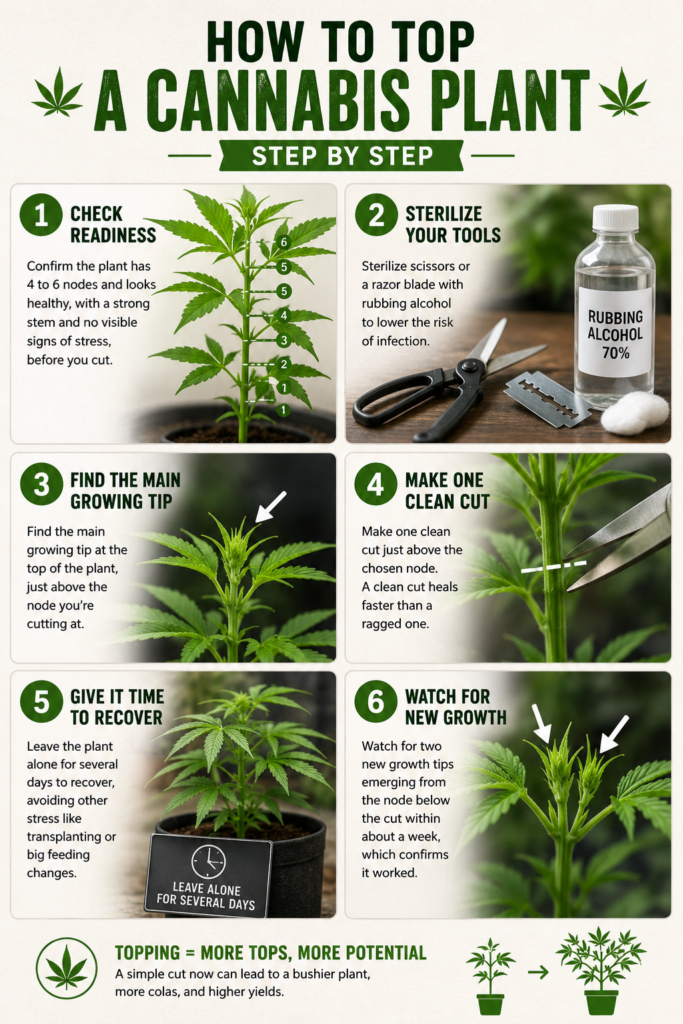
Confirm that the plant has 4 to 6 nodes and looks healthy, with a strong stem and no visible signs of stress, before you cut.
Sterilize scissors or a razor blade with rubbing alcohol to lower the risk of infection.
Find the main growing tip at the top of the plant, just above the node you're cutting at.
Make one clean cut just above the chosen node. A clean cut heals faster than a ragged one.
Leave the plant alone for several days to recover, avoiding other stress like transplanting or big feeding changes.
Watch for two new growth tips emerging from the node below the cut within about a week, which confirms it worked.
Recovery and Aftercare
Most plants show new growth at the node below the cut within 3 to 7 days, depending on health and conditions. During that window, your job is mainly to stay out of the way.
The rule is don't stack stress. Hold off on transplanting or major nutrient changes right after topping, and keep light, temperature, and watering steady while the plant repairs itself. If two weeks pass with no new growth, the cut probably isn't the culprit; root stress or a nutrient deficiency is more likely.
| ℹ️Cannabis Topping Tip: Logging conditions in a grow diary for cannabis makes it far easier to spot what went wrong. |
How Many Times Can You Top a Plant?
For boosting bud sites, 2 to 3 topping sessions do most of the work, and most growers treat 3 to 5 as the practical ceiling before returns flatten and stress accumulates.
Timing counts as much as the number, so wait for full recovery (new growth established rather than just emerging) before topping again, typically 10 to 14 days later. Also, stop at least a couple of weeks before you switch to the flowering schedule, so the plant pours its energy into bud development rather than vegetative repair.
Topping vs FIM: What's the Difference?
FIM removes roughly three-quarters of the new growth tip rather than the whole stem, and the choice between topping and FIM comes down to precision versus gentleness. A full topping cut gives you a predictable, controllable result: exactly two new main stems.
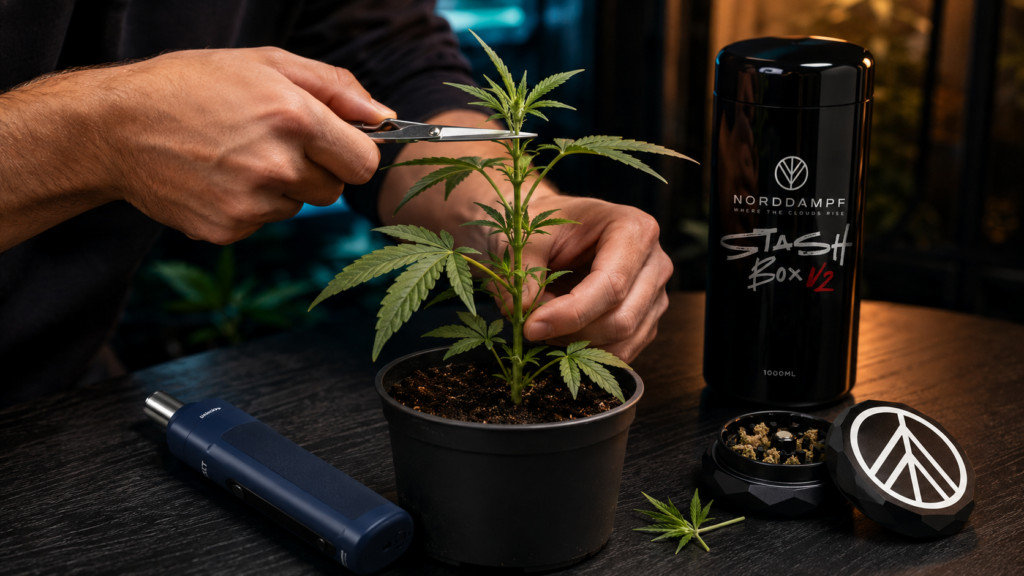
FIM is less precise but also less stressful. It produces more, smaller growth points and recovers faster, which suits a fragile plant or a grower who prefers a softer touch. Neither is objectively better, they just suit different plants, and both are within the wider family of cannabis training techniques like LST and HST.
Bottom Line
Topping is a cheap, straightforward way to build a wider, more even canopy, and the gap between a strong result and a stunted plant almost always comes down to two things: timing by node count and a clean cut.
Top at 4 to 6 nodes, cut once and cut cleanly, leave the plant undisturbed while it recovers, and ease off entirely for autoflowers. Follow it up with proper canopy management, and it's one of the most reliable cannabis training techniques for improving usable yield, and it costs nothing but a clean blade.
Ready to plan your grow? Our cannabis cultivation guide is highly recommended for the main steps and tips involved with growing cannabis.
FAQs
Can you top an autoflower?
Topping an autoflower is possible, but timing is critical, and the risk is higher than with photoperiod plants. Because autoflowers continue on a fixed age-based schedule, recovery time lost after topping cannot simply be added back by extending the vegetative stage.
If topping is used, it should be done early on a healthy plant and followed by careful training to make effective use of the new growth structure. Many growers skip it entirely on autoflowers and instead use low-stress training.
Does Topping Reduce Yield?
No, not when it's timed right with proper recovery. Topping typically improves light distribution and can increase usable yield by creating more evenly lit bud sites, but it doesn't guarantee a bigger harvest on its own. Canopy management and the training that follows matter just as much as the cut itself.
When Should I Stop Topping Before Flowering?
Stop at least a couple of weeks before switching to the flowering light schedule. That lets the plant fully recover and redirect energy toward bud development rather than vegetative repair once flowering begins.
What's the Difference Between Topping and FIM, and When Should I Top?
Cannabis topping removes the entire growing tip, leaving two predictable new main stems, while FIM removes only part of it, resulting in more numerous but smaller growth points and faster recovery.
Sources
Concepts and terminology of apical dominance: https://pubmed.ncbi.nlm.nih.gov/21708661/
Impact of Harvest Time and Pruning Technique on Total CBD Concentration and Yield of Medicinal Cannabis: https://pmc.ncbi.nlm.nih.gov/articles/PMC8747189/
Beginner's Guide to Growing Cannabis: https://medium.com/@SEOcannabis/a-beginners-guide-to-growing-cannabis-part-3-vegetative-stage-plant-training-f382482fe1e0