
Scroll through any concentrates menu, and you'll probably come across a wall of texture names. Shatter, wax, budder, crumble, sauce… they read like a dessert menu, and—frustratingly—the names tell you almost nothing about what you're actually getting.
Crumble, budder, and sauce may all be derived from similar base extracts, but what sets them apart is what happens next. Temperature, time, agitation, solvent management, and—especially in the case of sauce—controlled crystallization all influence the final texture.
Still confused? This guide explains what crumble and budder are, what sauce concentrate is, and which strains work best with specific types of vaporizers.
Key Points
Crumble, budder, and sauce typically come from the same base extraction (often butane or CO2). The differences arise after extraction, not before.
Butter gets its soft, spreadable texture from being stirred at low, constant temperatures during the purge.
Crumble gets its dry, honeycomb-like texture from a longer, cooler purge, which removes more moisture and residual solvents.
Sauce contains visible THCA crystals suspended in a thick, terpene-rich liquid, which gives it the strongest flavor and makes it the messiest to handle.
Texture is a poor indicator of potency; these cannabis concentrate textures tend to fall within a broadly similar cannabinoid range, regardless of how they look.
They all start the same way
Most cannabis concentrate textures share the same origin. Crumble, budder, and sauce are typically derived from the plant using the same type of solvent-based extraction, usually butane (the result is often called BHO, or butane hash oil) or CO2. This process extracts cannabinoids and terpenes from the flower, yielding a raw, unstable oil. At this stage, there is neither crumble nor sauce—only raw concentrate waiting to be finished. It is during the finishing process that the paths begin to diverge.
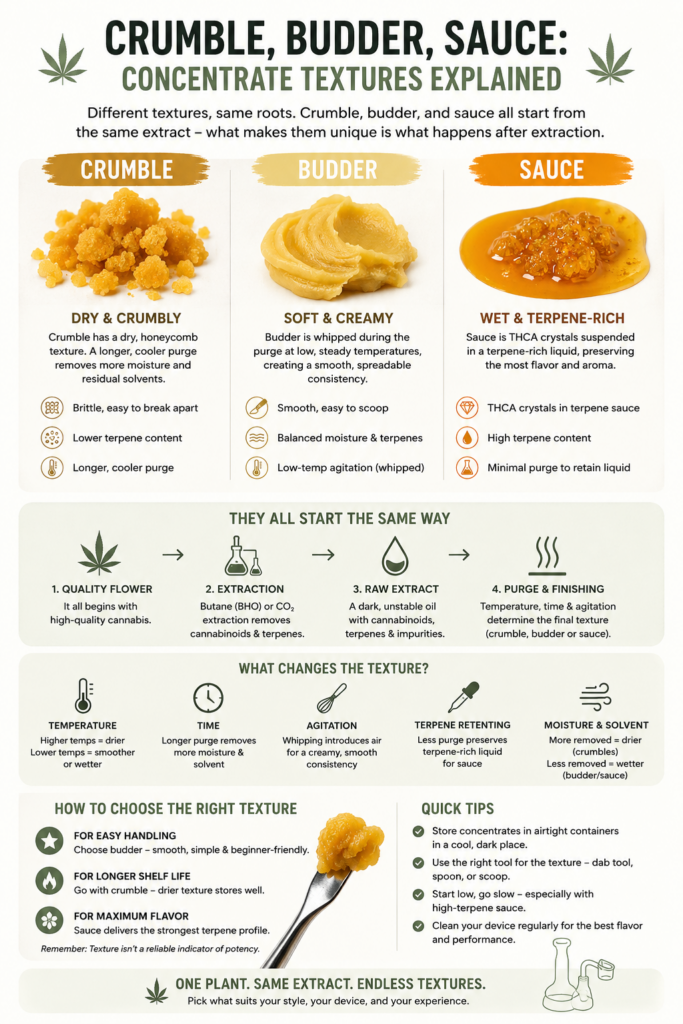
First, the manufacturer removes any remaining solvent from the crude oil, and the conditions of this purge help determine the final form of the product. Temperature, time, agitation, and the care taken in handling the solvent all play a role, and, especially with sauce, controlling crystallization is just as important as the purge itself.
If you push it too far in one direction, you get a dry, brittle solid; if you push it too far in the other direction, you get a soft, spreadable substance. Similarly, if you retain the liquid instead of driving it out, you get something moist and crystalline.
| ℹ️New to dabbing? Our article “Dabbing—Hype or Danger?” covers the method, the risks, and whether it’s right for you. |

Our Best Sellers
Discover the most popular Norddampf products
Butter: The whipped texture
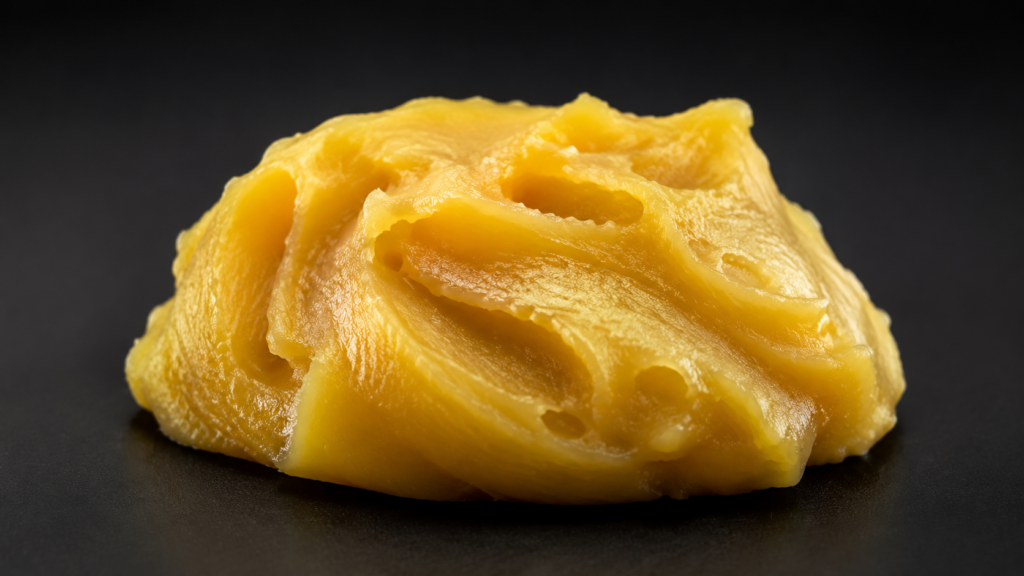
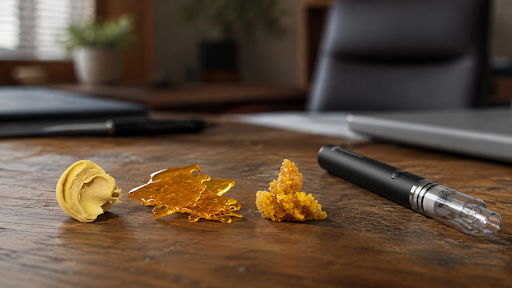
Let's start with the common question, "What is budder?" since that's what most people picture first. Budder (you'll also see it spelled " badder " or " batter" ) has a smooth, creamy consistency somewhere between room-temperature butter and cake frosting. You could say it looks the most appealing of all and is probably the easiest to work with.
This softness is entirely intentional, as manufacturers whip the extracted oil during the purge at low, consistent temperatures, and the agitation incorporates air while evenly distributing the cannabinoids and terpenes. The result is the wonderfully soft, opaque texture that gives budder its name.
It scoops cleanly onto a dab tool and holds its shape long enough to load without much resistance, making it a good starting point if you're new to dabbing concentrates and want something a little more forgiving.
Crumble: The Dry Texture
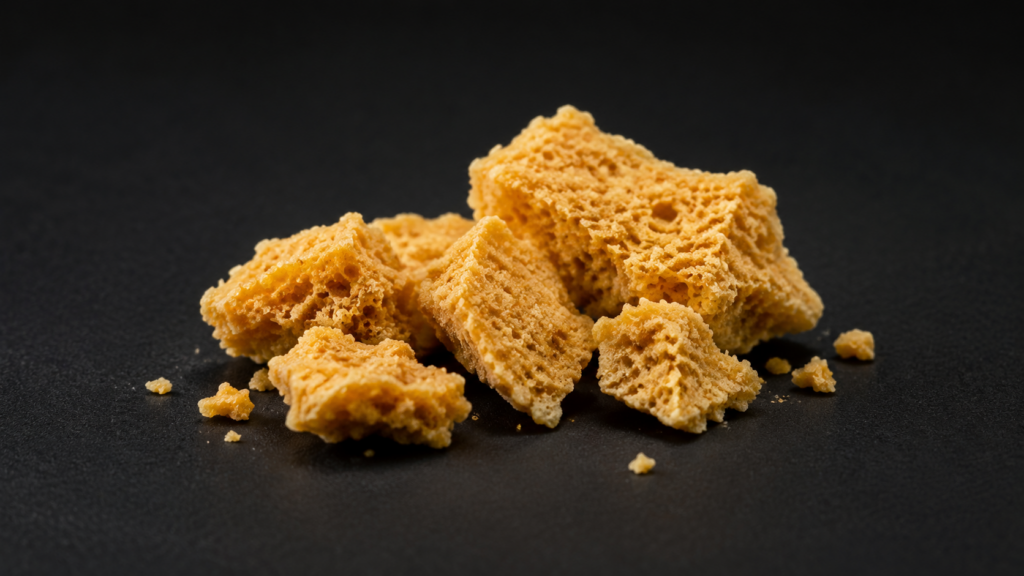
If budder is the soft one, crumble is its dry cousin. Understanding the nature of crumble means understanding the basic principles of moisture. It has a honeycomb-like, crumbly texture that falls apart when touched instead of sticking to your tool, and is the driest of the common textures.
This dryness comes from the purge. Crumble is typically finished with a longer purge at a slightly cooler oven temperature than budder, which drives out more residual moisture and solvents and leaves behind this brittle, airy solid.
It's a compromise: Crumble doesn't clog tools or smear the container, and some people find it easy to pinch off by hand, but a crumbly solid loses fragments and can be harder to measure precisely than a scoopable substance.
Sauce: The moist, crystal-rich texture
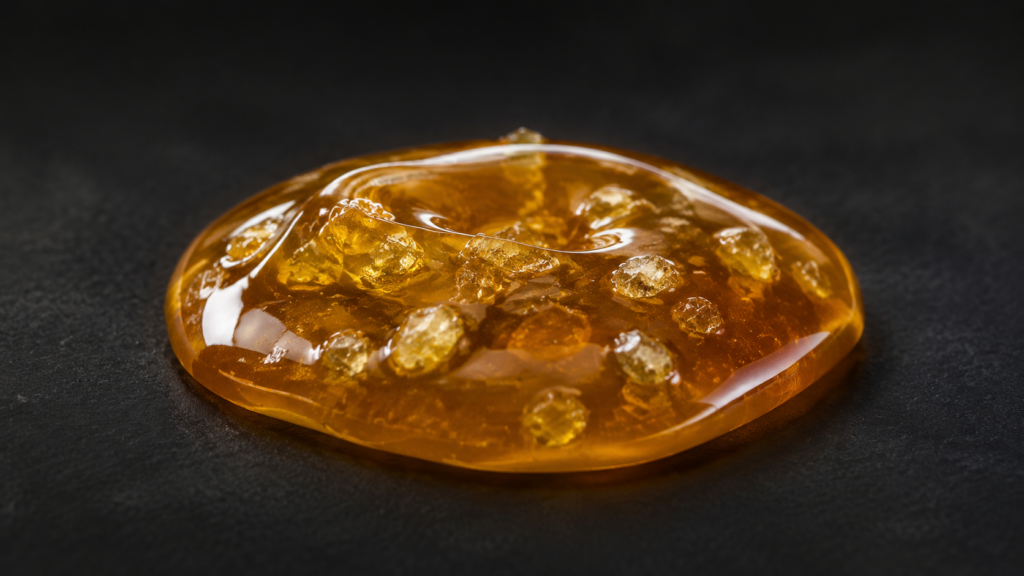
But what is sauce concentrate? Instead of a uniform solid, sauce has a two-part texture: visible THCA crystals (sometimes called THC diamonds) suspended in a thick, glossy, terpene-rich liquid. Compared to budder and crumble, it looks less like a finished product and more like something in the middle of a reaction (which, in a sense, it is).
Moisture is the key. Sauce is created through a gentler or shorter purge that keeps the plant’s terpenes in liquid form, combined with carefully controlled crystallization of the THCA under specific time, temperature, and pressure conditions—rather than simply driving this liquid out, as a crumble purge does.
This high terpene content is why Sauce has the strongest, most complex flavor of the three—and also why it is the least cooperative to work with.
It doesn't stay together on a dab tool, so it separates and drips. That's why most people store it in a specially designed container instead of scooping it up like budder.
Comparison Chart: Crumble vs. Budder vs. Sauce
The differences between crumble, budder, and sauce come down to how each was made, not what they're made of, as the following table explains.
| Crumble | Budder | Sauce | |
| Texture / Appearance | Dry, honeycomb-like, brittle | Smooth, beaten, opaque | Moist Crystals in Liquid |
| Typical manufacturing step | Longer, cooler purge | Whipped over low, steady heat | Gentle Purge Plus Controlled THCA Crystallization |
| Intensity of flavor | Moderate | Moderate to full | The strongest of the three |
| Handling | Easy to pull apart, crumbles | The easiest way—scoops cleanly | The messiest—needs a container |
| evaporation temperature | Can handle a wider range | Gentle, medium range | Lower and gentler |
Which texture works best with your vaporizer?
Of course, texture isn't just a factor in your purchasing decision; when you dab concentrates, it changes how you should use your device.
As a rule of thumb: The wetter and softer the concentrate, the more heat-sensitive it is. Budder and sauce benefit from gentler, lower vaporization temperatures, because heating them too hot scorches the terpene-rich liquid and burns away the flavor you paid for. Crumble, being drier, can handle a slightly wider range of temperatures before it starts to break down.
This is exactly where precise, adjustable heat comes in handy. A device like the Dab Pen Mini can handle the entire range of concentrate textures, and lowering the temperature is far more important for sauces than for a dry texture like crumble.
| ℹ️ A habit worth adopting: Preheat before loading a moister concentrate, since a warm chamber helps the sauce vaporize evenly instead of pooling, sticking, or dripping before it turns into vapor. |
Bottom Line
Crumble, budder, and sauce all come from the same extraction family, so the texture you choose says more about how it’s been processed than about its quality. It really comes down to what matters most to you: budder is the easiest to handle, crumble is the dry solid that doesn’t stick to everything it touches, and sauce is where the flavor lives—if you can live with the mess. It’s actually pretty simple.
Whatever you decide to do, let the texture dictate your heat level. The wetter it is, the more gently you should proceed, because this terpene-rich liquid is the first thing to burn. If you get this combination right, even the most challenging sauce will turn out quite well.
And if you'd rather master the technique before buying anything, our guide to dabbing with vaporizers offers a few useful tips and tricks.
FAQs
Is budder the same thing as wax?
Not quite. “Wax” is often loosely used as a general term for softer concentrates, while “budder” refers to a specific texture: the smooth, whipped consistency that results from agitation at a low temperature during the purge. Every budder is a type of wax, but not every wax is budder.
Which is stronger, crumble or budder?
Neither is inherently stronger. The texture reflects the processing method, not the potency, and both typically fall within a roughly similar cannabinoid range, depending on the source material and the quality of the extraction. If potency is your priority, look at the lab results, not the texture.
Why is sauce so messy compared to crumble?
Sauce naturally retains far more of its liquid terpene content, which gives it that robust flavor. It is precisely this liquid that makes it moist, crumbly, and less stable to handle than a dry, brittle texture like crumble, from which most of the moisture has been removed.
At what temperature should I reduce the sauce?
Use a lower and gentler heat than you would for a dry texture like crumble. The sauce’s high liquid terpene content can scorch or burn off its flavor at higher temperatures, so starting off gently helps preserve the flavor. Preheating the chamber helps it vaporize evenly instead of pooling.
Can I use crumble, budder, and sauce in the same device?
Generally speaking, yes, as long as the device is designed for concentrates. However, the texture does affect your approach: Adjust your loading technique and temperature depending on whether the concentrate is dry, whipped, or moist.
*⚠️Note: This article is for informational purposes only and does not constitute medical advice. Always consult a qualified healthcare professional before using cannabis products for health-related purposes. The legal status of cannabis concentrates varies from country to country. *
*In Germany, the extraction of cannabinoids from cannabis is generally restricted or prohibited by law, unless a specific exception applies. Readers should therefore always check the applicable laws before producing, purchasing, or possessing such concentrates.*
Sources
Measurement of residual solvents in a drug substance using a purge-and-trap method: https://www.sciencedirect.com/science/article/abs/pii/S0731708508001635
Crystallization of Δ1-tetrahydrocannabinolic acid (THCA) synthase from Cannabis sativa: https://pmc.ncbi.nlm.nih.gov/articles/PMC1952348/
Cannabis Potency Data: https://nida.nih.gov/research/research-data-measures-resources/cannabis-potency-data