
CBD is one of the most searched sleep aids on the internet, which you would assume means the science is pretty much concrete. It is not, though. The research behind CBD for sleep is more complex, and frankly more interesting, than the label on any gummy jar often implies.
The honest summary is not the one the wellness industry tends to lead with, in terms of branding, messaging, and voice.
That’s why it was time to paint a clear picture of what the studies actually show. In this blog post, we’ll look at where the evidence on CBD for sleep is encouraging, where it’s somewhat skewed, and why it’s so important to get the dosage right.
Key Points
- CBD does not act on CB1 and CB2 receptors in the same direct way THC does. Its mechanisms are complex, indirect, and still being mapped.
- The effect appears biphasic: lower doses can be mildly alerting, higher doses tend toward sedation. Direction may matter more than size.
- Early, methodologically limited studies have reported some positive findings in people with insomnia or anxiety, though controlled research in healthy sleepers has found no measurable effect. Further controlled research is still needed.
- CBD studied alongside THC, CBN, or terpenes shows more consistent outcomes than CBD alone.
- There is no single agreed dose. Most sources suggest starting low and adjusting under medical guidance.
- The evidence base is real but thin, leaning on small, short, subjective studies.
How CBD Is Thought to Interact With Sleep
Contrary to common belief, CBD does not work the way THC does, and that difference is the core root of most of the confusion around it. Even in this day and age, with years of narrative and marketing surrounding CBD, people still conflate the two terms.
THC binds directly to the CB1 and CB2 receptors of the endocannabinoid system, the network your body uses to help regulate mood, stress, and sleep. CBD does not act on those receptors in the same direct way. Instead, its effects appear to come from a mix of indirect mechanisms across multiple pathways, most of which are complex and still not fully understood.
One proposed mechanism, still under investigation, involves CBD's possible influence on cortisol via the gene that regulates corticotropin-releasing hormone. If this were confirmed, it would mean CBD supports sleep less by sedating you directly and more by turning down the stress response that keeps you awake.
This remains a hypothesis rather than a confirmed explanation, and it has not been established as the reason CBD may aid sleep.
The Dose Decides the Direction
Some studies suggest CBD may behave biphasically, with different reported effects depending on the dose. The general pattern that emerges from this work:
- Lower doses (~15mg range): reported as mildly alerting for some people
- Higher doses (up to 300mg in studies): trend toward sedation
- Effect varies by person: results depend heavily on the individual
No universally valid dose thresholds have been established for either alerting or sedating effects, and the picture remains an active area of research.
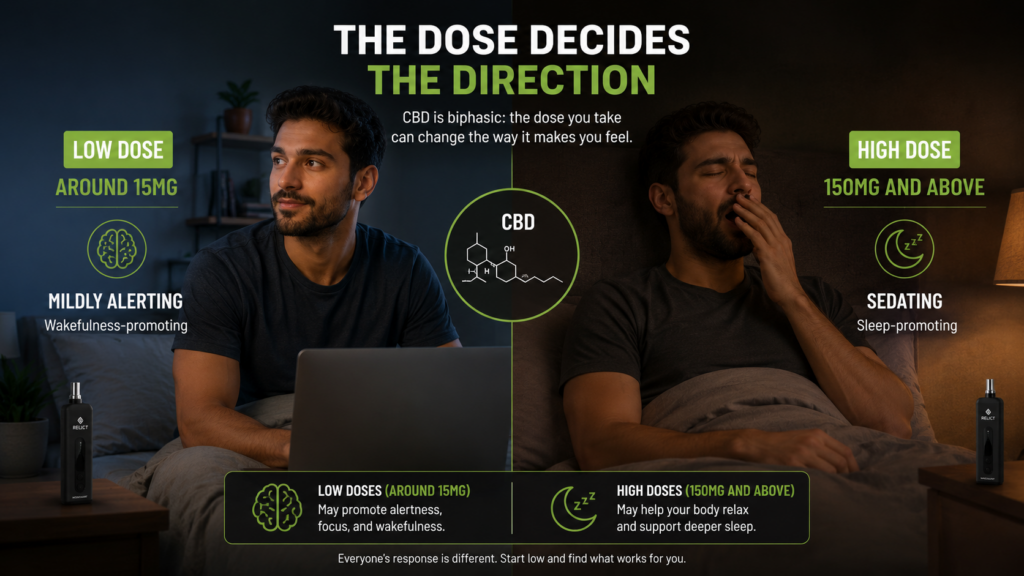
This is the single most important thing to understand about CBD for sleep. The same compound can wake one person up and settle another down, depending on how much they took.
| ℹ️For how CBD behaves alongside related cannabinoids, this guide to using CBD & CBG in vaporizers also covers the endocannabinoid system in depth. |

Our Best Sellers
Discover the most popular Norddampf products
What the Research Shows With CBD for Sleeping
The results depend enormously on who was being studied, and this is where most summaries go wrong by blurring it. Who gets studied changes the answer completely. If we group people by separate sleep problems, the contradictions resolve.
So let's do that, starting with insomnia, the most common of all sleep issues.
Insomnia and Clinical Sleep Disorders
The most encouraging results come from people who already have a problem. A large case series published in *The Permanente Journal* (2019) found that sleep metrics improved within the first month for about two-thirds of patients treated with CBD—most of whom also suffered from anxiety. The authors themselves pointed out the caveat: the metrics fluctuated over time, and a case series is not a controlled study, which is why further controlled research is needed.
CBD Combined With Other Cannabinoids
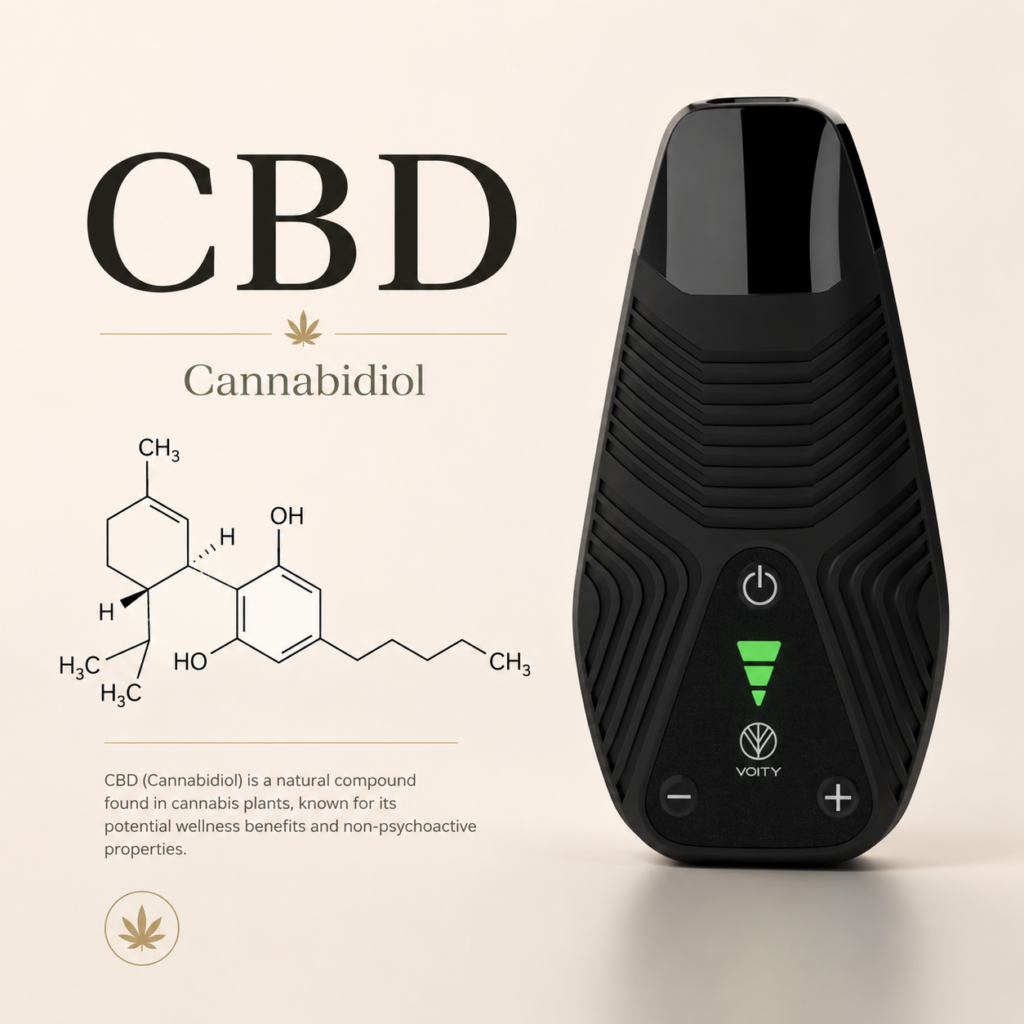
CBD tends to perform better with company than alone. Studied alongside THC, CBN, or terpenes, it shows more consistent sleep outcomes than in isolation. One particular randomized controlled trial concluded that testing a CBD and terpene formulation in people with insomnia leads to a modest but measurable increase in restorative sleep, with the biggest gains in those who slept worst to begin with.
Healthy Sleepers
In people without sleep problems, the results are far more muted. A randomized, placebo-controlled crossover study by Linares and colleagues gave 27 healthy volunteers a hefty 300mg dose and measured them by polysomnography, the full sleep-lab setup. The result was nothing: no significant effect on the sleep-wake cycle.
If your sleep is already fine, the evidence that CBD will improve it is close to absent. (Some research does suggest CBD may nudge REM timing at higher doses, but those studies are small and unsettled.)
Dosing: What's Actually Been Studied
Let’s be extra clear here, because the temptation is to hand you a dose number - but in reality, no single correct dose of CBD for sleep exists.
Studies used wildly different amounts; the biphasic pattern muddies everything, and response varies by person and formulation. Anyone quoting a precise magic figure is guessing with confidence.
The general consensus is to start low and adjust slowly, under the guidance of a healthcare provider who knows your situation. The assumption that more is automatically better is exactly what the biphasic data contradicts.
Delivery method matters too, as pharmacology rather than product placement:
- Inhaled CBD: acts within minutes, fades sooner; better suited to falling asleep
- Oils/tinctures: slower onset, longer-lasting effect
- Oral medications: slowest onset of action, longest duration of action
| ℹ️ On delivery: Inhaled CBD reaches you within minutes but fades fast, while oils and edibles are slower to arrive and slower to leave. This guide to vaporizing covers how heat and method affect onset. |
What We Still Don't Know About CBD for Sleep
- Most studies are small, short-term, and rely on self-reported sleep quality
Most sleep-focused CBD studies are small, short, and built on subjective questionnaires rather than objective sleep-lab measurements. People reporting they slept better is useful, but it is not a machine confirming they did.
- Long-term safety data specific to nightly sleep use is limited
The truth is that long-term safety data for sleep specifically, as opposed to CBD's established role in treating certain epilepsies, remains quite limited.
- Head-to-head comparisons with melatonin are too sparse to draw conclusions
And the comparison everyone wants (CBD compared to melatonin) is barely researched. The few head-to-head glimpses do not show CBD outperforming melatonin, but direct trials are so sparse that even that comes with an asterisk.
Ultimately, this is a fast-moving field, and everything here reflects the literature as it stands today - things may change, as research continues.
Possible Risks and Side Effects
CBD is generally considered well-tolerated at commonly studied doses, but it is not free of side effects. Reported ones can include:
- tiredness or drowsiness (which, in a sleep context, may be desired but is worth flagging)
- changes in appetite
- possible effects on liver enzyme values, particularly at higher doses
CBD can also interact with a range of prescription medications, including those metabolized by the liver's cytochrome P450 enzymes.
Anyone taking other medications or with liver or kidney concerns should speak to a qualified healthcare provider before starting CBD, whether for sleep or anything else.
Bottom Line
So where does that leave CBD for sleep?
The research is real and developing, with some encouraging findings in people with existing sleep or anxiety trouble compared to those who already sleep soundly. Most of the supporting work, however, comes from small or methodologically limited studies, and further controlled research is still needed before firm conclusions can be drawn.
The fairest description, and the one several research reviews reach for themselves, is promising but not proven.
If you take one thing from this, let it be skepticism toward anyone selling certainty. The science does not support it yet, and the honest position is to treat CBD for sleep as an area worth watching rather than a solution already proven.
Learn more about different vaporization methods and the devices that suit them in our vaporizer guides.
FAQs
Does CBD actually help you sleep, according to research?
Sometimes, in some people. The evidence is strongest in cases of existing insomnia or anxiety and weakest in healthy sleepers, where a controlled study found no measurable effect at a dose of 300 mg. “Promising, but not proven” is a fair summary.
What dose of CBD has been studied for sleep?
A very wide range, which is part of the problem. Studies span from around 15mg up to 300mg and beyond, and because CBD appears biphasic, higher is not reliably better. There is no single agreed-upon dose for sleep specifically.
Does CBD work better for sleep than melatonin?
The research does not support that claim. Direct comparisons are sparse, and the few that exist do not show CBD outperforming melatonin. Anyone stating otherwise with confidence is going beyond the evidence.
Can too much CBD keep you awake instead of helping you sleep?
Possibly. Because the effect is biphasic, lower doses (around 15mg) have been observed to be mildly alerting, while sedation tends to appear at higher doses. Dose direction, not just dose size, seems to matter.
Is CBD safe to take every night?
CBD is generally considered well-tolerated, but long-term safety data specifically for nightly sleep use are limited, and it can interact with other medications. Speaking to a healthcare provider before regular use is the sensible course.
Sources
- Linares, I. M. et al. (2018), No Acute Effects of Cannabidiol on the Sleep-Wake Cycle of Healthy Subjects, Frontiers in Pharmacology. https://pubmed.ncbi.nlm.nih.gov/29674967/
- Shannon, S. et al. (2019), Cannabidiol in Anxiety and Sleep: A Large Case Series, The Permanente Journal. https://www.ncbi.nlm.nih.gov/pmc/articles/PMC6326553/
- Saleska, J. L. et al. (2025), Effects of a cannabidiol/terpene formulation on sleep in individuals with insomnia, Journal of Clinical Sleep Medicine. https://jcsm.aasm.org/doi/10.5664/jcsm.11324
- Therapeutic Goods Administration (2020), Safety of low dose cannabidiol. https://www.tga.gov.au/sites/default/files/review-safety-low-dose-cannabidiol.pdf
- Kisiolek, J. N. et al. (2023), Safety and relative effectiveness of non-psychoactive cannabinoid formulations for sleep, medRxiv. https://www.medrxiv.org/content/10.1101/2023.01.20.23284842
Disclaimer: This article is for general informational purposes only and does not constitute medical advice. Always consult a qualified healthcare professional before using CBD products for health-related purposes.
The classification, availability, and legal use of CBD products vary by country and by product category. Readers should always check the applicable regulations in their own jurisdiction before purchase or use.