


Short answer: Is cannabis addictive?
Yes, cannabis can be addictive. Studies show that around 9% of all users can develop an addiction. If use begins in adolescence, the risk rises to around 17%. With very regular or daily use, as many as 25–50% of users can develop an addiction.
Cannabis can be addictive, but not everyone who tries cannabis becomes addicted. Most people who use cannabis do so only occasionally and not on a regular basis. In 2024, approximately 9.8% of adults in Germany had used cannabis within the last 12 months, and among 18- to 24-year-olds, the figure was almost 24%. The inhibition threshold for cannabis use may decrease if cannabis is more readily available.
Cannabis addiction does not usually develop suddenly, but rather over a longer period of time. Several factors play a role in this:
- psychological dependence
- physical adaptation of the body
- learned consumption habits and rituals
The risk depends heavily on frequency of use, THC content, personal predisposition, and form of consumption. Overall, the likelihood of developing a dependency is lower with cannabis than with substances such as alcohol or nicotine, especially when cannabis is prescribed by a doctor.
What is cannabis?
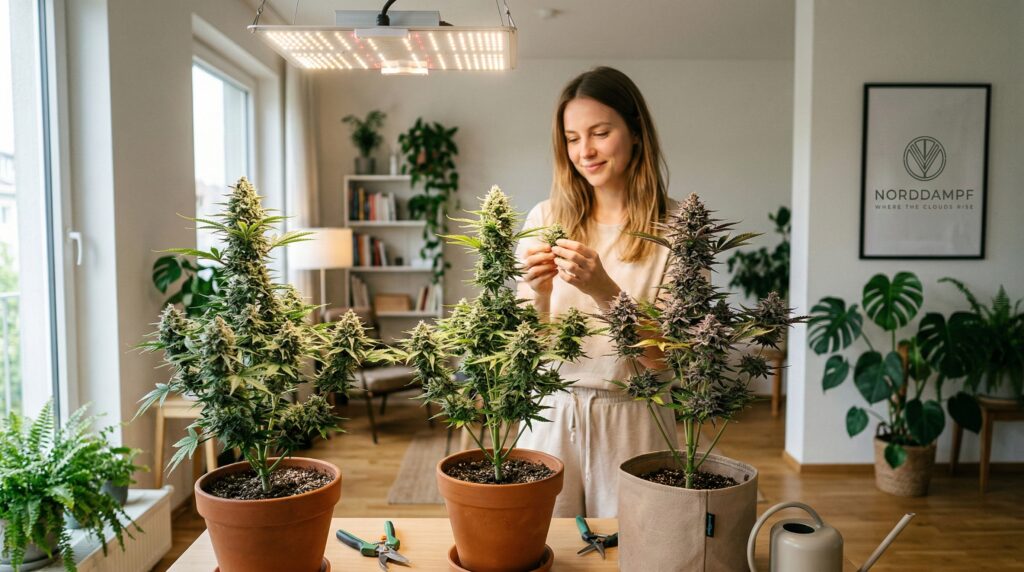
Cannabis is a genus of plants belonging to the hemp family. The best-known species include:
- Cannabis sativa
- Indian hemp
- Cannabis ruderalis
The dried flowers of the cannabis plant—often referred to as "weed" or "marijuana"—are the main source of the active ingredient THC and are usually smoked or consumed in other ways.
The plant contains numerous chemical compounds known as cannabinoids. These substances are responsible for the various effects of cannabis on the body.
Cannabis is used worldwide for both medical and recreational purposes.
The main active ingredients in cannabis

THC (tetrahydrocannabinol)
THC is the most well-known active ingredient in cannabis and is responsible for its psychoactive effects, i.e., the so-called "high."
THC affects, among other things:
- mood
- perception
- appetite
- memory
In addition, THC activates the reward system in the brain, which may play a role in the addictive potential of cannabis.
CBD (cannabidiol)
CBD is another important component of the cannabis plant. Unlike THC, CBD does not have an intoxicating effect.
Scientific studies are investigating CBD in connection with various possible effects, for example in the area of stress reactions or inflammatory processes.
Other cannabinoids
In addition to THC and CBD, cannabis contains numerous other cannabinoids, including:
- CBG
- CBN
- THCV
These substances together influence the overall effect of the plant.
How does cannabis affect the body?
The effects of cannabis are produced by the body's endocannabinoid system.
This system has receptors throughout the body:
- CB1 receptors in the brain and nervous system
- CB2 receptors in the immune system and various organs
THC mainly binds to CB1 receptors in the brain, thereby influencing, among other things, dopamine release in the reward system.
Typical short-term effects of cannabis can include:
- relaxation
- altered perception
- increased appetite
- more intense sensory impressions
Possible side effects may include:
- nervousness
- palpitations
- concentration problems
- feelings of anxiety
How high is the risk of cannabis addiction?
The question "Is cannabis addictive?" has been scientifically investigated for many years.
Studies show the following approximate risk values:
| consumer group | Risk of dependency |
|---|---|
| Occasional consumers | approx. 9% |
| Start of consumption in adolescence | approx. 17% |
| Daily consumption | up to 25–50% |
| This means that cannabis has a real addictive potential, but one that is generally lower than that of alcohol or nicotine. |
Cannabis is one of the most commonly used drugs worldwide. The likelihood of developing an addiction depends on various factors. The most important risk factors include the social environment, and young people in particular are at high risk of developing a cannabis use disorder. People with a history of behavioral disorders in childhood or adolescence have an increased risk of such a disorder. A substance use disorder is present when a substance continues to be used despite serious negative consequences. The criteria for cannabis use disorder are defined in the ICD-10 and include the simultaneous occurrence of at least three symptoms. According to the American Psychiatric Association, problematic cannabis use is considered a "cannabis use disorder." These statements are based on scientific facts and current studies.
How does cannabis addiction develop?
Cannabis addiction usually develops over a long period of time.
Several factors play a role here:
- psychological dependence
- physical adaptation processes
- learned consumption habits
Some individuals have an increased risk of developing an addiction due to genetic, social, or psychological factors. The social environment, failure at school, and a low socioeconomic background can also contribute to the development of a cannabis use disorder. Cannabis is not only used for pleasure, but is also used by many people to cope with everyday problems, anxiety, or sleep problems, and can affect all areas of life. Cannabis can reduce performance, which can lead to problems at work or school. Addicts also report more frequent social problems, relationship breakdowns, or professional failure.
These factors can reinforce each other.
Psychological dependence

With cannabis, psychological dependence is often the main issue. The symptoms of this dependence can be very pronounced, with psychological symptoms such as a strong craving for consumption dominating everyday life, while physical withdrawal symptoms are usually less severe than with other drugs.
THC activates the reward system in the brain, which can lead to pleasant feelings. The brain stores this experience. Cannabis use is often integrated into everyday life, which can promote problematic behavior patterns and a creeping dependence.
Over time, cannabis can become associated with certain situations, for example:
- relax after a stressful day
- Overcoming boredom
- make social situations more pleasant
- fall asleep more easily
The temptation to consume cannabis is increasing, particularly due to social trends and increasing legalization, which increases the risk of trivialization and access for young people.
Consumption then becomes a learned strategy for regulating stress or emotions. Many affected individuals feel the desire to regain control over their lives and overcome their addiction. However, the biggest hurdle for consumers is often admitting to themselves that they are addicted to cannabis.
Physical dependence
Physical dependence on cannabis can also develop, although it is usually less pronounced than with alcohol or nicotine.
With regular consumption, the body's endocannabinoid system adapts to the repeated intake of THC.
If consumption is suddenly stopped, withdrawal symptoms may occur, for example:
- sleep problems
- irritability
- inner turmoil
- decreased appetite
- sweating
- concentration problems
- reddened eyes as a visible physical symptom
The symptoms of cannabis withdrawal usually appear 24 to 48 hours after the last use. In cases of severe withdrawal symptoms, a stay in a clinic or psychiatric support may be advisable to ensure professional care. Professional support is usually necessary to achieve long-term abstinence. The treatment of addiction should always take into account both the physical and psychological components.
These symptoms are usually temporary and subside after a few days or weeks.
Habits and ritualized consumption patterns
Consumption rituals are a frequently underestimated factor when it comes to cannabis addiction.
Many consumers develop fixed habits around their consumption, for example:
- Consumption before bedtime
- Consumption after work
- Consumption while gaming or watching television
- Consumption in specific social situations
The brain begins to associate certain situations or times of day with consumption.
These so-called conditioned habits can lead to a strong craving, even if there is no pronounced physical dependence.
Which forms of consumption influence the risk?
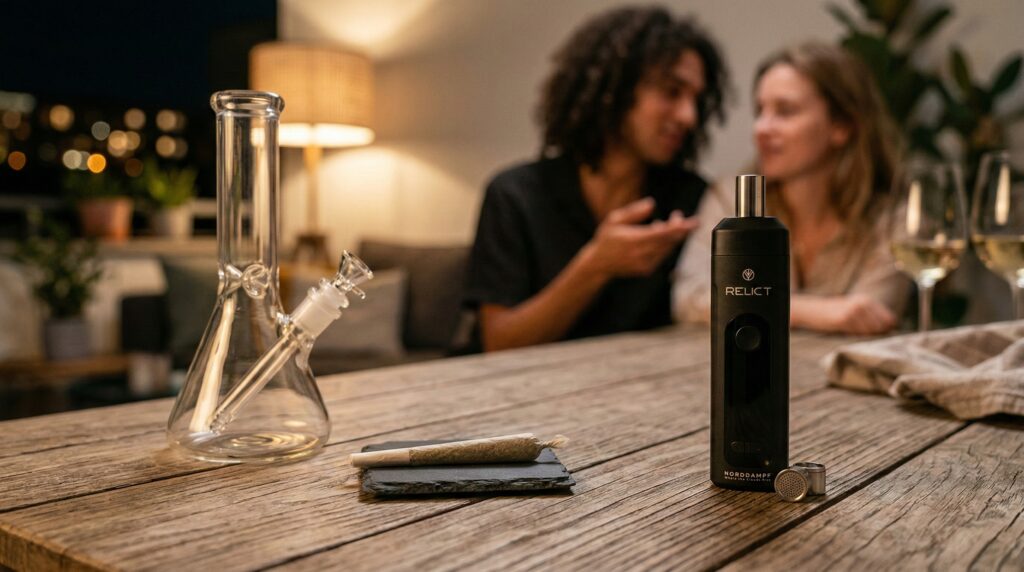
The type of consumption can influence habit formation, intensity of effect, and physical strain.
Joint with tobacco
In Germany, cannabis is often consumed with tobacco.
This results in a combination of:
- THC
- nicotine
- combustion products
Nicotine is highly addictive and can promote additional tobacco dependence.
Smoking without tobacco
Even when smoking without tobacco, combustion products continue to be produced; a comparison between vaporizers and smoking as methods of consumption shows that vaporization can reduce exposure to these substances.
With consumption methods such as bongs or pipes, a large amount of smoke often enters the body in a short period of time, which can make the effect more intense. In comparison, a comparison of the effects of vaporizers and joints shows that vaporization can have a different effect, which is often perceived as gentler.
Edibles
Edible cannabis products have a different effect than inhaled consumption, which is explained in detail in comprehensive guides on vaporizing and alternative consumption methods.
Typical characteristics:
- Effect begins after approximately 30–90 minutes
- Effective for up to 6–12 hours
- Dosage more difficult to predict
This can make it easier to overdose.
Vaporizers as an alternative form of consumption
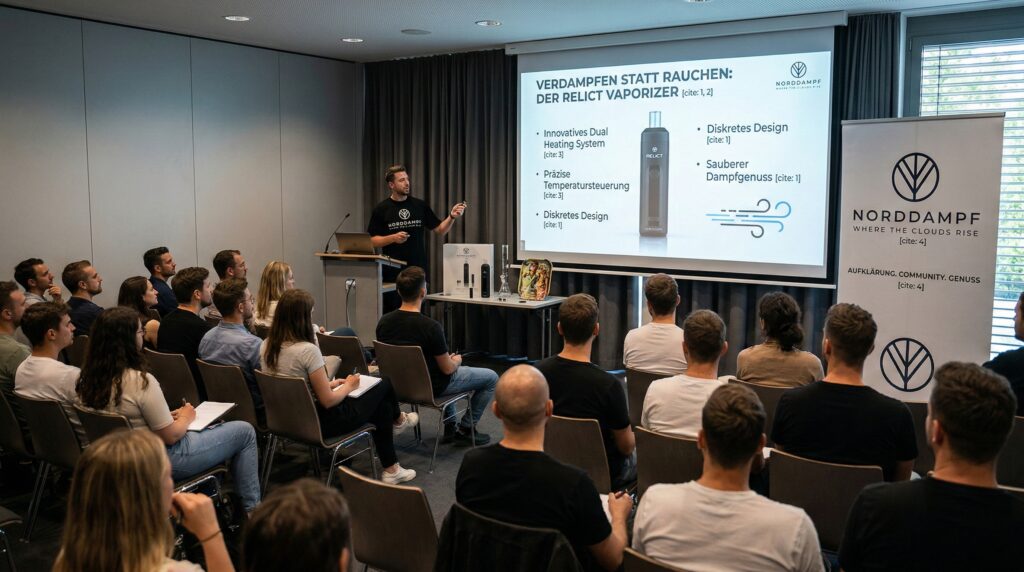
When vaporizing with a vaporizer, cannabis is not burned, but heated; how a vaporizer works in detail depends on the respective heating technology.
Typical temperatures range between:
160 °C and 220 °C
This causes cannabinoids and terpenes to vaporize, while the plant material does not burn.
Many modern devices allow for precise temperature control, which can influence the release of active ingredients; the optimal vaporizer temperature for cannabis plays a key role in this.
One example of a device in this category is the RELICT vaporizer, which was developed for use with cannabis flowers and enables temperature-controlled vaporization.
Warning signs of problematic cannabis use

The following signs may indicate problematic consumption:
- daily or very frequent consumption
- Loss of control over the amount consumed
- Neglect of work or social activities
- strong desire to consume
- Consumption despite negative consequences
- social withdrawal, such as avoiding friends or family
The symptoms of cannabis use disorder can include both psychological and physical characteristics. Problematic cannabis use can lead to social withdrawal. Addiction counseling centers are one of the first points of contact for those affected and their families. The Federal Center for Health Education offers comprehensive information, self-tests, and support for those affected.
Cannabis addiction is a disease that can only be diagnosed by a specialist. According to the International Classification of Diseases (ICD-10), at least three of the following symptoms must have been present within the last 12 months for a diagnosis of addiction to be made.
In such cases, it may be helpful to seek advice from addiction counseling centers or medical professionals.
Conclusion: Is cannabis addictive?
The scientific answer is: yes, cannabis can be addictive.
However, the risk depends heavily on various factors, including:
- frequency of consumption
- THC content
- personal disposition
- form of consumption
- learned habits
Studies show that the risk of psychosis and schizophrenia increases with cannabis use, especially in cases of genetic predisposition or early onset of use. Research has also identified various effective measures for addiction prevention. With continued use, tolerance develops, meaning that increasingly larger amounts of cannabis are needed to achieve the desired effect. Long-term use can lead to memory problems, concentration difficulties, and reduced learning ability. There is also evidence of an increased risk of testicular cancer in young men and an impact on brain development in adolescence. Cannabis can also exacerbate mental health problems such as anxiety disorders or depression and significantly increase the risk associated with activities such as driving.
Combined use with tobacco in particular can significantly increase the risk of addiction.
Conscious use of cannabis and knowledge about possible risks can help to identify problematic consumption at an early stage.
FAQ – Frequently asked questions about cannabis and addiction
Can cannabis be physically addictive?
Yes. With regular consumption, the endocannabinoid system can adapt, which can lead to withdrawal symptoms when you stop.
Is cannabis less addictive than alcohol?
Many studies show that the addictive potential of cannabis is lower overall than that of alcohol or nicotine. Nevertheless, dependence can develop.
What role do habits play in cannabis use?
Habits and ritualized consumption patterns can play an important role. When consumption is regularly associated with certain situations, a strong craving can develop.
Further information about cannabis
If you would like to learn more about cannabis, active ingredients, and different forms of consumption, the following topics may also be of interest to you:
- How does cannabis affect the body?
- Smoking cannabis vs. vaporizing – differences explained
- What is the ideal temperature for vaporizing cannabis?
- Terpenes and cannabinoids – the most important active ingredients in the cannabis plant
- How does a vaporizer for cannabis flowers work?
Note / Disclaimer
This article is intended solely to provide information and education about cannabis, its effects, and potential risks.
It does not constitute medical advice and does not contain any recommendations regarding the consumption of cannabis.
The use of psychoactive substances can pose health risks. If you have any questions about cannabis, addiction, or health effects, you should consult a medical professional or an addiction counseling center.