
Moldy cannabis. Two words that are, when used together, capable of absolutely ruining a lovely evening on the sofa with some good tunes or a great movie. But at some point, most people who handle their own flower have held up a bud and thought, “Hang on… is that meant to be there?”
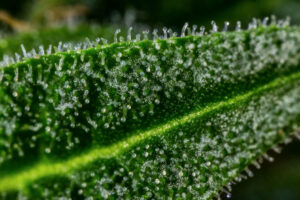
Moldy cannabis and great cannabis are easily confused, though. That frosty, gray-white dusting on a nice bud is usually a very good sign. It's cannabis trichomes, the tiny resin factories where most of the good stuff resides
Not always trichomes
Sometimes, however, they aren't trichomes at all. It's mold on cannabis, and that's not a good thing. Confusing the two can not only ruin a relaxing evening but, in the worst case, also have serious health consequences—at least potentially.
That’s why it’s worth learning how to spot mold on cannabis—a very useful skill that isn’t hard to learn once you know the difference between a healthy, glistening bud and a moldy, musty imposter.
This guide will show you how to do it: First, we’ll explain how to tell the two apart by sight and smell. Then we’ll discuss what actually happens to your body if you make a mistake, and (the part that we think most articles overlook) how proper drying, curing, and storage can prevent mold from developing in the first place.
Before we begin, here's a quick, sensible note: These are general safety guidelines, not medical advice.
Key Points
- Trichomes have a glassy, crystalline appearance and catch the light; moldy cannabis, on the other hand, looks alarmingly dull, lifeless, powdery, or fluffy.
- The smell is the quickest way to tell. Moldy cannabis smells musty (like wet hay, a damp basement, or even ammonia) and doesn't smell like its terpenes.
- Mold often settles inside dense buds, which is why a clean-looking surface is no guarantee of a clean interior.
- For most healthy adults, moldy grass causes unpleasant symptoms; however, for people with asthma, allergies, or a weakened immune system, it can actually be dangerous.
- Vaporizing does not make moldy flowers safe. Mycotoxins are heat-stable, and spores can survive the heat.
- Most mold problems are caused by moisture and poor air circulation. Drying, curing, and storage are therefore your best defenses—aim for a relative humidity of 59–63%.
Mold vs. Trichomes: How to Tell the Difference
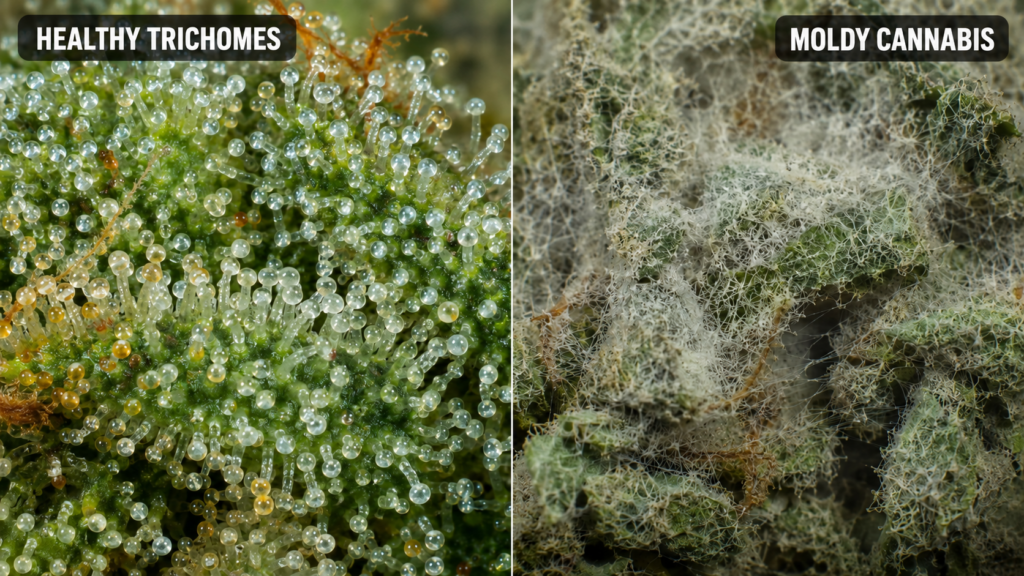
To the untrained or inexperienced eye, a bud heavily covered in frost and an early mold infestation look alarmingly similar, with their light, dusty coating. Upon closer inspection, however, the two have nothing in common.
Trichomes are tiny, glassy stalks with spherical heads—almost like microscopic glass mushrooms. Depending on their stage of maturity, they are clear, milky white, or amber in color and—crucially—catch the light and sparkle in a wonderfully soothing way. They coat the buds and sugar leaves quite evenly. It’s precisely this sparkle that you should look for. Healthy resin always shines.
Cannabis mold is the exact opposite of glitter. It's hard to describe in words, but it looks dull, powdery, fluffy, or web-like. It appears in shades of gray, white, brown, or black and doesn't reflect light at all.
It usually spreads unevenly and often takes hold deep within dense bud cores before it even reaches the surface. And that is precisely part of the problem: A bud can look perfectly fine on the outside while rotting on the inside.
The Smell Test
If your eyes can't tell for sure, your nose usually can. Smell is the fastest and most reliable way to spot a problem, because moldy cannabis smells musty and unpleasant. Here, too, think of wet hay, a damp basement, or a whiff of ammonia. Either way, it's no fun.
A healthy bud smells like its terpene profile: citrus, pine, diesel, earth—whatever is typical of that particular strain—and it’s all quite pleasant. If, on the other hand, a bud smells like the inside of a forgotten gym bag or a wet German shepherd, you should trust your instincts.
| ℹ️Pro Tip for Growers: A jeweler’s loupe or a macro lens for your cell phone—for just a few euros—will show you what the naked eye can’t see. Basically, it’s a cheap form of insurance. |
The Usual Suspects
Some types of mold are more common than others. Powdery mildew covers the surface with a white, powdery coating. Gray mold (Botrytis) is the more troublesome variety—it starts inside dense flower clusters and works its way outward, which is why it’s often already well advanced before you notice it. Less commonly, sooty mold appears as a dark, dusty film. You don’t need to identify the exact species, though. If it’s fuzzy, dull, and musty, that’s more than enough for a diagnosis.
| 👉Want to understand more about how to assess the maturity of trichomes? Then check out our Trichome Maturity Guide for valuable tips. |

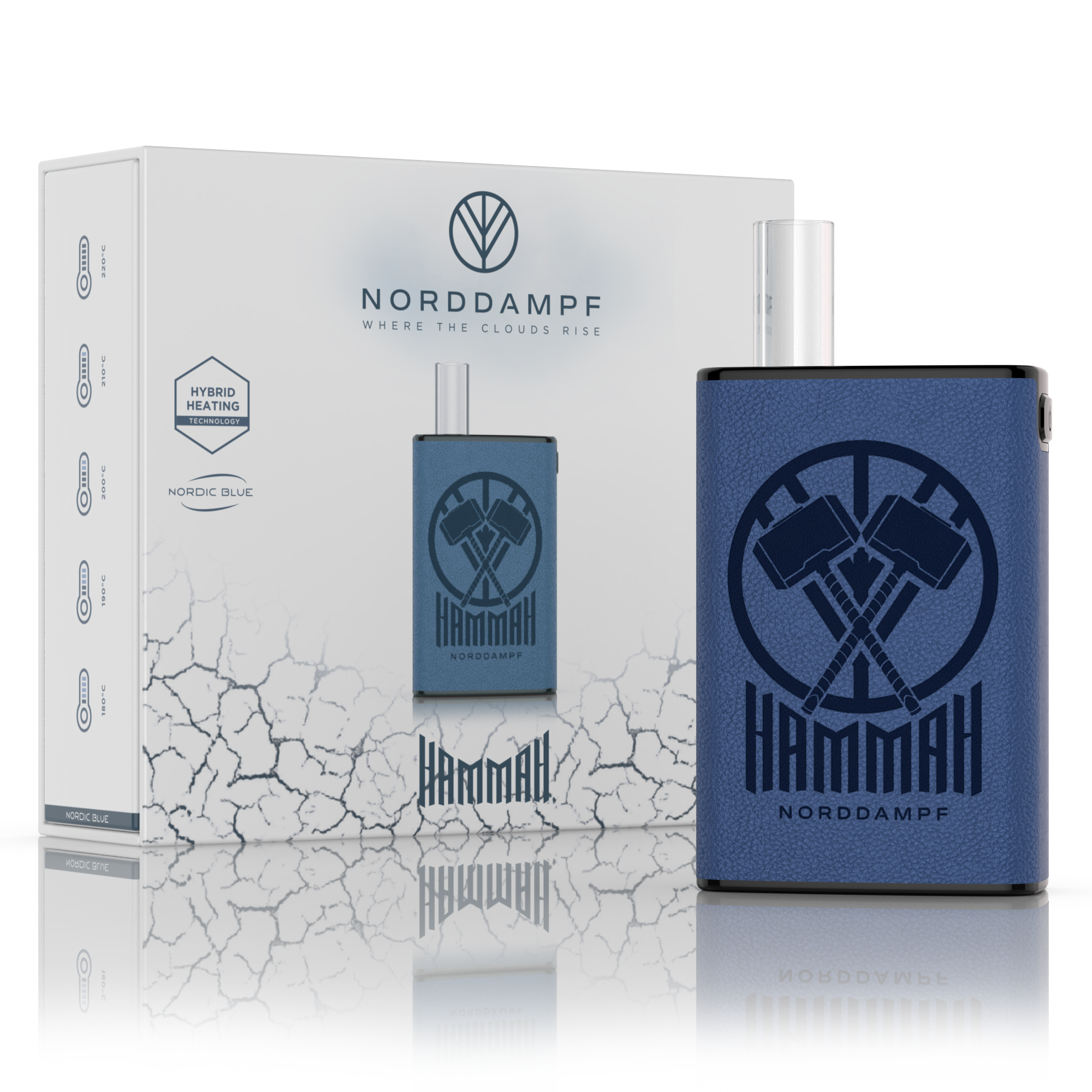
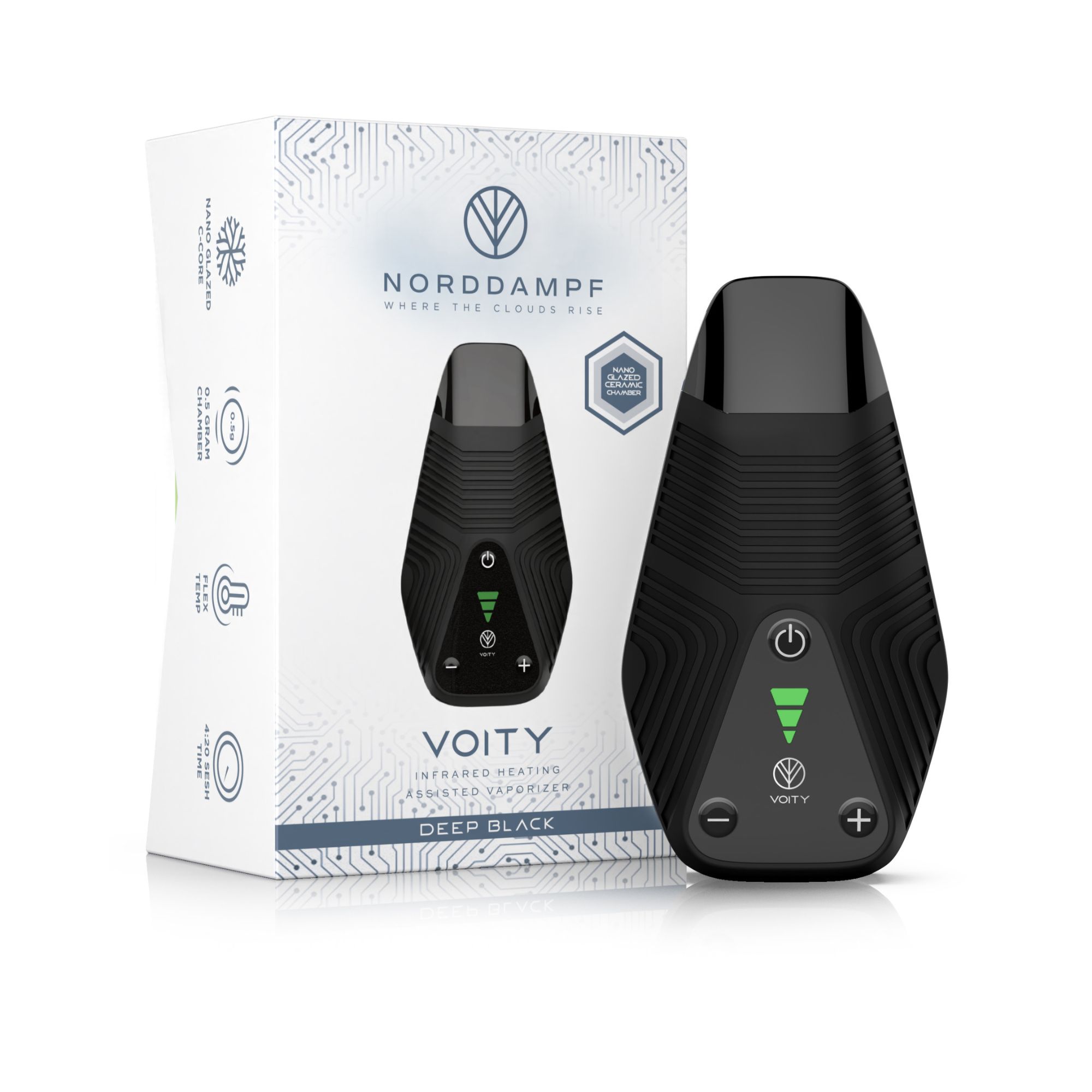
Our Best Sellers
Discover the most popular Norddampf products
Why Cannabis Gets Moldy
But why does this happen at all? Why does this strange natural phenomenon seem determined to steal your precious grass and ruin your day?
Mold isn't bad luck, even if it certainly feels that way. It's simply chemistry meeting the right conditions. Mold spores are everywhere anyway; they float through the air in every room and remain harmless until they find a place where they can settle and grow.
To thrive, they need moisture and stagnant air. If you give them both, cannabis is an excellent, hospitable host. That’s why moldy weed can usually be traced back to a handful of completely avoidable mistakes, such as:
⚠️ Flowers dried too quickly or too slowly, causing moisture to remain trapped inside the bud.
⚠️ Cannabis that has been cured or stored in conditions of excessive humidity.
⚠️ Dense, compact buds that store water at their core, where air cannot reach.
⚠️ Poor air circulation during drying.
⚠️ Storage in a container that isn't truly airtight or in a room with fluctuating humidity.
For home growers —a group that has been steadily growing since the CanG legalized home cultivation in Germany—there are still a few additional pitfalls to watch out for. Harvesting too early, while the plant is still damp; rushing through or skipping the curing process; and storing jars in a damp bathroom or steamy kitchen are all surefire, common ways to invite mold.
| 👉Proper curing is the most important factor here. Our guide to drying and curing cannabis covers the technique in detail. |
Health Risks: What Happens When You Use Moldy Cannabis
For most healthy adults, cannabis with a little mold is more unpleasant than dangerous—it causes coughing, nausea, perhaps a scratchy throat, or similar symptoms, but it’s ultimately something you can get through. If you’re allergic to mold, you can expect more severe symptoms, such as congested sinuses and wheezing.
People with weakened immune systems, asthma, or serious lung conditions really shouldn’t take the risk. Certain fungi found on cannabis (mostly Aspergillus) have been linked in medical reports to unpleasant lung infections, which can even spread further in the most vulnerable patients. Rare? Yes. Worth the risk? Definitely not.
And no, unfortunately, vaporizing doesn’t solve the problem of moldy weed either. Mycotoxins are stubborn little pests that can easily withstand vaporization temperatures, and some spores and toxins even survive open flames—so even a nice dry-herb vaporizer presents exactly the same problem, just in a pretty package.
Our message is very simple: If you suspect mold, don't smoke it and don't try to save the "good" half—the mold grows right through the entire bud. As painful as it is, you have no choice but to throw the whole thing away.
🚨If you notice persistent respiratory symptoms after using cannabis, or if you have a weakened immune system or a chronic lung condition, talk to a doctor before using it again!
Preventing Mold on Cannabis: Drying, Curing, and Storing
As with many things in life, almost any mold problem can be prevented, because ultimately it comes down to moisture—which you can control yourself. The only problem is: Most advice stops at “Take a glass”—which is about as useful as saying the secret to driving is “Take a car.” In other words: useless and anything but helpful.
Here are some better ways to prevent mold on cannabis.
Dry slowly and evenly
Mold prevention starts with drying. If you rush the process by using heat or a fan on full blast, you’ll only dry the outside, while moisture remains trapped inside—as you can imagine, this is the worst possible combination. Slow, controlled drying in a cool, dark, well-ventilated room gradually removes the moisture before the flower even goes into the jar.
Let them cure patiently and air out the jars
Curing is the step that many people rush through, and mold loves impatient growers. In the early curing phase, “burping” the jars—opening them for a few minutes each day—allows trapped moisture to escape and fresh air to enter. This simple step, which takes just a few seconds, significantly reduces your risk of mold in the weeks that follow.
Store in an airtight container at the proper humidity level
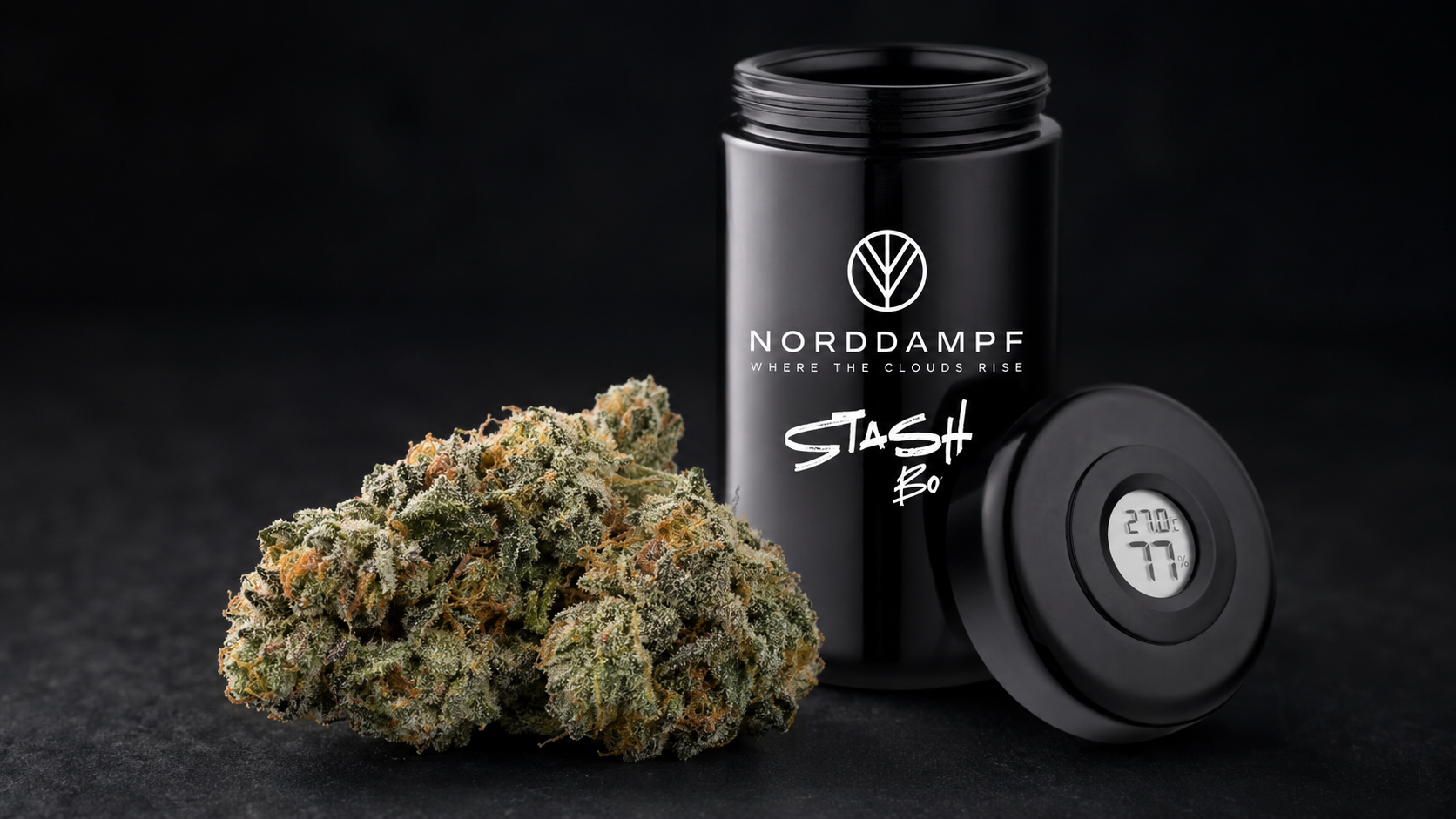
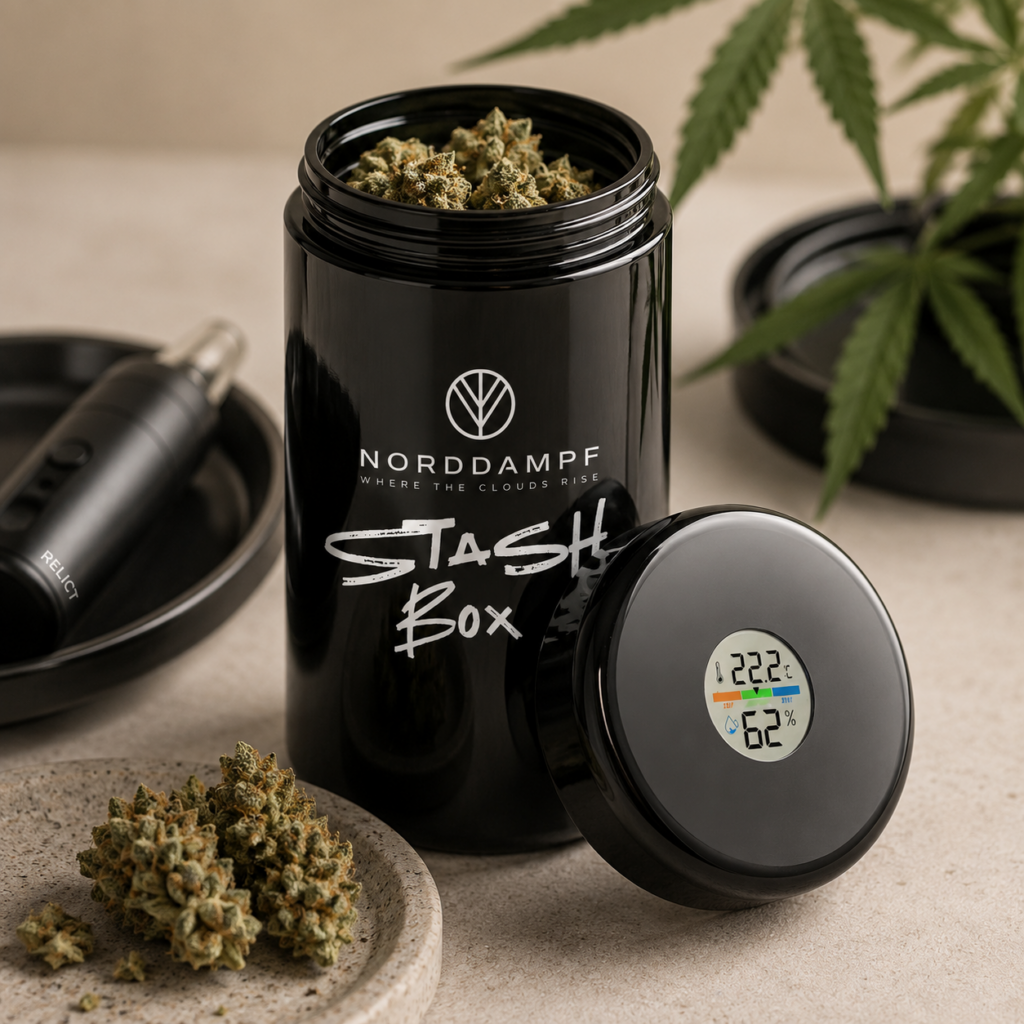
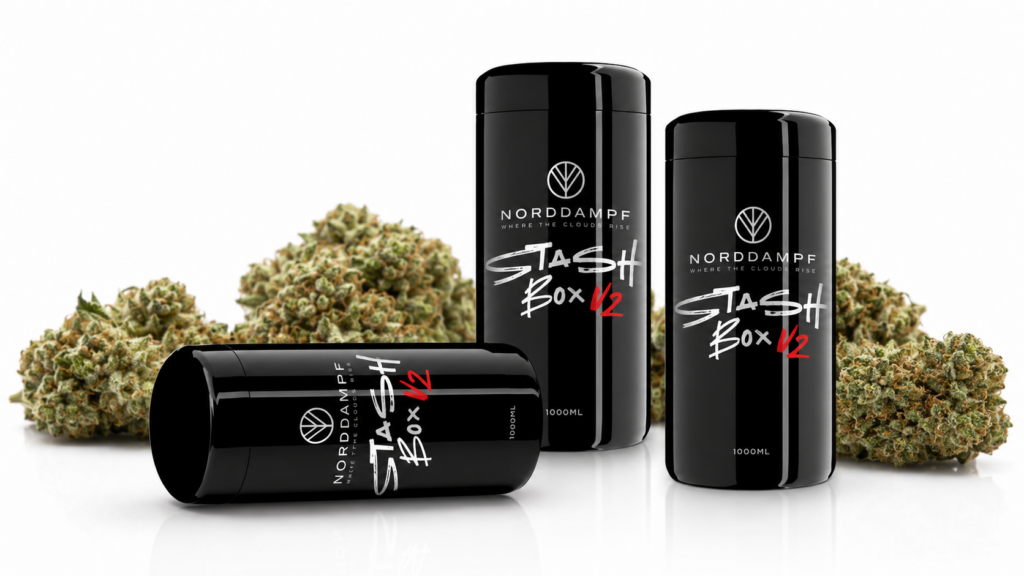
This is an important point. Store cured flowers in an airtight glass container. Violet Miron glass is ideal because it blocks light and air, and the NorddampfMiron storage jar for cannabis even has a built-in hygrometer that lets you check the humidity without opening the lid. Aim for 59–63% relative humidity; inexpensive two-way humidity pads will help maintain that level.
Store them in a cool, dark place, and avoid the refrigerator or freezer, where condensation can cause damage. Temperature fluctuations in those places lead to condensation, and that's exactly the kind of moisture you want to avoid.
Keep an eye on
For anything that's been stored for more than a few weeks, take a quick look or give it a sniff every now and then. It's simple, effortless, takes only a few seconds, and helps you catch problems while they're still fixable.
| ℹ️Pro Tip for Growers: Dense, tightly packed flower clusters are most susceptible to internal bud rot. Good air circulation during cultivation and a patient drying and curing schedule are therefore more important than any jar. A bud that was already damaged at harvest cannot be saved through storage. |
Conclusion
At first glance, trichomes and mold might seem like distant relatives, but upon closer inspection, a clear difference becomes apparent. Trichomes have an intuitively positive vibe, with a sparkle and a scent that matches the specific strain. Moldy cannabis, on the other hand, is dull, fuzzy, and smells like a neglected basement. Just remember: If your eyes are unsure, let your nose decide.
This safety tip is worth emphasizing once again. To put it simply: When in doubt, don’t use it. Moldy cannabis just isn’t worth the risk, and vaping isn’t a smart workaround.
Almost every mold problem arises during drying, curing, or storage—and all of that is entirely up to you. If you do it right, you’ll rarely have to ask yourself how to spot mold on cannabis.
If you're now viewing your supplies with a newfound sense of skepticism, it's worth taking a look at our storage accessories.
Frequently asked questions
How can you tell the difference between moldy cannabis and trichomes just by looking at them?
Trichomes are glassy, crystalline stalks that glisten and range in color from clear to milky to amber. Mold is the opposite: dull, powdery, or fluffy, in shades of gray, white, brown, or black, with absolutely no sheen. If it glistens, it’s resin; if it looks dusty and lifeless, you should be suspicious.
Can smoking or vaping moldy weed make you sick?
Yes. Most healthy adults experience a cough, nausea, or irritation of the sinuses and throat. People with allergies, asthma, or a weakened immune system face a higher—and in some cases, serious—risk of fungal infections of the lungs. It’s not worth the risk.
Is it enough to cut off the moldy part and use the rest?
No. Mold penetrates the inner structure of the bud, not just the surface—so the “clean” part is rarely truly clean. If a single bud in a batch is infested, the entire batch is considered suspect and should be discarded.
Does vaporizing kill mold, or does it make cannabis safe?
No. Mycotoxins are heat-stable and can withstand normal vaporization temperatures, and spores can survive even higher temperatures. Vaporizing moldy buds does not clean the weed; it merely delivers the harmful substances. A vaporizer is meant for good buds, not for salvaging bad ones.
What level of humidity prevents mold from growing on stored cannabis?
Keep the relative humidity between 59% and 63%. Above about 63%, mold has enough moisture to grow; below 59%, the buds dry out and terpenes break down. A hygrometer and two-way humidity pads make it easy to maintain this range.
Why does cannabis get moldy even though it's stored in a jar?
Most often, this is because the item was placed in the jar with too much residual moisture—perhaps due to hasty drying or curing—or because the jar isn’t truly airtight. A jar preserves exactly the conditions you put into it, whether good or bad. That’s why drying and curing are just as important as the container itself.
Sources
- Fungal and Mycotoxin Contaminants in Cannabis and Hemp Flowers: Implications for Consumer Health, Frontiers in Microbiology (2023) — https://www.frontiersin.org/journals/microbiology/articles/10.3389/fmicb.2023.1278189/full
- "Inhaled Medicinal Cannabis and the Immunocompromised Patient," Supportive Care in Cancer (2015) — https://pubmed.ncbi.nlm.nih.gov/25216851/
- Chronic necrotizing pulmonary aspergillosis in a patient with diabetes and marijuana use, CMAJ (2015) — https://www.cmaj.ca/content/187/17/1305
- Symptoms of Aspergillosis, U.S. Centers for Disease Control and Prevention (CDC) — https://www.cdc.gov/aspergillosis/signs-symptoms/index.html
- Evaluating the Effects of Gamma Irradiation for the Decontamination of Medicinal Cannabis, Frontiers in Pharmacology (2016) — https://www.frontiersin.org/journals/pharmacology/articles/10.3389/fphar.2016.00108/full
This article is for informational purposes only and does not constitute medical advice. Always consult a qualified healthcare professional before using cannabis products for health-related purposes.