
The temperature inside a vaporizer determines which active compounds, terpenes, and flavors are released from the herbs. What many people don’t know: the temperature range between 160°C and 210°C determines whether your vaping experience will be mild and aromatic or intense and body-focused. This vaporizer temperature guide shows you how to find the right temperature for your material—step by step, without any guesswork.
The Vaporizer Temperature Tool
Balanced
The sweet spot for most varieties.
Active cannabinoids
Terpenes Active
Key Findings
Most users vape at temperatures between 160 and 210 °C. Within this temperature range, flavor and effects can be precisely controlled without burning the material. Here are the key points:
- Everyday use and beginners: 170–190 °C provide a clear, mild experience with good aroma when using cannabis flowers
- Stronger effects: 195–210 °C produce a more physical effect, but increase the risk of harsh vapor
- Combustion threshold: Above 220°C, the risk of combustion increases significantly—this temperature range should be avoided when using herbs in a vaporizer
- Take a systematic approach: Always start at a low temperature and increase it in small increments (5 °C) until the flavor and intensity are just right

Our Best Sellers
Discover the most popular Norddampf products
What Actually Happens When You Vape
When vaporizing, the device heats your material to a temperature at which the active ingredients vaporize—without any actual combustion taking place. Unlike smoking a joint or pipe (600–900 °C), vaporizers have been using electronic temperature control since around 2010, which allows for precise control.
Vaporizing cannabis can produce fewer harmful combustion byproducts, such as tar and carbon monoxide, compared to smoking, making it a potentially healthier alternative.
- Cannabinoids such as THC and CBD begin to vaporize at different temperatures: THC at around 157 °C, and CBD at around 160 °C
- Terpenes have specific boiling points that determine the temperature at which they vaporize—this affects their aromas and effects
- Most people report feeling the effects of cannabis at around 170 °C
- At temperatures above 230 °C, actual combustion begins: tar, carbon monoxide, and benzene may be produced
The choice of vaporization temperature affects not only the effect, but also the taste and efficiency of vaping.
Temperature ranges in the vaporizer and their effects
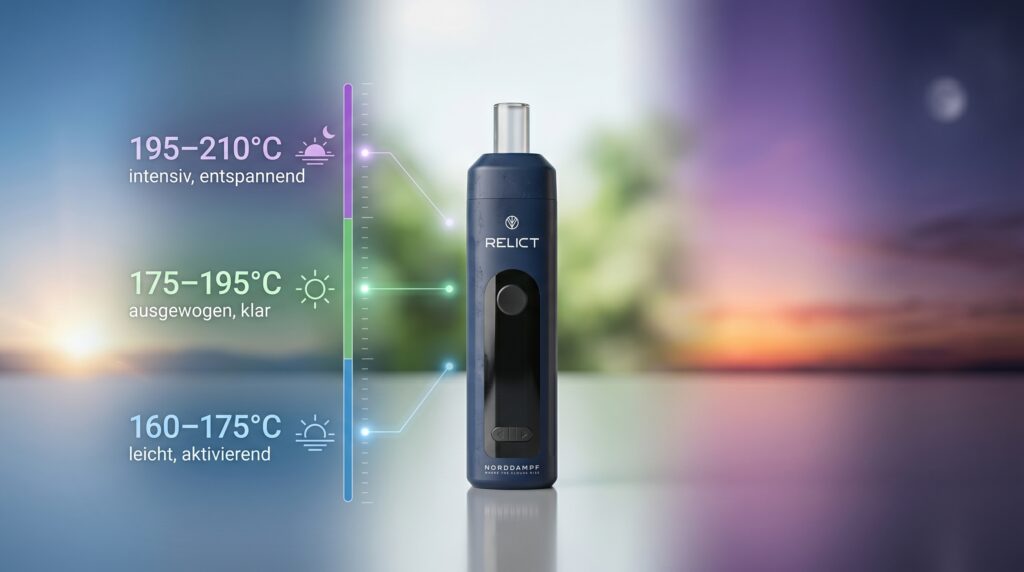
There is no single "perfect" temperature for a vaporizer, as the optimal experience is a balance between flavor and effective absorption of active ingredients. Instead, there are three main temperature ranges, each with different characteristics.
As a general rule, lower temperatures produce a better flavor and smoother vapor, while higher temperatures result in denser vapor and a stronger physical effect.
Low temperatures (approx. 150–175 °C)
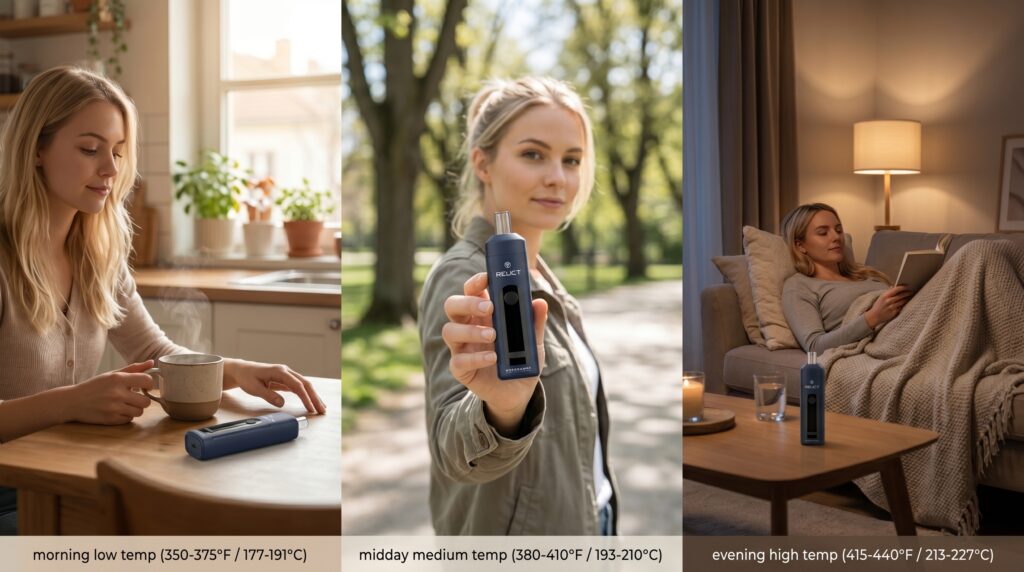
This section is particularly well-suited for aroma enthusiasts, microdosing, and daily functional use. For beginners and those trying microdosing, it is recommended to start with lower temperatures to gradually get used to the effects of the herbs.
- Effect: Mild, cerebral high – clear-headed, slightly more focused, subtle
- Ideal for: Sensitive users, medical beginners, daytime sessions (9 a.m.–5 p.m.)
- Advantage: Low temperatures preserve the delicate terpenes, with up to 70% terpene retention
- Disadvantage: Lower potency, only 20–40% extraction, longer sessions required
Start with 160 mg of cannabis to avoid feeling overwhelmed.
Medium temperatures (approx. 175–195 °C)
A temperature range between 180°C and 210°C is often considered the best all-around standard. Numerous studies and user reviews since 2015 have identified 180–190°C as the “sweet spot.”
- Effect: A balance between mental and physical effects
- Taste: Still has a good terpene aroma, but the effects are clearly noticeable
- Ideal for: Evening use, stress relief, moderate pain relief
- Extraction: 60–80% of the active ingredients, including CBD, at 180°C
The vapor is noticeable, the flavor is good, and cannabinoid extraction is most efficient at temperatures between 180 °C and 200 °C. The ideal temperature range for the best balance between aroma and potency is usually between 185 °C and 195 °C.
High temperatures (approx. 195–210 °C)
High temperatures (190–220 °C) produce dense vapor and result in a strong, often physical effect. This range is intended for experienced users who want maximum extraction.
Note: At temperatures above 200°C, there is a risk that the steam will become harsh and the first roasted flavors will develop.
- Extraction: 90–95% of the cannabinoids, including CBN
- Steam: Denser, warmer, harsher – approach slowly
- Risk: 10–20% increase in reports of a coughing sensation in user reports
- Recommendation: Take small sips, drink water, and take breaks
Medical guidelines recommend not exceeding 210 bpm for extended periods.
Vaporizer Temperature for Cannabis Flowers
The optimal temperature for vaporizing cannabis is typically between 160 °C and 220 °C, with lower temperatures tending to produce milder, aromatic effects and higher temperatures resulting in more intense effects. The following information applies to dried flowers (THC- or CBD-dominant) and common devices available since around 2018.
| Goal | temperature range |
|---|---|
| Everyday Life / Clear Impact | 170–185 °C |
| Stronger medicinal effect | 185–205 °C |
- Always start at about 170 °C, then adjust after 3–5 puffs
- Increase in 5°C increments until the effect and taste are just right
- The cannabis strain, moisture content, and grind size can slightly affect the optimal temperature
THC-dominant flowers: From clear-headed to deeply relaxing
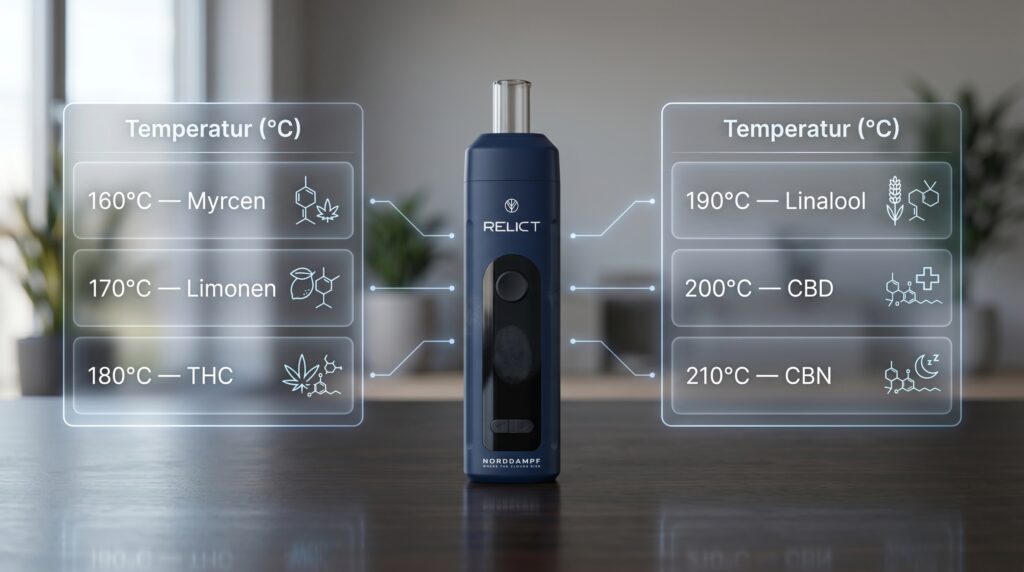
THC is effectively released at around 180 °C. Most users report feeling a noticeable effect only at 170 °C or higher.
- 170–180 °C: More of a “head high” – clear-headed, creative, good for daytime use or socializing on the weekend
- 185–200 °C: A blend of head and body effects, popular in the early evening
- 200–210 °C: Stronger, more physically relaxing sedation – ideal as a sleep aid or for severe discomfort
Above 210–215 °C, THC degradation increases and the vapor becomes unpleasant.
CBD-dominant flowers and hemp
CBD vaporizes well at around 160 °C; for full effect, temperatures of 180–190 °C are usually recommended.
- Getting Started with CBD: 165–180 °C to Get Used to the Effects and Vapor
- Experienced users: 180–195 °C for a deeply relaxing but non-intoxicating effect
- Over 200 °C: Unnecessary for many, as the steam becomes harsher without any significant added benefit
Typical scenarios: After work, before bed—a sense of well-being without the buzz.
Vaporizer temperature for other herbs
The vaporization temperatures for different herbs vary, as different herbs contain different active compounds that are released at different temperatures. Modern vaporizers released since around 2015 are specifically designed for medicinal herbs as well.
- Lavender: 120–140 °C for a relaxing, floral steam
- Chamomile: 140–160 °C for a gentle, soothing effect
- Peppermint: 150–170 °C for a fresh, clean aroma
- Thyme: 130–150 °C as an expectorant and cough suppressant
- Valerian: 160–175 °C to relieve anxiety and promote better sleep
It is important to adjust the temperature to suit the specific type of herb. If the heat is too high, these herbs can quickly develop a bitter taste due to the breakdown of essential oils. For medicinal uses, medical advice should be sought.
Understanding Device Types: Conduction, Convection, and Manual Vaporizers
Depending on the model, the displayed temperature may not reflect the actual heat at the food. Understanding how the appliance works will help you set the correct temperature.
- Conduction (compact models since 2016): The food rests directly against the heated chamber wall. Steam builds up more quickly. Conduction generally works best at slightly lower temperatures (approx. 170–190 °C) to prevent burning.
- Convection (high-quality tabletop devices, premium handhelds): Hot air flows through the herbs. Convection vaporizers often operate more efficiently starting at 170 °C. Requires a slightly higher temperature but produces a smoother vapor.
- Manual vaporizers (DynaVap, Vapman): No display. Heat is applied via a flame or induction. Operation is guided by clicking sounds, vapor volume, and taste.
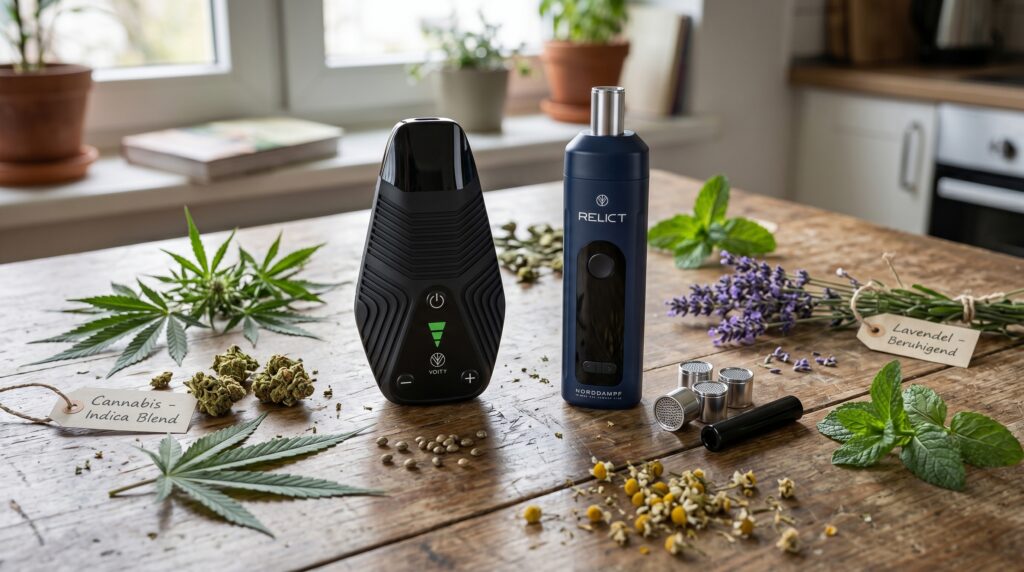
Practical tips based on vaporizer design
Conduction and convection require different approaches:
- Convection ovens: Start at 165–175 °C – the herb chamber heats up more intensely, so the food browns faster at the edges
- Convection ovens: It is recommended to start at 175–185 °C; the air must first bring the food up to temperature. Increase the temperature in 5 °C increments.
- Manual devices: Short heating intervals (5–8 seconds), rotate evenly. Weak vapor = reheat. Harsh vapor = too much heat
- All models: Regular cleaning (every 3–10 sessions) keeps the temperature distribution consistent
Step by step to the ideal vaporizer temperature
Every person and every variety reacts differently. A systematic, gradual approach has been the best strategy for years.
A good approach for beginners is to start at a temperature of about 160 °C and gradually increase it in 5-degree increments to find the temperature that feels right for you.
- Check the condition of the flowers: No mold, evenly dried (55–65% relative humidity), not bone dry
- Preparation: Grind the herbs to a medium-fine consistency, fill the chamber loosely, and do not block the airways
- Select the starting temperature: 170 °C for cannabis, 150 °C for herbal blends. Take 3–5 slow, steady puffs
- Rate: Evaluate the effect, taste, and vapor volume. Adjust in 5°C increments
- End the session: When steam is barely visible and the material is evenly medium brown. Black material = heat is too high
To get the most out of the herbs, it’s best to gradually increase the temperature during a session. For the best blend, many users start at 170–180 °C to bring out the flavor and then raise the temperature to 195–200 °C toward the end to ensure complete extraction.
Common issues and minor temperature adjustments
| problem | Cause | solution |
|---|---|---|
| Hardly any steam, weak performance | Temperature too low, herbs too damp, chamber not filled enough | +5–10 °C, apply the material in looser but denser layers |
| Harsh/burnt steam | Temperature too high, flowers too dry, heating time too long | -5–10 °C, with frequent short breaks |
| Musty taste | Dirty vaporizer, stale herbs | Thorough cleaning with 99% isopropyl alcohol, fresh materials |
Health, Safety, and "Too Hot" Vaporizer Temperatures
Vaporization allows for more precise control over the temperature, which helps release the desired active ingredients while minimizing the formation of irritants.
At temperatures below 160 °C, only a small amount of effective steam is typically produced, while temperatures above 210 °C increase the risk of combustion, which can lead to the formation of undesirable irritants.
- At temperatures above 200°C, undesirable substances such as benzene can be detected in the vapor
- At higher temperatures (approx. 200–220 °C), all cannabinoids are released, including THCV and CBC, which vaporize at around 220 °C
- At temperatures above 220°C, there is an increased risk of unwanted substances forming or the material catching fire
- Recommendation: Keep temperatures below 210 °C in everyday use; only exceed this limit briefly when absolutely necessary
Health tips: Take slow, deep breaths (inhale for 3–5 seconds), drink water throughout the day, and take breaks. This helps reduce the urge to cough and soothes irritated mucous membranes.
Cleaning & Maintenance: Impact on the Effective Temperature
Dirty screens and clogged chambers can distort the actual temperature of the herb. A clean vaporizer delivers more predictable results at the same settings.
- After each session: Tap out any loose debris, then brush it out
- Every few days (approx. 10 refills): Thorough cleaning
- For intensive weekly use: Deep cleaning with an isopropyl alcohol bath
Dirty filters can cause hot spots of +10–20 °C—which significantly skews the temperature reading.
Conclusion: Finding and Using the Right Vaporizer Temperature
The right vaporizer temperature isn’t a matter of chance—it’s a conscious choice. The optimal range is between 160 and 210 °C and depends heavily on the cannabis strain, the device, and personal sensitivity. Precision beats guesswork.
- Low temperatures (150–175 °C): For flavor, clarity, and beginners
- Medium temperatures (175–195 °C): A versatile range offering a good balance of potency and aroma
- High temperatures (195–210 °C): Maximum extraction and evening effects that affect the body – use with caution
- Golden rule: Start low, adjust gradually, listen to your body—don’t stick rigidly to round numbers
You can customize your vaping experience with precise temperature control. Find your sweet spot.
FAQ on Vaporizer Temperature
Here you'll find answers to common detailed questions that were only briefly touched upon in the main text. The recommendations are based on practical experience, manufacturer specifications, and studies from recent years.
At what temperature does vaporization actually become worthwhile?
- At temperatures of approximately 150–160 °C, very little visible steam is produced by many herbs
- For cannabis flowers: Noticeable effects starting at around 165–170 °C, depending on the strain and device
- For medicinal herbs: A temperature of 130–150 °C is often sufficient to extract essential oils
- Recommendation: When vaporizing cannabis, never go below 160 °C; otherwise, the session will often be disappointingly weak
Why does my vaporizer display 190 °C, but the vapor feels like it does on another device set to 180 °C?
- Different manufacturers take measurements at different locations (heating element, chamber wall, air path)
- With conduction, the herb can get hotter in certain spots, while with convection, it can be cooler in some areas
- Rely more on flavor, vapor production, and effect than on the exact temperature
- Practical tip: When switching devices, start 5–10 °C lower and gradually increase the temperature
Can I mix several herbs together in the vaporizer—and what temperature should I use?
- It's possible, but every plant has its own optimal temperature range
- Choose a temperature in the middle range (e.g., 160–180 °C for lavender-cannabis blends)
- Heat-sensitive herbs (130–140 °C is ideal) become bitter at high temperatures
- Method: Start at a low setting (for delicate herbs), then increase the heat during the second cycle
Without a temperature display, how can I tell if I’m vaping within a “safe” range?
- Pay attention to vapor production, flavor, throat irritation, and discoloration of the material
- Very hot, acrid steam and material that quickly turns dark brown/black = temperature too high
- Pleasant, slightly warm steam with medium-brown material = ideal range
- Tip: It’s better to heat it for a shorter time at a lower temperature than to run it at “blazing hot”
How often should I adjust the temperature during a session?
Many experienced users employ temperature stepping, starting at 180 °C and increasing to 210 °C. The following applies:
- Start at one temperature, then increase it slightly once after 5–10 puffs
- Many use 2–3 temperature settings: e.g., 175 → 185 → 195 °C
- Constant temperature fluctuations put a strain on the device and make for an inconsistent vaping experience
- Conclusion: A few targeted adjustments per session are sufficient for efficient use