
That brownish, spent-looking material sitting in your vaporizer's chamber isn't trash. It's AVB, and it still holds usable cannabinoids, which means you get a second round of use out of material you already paid for and would otherwise toss.
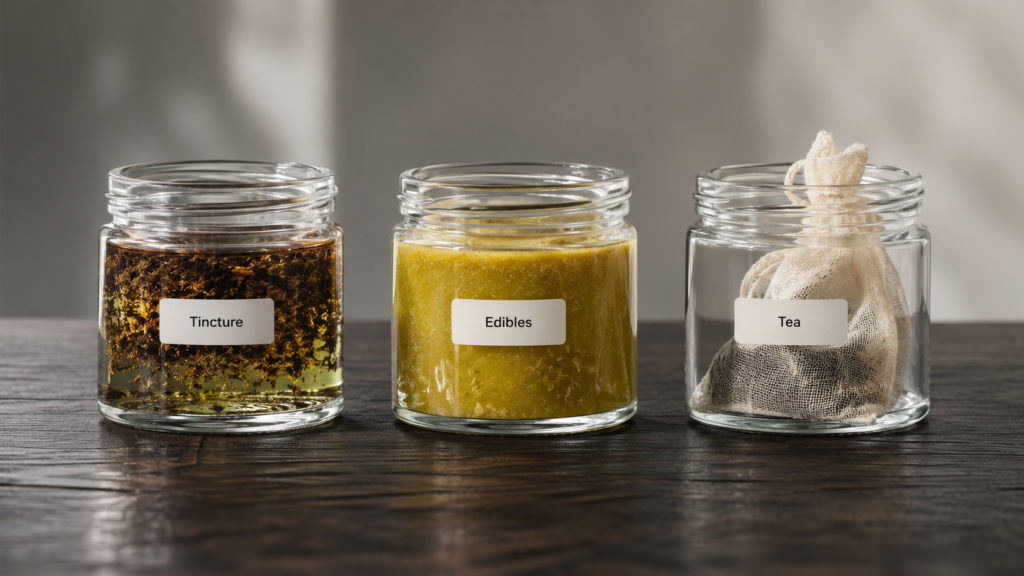
Call it a double whammy: one session from the flower, another from what's left behind. Turn it into edibles, an alcohol-based tincture, or a simple tea: AVB can still contain relevant amounts of cannabinoids after vaporization, though how much remains depends strongly on temperature, session duration, device, and the original material.
This piece focuses on the practical stuff - what to actually do with it, not the science of why it works.
Key Findings
- AVB (Already Vaped Bud) is the leftover, already-decarboxylated plant material sitting in your vaporizer's chamber after a session, not burnt ash.
- AVB can still contain relevant amounts of cannabinoids after vaporization. How much remains depends strongly on temperature, duration, device, and the original material.
- Because it's usually already largely decarboxylated, AVB can typically go straight into edibles without the oven-activation step fresh flower needs.
- A simple alcohol tincture is one of the most efficient ways to extract what's left, typically steeping for 1 to 3 weeks.
- AVB tea is the fastest, lowest-effort method, but the mildest and least reliable dose of the three.
What Is AVB, Briefly
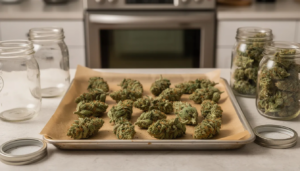
AVB is the plant material left behind after vaporizing. Through vaporization, it's usually already largely decarboxylated, though the exact degree depends on the temperature used and the duration of the session, and it's meaningfully weaker than fresh flower.
Color is a decent rough guide to how much is left: lighter, tan-colored AVB from lower-temperature sessions has given up less of its cannabinoid content than the near-black AVB you get from running hotter or longer.
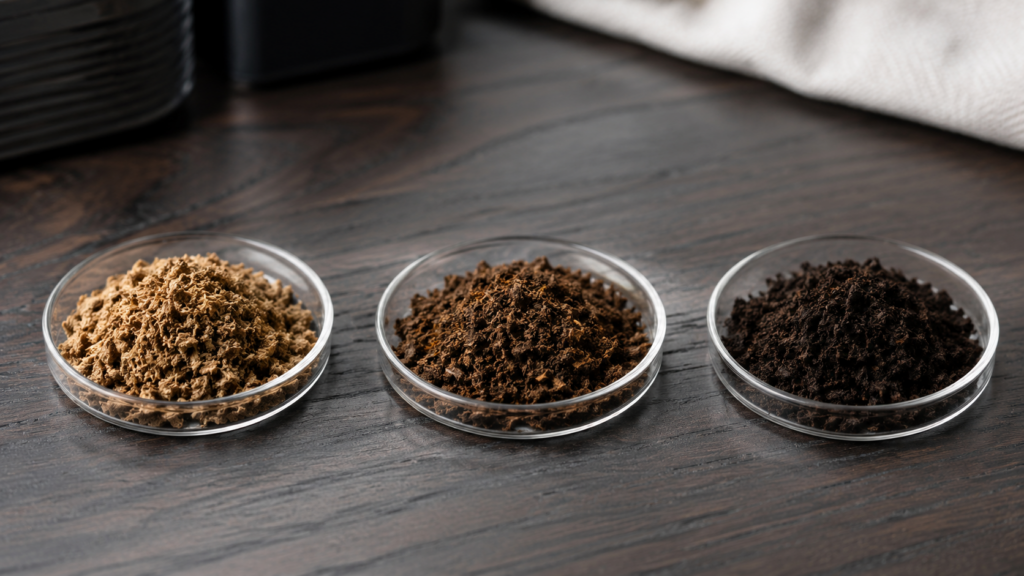
Either shade is still usable; dark AVB just needs more of it and a stronger stomach for the flavor. One storage tip worth repeating: keep AVB airtight and in the dark between collection and use, the same as you would fresh flower, since light and air continue to degrade whatever potency is left.
| ℹ️ Want the full breakdown? Norddampf's AVB vs. Fresh Material guide covers how temperature affects remaining potency, and AVB Effects explains why color is a useful clue. |

Our Best Sellers
Discover the most popular Norddampf products
Tincture vs. Edibles vs. Tea at a Glance
Before getting into the how-to for each, here's how the three stack up against each other, since the right method really depends on what you're optimizing for.
| Tinctures | Edibles | Tea | |
| Effort | Moderate | Moderate to high | Low |
| Time to ready | 1 to 3 weeks | A few hours | Minutes |
| Dosing precision | Good, once diluted | Good, if measured carefully | Bad |
| Extraction efficiency | Highest of the three | High | Lowest |
| Best for | Precise, repeatable doses | Cooking and baking | A quick, low-key session |
⚠️ Legal note for Germany: The production of cannabis extracts and the extraction of cannabinoids are generally prohibited under the KCanG. THC-containing edibles are also subject to legal restrictions. The following information is provided solely for general informational purposes and is not intended as an instruction or encouragement to produce or consume such products. Readers should always check the applicable laws in their own country.
What to Do with AVB: 3 Practical Methods
Method 1: AVB Tinctures
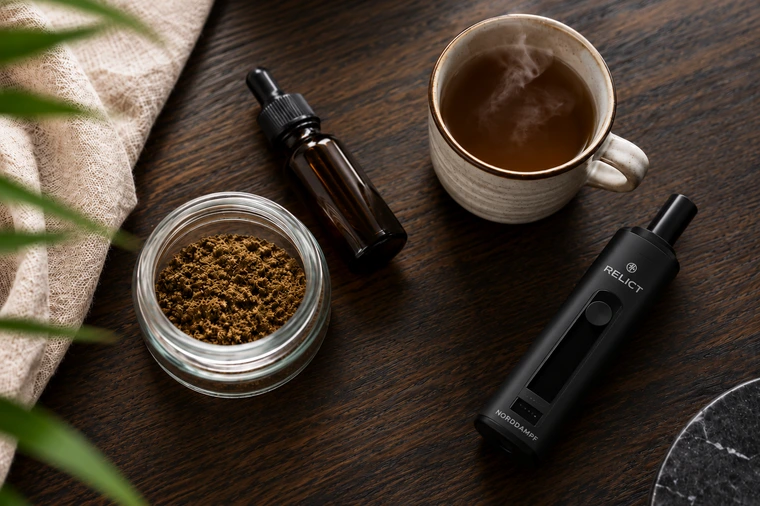
A tincture is one of the more efficient ways to pull the remaining cannabinoids out of AVB, since alcohol extracts what water and heat alone can't.
Combine your AVB with a high-proof, food-safe alcohol (Everclear or similar) in an airtight glass jar, using enough to fully submerge the material, which for most people works out to roughly equal parts by volume, though exact ratios vary by recipe and how concentrated you want the result.
Store the jar somewhere cool and dark, shake it once a day, and let it steep for 1 to 3 weeks before straining through cheesecloth into a dark dropper bottle.
Because AVB has already given up most of its potency, you'll typically want to use noticeably more of it than a fresh-flower tincture recipe calls for.
If you'd rather not wait weeks, some people speed things up with a brief, gentle simmer instead of a long cold steep, though that trades convenience for a slightly rougher flavor.
| ⚠️ Two things worth knowing before you start. First, high-proof alcohol like Everclear is genuinely flammable, so keep it well away from stovetops, open flames, and any spark source while you work. Second, start with a small test dose, a few drops held sublingually, and wait at least an hour before taking more, especially with a first batch, since strength can vary a fair bit from jar to jar. |
Method 2: AVB Edibles
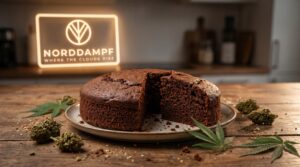
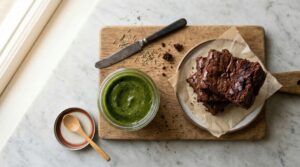
AVB's biggest advantage for edibles is that the decarboxylation step is usually already largely done. Combine AVB with butter or oil, using noticeably more AVB than a fresh-flower recipe would call for, since it's already spent most of its potency.
A good starting point is roughly equal parts by weight, adjusted to taste and desired strength. Simmer gently for 2 to 4 hours with a splash of water to stop things from scorching, then strain and refrigerate.
A cheesecloth or fine strainer works best for separating the spent plant matter from the finished butter or oil, and pressing the material against the strainer with the back of a spoon squeezes out a bit more of the infused fat before you discard it.
Once strained and chilled, the infused butter keeps for a couple of weeks in the fridge or considerably longer in the freezer, just like any homemade infused fat.
| 👉 Already skipping the oven-activation step? Our Cannabis Butter recipe covers the full infused-butter process in more detail, including ratios, straining, and dosing for fresh flower. |
As with the tincture, start with a small test portion and wait at least 90 minutes before eating more; edibles take longer to hit than you'd expect, and AVB batches can vary in strength from one session's worth of material to the next.
Method 3: AVB Tea
The simplest of the three: steep a spoonful of AVB in a tea bag or a cheesecloth pouch in hot, not boiling, water for 7 to 10 minutes.
Since cannabinoids are fat-soluble rather than water-soluble, a splash of milk or a little butter or oil in the cup helps draw out more of what's left, since it gives the cannabinoids something fatty to bind to on the way into your mug.
Expect a roasted, slightly bitter flavor. Honey, lemon, or cinnamon all help mask it. This is the mildest and least reliable of the three methods for dosing, so treat it as a low-key ritual rather than a precise dose, and don't count on it for anything you need to be consistent.
Common Mistakes to Avoid
Using too little AVB. Fresh-flower ratios don't translate directly, since AVB has already lost most of its potency. Doubling up on the amount a comparable fresh-flower recipe calls for is a reasonable starting point.
Boiling instead of steeping. Hard-boiling water for tea, or letting a tincture or butter mixture run too hot for too long, drives off flavor and can degrade what little potency remains rather than extracting more of it.
Skipping the fat. Cannabinoids need something fatty to bind to. A tea made with plain water and no milk, butter, or oil will taste better than it works.
Not straining thoroughly. Loose plant material left in a finished tincture, butter, or tea makes for a harsher, more bitter result than a well-strained one.
Assuming every batch is the same strength. AVB potency depends heavily on how hot and how long the original vaporizing session ran, so a jar from one week's collection won't necessarily match another's. Dose conservatively until you know how a given batch behaves.
Bottom Line
Tinctures extract the most from your AVB, edibles are the most versatile, and tea is the simplest. All three beat throwing the material away, and all three turn a byproduct you already paid for into a second, entirely separate session. That's the real double whammy: one session from the flower, another from what's left behind. Use more AVB than you'd think you need, since it's inherently weaker than fresh flower, and dose conservatively on a first batch regardless of which method you pick.
Collecting AVB from every session adds up fast. These stainless steel dosing capsules keep each session's herb pre-portioned and contained, so the spent material stays put in the capsule instead of getting scraped out of the chamber and mixed with residue, making it easier to collect clean AVB batch by batch.
FAQs
How much AVB do I need for a recipe?
More than you'd think. Since AVB retains only a fraction of its original cannabinoid content, most recipes call for roughly double the amount of fresh material a comparable recipe would use.
Does AVB need to be decarboxylated before use?
Usually not, though not necessarily completely. Through vaporization, AVB is usually already largely decarboxylated, since vaporizer chambers typically run above the roughly 105 to 115°C threshold where THCA converts to THC.
However, the exact degree of decarboxylation depends on the temperature used and the duration of the session, so an extra oven step can still help with a batch vaporized at a lower temperature.
Read our decarboxylation guide, which covers the process in full if you want the details.
Can I smoke AVB instead?
It's possible but generally discouraged. It negates much of the point of having vaporized in the first place, tastes harsher, and delivers a weaker effect than infusing it into a tincture, edible, or tea.
How long does AVB stay good for reuse?
Stored airtight in a cool, dark place, it holds its remaining potency reasonably well for several weeks to a few months, though it will continue to degrade gradually, just like fresh flower.
Can I mix AVB from different strains together?
Yes, and many people do exactly that, since a single vaporizing session rarely produces enough AVB on its own to be worth processing. Combining AVB collected over several sessions, even from different strains, is fine for tinctures, edibles, and tea; you'll lose some of the strain-specific flavor and effect distinctions, but the cannabinoid content still adds up.
Sources
Hazekamp, A. et al. (2006). Evaluation of a Vaporizing Device (Volcano) for the Pulmonary Administration of Tetrahydrocannabinol. Journal of Pharmaceutical Sciences. https://pubmed.ncbi.nlm.nih.gov/16637053/
Abrams, D.I., et al. (2007). Vaporization as a Smokeless Cannabis Delivery System: A Pilot Study. Clinical Pharmacology & Therapeutics. https://pubmed.ncbi.nlm.nih.gov/17429350/
NIDA. Cannabis Potency Data. https://nida.nih.gov/research/research-data-measures-resources/cannabis-potency-data
Disclaimer: This article is for informational purposes only and does not constitute medical advice. Always consult a qualified healthcare professional before using cannabis products for health-related purposes.