
Every grow starts with a choice that most first-timers make without quite realizing how much rides on it: the seeds themselves. Long before you are patiently fussing over lights or nutrients, you might need to decide between autoflower and photoperiod. The difference between them dictates how long you will wait to harvest and how much you can expect to pull from the plant in the end.
Autoflowers run on a fixed internal clock and finish fast, whatever you do with the lights, while photoperiod plants take longer and demand a light-cycle change to start flowering, and in return, they tend to give you a bigger harvest, and more say over the outcome.
Of course, neither one is the right answer. It depends entirely on what you want out of the plant. This guide covers both, either way.
| Disclaimer: This article is for informational purposes only and does not constitute medical advice. Always consult a qualified healthcare professional before using cannabis products for health-related purposes. In Germany, the purchase, possession, and use of cannabis products outside of authorized medical or cultivation channels are regulated under the KCanG. Please verify your local legal status before purchase. |
Key Points
- Autoflowers move into flowering on their own, based on age, usually after three to four weeks of vegetative growth, no matter the light schedule.
- Photoperiod strains only start flowering once the light cycle shifts to roughly 12 hours on and 12 off.
- Autoflowers typically wrap up in 8 to 12 weeks from seed. Photoperiod strains typically run 12 to 16 weeks or more.
- Photoperiod strains generally yield more per plant, mostly because you can stretch out the vegetative stage first.
- Beginners often start with autoflowers because there's no light cycle to manage, though the fixed timeline leaves little room to recover from mistakes. Growers who want maximum yield, or the flexibility to fix a stressed plant, tend to lean toward photoperiod.
Autoflower vs Photoperiod Cannabis: What's the Difference?
Photoperiod cannabis flowers by the light. In the wild, it waits for the long nights of autumn before it starts to bud. Indoors, you are the one who decides when autumn arrives. Switch your lights to a 12/12 cycle, and the plant takes the hint and begins to flower.
Autoflowers don't wait for anything. They carry a bit of Cannabis ruderalis in their genes, a hardy subspecies from the far north where the summers are too short to bank on the seasons. It flowers by age instead, a set number of weeks after sprouting, and breeders bred that trait into stronger strains without losing it. Give it an autoflower light, and it will grow, but it will flower on its own schedule regardless of how you set the timer.
Everything else in contention, including grow time, yield, and how much you can push the plant, leads from that one split. Light or age. That's the crux of the whole thing in two short words.

Our Best Sellers
Discover the most popular Norddampf products
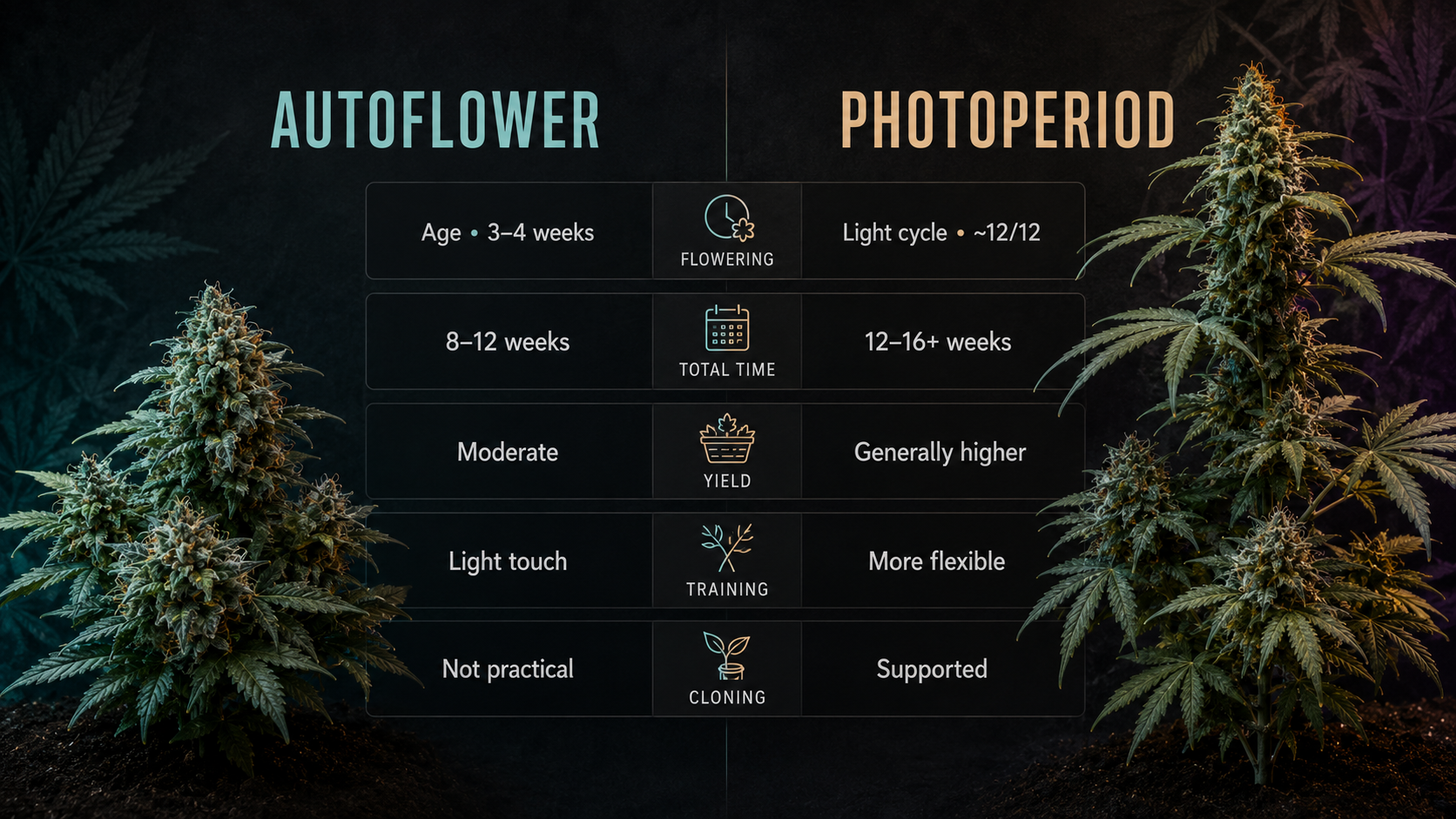
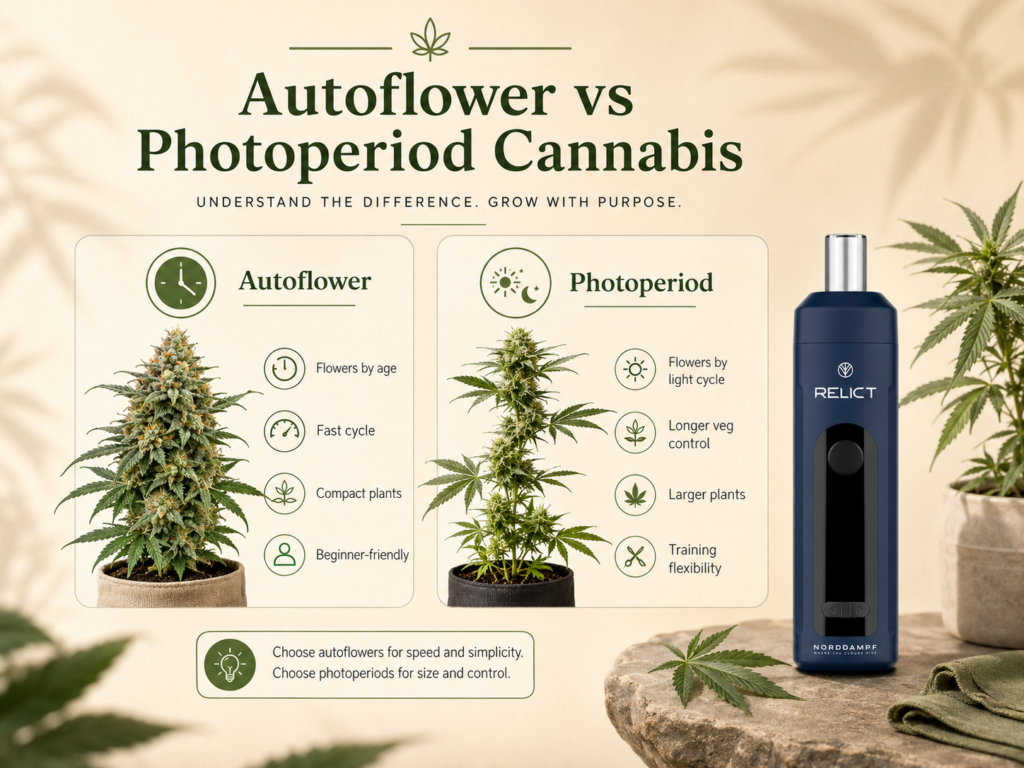
IMAGE [Autoflower and photoperiod cannabis comparison] Comparison Table: Autoflower vs Photoperiod
Most of what separates autoflower and photoperiod cannabis comes down to a handful of practical factors, from how long the grow takes to how much you will get at the end. The table below shows a side-by-side comparison so you can see where each type wins and where it gives ground.
| Factor | Autoflower | Photoperiod |
| Flowering trigger | Age (usually 3 to 4 weeks in) | Light shift to roughly 12/12 |
| Total grow time | ~8 to 12 weeks | ~12 to 16+ weeks |
| Typical yield | Moderate, often 1 to 4 oz per plant indoors | Higher, often 3 to 8+ oz per plant indoors |
| Cloning | Not practical (clones inherit the age clock) | Fully supported |
| Training | Light touch only (LST) | Handles aggressive work (topping, HST) |
| Light schedule | No 12/12 switch needed, but less room to recover from mistakes | Requires a light switch, but the vegetative stage can be extended for flexibility |
Yield ranges swing wildly with genetics, lighting, and the hand of the grower, so treat them as a ballpark rather than a promise.
Timeline and Yield: What to Expect
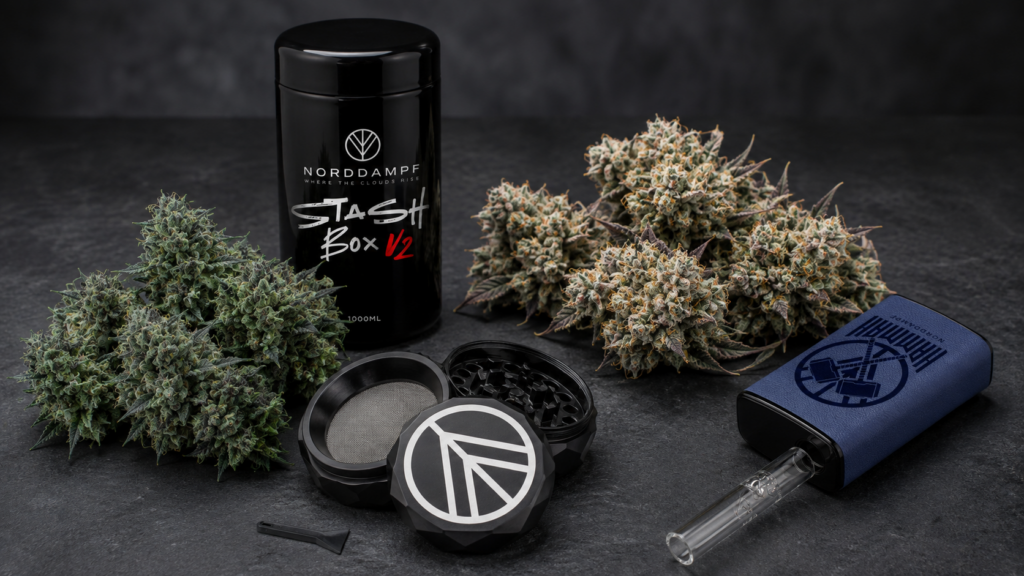
Autoflower and photoperiod plants differ a lot in how long they take from seed to harvest:
Autoflowers: roughly 8 to 12 weeks from seed to harvest, on a fixed schedule you can't change.
Photoperiod strains: usually 12 to 16 weeks or more, with the length largely down to you.
That control is the whole appeal of a photoperiod grow. The vegetative stage is yours to stretch or cut short, so you choose when the plant stops growing and starts to flower. It lasts exactly as long as you let it.
Yield tends to follow size, and size follows time, which is where those extra weeks earn their keep. A photoperiod plant left to veg builds a bigger frame first, then packs it with bud, so plant for plant it usually finishes ahead.
Autoflowers can be easier to manage because they do not require a change in the light cycle to begin flowering. However, their fixed internal timeline also means they can be less forgiving of mistakes.
Stress, overwatering, nutrient issues, or heavy training can reduce growth and potential yield because the vegetative phase cannot simply be extended.
Photoperiod plants offer more flexibility, as growers can keep them in the vegetative stage longer by maintaining the appropriate light cycle before switching to flowering.
| ℹ️If you want the full picture on getting the most from a plant, our cannabis cultivation guides go deeper than we can here. |
Training: How Much the Plant Will Take
Autoflower and photoperiod plants require different handling once you start training them, and that comes down to recovery time. Photoperiod strains forgive a lot. You can cut them back, clone them, and put them through the harder cannabis training techniques, because they have got the weeks to recover.
Autoflowers don't have that room. The clock runs from the day they sprout, so heavy work costs them growth they never get back. Keep it gentle with an autoflower, and you'll stay on the right side of that trade.
Which Should You Choose?
Go autoflower if it's your first grow, if space is tight, if speed matters more to you than the last few grams, or if you want a few quick harvests across a single outdoor season. Go photoperiod if yield and control matter most, or if the appeal is training a plant properly and cloning a genetic line you have taken to.
And if you can't decide, you don't have to. Plenty of growers run both once they have a season or two under their belt: an auto for a quick turnaround and a photoperiod when there's time to do it properly. Picking one now doesn't tie you to it later.
| ℹ️If you are leaning toward the bigger harvest, our topping guide covers one of the main ways growers push photoperiod yields higher. |
Bottom Line
The autoflower vs photoperiod decision is a trade-off between speed and flexibility.
Autoflowers get you to harvest fast and skip the light-cycle switch, which makes them appealing for a first grow, though their fixed timeline leaves less room to recover if something goes wrong.
Photoperiods take longer and demand more attention, but that extra time gives you room to correct course, and it pays off in yield and control.
Work out which of those two you actually care about, and the choice makes itself. Once you've settled it and got a grow underway, keeping a grow diary will tell you more about your setup than any comparison piece can.
FAQs
Can autoflowers be cloned?
Not in any way that's worth the effort. A clone inherits its mother's age-based clock, so instead of rooting and growing like a fresh seedling, it flowers on the parent's schedule and leaves you with a stunted plant. If cloning matters to you, that's a photoperiod job.
Can you top an autoflower?
You can, but keep it gentle and do it early. Autoflowers recover far more slowly than photoperiod strains, so a heavy hand or a late cut costs them growth they won't get back. Light training is the safer play.
Which yields more, autoflower or photoperiod?
Photoperiod, usually, plant for plant, because you can extend the vegetative stage and grow a bigger plant before it flowers. The autos have closed a lot of that gap when grown well, but if raw weight per plant is the goal, photoperiod still has the edge.
Is autoflower better for beginners?
For light-schedule simplicity, yes; there's no 12/12 switch to get wrong. But the fixed timeline isn't particularly forgiving of other mistakes: overwatering, nutrient issues, or stress can cost growth that can't be made up later, since the vegetative stage can't be extended. Photoperiod plants give you more room to recover, since you can hold them in vegetative growth until the plant is ready.
Sources
Optimizing Photoperiod Switch to Maximize Floral Biomass and Cannabinoid Yield in Cannabis sativa L: https://pmc.ncbi.nlm.nih.gov/articles/PMC8786113/
Longer Photoperiod Substantially Increases Indoor-Grown Cannabis’ Yield and Quality: A Study of Two High-THC Cultivars Grown under 12 h vs. 13 h Days: https://pmc.ncbi.nlm.nih.gov/articles/PMC10857075/
Disclaimer: This article is for general informational purposes only and does not constitute medical or legal advice. Always consult a qualified healthcare professional before using cannabis products for health-related purposes.
The purchase, possession, and use of cannabis may be regulated or restricted differently depending on the country and product category. Readers should always check the applicable regulations in their own jurisdiction before purchase or use.