
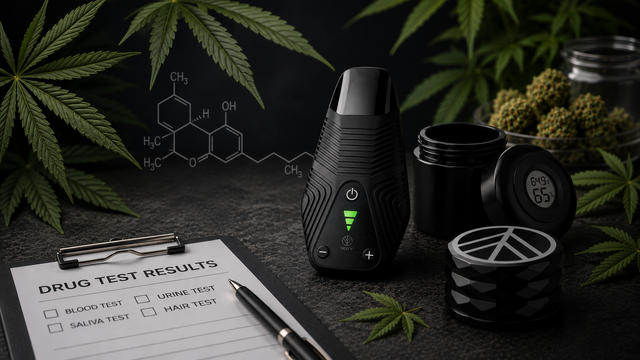
There is a widespread but mistaken belief among vapers that heating cannabis is somehow gentler on the circulatory system than burning it, and that the two methods would yield noticeably different results on a drug test.
Unfortunately, that’s not really true. Vaping has been shown to be a cleaner way to consume cannabis, but “cleaner” doesn’t mean “invisible.” Once THC enters the bloodstream, the body processes it the same way—regardless of whether it got there through vapor or smoke.
But how long exactly does THC vapor actually stay in the body? As it turns out, the answer is quite complex, but in this blog post, we’ll take a look at what happens after you exhale, how long traces remain detectable in different types of drug tests, and what factors can affect that timeframe in one direction or another.
Key findings
- Vaporizing THC does not shorten the detection window compared to smoking flower.
- The key variable in the analysis is frequency of use, not method of use.
- Depending on usage patterns, urine tests can detect THC metabolites for 3 to more than 30 days.
- Blood, saliva, and hair tests detect different substances over different time periods, and a longer detection window does not necessarily indicate current impairment.
- Body fat percentage, metabolism, and product potency all influence the timeframe.
- Detox products aren't reliable. Time is the only real solution.
How the body processes vaporized THC
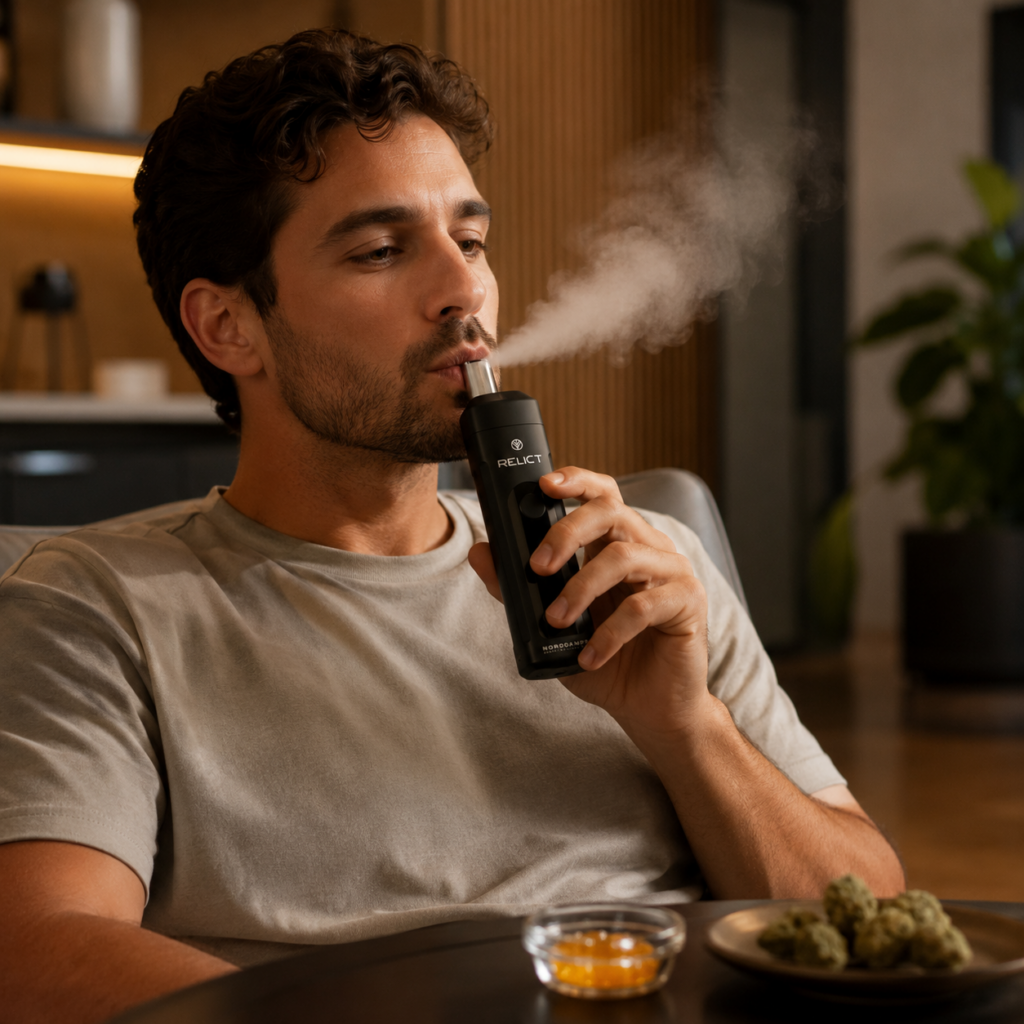
Vaporizing cannabis heats the plant material to a temperature below its combustion point, and since there is no conventional combustion, significantly fewer typical combustion byproducts—such as tar and carbon monoxide—are produced. Depending on the material, temperature setting, and device itself, the aerosol may also contain other substances.
That makes a huge difference for your lungs (and hopefully for the condition of your curtains, too), but it doesn't affect the metabolic fate of the THC itself.
As soon as you inhale THC, the following happens:
- THC enters the bloodstream: THC moves from the lungs into the bloodstream within seconds, which is why the effects are felt almost immediately.
- THC is distributed and metabolized simultaneously: As soon as it is absorbed, THC spreads rapidly throughout the body, while at the same time it is gradually converted in the liver into several metabolites, including 11-hydroxy-THC and THC-COOH.
- THC and some of its metabolites remain in the body: Because they are fat-soluble, they can accumulate in fatty tissue with frequent use and remain detectable for extended periods of time—sometimes days or even weeks.
- Drug tests detect the metabolite: THC-COOH can remain detectable long after the effects of the high have worn off. However, not all tests look for the same substance. Saliva tests usually target unchanged THC, while blood tests can detect both THC and various metabolites, depending on the purpose of the test.

Our Best Sellers
Discover the most popular Norddampf products

THC Detection Times by Test Type
The detection windows vary greatly depending on the type of test, and the ranges listed below are general estimates and not laboratory guarantees.
| Test Type | Occasional use | Regular consumption | Chronic/heavy use |
| urine | 3–7 days | 7–21 days | 30+ days |
| blood | 1–2 days | 2–7 days | 7–30 days |
| saliva | 24–72 hours | 1–3 days | up to 30 days |
| Hair | Up to 90 days | Up to 90 days | Up to 90 days |
These figures are merely rough estimates. Actual detection results depend heavily on the type of test, the laboratory’s cutoff value, frequency of use, dosage, and individual biological factors. Reliable individual predictions are simply not possible, especially with blood and saliva tests. Two people with identical patterns of use can and will produce different results.
| ℹ️For a personalized estimate based on your body composition and consumption habits, our THC detection calculator is more useful than any general chart could ever be. |
What Actually Changes Your Reporting Window
If the method of consumption is largely irrelevant, it’s worth taking a closer look at the factors that actually influence the time frame:
| factor | Impact on the verification window |
| Frequency/Duration of Use | The biggest variable; daily consumption builds up reserves that take longer to deplete |
| Body Composition | A higher body fat percentage means a longer window (THC-COOH is fat-soluble) |
| Metabolism/Genetics | High individual variability; not entirely predictable |
| Product Potency | A higher THC content means more metabolites and a longer breakdown time |
| Hydration/Exercise | Minimal, unreliable effects; may even backfire (diluted urine is noticeable, and stored THC is released) |
Frequency and Duration of Use
By far the biggest variable. A single Saturday session can result in a negative urine test result within just one week. Months of daily use build up THC-COOH reserves in fatty tissue, which can take a month or longer to break down completely. The body doesn’t distinguish between the vapor from a premium desktop vaporizer and the smoke from a hand-rolled joint. It simply adds up the total exposure.
Body Composition
Body composition can affect detectability, and since THC-COOH is fat-soluble, a higher body fat percentage generally correlates with a longer detection window. The average body fat percentage differs between men and women, which is worth noting, but gender or body fat percentage alone never provides a reliable prediction for a specific individual. Every reputable drug testing laboratory already takes these variables into account during analysis.
Metabolism, Liver Function, Genetics
There is enormous individual variation. Two people with similar weights and similar consumption habits can produce different test results depending on their metabolic rates, liver enzyme profiles, and genetic characteristics—which no one has fully mapped out. If you’ve ever wondered why your friend seems to sober up faster than you do, that’s roughly why.
Product Potency
A flower with a higher THC content or a concentrate delivers more THC per session, which produces more THC-COOH—a compound that takes correspondingly longer to break down. Modern flowers with 25% THC are in a completely different league than the mysterious little bags from the 1990s.
Hydration and Exercise
Both can easily affect the results. Neither is a miracle cure. Drinking a lot of water before a test does dilute the urine, but it also raises red flags at competent labs. Physical activity and changes in fat metabolism can theoretically influence test results, but they do not offer a reliable way to predict or influence a test outcome. Detox products, on the other hand, are just marketing hype from the wellness industry. Time is the only honest solution.
Vaping vs. Smoking vs. Edibles: Does the Method of Detection Matter?
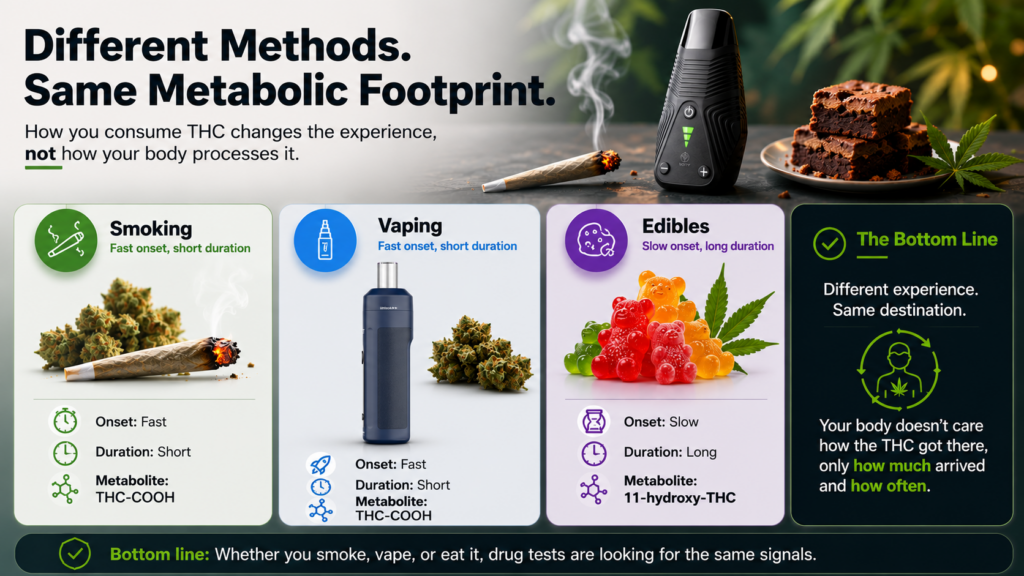
Ask anyone who’s tried all three: a joint, a vaporizer, and a plate of brownies feel like completely different experiences. Different onset, different duration, and an overall different mood. Whether that translates into different drug test results, however, is another matter entirely.
Biologically speaking, what matters is how much THC has reached its destination and how often you've sent it—not the route it took to get there.
- Smoking and vaping produce the same primary THC metabolites, with a rapid onset of action and short duration; however, the amount absorbed and the concentration profile over time may differ between the two methods.
- Foods are an exception: they take longer to take effect, have a significantly longer duration, and produce a different metabolite profile due to the path they take through the body.
Oral ingestion produces comparatively more 11-hydroxy-THC due to first-pass metabolism in the liver, and this metabolite is more potent and lasts significantly longer than the parent compound. That’s why a plate of cookies can knock you out for six hours, while a vape session barely lasts until dinnertime.
However, how long a test remains positive continues to depend primarily on the dose, frequency, type of test, and cutoff value.
| Method | Effective Date | Duration | Metabolite Profile |
| smoking | Quickly | In short | Standard THC-COOH |
| Vaping | Quickly | In short | Equivalent to smoking |
| Food | Slowly | Long | Higher levels of 11-hydroxy-THC, lasts longer |
Either way, there’s one thing it doesn’t do (which makes the “I only had one gummy bear” excuse rather impractical): It doesn’t extend the length of time you might test positive during a screening.
Conclusion
Vaping cannabis has real advantages over smoking, chief among them the absence of the substances that make smoke unpleasant to inhale. What it doesn’t do is shorten the detection window for a workplace urine test. The metabolites don’t care how fancy your device is—they’re only interested in the amount and frequency of your use.
If you're thinking about getting a dry herb vaporizer, detection times aren't really the reason why. The real reason is that you get your cannabinoids without inhaling the byproducts of a small, controlled fire—something most lungs will appreciate.
Frequently asked questions
Does vaporized THC show up on a drug test the same way as smoked THC?
Yes. The metabolites are identical because the substance is identical. Vaping affects the speed at which the effects set in and the sensation in the lungs, not the chemicals that are detectable in urine.
How long does vaporized THC remain detectable in urine?
From 3 days for occasional users to over a month for chronic users. Frequency of use is the dominant variable.
Can inhaled THC affect a roadside drug test in Germany or the EU?
Yes. In Germany, roadside saliva tests can be used as initial screening tests, while the THC concentration in blood serum is decisive for legal assessment. A saliva test result does not provide a reliable indication of a person’s fitness to drive or of what a subsequent blood test will show. You should not drive a vehicle after consuming THC.
Does body fat percentage affect how long THC remains detectable in women compared to men?
On average, yes, but only slightly. THC-COOH is fat-soluble and is stored in adipose tissue, which is why a higher body fat percentage tends to correlate with slightly longer detection windows. There is considerable individual variation.
Is THC from a vaporizer less potent, or does it break down faster than THC from smoked flowers?
Neither. Administration is often more efficient—that is, it requires less of the substance to achieve the same effect—but the metabolite produced and the time it takes to be metabolized are the same.
How accurate is a THC detection calculator?
Calculators provide a reliable estimate based on the information you provide. Actual results may vary depending on the laboratory's cutoff values, individual biology, and how accurately the form was filled out. Useful as a starting point, but not a legal guarantee.
Sources
How Long Does Marijuana Stay in Your System? — American Addiction Centers.
Factors That Influence THC Detection — Medical News Today.
Human Cannabinoid Pharmacokinetics — Chemistry & Biodiversity, NCBI/PMC.
Cannabinoid Metabolism and Distribution — PubMed, *Cannabis and Cannabinoid Research*.
Disclaimer: This article is intended solely for general informational purposes and does not constitute medical, forensic, or legal advice. Detection times vary significantly from person to person and cannot be reliably predicted for any individual. Always consult a qualified healthcare professional before using cannabis products for health-related purposes.