
Most people who have bought a cannabis vape cartridge in the last five years have consumed cannabis distillate—whether they knew it or not. It’s the clear-to-amber-colored, syrupy oil found in most pre-filled cartridges. It’s also the active ingredient in many edibles, syringes, and dab-able concentrates.
However, if you ask a casual user what cannabis distillate actually is, you'll probably just get a shrug in response.
That’s why we thought an explanation was needed to cover the most important points: what it is, how it’s made, how it differs from other cannabis products, and—most importantly—what “purity” really means when a label advertises a product as being over 90% of something.
Key Points
- Cannabis distillate is a highly refined cannabis extract that typically has a cannabinoid content of 80–99%, depending on the product and testing method.
- The two most common types are THC distillate and CBD distillate.
- The manufacturing process includes extraction, winterization, decarboxylation, and distillation.
- Terpenes are removed during distillation; some manufacturers then add them back in to enhance the flavor.
- Distillate is the base ingredient in most vape cartridges on the market.
- A reputable Certificate of Analysis (COA) is essential when making a purchase.
What is cannabis distillate?
Cannabis distillate is a cannabis extract that is refined to isolate a specific cannabinoid—usually THC or CBD—in very high concentrations. Depending on the number of passes through the distillation unit, it can be 80–99% pure.
What sets it so clearly apart from other concentrates is what it doesn’t contain. Flowers, for example, contain hundreds of compounds, including cannabinoids, terpenes, waxes, chlorophyll, and lipids. Live resin and rosin preserve most of these. Cannabis distillate, on the other hand, reduces the whole thing to almost nothing but the target cannabinoid.
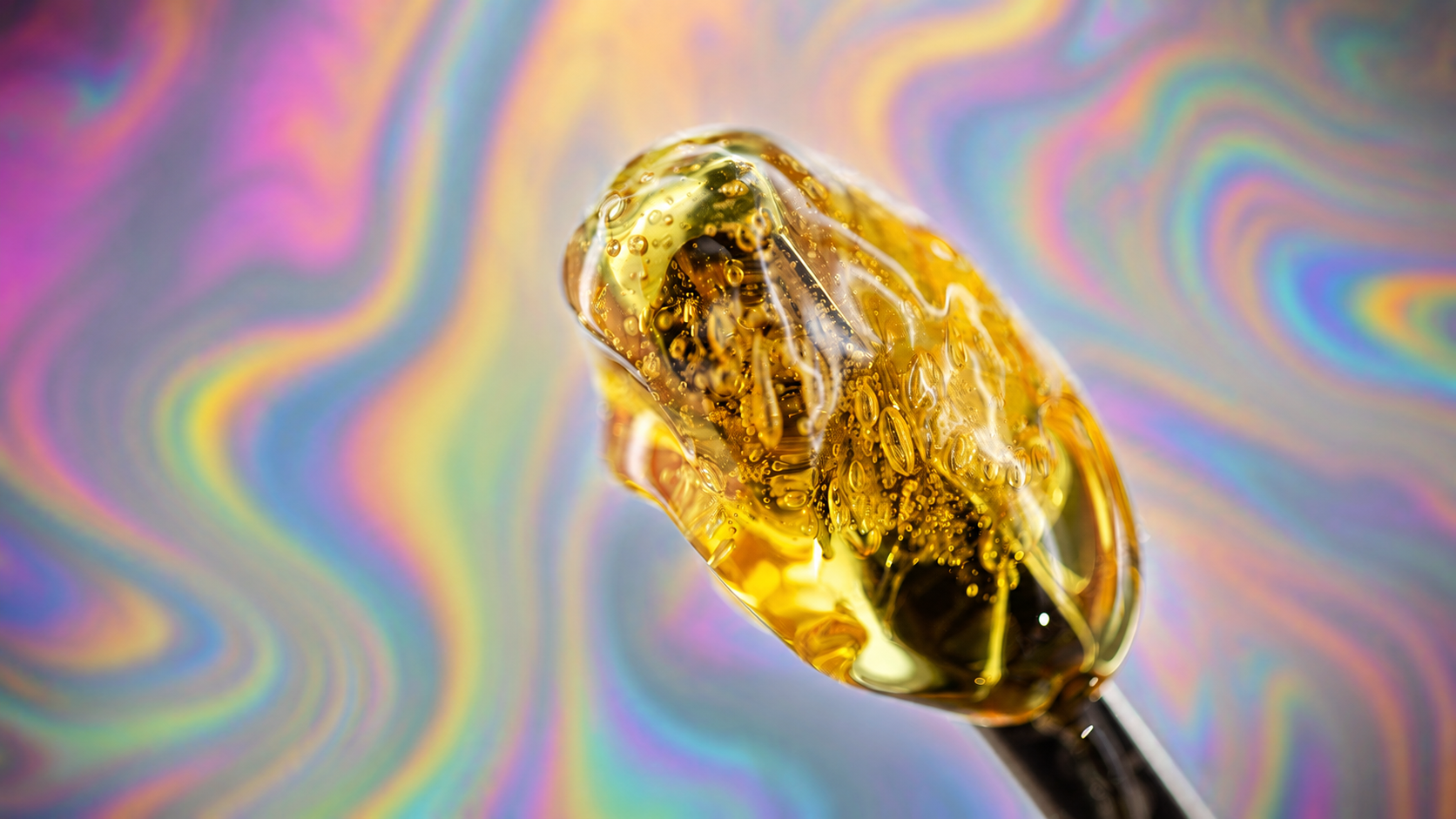
The result is a thick, viscous, translucent, and almost mesmerizing oil, whose color ranges from light gold to amber.
The two most common types you'll come across:
- THC distillate: Found in most vape cartridges.
- CBD distillate: Widely available wherever CBD products are legally sold.
CBG and CBN distillates are also available for specific applications, but they are less common.

Our Best Sellers
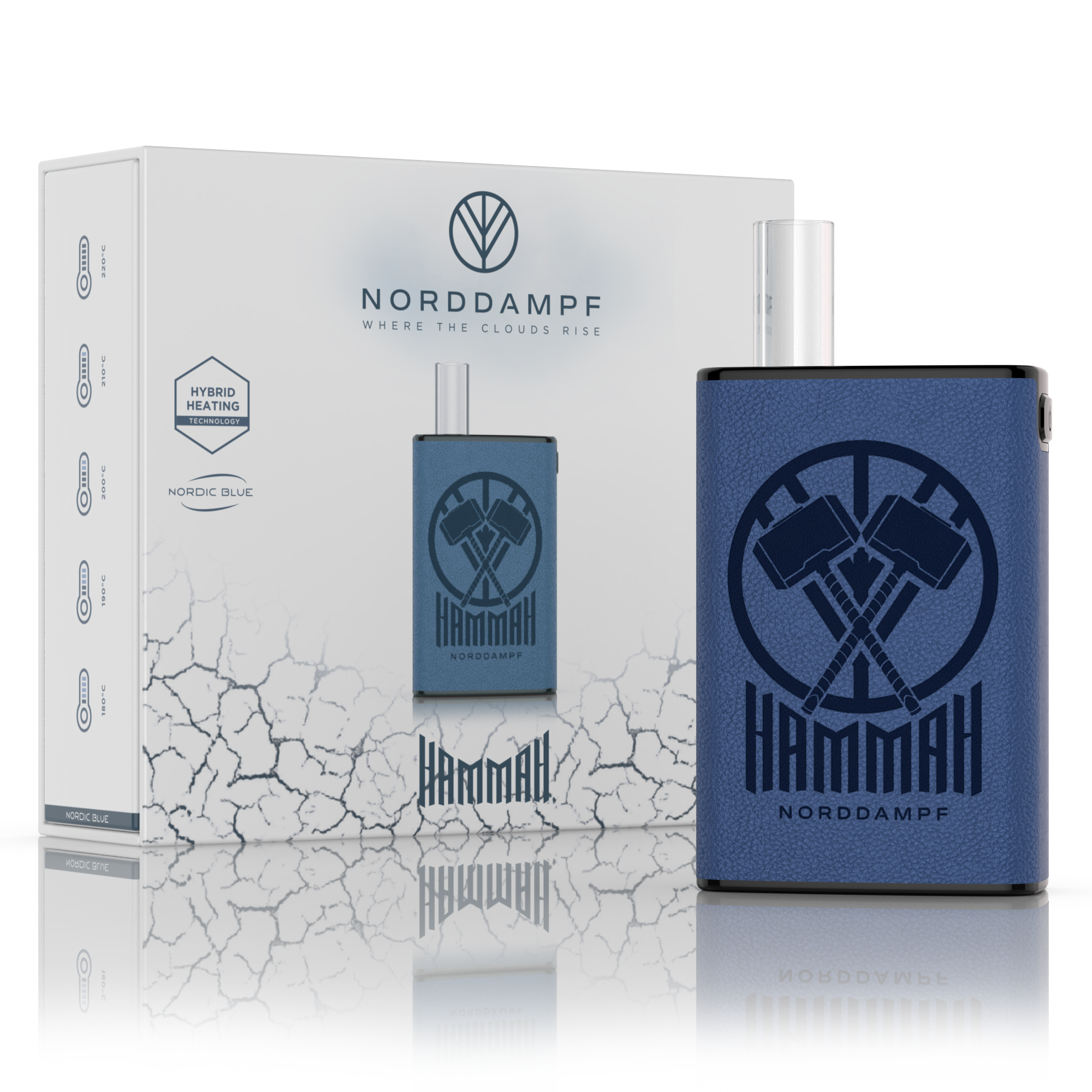
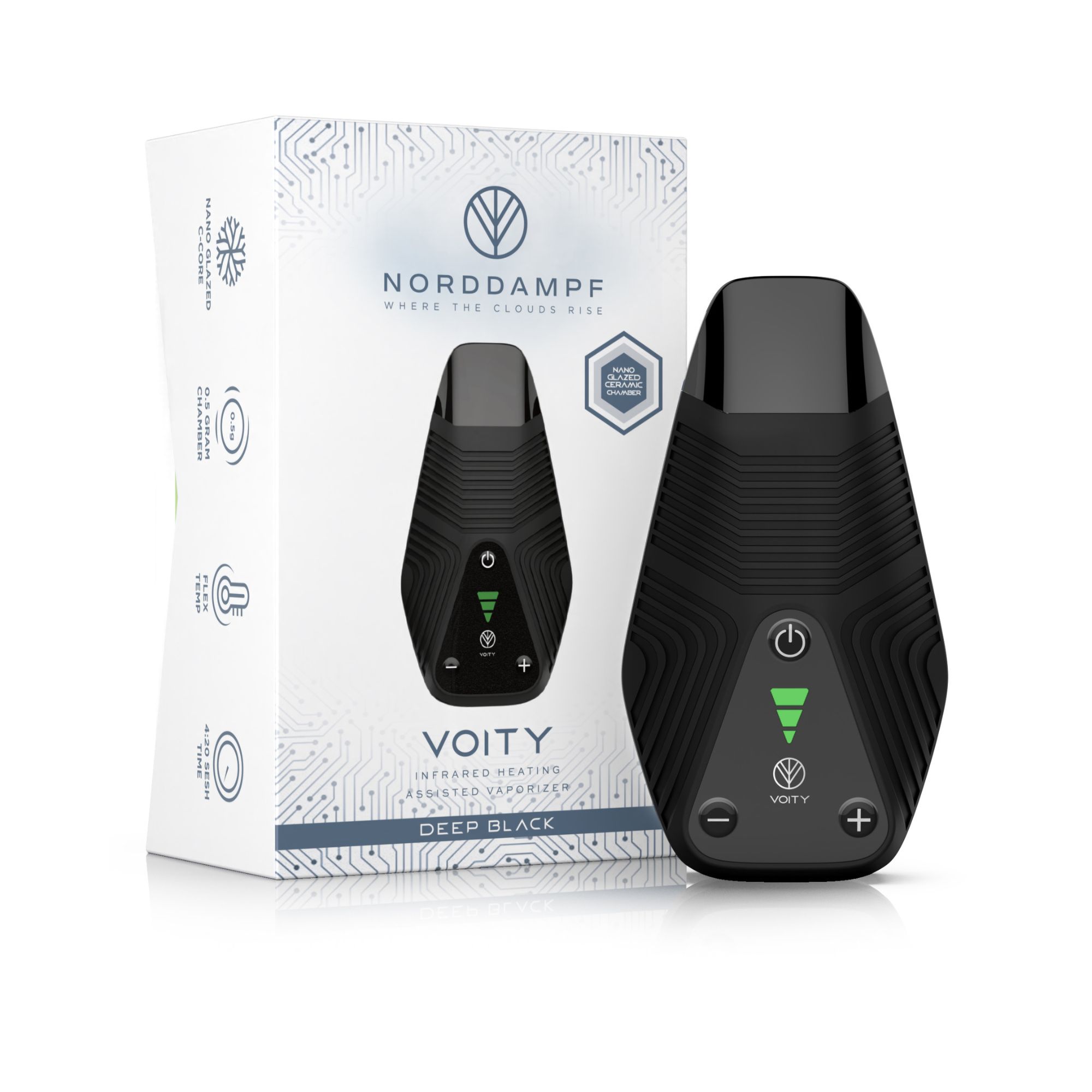
Discover the most popular Norddampf products
How is cannabis distillate made?
The distillate goes through four distinct phases, each of which removes a different substance.
Step 1: Extraction
Raw cannabis or hemp biomass is processed to produce a raw broad-spectrum extract. Common methods include CO₂ extraction and hydrocarbon extraction using butane or propane. The result is a sticky, dark mixture of cannabinoids, terpenes, waxes, chlorophyll, and plant residues.
Powerful, but not particularly pretty.
Step 2: Winterizing
The crude extract is mixed with ethanol and cooled to about -40 °C or colder. The cold temperature causes waxes and lipids to precipitate out of the solution, after which they can be filtered out.
What remains is a cleaner extract—without the greasy plant matter.
Step 3: Decarboxylation
The extract is heated to convert THCa into active THC—or CBDa into CBD. Raw cannabis contains the acidic precursors, which require heat to be activated. That is exactly why consuming raw cannabis has virtually no effect.
Step 4: Distillation
Now comes the actual distillation. The extract is fed into a short-path or wiped-film distillation unit. Both processes use heat and vacuum pressure to vaporize specific compounds at their respective boiling points and then condense them separately. By precisely controlling the temperature, manufacturers can isolate target cannabinoids with remarkable purity; some units achieve purity levels of 99%.
Multiple runs further increase the purity. However, distillation does not preserve terpenes. We’ll come back to that in a moment.
But what does purity actually mean?
Purity refers to the percentage by weight of the target cannabinoid in the total product. “90% THC distillate” means that 90% of what you’re holding—by weight—is THC. The remaining 10% typically consists of minor cannabinoids, residual terpenes, and traces of plant compounds.
However, a higher purity rating does not automatically mean better quality. A 95-percent distillate made from contaminated biomass is inferior to an 85-percent distillate made from clean, well-grown flowers. Purity is just one metric. The quality of the raw material, the extraction method, and the manufacturer’s reputation are also important.
This is exactly where the COA comes into play—the Certificate of Analysis. Reputable manufacturers have independent laboratory tests conducted to check the cannabinoid profile, solvent residues, pesticides, heavy metals, and microorganisms. The absence of a COA should be a clear red flag.
Cannabis Distillate at a Glance
| Property | Details |
| Typical THC content | 80–99% |
| Appearance | Thick, viscous oil; light golden to amber in color |
| Does it contain terpenes? | Usually removed; sometimes added back |
| Psychoactive? | Yes for THC distillate / No for CBD distillate |
| Common Forms | Vape cartridges, syringes, edibles, dabbing |
| Is decarboxylation necessary? | No, it happens during the manufacturing process |
| Third-Party Testing | A COA is essential for any legitimate purchase |
Cannabis Distillate vs. Other Concentrates
Distillate is just one option in a steadily growing and now rather crowded market for concentrates. Here are some of the options currently available:
Distillate vs. Live Resin
Live resin is made from freshly frozen cannabis and retains a significantly richer terpene profile. It tastes just like the plant. On paper, distillate is purer and more potent, but it lacks aromatic complexity.
Conclusion: Live resin for flavor. Distillate for pure effects.
Distillate vs. Rosin
Rosin is solvent-free and is produced using heat and pressure. For purists, live rosin in particular ranks at the very top of the concentrate hierarchy. Distillate, on the other hand, requires chemical extraction followed by refinement.
Conclusion: Rosin preserves the plant's full spectrum of active compounds. Distillate reduces it to just the cannabinoid.
Distillate vs. Wax / Shatter
Wax and shatter are BHO concentrates, or butane hash oil. They are refined, but not to the same extent as distillate. They retain more terpenes and minor cannabinoids, which gives them character but also results in less consistency.
Bottom line: The best cannabis concentrate depends entirely on the situation. It comes down to your device, your priorities, and the kind of session you're looking for.
How is cannabis distillate used?
There’s actually a lot you can do with cannabis distillate. It’s the Swiss Army knife of the concentrate world and fits effortlessly into everything—from disposable vape pens to brownies. The main ways to consume it are:
Vape Cartridges
By far the most common application. Distillate’s high potency, consistent texture, and neutral base make it ideal for 510 cartridges. It vaporizes cleanly, doesn’t clog devices unnecessarily, and can be formulated with added terpenes to specifically tailor certain flavors.
ℹ️ If you're using a herb vaporizer, you'll need a compatible concentrate chamber.
dabbing
Distillate can be dabbed in a dab rig or, more conveniently, vaporized using a suitable dab pen. The high boiling point of THC distillate means that a sufficiently high temperature is required for it to vaporize properly.
Edibles and Infusions
Since the distillate is already decarboxylated, you can add it directly to food or drinks without heating it further. This makes it a popular base for homemade edibles. Of course, local regulations apply.
Topicals and Other Formats
CBD distillate is used in many topical products, including creams, balms, lotions, and more. It’s important to note that it won’t get you high, because unlike THC, CBD isn’t psychoactive. Also, absorption through the skin is much slower than through the lungs. It’s a good choice for local applications, but less so if you’re looking for the full experience.
Terpenes and Distillate: Why Some Products Add Them Back In
Distillation removes terpenes to achieve a high level of cannabinoid purity. However, terpenes are responsible for the taste, aroma, and a significant part of the overall character of cannabis.
That’s why many manufacturers add them back in—either as cannabis-based terpenes extracted from cannabis strains or as botanical terpenes derived from other plants. That’s exactly why a distillate cartridge can still taste like a specific strain. The flavor wasn’t preserved during production; it was added back in afterward.
Product labels help you tell the difference:
- "Live Resin Cartridge" means that the terpenes have been preserved from freshly frozen flowers.
- "Distillate + terpenes" or "strain-specific flavor" means they were added back in later.
None of them is inherently better. They simply cater to different price points and different priorities.
What to Look for When Buying Distillate Products
Buying cannabis distillate is a bit like buying olive oil. Most of them look pretty much the same in the bottle, the labels are meant to impress, and the actual quality can vary enormously—depending on what happened to them before they ended up on the shelf.
Here's how to tell the good from the questionable without needing a degree in chemistry.
COA (Certificate of Analysis)
Once again: Always look for lab tests conducted by independent third parties. The COA should include cannabinoid levels, solvent residue, and tests for contaminants such as pesticides, heavy metals, and microorganisms. No COA, no purchase.
Raw material
Reputable manufacturers disclose whether they use whole flowers, trim, or industrial hemp biomass. As a general rule, the higher the quality of the raw material, the purer the distillate.
Terpene Information
If terpenes have been added, reputable manufacturers should specify whether they are cannabis-derived or botanical—and, ideally, which specific terpenes are included.
Extraction method
CO₂ extraction is generally considered cleaner than hydrocarbon-based methods, although both processes can produce high-quality distillate when carried out correctly.
Prioritize transparency. If a manufacturer is unwilling to provide you with any of the information listed above, you should probably steer clear.
Conclusion
Cannabis distillate is a highly refined extract produced through a multi-step process to isolate the target cannabinoid to impressive levels of purity. It is the key ingredient in most vape cartridges on the market, a versatile base for edibles, and an increasingly popular dabable concentrate.
If you know what's really in it, how it got there, and what to look for on the label, you'll be much better equipped to make conscious and informed purchasing and consumption decisions.
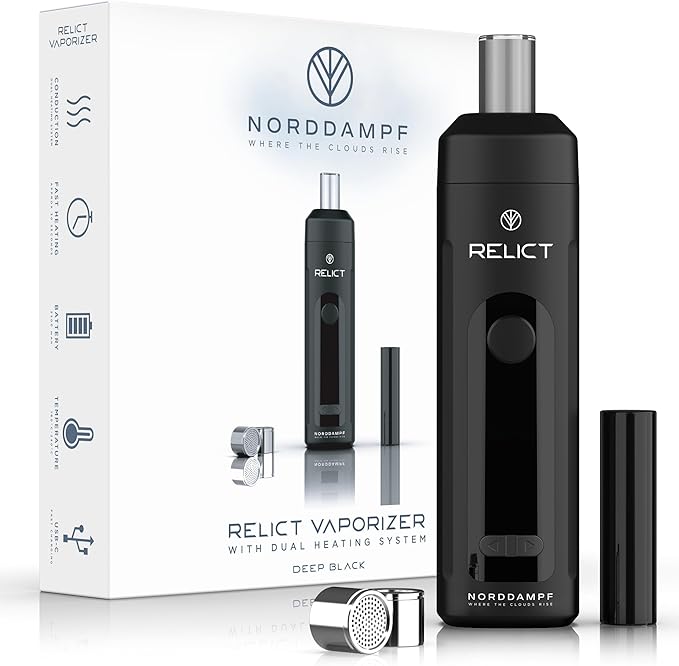
If you want precise temperature control that helps you get the most from high-quality concentrates, the Terp Pen is built for exactly that.
Frequently Asked Questions
What is cannabis distillate?
Cannabis distillate is a highly refined cannabis extract that typically consists of 80–99% of a single cannabinoid—usually THC or CBD. It is produced through a multi-step process in which terpenes, waxes, and other plant compounds are removed.
How potent is cannabis distillate compared to flowers?
Significantly higher. Flowers typically contain 15–25% THC. Distillate contains 80–99%. This corresponds to approximately four to six times the cannabinoid concentration by weight.
Does cannabis distillate contain terpenes?
Not by default. Distillation removes terpenes. In many products, terpenes—either cannabis-derived or botanical—are added back after production to enhance the flavor.
Is cannabis distillate the same as cannabis oil?
Not quite. “Cannabis oil” is an umbrella term for many types of extracts, ranging from full-spectrum oil to RSO to distillate. Distillate is a specific subcategory: highly refined and dominated by a single cannabinoid.
How do I use cannabis distillate with a vaporizer?
Most commonly, using a 510 cartridge with a compatible vape battery. For loose distillate, you'll need a special concentrate device or a vaporizer with a compatible concentrate attachment.
What should I look for in a distillate COA?
The cannabinoid profile, solvent residues, tests for pesticides and heavy metals, and microbiological tests. If any of these items are missing, the COA is incomplete.
Sources
Comprehensive Exploration of Short-Path Distillation of Cannabis, Cannabis Tech.
Experimental Optimization of Short-Path Distillation of Alcoholic Extracts from Hemp, ResearchGate.
Achieve Ultimate Purity With Short-Path Distillation Cannabis Extraction, Cannabis Tech.
The Entourage Effect in Medicinal Cannabis Products, NCBI/PMC.
"Cannabis Vaporizer Combines Efficient Delivery of THC," Gieringer et al., *Journal of Cannabis Therapeutics*.
Disclaimer: This article is for informational purposes only and does not constitute medical advice. Always consult a qualified healthcare professional before using cannabis products for health-related purposes.