

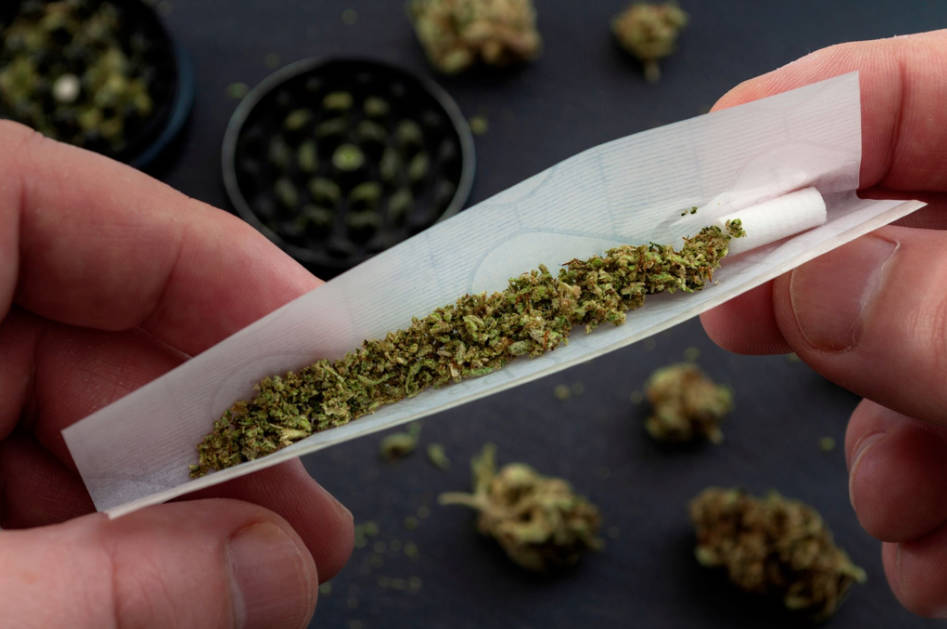
Potheads back in the day probably wouldn't have given much thought to how much THC was in a joint. The potency of a joint was measured more by how much you laughed, how well you moved, or how deeply you sank into the sofa.
But times have changed, and cannabis has gotten stronger. Significantly stronger. Smoking a whole joint these days is a risky business if you have no idea how strong it is, in terms of THC content. That’s why it’s always a good idea to know what you’re actually getting into. But how? It’s simple: by looking at a specific number.
More specifically, there are two numbers to consider. First, there’s the THC in the flower itself, which can be calculated, and second, there’s the THC that actually enters your bloodstream after smoking (which can varygreatly ). This short guide explains both, takes a quick look at how THC works, and shows why vaping is a better alternative to smoking joints.
Key Points
- A typical joint usually contains between 0.3 g and 0.75 g of cannabis.
- Modern buds contain between 10% and 30% THC.
- A 0.5-gram joint with 20% THC contains, on paper, 100 mg of total THC.
- Combustion and sidestream smoke destroy 50–70% of it.
- Realistic estimated THC intake per joint: about 10–50 mg.
- Vaporization delivers significantly more of the compounds found in the flower.
The variables that determine THC content
The amount of THC in a joint isn't determined by a single, fixed number. It depends on three factors that work together:
Amount of flower
An average joint contains between 0.3 g and 1 g of cannabis. A study published in *Drug and Alcohol Dependence* cites a common weight of about 0.32 g for a typical recreational joint. A thin “one-skinner” tends to weigh around 0.3 g. A thick joint rolled with two sheets of paper—the kind that looks like “we’re celebrating something”—tends to be closer to one gram.
The flower weight is your starting point
THC Percentage in the Flower
Modern flowers range from 10% at the low end to 25–30% for particularly potent strains. Products from legal markets list this value on the label. For anything from unregulated sources, you should take these claims with a grain of salt, since no one has verified them. Or rather: with a whole handful of caution .
For a useful calculation, 15–20% THC is a reasonable assumption in the mid-range.
Moisture Content and Density
This fact surprises many people. Drier flowers weigh less for the same volume. So if you roll by eye rather than using a scale, the same joint—which looks the same size—can contain significantly different amounts depending on how dry and cured the flower is.
All three variables are interrelated. The calculation will only work if you take them into account.

Our Best Sellers
Discover the most popular Norddampf products
The Simple THC Calculation
Time for a little real math. Nothing complicated—just a simple formula that anyone can understand, no matter how high you might be right now.
Total THC in a joint (mg) = weight of the flower (g) × THC percentage × 1,000
Three numbers and a simple multiplication. If you plug these values in, you'll get roughly the following:
| Joint Size | THC % | Total THC |
| 0,32 g | 15 % | 48 mg |
| 0,5 g | 20 % | 100 mg |
| 0,75 g | 25 % | 187.5 mg |
As a rough estimate, a smaller joint with moderate potency contains about 48 mg of THC. A standard 0.5-g joint with decent flower contains 100 mg. A thick joint with high-quality material can contain over 187 mg. As you can see, the range is quite wide.
There is one caveat, however. The THC percentage listed on a label usually refers to the total potential THC content. This includes THCa, the acidic form that has not yet been activated. When smoked, it is decarboxylated at the moment of combustion—that is, converted into active THC. For our purposes, therefore, the label value serves as a rough estimate.
Absorption Efficiency: How much THC actually reaches you?
Most articles on this topic stop at the calculation, tell you “100 mg,” and leave it at that. That’s nonsense, because the most important number isn’t how much THC is in the joint. What matters is how much of it actually reaches you .
Smoking is, to put it mildly, not particularly efficient. There are losses—and these losses are difficult to quantify precisely for the following reasons.
Loss due to burning
Cannabis burns at temperatures well above the range at which THC vaporizes cleanly. Some of the THC is destroyed by the heat itself before it even reaches your lungs. Research cited in *The Permanente Journal* estimates that pyrolytic destruction accounts for 23–30% of the available THC. So nearly a third is gone before you’ve even inhaled.
Sidestream smoke
Take a look at a joint between two puffs. It keeps burning. The smoke drifting away from the front carries THC into the air, into the curtains, into your roommate’s hoodie—but not into you. With a typical joint, the loss from sidestream smoke accounts for 40–50% of the THC. So half of it just vanishes into thin air.
The longer the joint sits around between puffs, the more THC you release into the atmosphere.
Exhaled smoke
Even the THC that reaches your lungs isn't fully absorbed. Some of it is exhaled. While the length of time you hold the smoke in does play a role, studies suggest that the additional effect decreases significantly after just a few seconds.
Realistic estimate of absorbed THC
To sum it all up, smoking a joint delivers between 20% and 37% of the total THC, with most studies tending to be on the lower end of that range. Applying this to the previous examples, we get the following:
| Joint Size | THC % | Total THC | THC content (~25%) |
| 0,32 g | 15 % | 48 mg | ~12 mg |
| 0,5 g | 20 % | 100 mg | ~25 mg |
| 0,75 g | 25 % | 187.5 mg | ~47 mg |
So this potent 187-mg joint delivers just under 50 mg. The remaining 140 mg or so turn into heat, ash, and a living-room smell.
How Joint Size and Rolling Technique Affect the Numbers
Two joints with the same flower weight and the same THC content can still give you noticeably different effects, depending on how they're rolled and smoked.
Size and Shape of the Joint: A smaller, tightly rolled joint burns more efficiently than a loose, thick one. Tapered joints burn more unevenly; straight cylinders provide a more consistent draw.
Paper type: Thicker papers burn slowly and unevenly. Thinner papers—rice paper is considered the gold standard here—burn more cleanly. The paper itself does not contain THC, but it does affect how the paper burns.
Filters and Tips: A filter doesn't reduce THC intake, but the bud that gets stuck in the filter end is material you paid for and never consume.
Sharing: A joint shared among three people gives each person about one-third. Meanwhile, sidestream losses continue for everyone.
How does this compare to vaping?
So if a joint delivers 20–37% of the THC it contains, what happens when you vaporize the same flower? Quite a lot, actually.
The groundbreaking Hazekamp study from 2006 showed that a high-quality vaporizer delivers about 54% of the THC loaded into it to the user. Depending on the device, some studies show recovery rates of 50–80%. The reason is quite obvious once you think about it:
- No continuous burning. The device only heats up when you take a puff. No smoke drifts away between puffs.
- No side-stream loss. The flower stops emitting vapor the moment you stop inhaling.
- Lower temperatures. Vaporizers operate at 170–210 °C, which is well below the temperatures that destroy THC.
- Controlled extraction. You can precisely adjust the intensity of the extraction.
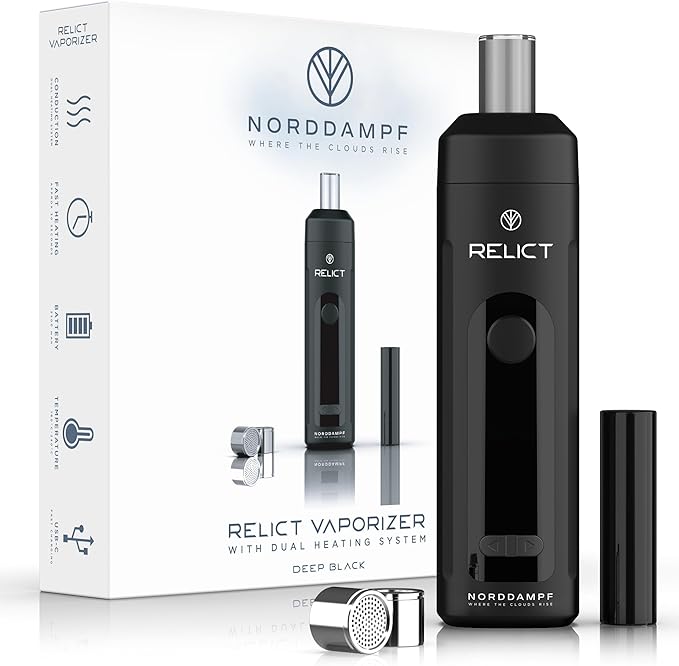
The difference in efficiency is significant enough that you can usually achieve the same effect with considerably less flower. A device like the RELiCT can be adjusted in 1°C increments within the relevant temperature range. This allows you to precisely control what you want to extract, rather than just lighting the bud and hoping for the best.
What about pre-rolls?
Many people reading this don’t roll their own joints. So, briefly:
- Pre-rolls vary enormously in quality. Some contain real whole flowers; others are filled with trim, shake, or whatever couldn't be sold as buds. The THC percentage listed on the label refers to what's actually inside.
- The number on the label alone does not indicate how much THC is actually absorbed. The same efficiency losses apply here as well.
- Infused pre-rolls are a different category. They are coated or infused with concentrate, kief, or distillate, which can result in a total THC content far higher than that of raw flower.
A 1-g infused pre-roll with 40% THC contains 400 mg of total THC. Even at the lower end of absorption efficiency, that’s a substantial dose. Caveat emptor—so buyers should be cautious.
Conclusion
A typical 0.5-g joint made with 20% THC flower contains about 100 mg of total THC. That’s the number on the label and in the product sheet—and it’s also the number that sounds pretty impressive to most people. However, the amount that actually enters your bloodstream is more like 20–37 mg, once combustion and sidestream smoke have taken their toll. About two-thirds of what you paid for more or less vanishes into thin air.
If that seems like a pretty silly way to consume something you’ve spent real money on, you’re definitely not wrong. Vaping is a much better alternative. It roughly doubles the amount you actually absorb, offers true temperature control, and, on top of that, avoids most carcinogenic byproducts.
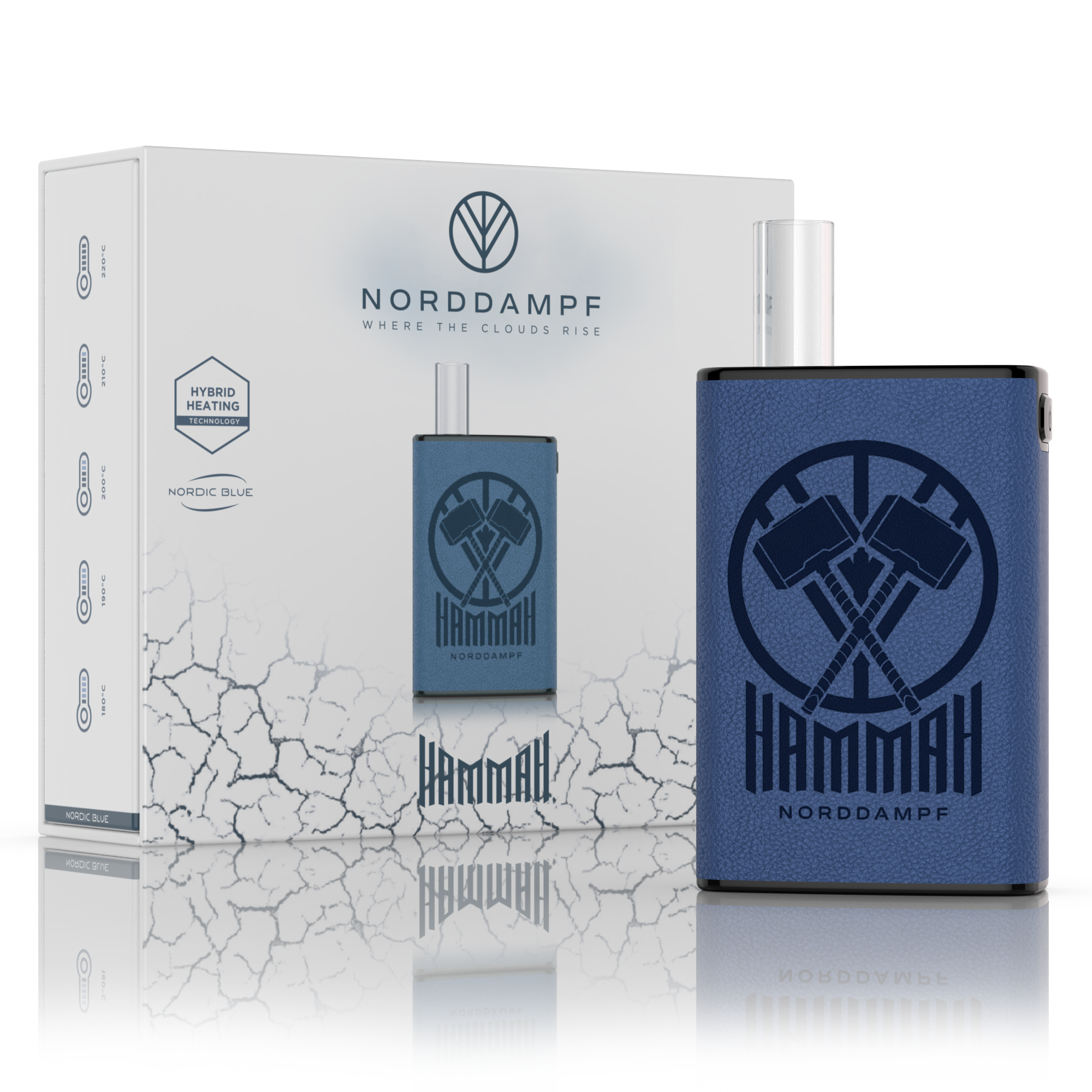
All you need now is a high-quality vaporizer - and we have just the thing for you. If you're looking for something compact and portable, the HAMMAH is an excellent place to start. Alternatively, you can watch your cannabis go up in smoke. Literally.
Frequently Asked Questions
How much THC is in an average joint?
A typical 0.5-gram joint made with 20% THC buds contains about 100 mg of total THC. A smaller, less potent joint may contain 30–50 mg. A larger, highly potent joint can contain over 180 mg.
How much THC do you actually absorb when smoking a joint?
Significantly less than the total amount. Research suggests that smokers absorb about 20–37% of the THC in a joint, with most studies putting the figure closer to 25%. The rest is lost through combustion, sidestream smoke, and incomplete absorption.
Does a bigger joint automatically mean you're taking in more THC?
It means more total THC is available, but not proportionally more THC is absorbed. A larger, slower-burning joint actually loses even more sidestream smoke between puffs.
How does THC absorption differ between smoking a joint and vaporizing?
Vaporizing is significantly more efficient. A high-quality vaporizer can extract about 54% of the THC from the flower you put in it, compared to about 25% when smoking a joint. Plus, you completely avoid the byproducts of combustion.
How much THC is in a pre-roll?
The same calculation applies as for a regular joint—with one caveat: Infused pre-rolls, which are coated or enriched with concentrate, kief, or distillate, can contain significantly more THC than the flower weight listed on the label would suggest. A 1-gram infused pre-roll with 40% contains 400 mg of total THC.
Does the type of paper affect THC absorption?
To a certain extent, yes. Thinner, faster-burning papers, such as rice paper, burn more evenly and tend to be slightly more efficient. Thicker, slower-burning papers produce more sidestream smoke.
Sources
"Cannabis Vaporizer Combines Efficient Delivery of THC," Gieringer et al., *Journal of Cannabis Therapeutics*.
Clinical Evaluation of the Cannabis-Using Patient, The Permanente Journal.
Evaluation of a Vaporizing Device (Volcano) for the Pulmonary Administration of Tetrahydrocannabinol, Hazekamp et al., Journal of Pharmaceutical Sciences (2006).
The Physics and Chemistry of the Joint, Leafly.
Science Reveals How to Roll the Perfect Joint, Scientific American.
Disclaimer: This article is for informational purposes only and does not constitute medical advice. Always consult a qualified healthcare professional before using cannabis products for health-related purposes.