
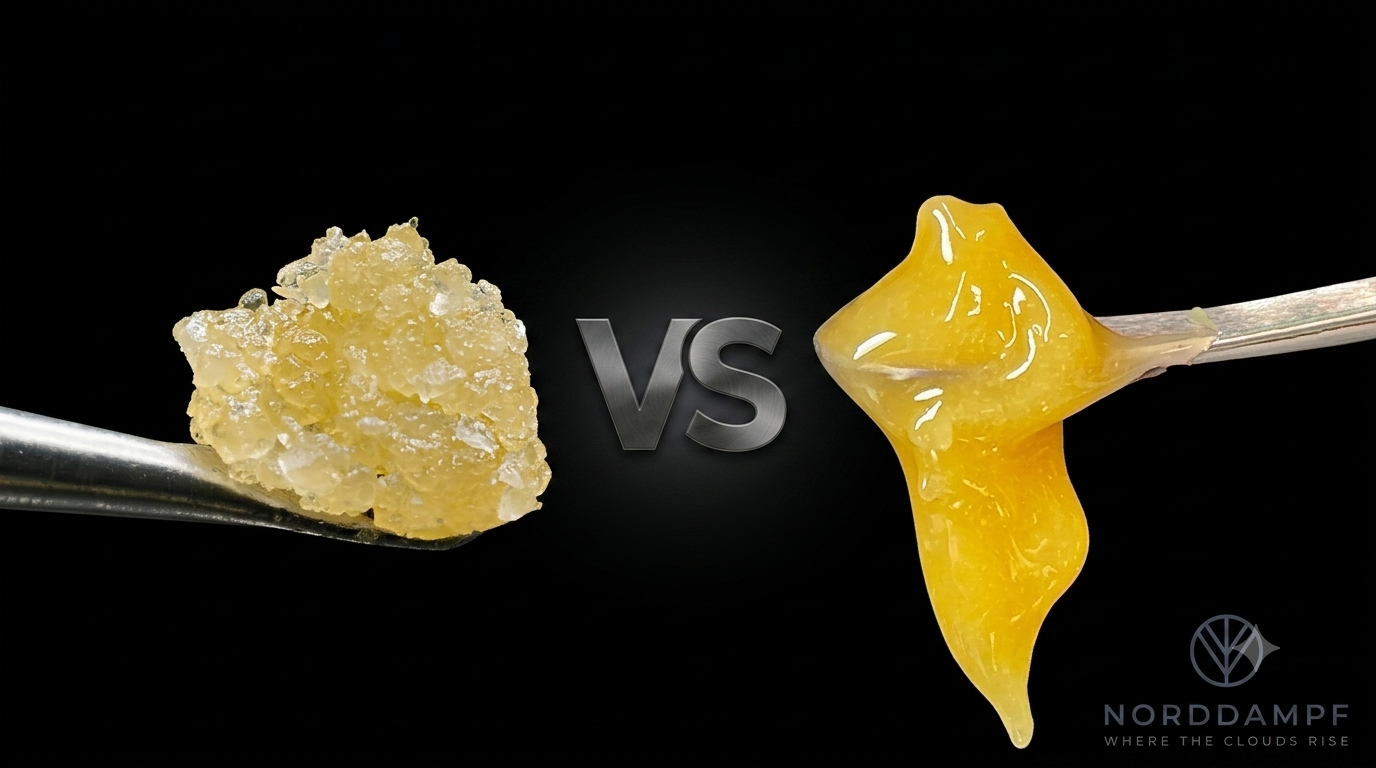
Take a quick stroll through a cannabis dispensary with a good selection of concentrates, and sooner or later, amid today's absurdly vast array of cannabis products, you'll come across two terms: live resin and live rosin.
To the untrained eye, they look almost identical, but they’re actually quite different. Your choice affects the flavor, price, and the kind of vaping experience you’ll have. So if you’re new to this, this short article is definitely worth a read.
So what exactly is live resin THC, and why do some connoisseurs debate so passionately about live resin versus rosin? In short: Both are high-quality cannabis concentrates made from “live” plant material. However, the extraction methods and results are completely different, as this guide explains.
Key Points
- Live Resin is a solvent-extracted concentrate made from freshly frozen cannabis.
- Live Rosin is a solvent-free concentrate that is pressed from freshly frozen plant material using heat and pressure.
- Both are called “live” because the cannabis is never dried or cured, which helps preserve the volatile terpenes.
- Live rosin is generally more expensive due to its labor-intensive production process and lower yield.
- The potency is similar; the real difference lies in the taste, the purity of the extraction, and the price.
- Both are best vaporized at lower temperatures to preserve the terpenes.
What are cannabis concentrates?
Cannabis concentrates are extracted forms of cannabis in which cannabinoids and terpenes are concentrated into a smaller, significantly more potent form. By way of comparison: One gram of flower may contain 20% THC, while one gram of concentrate often exceeds 70%. Yeah… that’s quite a difference.
In a broader sense, this category includes wax, shatter, distillate, rosin, and resin, which are consumed through cannabis dabbing or specialized vaping equipment. Live resin and live rosin are considered by many—though certainly not all—to be the most sought-after members of this family.
What is live resin?
| ℹ️ Live Resin is a cannabis concentrate produced by flash-freezing freshly harvested plants and then extracting cannabinoids and terpenes using a solvent such as butane or propane. Since the plant is never dried or cured, the full spectrum of terpenes is preserved. |
The “live” part refers to the plant material. Standard resin is made from cured cannabis, while live resin skips the curing process entirely and preserves the aromatic compounds directly at the time of harvest.
Butane is usually used as the solvent, though propane is sometimes used as well. Butane extracts are often referred to as BHO, or butane hash oil. Reputable manufacturers use closed systems and subsequently remove residues in vacuum ovens, ensuring that the levels are well below the legal limits. That’s why it’s worth asking for a good lab test certificate, if you’re willing to go to the trouble of insisting on one.
But how does live resin THC compare to distillate? It’s actually much more interesting. Distillate is essentially pure THC from which almost everything else has been removed. Live resin retains THC along with a rich terpene profile and minor cannabinoids that round out the experience. It usually comes in the form of a sauce with THCA crystals suspended in a terpene-rich liquid, or as a wax with a sugary texture.
What is Live Rosin?
Live Rosin is a solvent-free concentrate produced by applying heat and pressure to freshly frozen cannabis or freshly frozen ice-water hash. No butane, no propane. In fact, no chemical solvents are used at any stage of the process.
The “Live” principle, however, is the same: freshly frozen plant material preserves the terpenes that would otherwise be lost during drying. Standard rosin is pressed from dried flowers or cured hash. Live Rosin, on the other hand, starts with freshly frozen material, undergoes an ice-water extraction to produce bubble hash, which is then freeze-dried and pressed.
The result of this fun, surprisingly complicated alchemy is a creamy, golden product with a consistency similar to badder, budder, or jam. Many enthusiasts believe that live rosin offers the most terpene-rich experience because the plant never comes into contact with solvents.
That's exactly why it costs more: yields are lower, the process takes longer, and small-batch production keeps supply fairly limited.

Our Best Sellers
Discover the most popular Norddampf products
How Live Resin and Live Rosin Are Made
| Step | Live Resin | Live Rosin |
| Harvest | Flash-freeze immediately | Flash-freeze immediately |
| Extraction | Hydrocarbon solvents such as butane or propane, closed system | Ice-water agitation produces bubble hash |
| Drying | Vacuum oven removes solvent residues | Freeze-drying the bubble hash |
| Pressing | Not applicable | Heat and Pressure (60 °C to 80 °C) |
| Post-processing | Sauce, Sugar, or Diamonds + Terp Sauce | Whipped into badder/budder or jarred |
The difference in production is the basis for every other difference . The solvent-based Live Resin process is faster and yields higher outputs, making it more accessible. At the same time, the solvent-free Live Rosin process requires more time and skill. That’s why, once loaded into a dab pen, a gram of either can range in price from reasonable to absolutely painful—depending on what you buy.
Cured vs. Live Concentrates: Why This Matters
Cured concentrates are made from cannabis that has been dried and cured using traditional methods. This is great for flowers, but tough on terpenes. The cannabinoids survive; unfortunately, the aromatic complexity does not.
Live extracts skip the curing process. The plant goes straight from harvest to the freezer within minutes, preserving the terpene profile at near-peak levels. If flavor matters to you—and why wouldn’t it?—live products are probably worth the extra cost. If you’re only interested in mind-blowing potency, a clean distillate will get the job done for less money.
Flavor, Potency, and Terpene Profiles
| Live Resin | Live Rosin | |
| Terpene retention | High | Very high |
| Solvent-free | No (hydrocarbon) | Yes |
| Taste | Aromatic, complex, fresh plant | Often the purest expression of terpenes |
| Consistency | Sauce, Sugar, Diamonds | Badder, Budder, Jam |
| Typical price | Premium | Premium to Ultra-Premium |
| Availability | Widespread | Less common, often small batches |
The decision, however, is a bit more nuanced. There isn’t a dramatic difference in potency between the two, since the THC content depends more on the strain and batch than on the extraction method. The real difference lies in the terpene profile and the purity of the extract. Generally speaking, those looking for the purest extract prefer Live Rosin. Those who want excellent flavor at a slightly lower price tend to opt for Live Resin.
Decisions, decisions… Do you remember when buying cannabis was so easy?
How to Vape Live Resin and Live Rosin
Live Resin Cartridges
Live Resin is often available pre-filled in 510 cartridges. It works with standard vape batteries, and lower voltage settings of about 2.4 to 3.0 V preserve the terpene flavor much better than when you vape at too high a temperature. A higher voltage can produce bigger clouds, but it burns away exactly what you paid extra for. Look for lab-tested cartridges with certificates regarding solvent residues.
Vaping Live Rosin
Live rosin is usually sold as loose concentrate. This means you either fill a refillable cartridge with it or vaporize it using a dab pen or an e-rig designed for concentrates. With rosin, temperature is even more important. Lower temperatures—between 160 °C and 185 °C —help preserve the delicate terpene profile.
Live Resin or Live Rosin: Which One Is Better for You?
This is just our opinion—and there really is no right or wrong here—but we would recommend the following:
Choose Live Resin if you want premium flavor at a lower price, prefer the convenience of pre-filled cartridges, and are comfortable with solvent-extracted products. Rigorous lab testing ensures that residue levels remain well below regulatory limits.
Choose Live Rosin if solvent-free extraction is important to you, you're looking for the most terpene-rich experience available, and you're willing to pay more and use a refillable device or a dedicated concentrate vaporizer.
In any case, both are a significant step up from standard distillate cartridges. Ultimately, it just comes down to what matters most to you.
Conclusion
Both Live Resin THC and Live Rosin are high-quality concentrates that preserve the aromatic complexity of fresh cannabis. Live Resin achieves this using solvents, making it more widely available and more affordable. Live Rosin is produced without solvents, and the effort is rewarded with what many consider to be the purest expression of terpenes in the world of concentrates.
Whatever you decide: The device you use to vaporize it determines how much of that flavor actually reaches your taste buds.
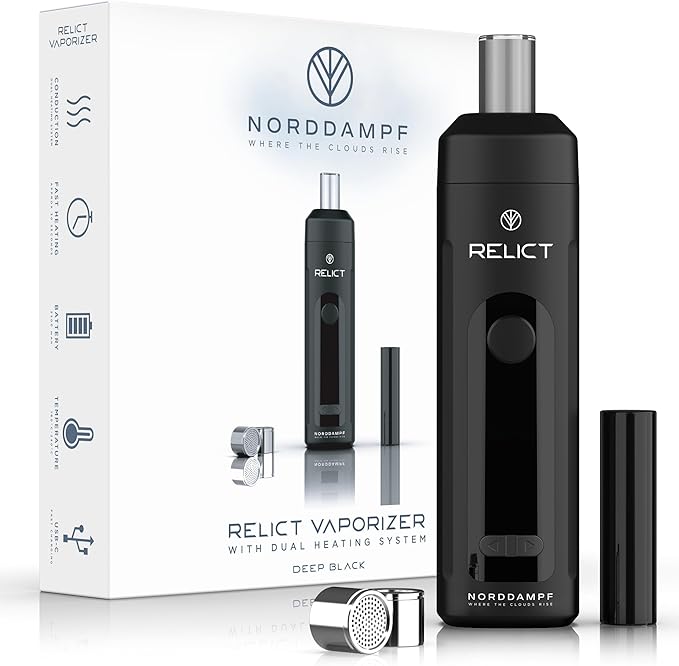
So if you'd like to try one of these products, it might be worth checking out the entire Norddampf —for what many consider the ultimate vape device: one that will likely shape your entire experience.
Frequently Asked Questions
What is Live Resin THC?
Live Resin THC refers to the THC contained in live resin concentrate. This is an extract made from freshly frozen plant material using hydrocarbon solvents. The “live” process preserves more of the original terpene and cannabinoid profile than would be the case when producing concentrates from cured flowers.
Is Live Resin stronger than Live Rosin?
Not necessarily. Depending on the strain and batch, both can reach high THC levels. The real difference lies in the extraction method and the preservation of terpenes, not in the potency itself.
Can you put live rosin in a vape cartridge?
Yes, but it's less common than live resin cartridges. The thicker consistency of live rosin means you'll need a cartridge designed for viscous concentrates, or a special dab pen or e-rig.
What is the difference between resin and rosin?
Resin is extracted using solvents. Rosin is produced without solvents, using heat and pressure. The “live” versions of both are made from freshly frozen plant material rather than cured cannabis.
Which one tastes better?
Many enthusiasts consider live rosin to be the purest expression of terpenes because no solvents come into contact with the plant. High-quality live resin also offers exceptional flavor. The difference is noticeable, but subjective.
Sources
"The Preservation and Augmentation of Volatile Terpenes in Cannabis Inflorescences," Journal of Cannabis Research — discusses terpenes losses during drying, curing, and storage.
In Pursuit of Optimal Quality: Cultivar-Specific Drying Approaches for Medicinal Cannabis, NCBI/PMC — a peer-reviewed study on how drying conditions affect terpene and cannabinoid content.
"The Entourage Effect in Medicinal Cannabis Products: A Comprehensive Review," NCBI/PMC — a systematic review of interactions between terpenes and cannabinoids.
Residual Solvent Analysis: Ensuring the Safety of Cannabis Extracts, Technology Networks — Industry Overview of Testing for Solvent Residues in BHO and Concentrates.
Disclaimer: This article is for informational purposes only and does not constitute medical advice. Always consult a qualified healthcare professional before using cannabis products for health-related purposes.