
Good cannabis rarely goes bad all at once. It slowly loses its quality. You buy a great batch, leave it in a bag on a warm, bright shelf, and two weeks later it’s dry, scratchy, and doesn’t smell like much of anything. If this sounds familiar: The plant didn’t let you down—storage was the problem.
Learning how to store cannabis properly basically just means controlling the four factors that start to degrade its quality the moment you bring it home: humidity, temperature, light, and oxygen. If you keep these factors under control, what you bought in January will still be just as good to smoke or vape in the summer.
Key Points
- The optimal humidity for storage is 55–62% RH. Below 45%, cannabis dries out; above 65%, the risk of mold increases.
- The storage temperature should be below 25 °C, ideally between 15 and 21 °C.
- UV light is one of the fastest causes of the degradation of terpenes and cannabinoids. Opaque or UV-blocking containers are therefore clearly the best choice.
- Oxygen causes oxidation. Airtight containers are essential for anything stored for more than a few days.
- Glass is the best material for everyday storage. Plastic bags are suitable for transport, not for storage.
- When stored properly, cannabis can retain its good sensory quality for 6–12 months.
Why Proper Cannabis Storage Is Important
Cannabis breaks down over time—depending on the factors it is exposed to. Terpenes disappear first, as they are responsible for aroma and flavor and are volatile enough to evaporate if conditions are not controlled. After that, the texture changes: if it’s too dry, the draw becomes harsh; if it’s too moist, there’s a risk of mold.
Good cannabis costs money, and poor storage is simply a slow way to waste it. With the right setup, the usable shelf life extends from a few days to several months. The right cannabis storage accessories cost only a fraction of what you’d spend again on a spoiled product over the same period.

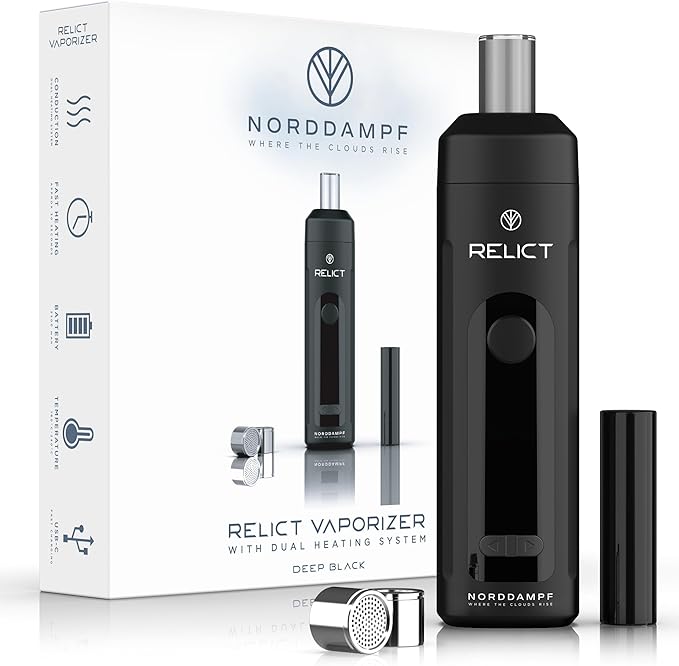
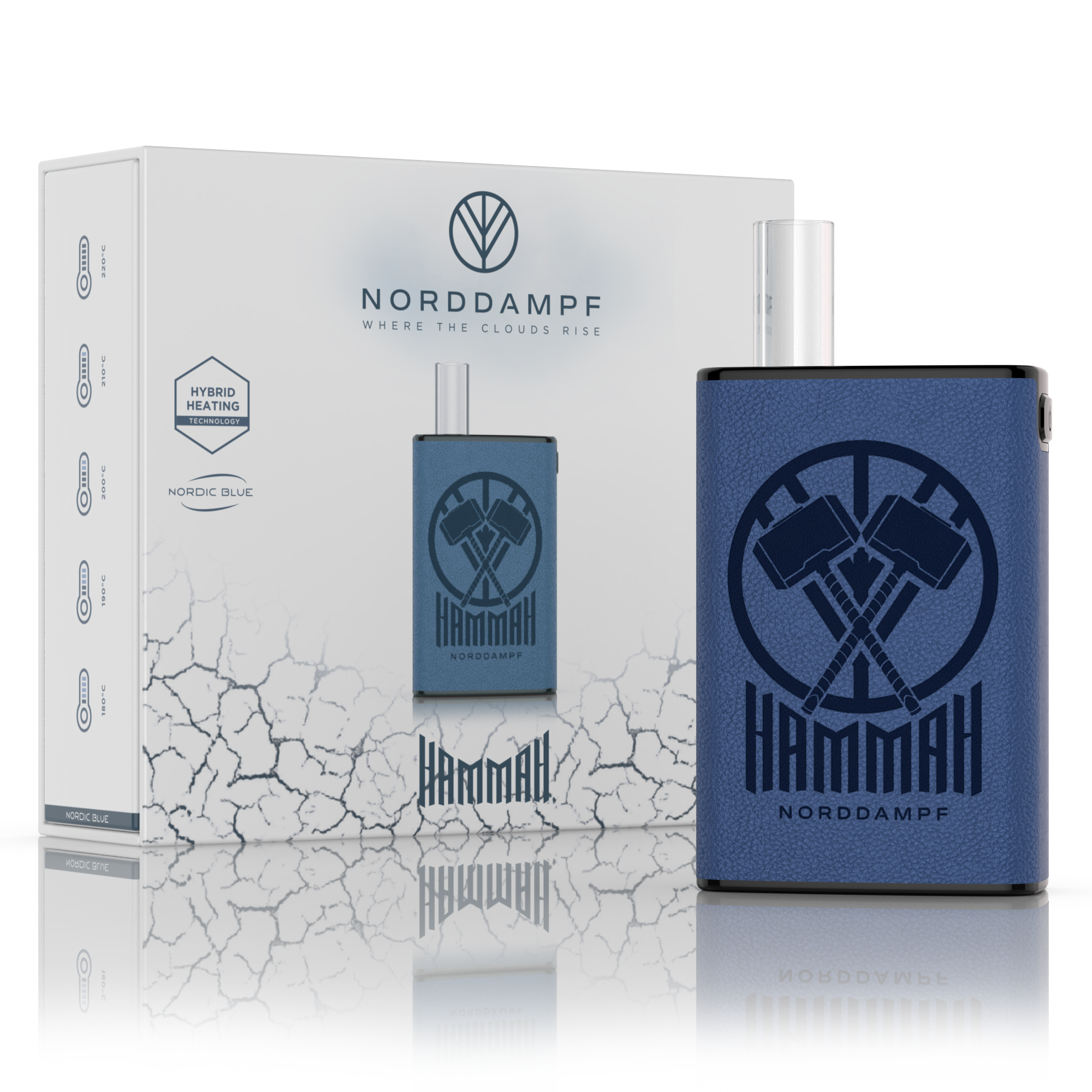
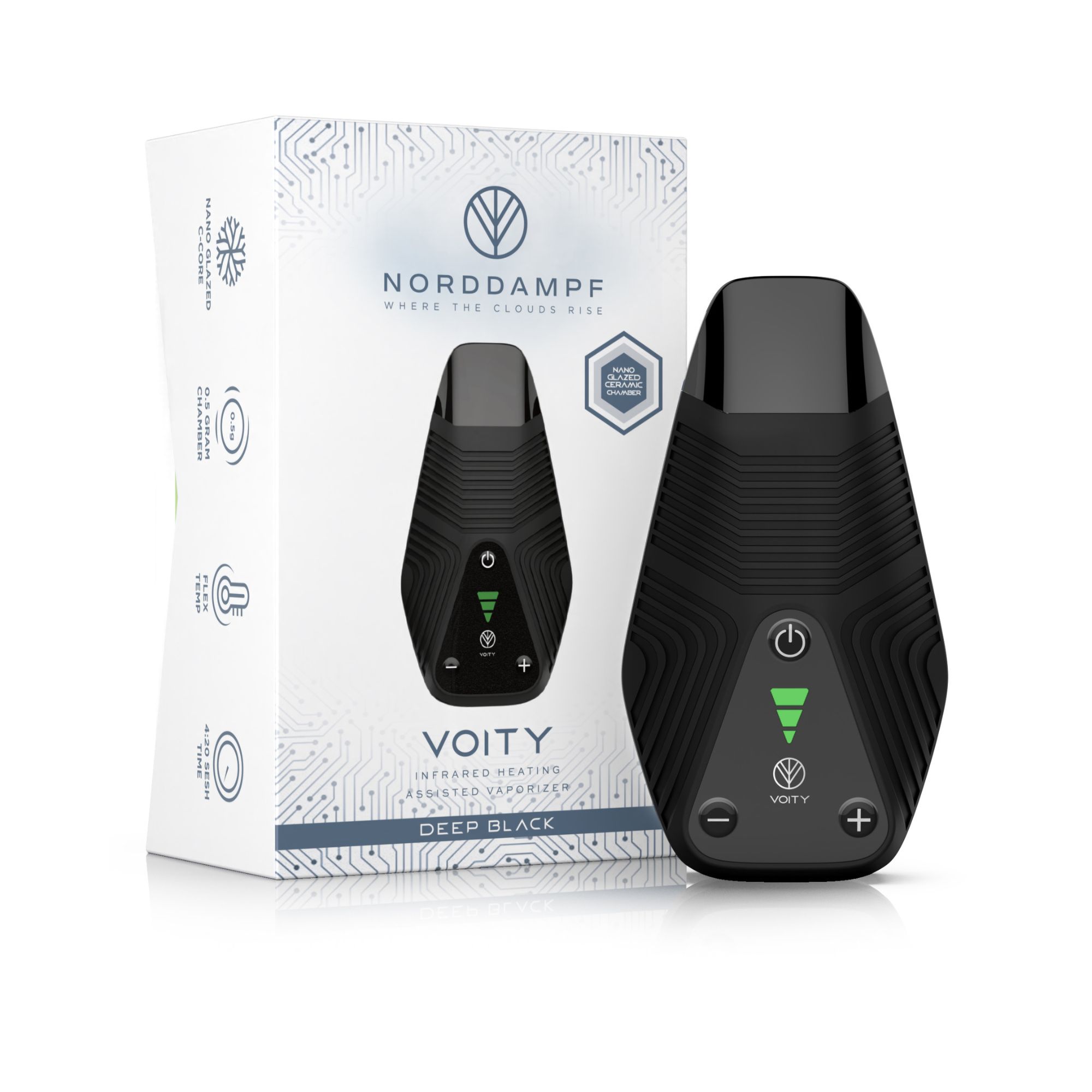
Our Best Sellers
Discover the most popular Norddampf products
The Four Enemies of Fresh Cannabis
| Enemy | What it does |
| High humidity | Promotes the growth of mold and mildew |
| UV light | Breaks down terpenes and degrades quality |
| Heat | Dries out the material and accelerates its degradation |
| Oxygen contact | Causes oxidation and dulls the flavor and texture |
Humidity: The Most Important Factor
Cannabis thrives in a narrow range of 55–62% relative humidity. If you stay within this range, the flowers will retain their terpenes and texture. If the humidity drops below 45%, the material dries out, the trichomes become brittle, and the flavor becomes almost nonexistent. If it rises above 65%, you’re basically just growing mold—and aside from the health risk, that’s not a flavor issue you can fix.
A humidity pack is the easy solution. Place a Boveda pack in a sealed jar, and it will regulate the humidity for you. But only a hygrometer will show you what’s actually happening inside. Plus, humidity levels change with the seasons: what was within the right range in February might be way off in August.
Temperature: Finding the Sweet Spot
The goal is a temperature below 25 °C, ideally somewhere in the range of 15–21 °C. Heat strips away terpenes faster than almost anything else, and once it’s dried out the flowers, you can’t get them back. The usual suspects are windowsills, the top of the fridge, or the countertop next to the stove: places that seem harmless but reach temperature spikes several times a day—and the damage adds up.
The refrigerator is sometimes cited as a smart option, but every time the door opens, the humidity fluctuates significantly. The freezer is fine for long-term storage, but it’s not good for anything else because frozen trichomes become brittle and break off when you touch the flower.
| ℹ️ For most people who want to store cannabis for a few weeks to a few months, a cool, dark cabinet is all you need. And if you live in a stuffy apartment in Berlin or Warsaw where indoor temperatures rise above 25 °C in the summer, a floor-level cabinet on tile flooring or a basement is worth its weight in gold. |
The Effects of Light: The Silent Quality Killer
UV light breaks down organic compounds, and this is not a new finding: Studies dating back to the 1970s have repeatedly identified light as one of the main causes of the breakdown of cannabinoids and terpenes.
Direct sunlight isn't the only danger. Even ambient light in a bright room can noticeably reduce quality within a few days. A clear glass jar on an open shelf fares significantly worse than the same jar in a drawer. Opaque containers, UV-blocking glass, or simply a dark cabinet solve the problem right away.
Air and Oxygen: The Right Balance
Oxygen causes oxidation. Zip-lock bags, loosely sealed containers, and paper bags all allow for a slow, continuous exchange of air, causing flavor and texture to deteriorate within a few days.
An airtight glass container is the answer. It is not necessary to create a complete vacuum, as this can compress and damage the material; a good airtight seal with a container of the appropriate size is sufficient.
Here’s a practical tip: A container that’s too big for its contents creates a noticeable air pocket above the material—and that works against you. If possible, adjust the container’s volume to fit the contents, and open the container less often than you think is necessary.
Choosing the Right Container
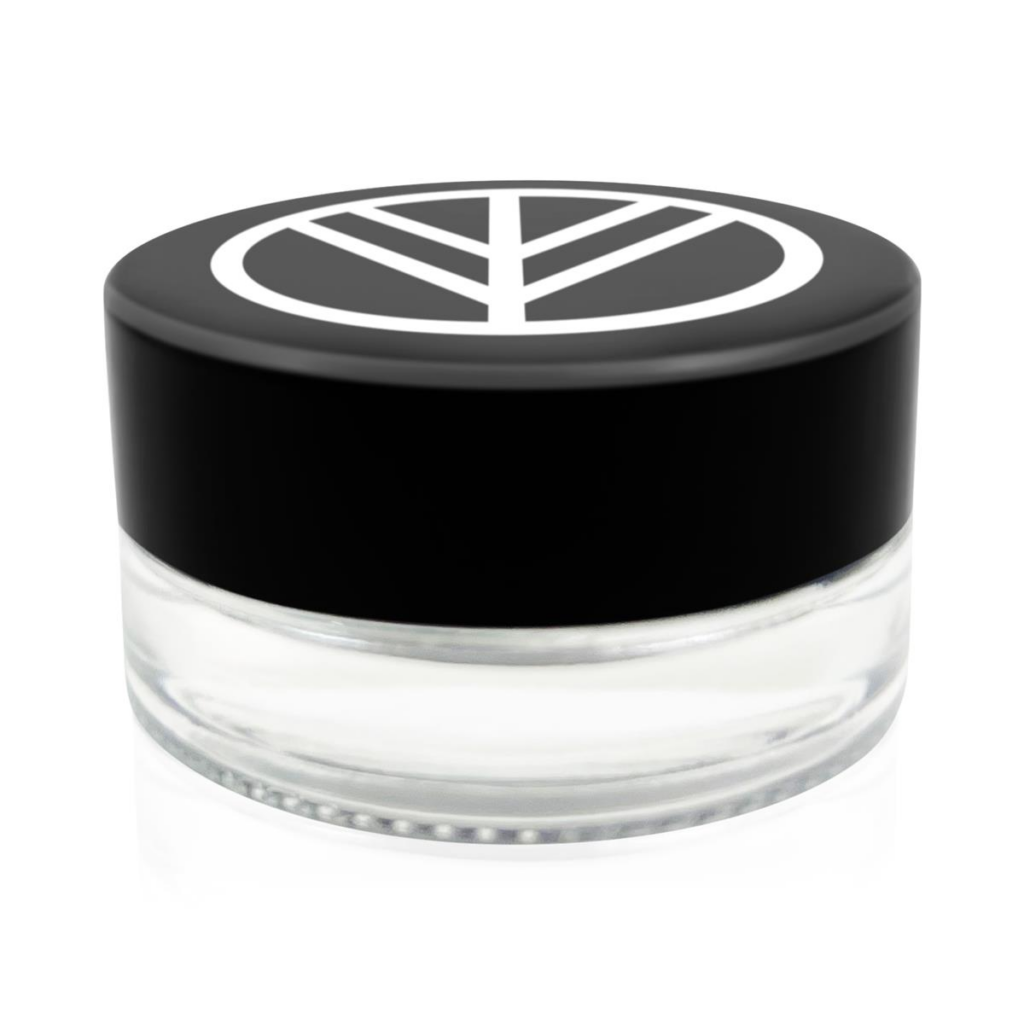
Glass: Recommended
Non-porous, no static buildup, seals well, easy to clean. UV-protective glass provides additional light protection without requiring a dark location. Overall, the best choice for everyday storage.
Plastic bags: Not recommended
Over time, plastic becomes permeable to air, generates static electricity that pulls trichomes off the material, and can absorb and transfer odors. Suitable for same-day transport, but not for longer periods.
Metal cans
Better than plastic and completely opaque, but may give off a slight metallic odor over time. The quality of the airtight seal varies. An acceptable short-term solution, but not ideal for long-term storage.
Wooden Boxes
Wood is porous. It absorbs moisture and odors from the environment and transfers them to the contents. It looks nice on a shelf, but it's not a real storage solution.
Specially Designed Stash Boxes
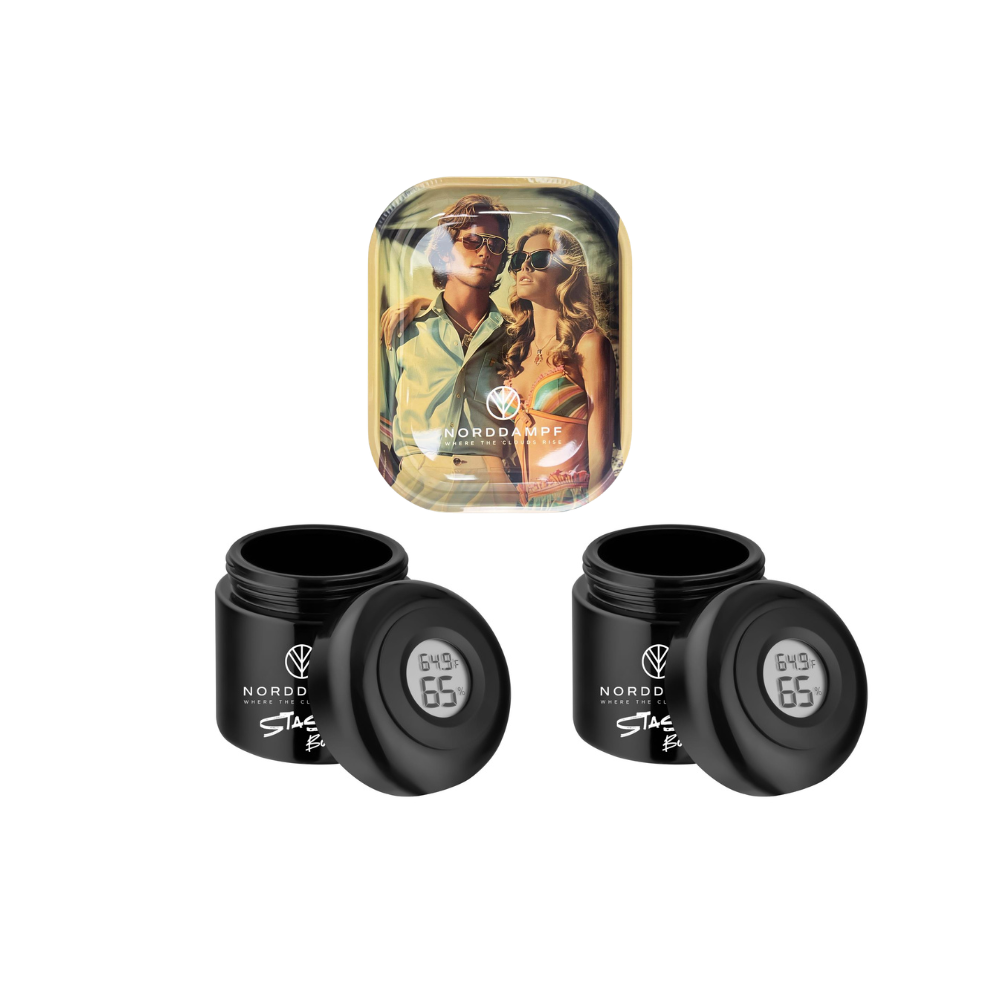
A well-designed stash box combines an airtight seal, UV-protective glass, and a built-in hygrometer all in one unit. No separate components to buy or keep track of. The Norddampf V2 manages all four storage variables at once.
Common Storage Mistakes
⚠️ Storage in the bathroom. Humidity spikes every time you take a shower.
⚠️ Reuse containers for different types of food without washing them. Flavors linger and mix with whatever goes in next.
⚠️ Keep the product in the dispensary’s original packaging long term. These bags are intended for transport, not for storage.
⚠️ Do not store near strong odors. Cannabis absorbs ambient odors from spices, cleaning products, and similar items.
⚠️ Don't open the container more often than necessary. Every time you open it, fresh air gets in. Take out just enough for one use and keep the main supply sealed.
⚠️ Store together with used accessories. Residue and odors from grinders or pipes can transfer to the contents.
How long can you store cannabis?
If all four variables are controlled, the sensory quality generally remains good for six to twelve months. After that, the loss of quality accelerates regardless of the conditions. Loss of aroma is usually the first sign, followed by changes in texture. Visible white fuzz or powdery growth means: discard immediately. This is a health risk, not a quality issue.
Conclusion
So there are only four variables. That’s really what it comes down to. Keep the humidity between 55–62% RH, store it below 25 °C, block UV light with an opaque or UV-protective container, and seal it properly to minimize oxygen exchange. If you consistently follow these four steps, your cannabis will still be of high quality even months later.
The setup doesn't have to be complicated either. A decent glass container in a dark cabinet will get you a long way. Add a humidity pack and a hygrometer, and you'll have every variable covered with minimal ongoing effort.
If you'd rather keep everything in a single solution, a specially designed stash box with UV-protective glass and a built-in hygrometer is a smart choice. The Norddampf with hygrometer was built exactly for this purpose.
Frequently Asked Questions
What is the best humidity level for storing cannabis?
55–62% RH. Below 45%, cannabis dries out and loses terpenes; above 65%, the risk of mold and mildew increases.
Should I store cannabis in the refrigerator or the freezer?
Neither option is ideal. Refrigerators cause fluctuations in humidity; freezer compartments make trichomes brittle. For most consumers, a cool, dark cabinet at room temperature is the better choice.
How long does cannabis stay fresh when stored properly?
When conditions are right across all four variables, good sensory quality is generally maintained for six to twelve months.
Can I store different varieties together?
Flavors blend together over time. Using separate airtight containers for each variety is the better solution if clearly distinguishable flavor profiles are important to you.
Is a glass container better than a plastic bag?
Yes, definitely. Glass isn't porous, doesn't generate static electricity, and can be sealed properly. Plastic allows for a slow exchange of air and affects the aroma of the contents.
Does light really have such a strong effect on stored cannabis?
Yes. Over the long term, UV light is one of the main causes of quality loss. Even indirect light in a bright room can lead to noticeable quality loss over the course of several days.
Sources
Fairbairn, J.W., Liebmann, J.A., & Rowan, M.G. (1976). The stability of cannabis and its preparations in storage. Journal of Pharmacy and Pharmacology, 28(1), 1–7. https://doi.org/10.1111/j.2042-7158.1976.tb04014.x
Trofin, I.G., Dabija, G., Vaireanu, D.I., & Filipescu, L. (2012). Long-term storage and stability of cannabis oil. Revista de Chimie, 63(3), 293–297.
European Monitoring Center for Drugs and Drug Addiction (EMCDDA). (2023). Cannabis drug profile. https://www.emcdda.europa.eu/publications/drug-profiles/cannabis
Health Canada. (2022). Information for health care professionals: Cannabis (marihuana, marijuana) and the cannabinoids. Government of Canada. https://www.canada.ca/en/health-canada/services/drugs-medication/cannabis/information-medical-practitioners/information-health-care-professionals-cannabis-cannabinoids.html
This article is for informational purposes only and does not constitute medical advice. Always consult a qualified healthcare professional before using cannabis products for health-related purposes.