
THCV—or tetrahydrocannabivarin—is one of the lesser-known compounds in the cannabis plant, with the plant itself playing a special role as a natural source of this cannabinoid. Unlike traditional THC, this cannabinoid is often described as stimulating, focus-enhancing, and appetite-suppressing. Its nickname, “diet weed,” is no coincidence. But what’s really behind it? This article gives you a clear look at the effects of THCV, current research, and the role of modern vaporizers in targeted delivery—a topic that is receiving increasing attention in both research and the public sphere.
Key Findings (At a Glance)
- THCV is a less common cannabinoid with a shorter-lasting, more pronounced psychoactive effect than traditional THC—many describe it as energizing rather than sedating.
- Dose-dependent effects: At low doses, THCV partially blocks CB1 receptors; at higher doses, it can produce psychoactive effects similar to those of THC.
- Research on metabolism and appetite is based on animal models and small-scale human studies—the results are preliminary and do not constitute a guaranteed cure.
- Benefits of THCV: The potential health benefits of THCV include supporting metabolic regulation, anti-inflammatory properties, and possible neuroprotective effects.
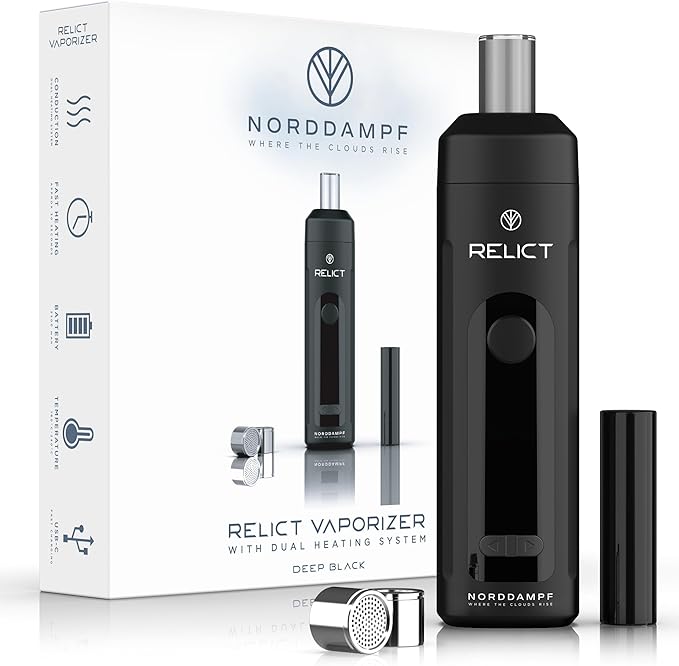
- The choice of vaporizer matters: Precise temperature control (e.g., in devices like the RELICT ) allows for more targeted THCV release than combustion.
- Legally complex: The classification of THCV varies depending on the country, concentration, and product category.
What is THCV (tetrahydrocannabivarin)?
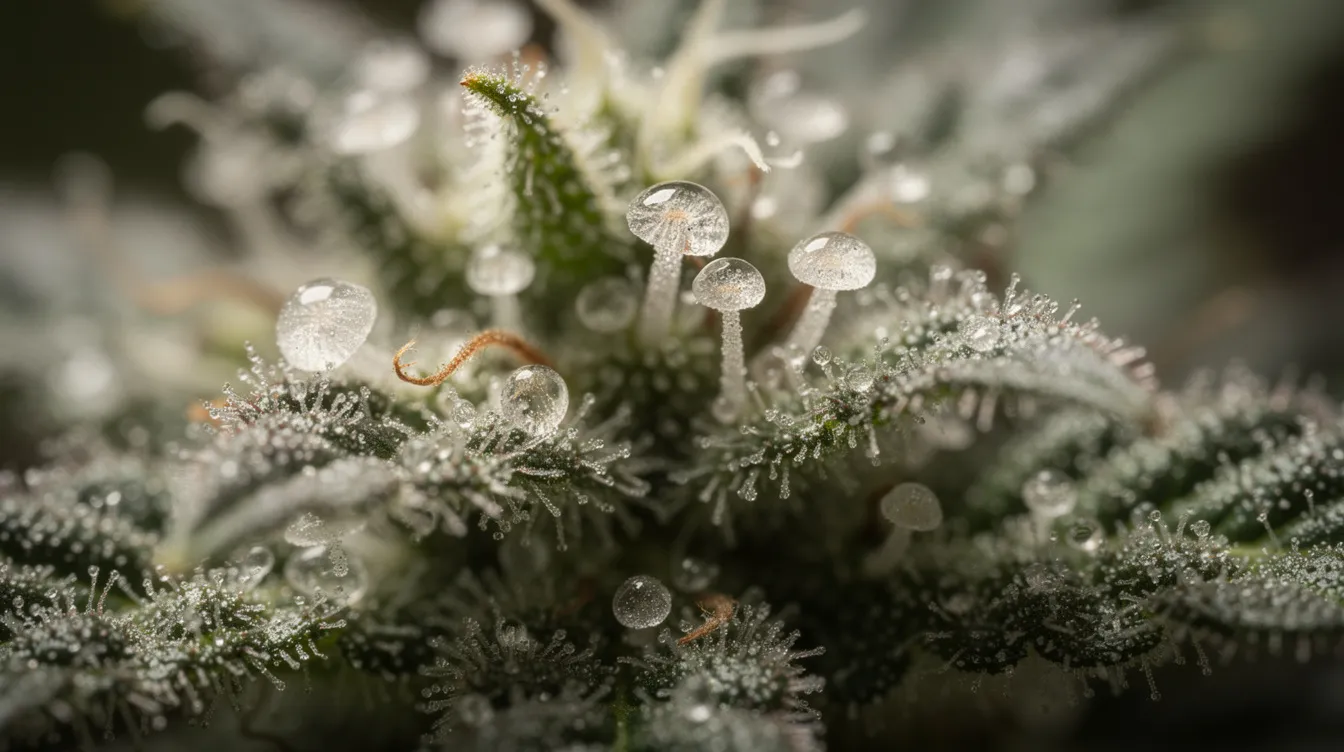
THCV was first described in 1973 and is one of the natural cannabinoids found in the hemp plant. In the trichomes—the resinous glandular hairs—it is initially produced from cannabigerovaric acid (CBGV-A), a precursor that is converted into THCV-A by enzymes in the plant. Subsequently, through the process of decarboxylation—that is, through the application of heat when smoking, vaporizing, or cooking with cannabis—THCV-A is converted into the active, neutral form of THCV. Only through this necessary process does the cannabinoid become bioactive and able to exert its effects.
Chemically, THCV is similar to the well-known δ9-tetrahydrocannabivarin, but differs in that it has a shorter propyl side chain with only 3 carbon atoms—THC, by contrast, has a pentyl chain with 5. This small structural variation significantly affects binding to cannabinoid receptors.
Important to know:
- THCV concentrations are below 1% in most modern hybrid varieties
- Higher levels are found naturally in certain landraces, such as African sativa varieties

Our Best Sellers
Discover the most popular Norddampf products
THCV vs. THC: The Key Differences
Many people know THC as the most well-known psychoactive cannabinoid. THCV can best be understood as its “cousin”—chemically similar, but with effects that are sometimes opposite. One key difference: THCV has a 3-carbon side chain, while THC has a 5-carbon side chain, which leads to different effects in the body.
| feature | THC | THCV | Other cannabinoids |
|---|---|---|---|
| Side chain | Pentyl (5C) | Propyl (3C) | Variable |
| CB1 receptor | Full agonist | Low: Antagonist / High: Partial agonist | Different |
| psychoactivity | Strong, sedative | Milder, clearer, shorter | Some are non-psychoactive (e.g., CBD) |
| appetite | Stimulating (munchies) | More subdued | Different |
| duration of effect | Longer-lasting | Faster deployment, shorter | Variable |
Similarities: Both bind to CB1 and CB2 receptors. The difference lies in the “how”—THC activates CB1 directly and potently, while THCV modulates it in a dose-dependent manner. Other cannabinoids, such as CBD, on the other hand, have little psychoactive effect and influence the endocannabinoid system in different ways.
A Comparison of Subjective Experiences:
- THC: Relaxing, introspective, often physically overwhelming (“couch lock”). The effects of THC are highly psychoactive and produce an intense high, which is often accompanied by a significant change in consciousness and increased appetite.
- THCV: Clear-headed, energizing, fewer cravings. The high from THCV is described as shorter, clearer, and less intense, especially at low doses, making the psychoactive effects milder than those of THC.
How does THCV affect the body? (Endocannabinoid system)
The endocannabinoid system (ECS) regulates processes in the body such as mood, appetite, sleep, and pain processing. It works with the body’s own ligands, such as anandamide and 2-AG, which bind to CB1 receptors (primarily in the brain) and CB2 receptors (in the immune system).
THCV exhibits a unique behavior here:
- Low doses: THCV acts as a CB1 receptor antagonist—it partially blocks activation by endocannabinoids or THC
- Higher doses: THCV acts as a partial agonist and can produce mild, THC-like effects
- Additionally: Interaction with CB2 receptors and 5-HT1A serotonin receptors (potential role in mood and inflammation)
There is evidence that THCV may have a positive effect on overall well-being by modulating various processes in the body.
Think of the ECS as a dimmer switch, not a light switch. THCV has a different effect depending on the dose.
Limitation: Much of the evidence comes from animal models or small human studies (2013–2023). Its applicability to the general population is limited.
Why is THCV called “diet weed”?
The term emerged around 2016–2018 in the media and cannabis communities. It refers to its appetite-suppressing properties—in contrast to THC’s infamous “munchies.”
What the research shows:
- Appetite: Studies in mice using 3 mg/kg of THCV reduced food intake for 6–8 hours without rebound eating
- Metabolism: A 13-week study involving 62 patients with type 2 diabetes showed a significant reduction in fasting blood sugar levels and improved insulin sensitivity
- Energy & Focus: Users report a "caffeine-like" sense of clarity and motivation
Important clarification: THCV is not an approved weight-loss product. It is not a substitute for medical advice, dietary changes, or exercise. The term “diet weed” is merely a marketing term—not a medical fact.
The State of THCV Research: What Do We Know in 2026?
Cannabis research on THCV has gained significant momentum since the 2000s. As of 2026, there are over 100 publications on the subject, about 80% of which are preclinical.
| area | Findings | Status |
|---|---|---|
| Metabolism/Appetite | Lower blood sugar levels, reduced feelings of hunger | Small-scale human studies |
| Neurology | Seizure reduction (epilepsy models), tremor reduction | Primary animal models |
| Inflammation/Pain | Modulated inflammatory markers, neuropathy | Cell/animal models |
| Psyche | Altered reward regions (fMRI) | Human data, small samples |
From a scientific perspective: The results suggest potential, but no Phase III trials or guidelines exist as of 2026. Caution is advised regarding overly high expectations.
THCV in Cannabis Strains: Where Does It Occur Naturally?
THCV levels vary widely. Most European and North American cannabis strains contain less than 1%.
Naturally, higher levels are found in:
- African landraces: Durban Poison (0.5–1%), Malawi Gold
- Asian routes: Nepal, Pakistan, Northern India
- Modern strains: Doug’s Varin, Pineapple Purps (up to 3–16% in certain selections)
Factors influencing:
- Genetics (THCV synthase gene)
- Growing conditions (stress, UV, drought)
- Harvesting time and processing
Practical tip: Laboratory tests with cannabinoid profiles (COAs) are essential for determining the actual THCV content in cannabis flowers or oils.
THCV and Temperature: Why Vaporizers Have the Edge Here
Cannabinoids vaporize at different temperatures. THCV vaporizes at around 220–235 °C—slightly higher than some terpenes (150–200 °C).
Combustion vs. Evaporation:
- Smoking: Over 800 °C – destroys 30–50% of the sensitive compounds, produces tar and CO
- Vaporizer: 160–230 °C – precise control, up to 95% fewer harmful substances
Advantages of precision instruments:
- Stable PID control (±1 °C for premium models)
- Reproducible results
- Maximized THCV release at 200–220 °C
- Up to 90% bioavailability vs. 25% when smoked
Devices like the RELICT from Norddampf a hybrid heating system, offer exactly this level of precision. Cheap models with temperature fluctuations of ±10 °C significantly reduce the yield.
Subjective effects of THCV: A clear head instead of being stuck on the couch?
Subjective experiences vary widely—depending on dosage, strain, personal sensitivity, and setting.
Common side effects:
- Mental clarity: “Focused, alert, productive” instead of sluggish
- Mood & Energy: Mild euphoria, motivation—similar to caffeine without the jitters
- Duration: Rapid onset (5–10 min), peak at 30–60 min, wears off after 2–4 hours (shorter than THC)
Possible side effects:
- Restlessness, increased heart rate
- Dizziness at high doses
- Rare Paranoia
Not everything about THCV is positive—individual dosing and caution are important, as side effects can occur.
No guarantee: Individual ECS polymorphisms (e.g., the CNR1 gene) can cause variations of up to 50%. THCV does not automatically protect against adverse effects.
Legal Framework and Classification (as of 2026)
The legal landscape surrounding cannabis and other substances such as THCV has evolved rapidly since 2024.
Germany (CanG starting in April 2024):
- Cannabis flowers containing THC are legal under certain conditions
- THCV is not explicitly listed in the BtMG, but is regulated as a THC analog depending on its concentration
- Grey areas in isolated extracts
International:
- EU: Varies (Switzerland: Recreational use up to 1% THC/THCV)
- United States: Schedule I nationwide, varies by state (e.g., licensed in California)
- Canada: Legal since 2018; THCV extracts are regulated
Recommendation: Before purchasing or possessing THCV products, check the current legal status with the relevant authorities (BfArM, EMA).
Conclusion: THCV is an exciting but still relatively new cannabinoid
THCV stands out from other cannabinoids due to its dose-dependent mechanism of action. Its particular effects on appetite, metabolism, and energy make it an exciting area of research.
- Less common, milder, and shorter-lasting than THC—described by many as suitable for daytime use
- Research is promising but still in its early stages—no Phase III trials by 2026
- Technology matters: Precise vaporizers (e.g., RELICT) optimize targeted use
- Fact-checking the hype: Stay critical, evaluate studies, and keep track of legal developments
FAQs About THCV & Its Effects
Can THCV help with weight loss?
Studies suggest that THCV may affect appetite and metabolic parameters—such as the 13-week study involving 62 patients with diabetes. However, THCV is not an approved weight-loss product. Weight management depends on diet, exercise, sleep, and individual factors. It is advisable to consult a doctor.
Is THCV safer than THC?
It’s not possible to make a blanket statement about which is “safer.” THCV is described as milder and less sedating, but it can also have psychoactive effects and cause restlessness or dizziness. There is significantly less long-term data on THCV (less than 20 years of research) than on THC (over 50 years).
In which products is THCV most commonly found today?
THCV is found in analyzed flowers of certain Sativa strains, specialized extracts, vape cartridges, and formulated oils. The market is growing, but concentrations vary widely (±20–50%). Laboratory certificates (COAs) are essential for clarity regarding actual content.
How does THCV differ from CBD in terms of everyday experience?
CBD is non-intoxicating and is associated with relaxation and stress reduction. THCV is psychoactive and is described as stimulating and appetite-suppressing. Both modulate different receptors and signaling pathways—they are not interchangeable.
Does the choice of vaporizer really matter when it comes to THCV?
Yes. Precise temperature control (e.g., ±1 °C in premium devices like the RELICT ) determines whether and to what extent THCV is released. Consistent temperature control ensures reproducible results. However, a device alone does not guarantee a specific effect—individual differences still apply.