

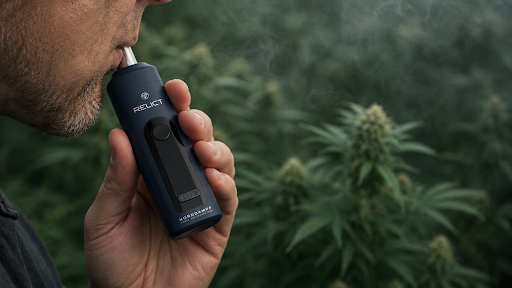
If your cannabis or THC vape sessions don't feel quite as satisfying as they once did, that's probably tolerance at work. THC tolerance is a normal physiological adaptation to repeated use.
It is not automatically the same as dependence, but it does show that the body has adapted to regular THC exposure, and it's not a sign that anything is wrong with your supply.
Fortunately, there are steps you can take. Learning how to keep THC tolerance low mostly comes down to using less, more deliberately.
Five strategies do most of the work, and we will cover them all, including tolerance breaks, microdosing, tracking your use, rotating strains or ratios, and supporting your body with sleep, hydration, and exercise.
There is no magic reset here, but this guide covers everything you can do to keep your THC tolerance as low as possible.
| ⚠️Disclaimer: This article is for informational purposes only and does not constitute medical advice. In Germany, adult cannabis use was partially legalized under the Cannabis Act (CanG) on April 1, 2024, subject to possession limits and other restrictions. The law varies by country, so always check the current legal status in your country before purchasing or using it. Consult a qualified healthcare professional before using cannabis products for health-related purposes. |
Key Points
Tolerance breaks are the most consistently cited way to lower THC tolerance, though the length needed varies by person.
Microdosing, using smaller amounts on purpose, slows the buildup of tolerance compared with steadily increasing doses.
Tracking frequency and amount helps you notice tolerance rising before it becomes a bigger adjustment.
Rotating strains, methods, or THC:CBD ratios is a useful supporting tactic, but works best alongside reduced frequency, not instead of it.
Sleep, hydration, and exercise don't directly lower tolerance, but they help you get through a break or dose reduction.
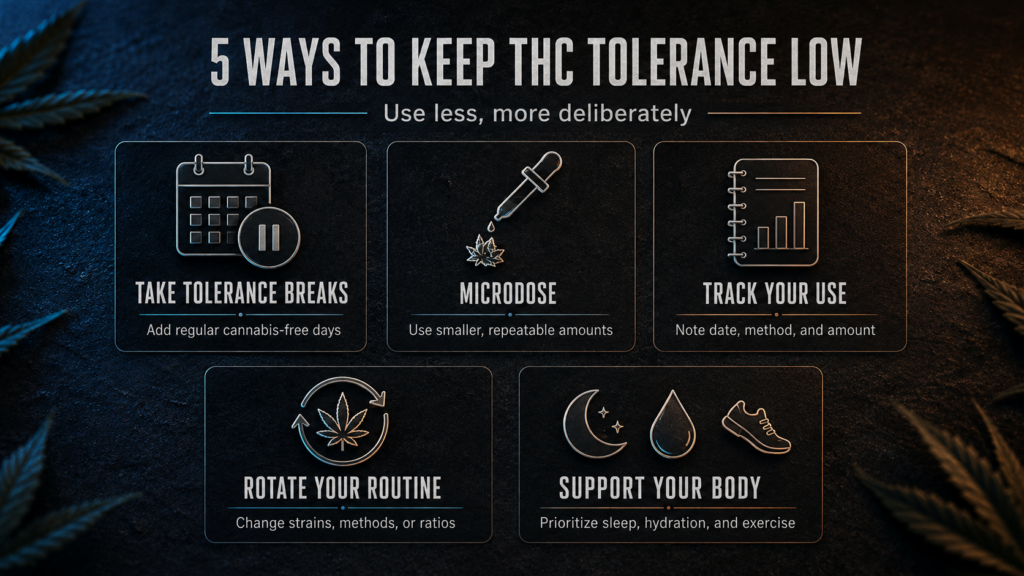
Take Regular Tolerance Breaks
A tolerance break, or "T-break," is the strategy most people try first, and for good reason. Regular THC use is associated with reduced sensitivity in your cannabinoid (CB1) receptors over time, and stepping back gives that sensitivity room to recover.
There is no single number that works for everyone, as recovery timelines vary with usage history, frequency, and body composition, so a break that resets one person may barely register for another.
Either way, if stopping fully feels like too much, a middle path might be a better idea where you take a couple of cannabis-free days each week. Even short breaks like this may allow some recovery in CB1 receptor availability, though there is no clearly established rule for how often or how long breaks need to be to keep tolerance low.
| ℹ️ Higher-potency habits tend to build tolerance quickest, so if dabbing is part of your routine, you might want to check out our article Dabbing: Hype or Danger? |

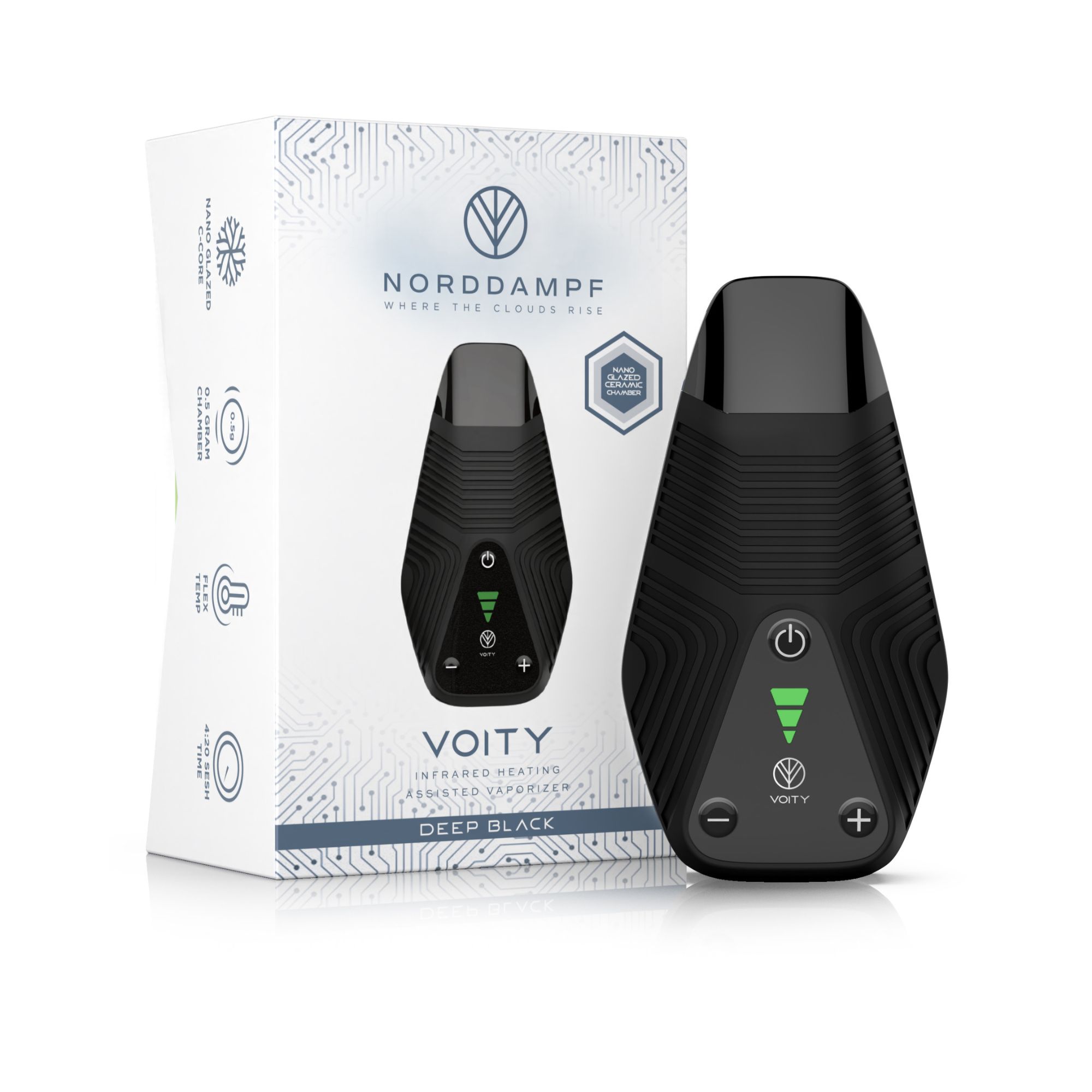
Our Best Sellers
Discover the most popular Norddampf products

Microdose Instead of Maximizing Dose
Microdosing means using smaller, more deliberate doses per session rather than letting your dose build up over time. The logic is simple: consistently high doses build tolerance more quickly, while smaller, steady amounts demand less from your body's adaptive response.
The catch is precision. Eyeballed dosing makes real microdosing almost impossible, since you can't hold a low dose steady if you don't know what you took last time. This is where consistent hardware helps, not as a cure, but as a control tool.
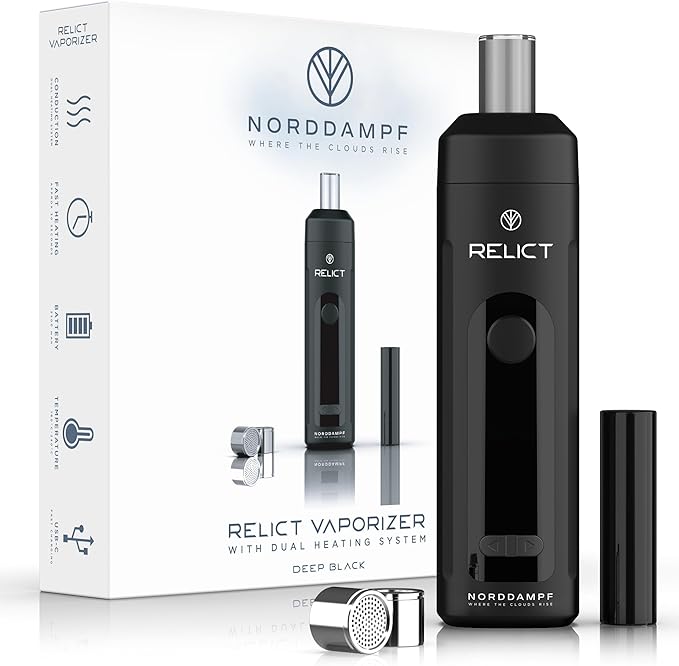
👉A capsule-based system like the Relict dosing capsules lets you load a repeatable amount each session, making a genuine low-dose routine far easier to keep to.
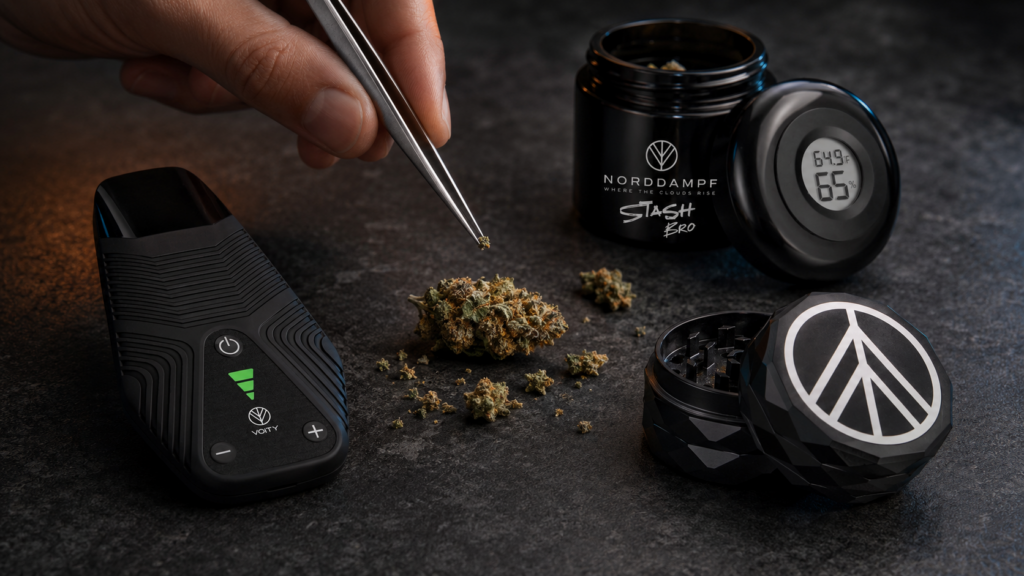
Track Your Use So You Notice Tolerance Early
Tracking sounds fussy, but it can be as light as a note on your phone: date, method, rough amount, which is usually enough to catch tolerance creeping up. What you are watching for is needing more material or longer sessions to reach the effect you got a few weeks ago.
A log also reveals patterns that are more valuable than the raw numbers, such as reaching for more on stressful days. If your usual amount has drifted up over the past month without a deliberate decision behind it, that might be your cue to lean on the other strategies here.
Rotate Strains, Methods, or THC:CBD Ratios
Rotation is a supporting move, not a substitute for a break, but it still earns its place here. Different cannabinoid and terpene profiles can shift how a session actually feels even at similar THC levels.
That said, rotating strains or cannabinoid profiles changes the subjective experience, not the underlying THC tolerance itself; total THC exposure, dose, and frequency remain the main factors.
THC:CBD ratio products, such as 1:1 or 2:1, work along the same lines by moderating a session's intensity. One thing to be clear about is that CBD does not directly reverse THC tolerance. It can soften the psychoactive edge, but it doesn't undo the underlying receptor changes.
Switching methods helps too: moving from concentrates back to flower lowers the potency reaching your system each time.
| ℹ️Interested in how much potency varies between products? Cannabis distillate explained is easily worth five minutes of your time. |
Support Your Body With Sleep, Hydration, and Exercise

Our last strategy isn't about THC at all, and it's the one people often overlook, but poor sleep amplifies the urge to use more to make up for feeling off, so resting well removes that pressure. Staying hydrated and eating regular meals keeps your energy steadier, which counts for most during a break or taper.
Exercise pulls double duty, as it gives you a replacement ritual for time you'd otherwise spend reaching for a session, and supports mood, which cuts the temptation to dose bigger out of boredom.
Bottom Line
THC tolerance isn't a problem you fix once and forget, but something you manage with the same habits that keep any routine sustainable, such as breaks, smaller doses, and paying reasonable attention to what you are actually using.
Again, as you probably already imagine, no single strategy here does the job on its own. They work because they reinforce each other. So, take the occasional break, keep your doses deliberate, switch things up when a session stops landing, and don't ignore sleep and food. Do that, and you stand a far greater chance of keeping your THC tolerance low (or at least in check).
And if you want more of the same straight-talking take, smoking cannabis: honest insights is definitely worth five minutes of your time.
FAQs
How Long Does It Take to Lower THC Tolerance?
It varies by person, frequency of use, and usage history. Some people notice a difference within a few days of reduced use, while others need longer. There's no universal timeline, so treat any specific figure you see elsewhere as a rough guide rather than a promise.
Does CBD Lower THC Tolerance?
Not directly. CBD doesn't reverse the receptor changes behind THC tolerance. What it can do is moderate the overall psychoactive intensity of a session when used in a CBD-inclusive or ratio product, which is a different thing from resetting tolerance.
Can I Lower My Tolerance Without Stopping Completely?
Yes. Reducing your frequency and dose is a realistic middle path for many people, especially when combined with microdosing and tracking your use.
Even a couple of cannabis-free days a week may allow some recovery in CB1 receptor availability, though there's no clearly established rule for exactly how many days are needed.
Does the Consumption Method Affect How Fast Tolerance Builds?
Yes. Higher-potency methods like concentrates and dabs can build tolerance faster than lower-potency methods like flower at the same frequency, simply because more THC reaches your system per session. Switching to a lower-potency method, or using a device like the RELICT vaporizer to keep each dose consistent, is one way to ease the load.
Is Tolerance the Same as Dependence?
No. Tolerance means needing more to get the same effect. Dependence involves withdrawal-type symptoms when you stop. They're related and can overlap, but they aren't the same thing, and having one doesn't automatically mean you have the other.
⚠️Disclaimer: This article is for informational purposes only and does not constitute medical advice. Always consult a qualified healthcare professional before using cannabis products for health-related purposes.
Sources
Reversible and regionally selective downregulation of brain cannabinoid CB1 receptors in chronic daily cannabis smokers: https://pmc.ncbi.nlm.nih.gov/articles/PMC3223558/
Cannabis use and the development of tolerance: a systematic review of human evidence: https://pubmed.ncbi.nlm.nih.gov/30056176/
Cannabinoids and Cannabinoid Receptors: https://pmc.ncbi.nlm.nih.gov/articles/PMC7339067/