
Most people set the temperature on their vaporizer like a thermostat: somewhere in the middle, a little higher for a stronger effect, but never quite sure why. It works, sort of. But with these settings, a whole lot is happening chemically that you can’t see right away—and once you understand it, it changes the way you look at every session.
Every cannabinoid and every terpene has its own boiling point at which it transitions from resin to vapor. If you stay below that point, the compound remains inactive in the material; if you hit the sweet spot, it vaporizes cleanly; if you go too far above it, you break down the good compounds before they even reach you. A vaporizer with true temperature precision lets you work with this logic instead of against it.
Think of this guide to cannabinoid boiling points as your go-to reference whenever you want to know what happens at a specific setting. You might even want to save it. Either way, let's get started.
The most important information at a glance
- Each cannabinoid has its own boiling point. If you know these values, you can target specific compounds instead of simply vaporizing everything at once.
- CBG has the lowest boiling point of the major cannabinoids, at about 52 °C, while CBC and THCV require temperatures of up to 220 °C to vaporize effectively.
- THC begins to vaporize at 157 °C; the CBD range overlaps significantly with this at 160–180 °C, which is why both are usually active at the same time under standard conditions.
- Most terpenes have lower boiling points than cannabinoids and begin to evaporate at temperatures above about 185 °C. That's why sessions at lower temperatures usually taste much better.
- At high temperatures in the range of 200–220 °C, you’ll achieve maximum cannabinoid extraction, but you’ll lose most of the aromatic complexity.
- All of this is only relevant if your vaporizer's temperature reading is actually accurate. A device that displays 185 °C but delivers 170 °C doesn't give you any real control.
Why Boiling Points Are Important in Evaporation
When vaporizing, cannabis is heated just enough to turn its compounds into inhalable vapor, without ever reaching the point of combustion. Our Vaporizing Guide explains the full process, but the short version is this: Instead of burning everything at once, you apply controlled heat to a specific target.
This target shifts depending on what you want, because each cannabinoid and terpene vaporizes at its own temperature. Below that temperature, the compound remains trapped in the resin; above it, it vaporizes; if you go too far above it, it breaks down before you inhale it. The trick is to hit the range for each compound without overheating it.
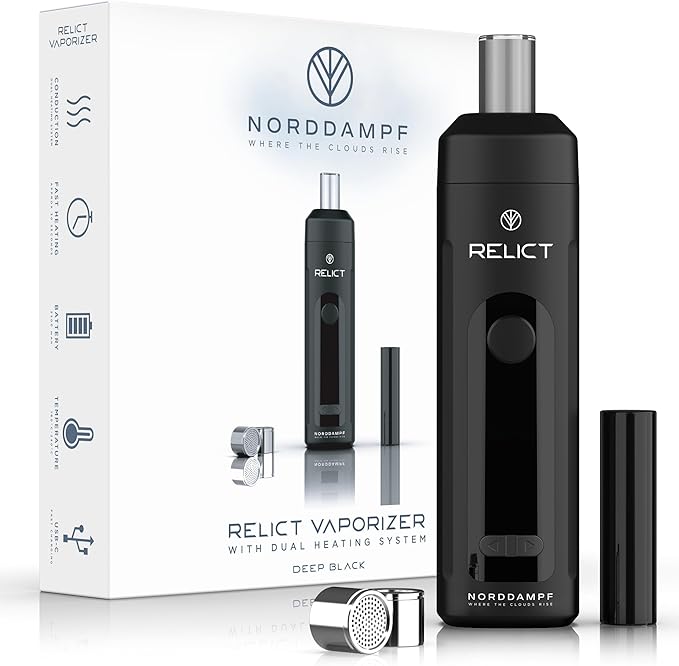
The bottom line is actually quite simple: A vaporizer with 1°C increments gives you real control over which compounds are activated. A dial with “low, medium, high” settings doesn’t do that. That’s exactly why the popular RELiCT operates with 1°C precision across its entire range.

Our Best Sellers
Discover the most popular Norddampf products
The Reference Table of Cannabinoid Boiling Points
The following boiling points are taken from the available scientific literature. Depending on the measurement method, there are slight variations between sources. Therefore, consider these values as reliable reference ranges rather than absolute figures!
| cannabinoid | Full Name | boiling point | Primary Character |
| CBG | Cannabigerol | 52 °C (126 °F) | Not psychoactive |
| THC | Delta-9-tetrahydrocannabinol | 157 °C (315 °F) | Psychoactive |
| CBD | Cannabidiol | 160–180 °C (320–356 °F) | Not psychoactive |
| Delta-8 THC | Delta-8-tetrahydrocannabinol | 175–178 °C (347–352 °F) | Mildly psychoactive |
| CBN | Cannabinol | 185 °C (365 °F) | Mildly psychoactive |
| THCV | Tetrahydrocannabivarin | 220 °C (428 °F) | Mildly psychoactive |
| CBC | Cannabichromene | 220 °C (428 °F) | Not psychoactive |
Note: The figures reported in the published literature vary slightly depending on the measurement method. Consider them reliable reference ranges, not exact values.
Cannabinoid by Cannabinoid: Which One Vaporizes at What Temperature
The table provides the numbers, but this is about what they really mean—including what each cannabinoid actually is and what you should know before choosing a temperature.
CBG — approx. 52 °C (126 °F)
CBG is sometimes referred to as the “mother cannabinoid” because it is a biosynthetic precursor to THC, CBD, and other cannabinoids in the plant. Its boiling point is unusually low, which means it vaporizes even at the very lower end of a device’s temperature range. CBG concentrations in most dried cannabis flowers are relatively moderate compared to THC and CBD, so its contribution to a session depends heavily on the strain.
THC — 157 °C (315 °F)
The most important psychoactive cannabinoid in cannabis. THC begins to vaporize at 157 °C, which is at the lower end of most typical settings. A device set precisely to 157 °C will begin to produce THC vapor, though most users experience a more complete extraction at 165–180 °C, where the compound vaporizes more efficiently throughout the entire chamber.
CBD — 160–180 °C (320–356 °F)
CBD is the predominant cannabinoid in hemp flowers and is the second most abundant cannabinoid in many cannabis strains. Its boiling point range overlaps significantly with that of THC, which is why both typically vaporize together at standard temperatures. In the literature, the CBD boiling point is generally given as a range rather than a single fixed number; 160–180 °C is the most commonly cited range.
Delta-8 THC — 175–178 °C (347–352 °F)
Delta-8 THC is a structural isomer of delta-9 THC: It consists of the same atoms arranged in a slightly different configuration and has a boiling point that is a few degrees higher. Delta-8 occurs only in very small amounts in unprocessed flowers. It becomes more relevant in concentrated or refined extracts, where you are most likely to encounter it as a listed compound.
CBN — 185 °C (365 °F)
CBN is formed when THC oxidizes over time due to exposure to light, air, and heat. It is more of a byproduct of aging and improper storage than something found in abundance in fresh flowers. Its boiling point is higher than that of THC and CBD, which is why it does not become significantly active at lower temperatures.
THCV — 220 °C (428 °F)
THCV’s boiling point is near the upper end of most vaporizer temperature ranges. Lower settings do not activate it to any significant degree. Certain strains, particularly some African landraces, contain higher concentrations of it. If you’ve specifically chosen a THCV-rich strain, you’ll need high temperatures to get anything out of it at all.
CBC — 220 °C (428 °F)
CBC shares its high boiling point with THCV and remains one of the less-studied major cannabinoids. At 220 °C, most of the terpenes in your material have already evaporated or broken down, so a session at this temperature is dense and cannabinoid-heavy but has significantly less aromatic character.
Where Terpenes Come Into Play
Cannabinoids aren't the only compounds with boiling points. Terpenes—the aromatic compounds responsible for flavor and aroma—also vaporize at certain temperatures. Most terpenes have lower boiling points than cannabinoids, which means they vaporize sooner and are more easily driven off by high heat.
| terpene | boiling point | Aromatic notes |
| Humulen | 106 °C (222 °F) | Hoppy, earthy |
| Beta-caryophyllene | 119 °C (246 °F) | Spicy, woody, peppery |
| Alpha-pinene | 155 °C (311 °F) | Pine, fresh |
| myrcene | 167 °C (332 °F) | Earthy, musky, herbaceous |
| limes | 176 °C (348 °F) | Citrusy, light |
| Terpinolene | 186 °C (366 °F) | Fresh, pine-like, floral |
| linalool | 198 °C (388 °F) | Floral, Lavender |
If flavor is important to you, lower settings preserve more of that profile. Alpha-pinene vaporizes at around 155 °C; by 200 °C, it’s long since disappeared. Above about 185–190 °C, many of the lighter terpenes have already evaporated, and the vapor becomes denser and more cannabinoid-forward, but less complex on the palate. Of course, none of these results are wrong—they’re simply different sessions with different priorities.
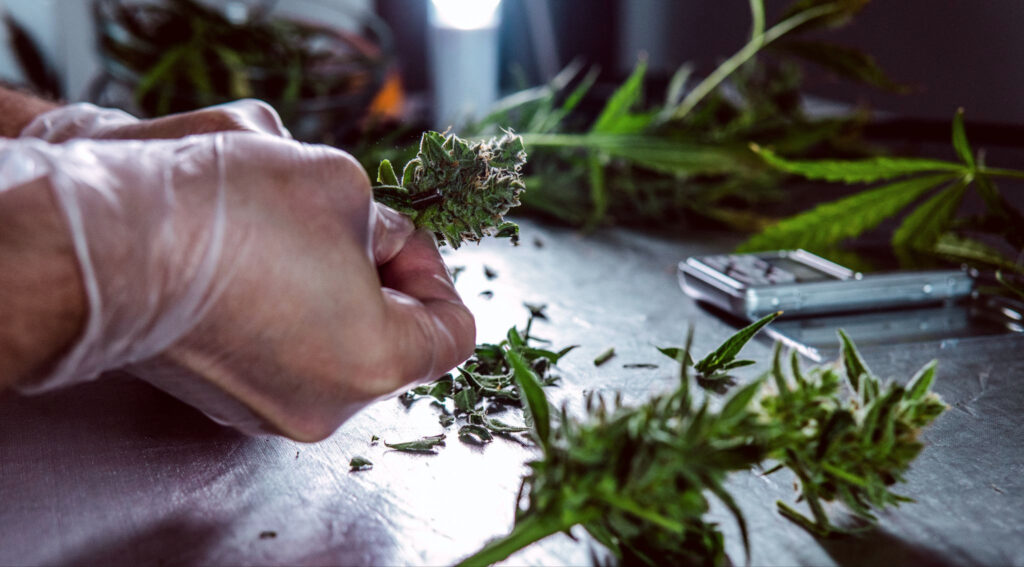
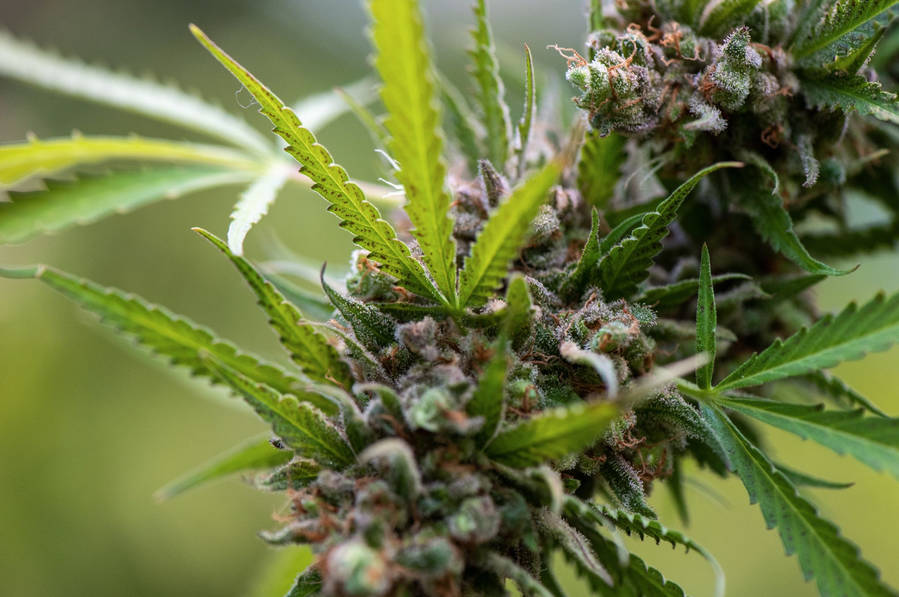
IMAGE [Harvesting a cannabis plant]
Low, Medium, and High: A Practical Temperature Guide
For most sessions, you don't need to think in terms of individual connections. A simpler framework covers most use cases. These values are starting points, not rules; every user, every device, and every type behaves slightly differently.
Low range: 160–180 °C
THC, CBD, CBG, and several lighter terpenes—including alpha-pinene, myrcene, and beta-caryophyllene—are active here. The vapor is lighter and less dense, while the aromatic character of the material comes through clearly. The flavor is at its best here, and this range is suitable for anyone who finds vapor too heavy to inhale at higher temperatures.
Medium range: 180–200 °C
The mid-range setting causes CBN and higher-boiling-point terpenes, such as linalool and terpinolene, to vaporize as well. This results in noticeably denser vapor and a more complete cannabinoid extraction. You lose some of the lighter aromatic character, but in return you get a more comprehensive vaporization of the material. Most standard sessions fall somewhere within this range.
High range: 200–220 °C
At the upper end of the range, you’ll capture the full cannabinoid spectrum, including THCV and CBC. The vapor is warm and dense, but most of the terpenes have already evaporated, so the aromatic complexity is minimal. This range is well-suited for clearing out residual material from a chamber that has already been used at lower temperatures.
One point is worth repeating: These factors are only relevant if your device actually delivers what it displays. A vaporizer that reports 185 °C but operates 15 °C below that is not a precision instrument. At this level of detail, the difference between accurate and inaccurate temperature control is crucial.
Conclusion
Once you know the boiling points of cannabinoids, choosing a temperature is no longer a matter of habit but a conscious decision: which compounds you want to activate, how much terpene character you want to preserve, and how dense you want the vapor to be. This changes your entire relationship with the device.
So you might want to save this article. The table and the temperature range are always there when you switch strains, try a new range, or wonder why a session felt different from the last one.
And if you're interested in the science behind it—that is, what actually happens when heat is applied to the chamber—you might find our article on THCa vs. THC fascinating.
Frequently Asked Questions
At what temperature should I vaporize cannabis?
It depends on what you expect from the session. For the most flavor and a milder experience, 160–180 °C is a good starting point. For a more complete extraction with denser vapor, 180–200 °C covers most standard cases. Above 200 °C, you’re in the high-extraction range, suitable for sessions at the end of a chamber run or for users who specifically want to target cannabinoids with high boiling points, such as THCV and CBC.
What is the boiling point of THC?
Delta-9 THC vaporizes at about 157 °C (315 °F). At this temperature, significant amounts of THC vapor begin to form, although in practice, most users find that extraction is more efficient at 165–180 °C, especially when the chamber is full of dried herbs.
Do terpenes vaporize at lower temperatures than cannabinoids?
Most of them, yes. Compounds such as beta-caryophyllene and alpha-pinene vaporize well below 160 °C, while even higher-boiling terpenes like linalool have a boiling point of around 198 °C. Since most cannabinoids vaporize in the range of 157–220 °C, terpenes are usually driven off earlier and have largely disappeared by the time you’re working at high temperatures.
What happens if I vaporize at too high a temperature?
You’ll still vaporize most of the available cannabinoids, but the delicate terpenes will have already broken down by then, making the session taste harsher and less complex. If you raise the temperature high enough, you’ll approach the combustion range. For most vaporizers, the practical upper limit for controlled vaporization is around 220–230 °C.
Which cannabinoids are active only at high temperatures?
THCV and CBC both have boiling points around 220 °C. This means that they are not present in the vapor to any significant degree at the low to medium settings that most people use. If your device operates at 175 °C and your strain has a significant THCV content, you’ll be keeping it well below the activation threshold.
Does temperature affect the taste of the vapor?
Definitely. The flavor profile of a session is largely determined by which terpenes remain intact at the selected temperature. Light, volatile terpenes such as pinene and limonene contribute fresh, citrusy notes but evaporate quickly. The same material tastes noticeably different at 165 °C than it does at 210 °C, where most of this aromatic complexity has already been lost.
Sources
- Brenneisen, R. (2007). Chemistry and Analysis of Phytocannabinoids and Other Cannabis Constituents. In M. A. ElSohly (Ed.), Forensic Science and Medicine: Marijuana and the Cannabinoids. Humana Press. https://doi.org/10.1007/978-1-59259-947-9_2
- Hazekamp, A., Ruhaak, R., Zuurman, L., van Gerven, J., & Verpoorte, R. (2006). Evaluation of a vaporizing device (Volcano) for the pulmonary administration of tetrahydrocannabinol. Journal of Pharmaceutical Sciences, 95(6), 1308–1317. https://doi.org/10.1002/jps.20574
- McPartland, J. M., & Russo, E. B. (2001). Cannabis and Cannabis Extracts: Greater Than the Sum of Their Parts? Journal of Cannabis Therapeutics, 1(3–4), 103–132. https://doi.org/10.1300/J175v01n03_08
- Pertwee, R. G. (Ed.). (2014). Handbook of Cannabis. Oxford University Press. https://global.oup.com/academic/product/handbook-of-cannabis-9780199662685
- National Center for Biotechnology Information. PubChem Compound Summaries for Cannabinoids and Terpenes. https://pubchem.ncbi.nlm.nih.gov/
- Russo, E. B. (2011). Taming THC: Potential Cannabis Synergy and Phytocannabinoid-Terpenoid Entourage Effects. British Journal of Pharmacology, 163(7), 1344–1364. https://doi.org/10.1111/j.1476-5381.2011.01238.x
This article is for informational purposes only and does not constitute medical advice. Always consult a qualified healthcare professional before using cannabis products for health-related purposes.