
It’s probably a thought that rarely crosses most people’s minds, but when you take a puff from a vaporizer, something quite extraordinary happens inside your body. A handful of plant compounds, freshly released from heated flowers, enter your bloodstream and dutifully integrate into your biological system.
This system has a name. It’s called the endocannabinoid system, and you’ve had it inside you since the day you were born. Just like every dog, every cat, every horse, every dolphin, and every chicken on this planet.
But what is the endocannabinoid system, and why should you care? Well, you don't really have to—but it's a truly fascinating topic, and we feel compelled to explain it as clearly as possible.
This article is a brief overview of what the endocannabinoid system is, what it does, and how it works once you start vaping some good stuff.
Key Points
- The endocannabinoid system (ECS) is a biological signaling system found in all vertebrates.
- It consists of three main components: endocannabinoids (molecules), receptors (primarily CB1 and CB2), and enzymes that break them down afterward.
- Its job is to keep the body in balance—a state that scientists call homeostasis.
- The ECS regulates things such as mood, sleep, appetite, pain perception, immune response, and memory.
- Plant-based cannabinoids such as THC and CBD interact with this very system. That is why cannabis affects us the way it does.
- Different cannabinoids are released at different temperatures. That is one of the reasons why precise vaporization is important.
What is the endocannabinoid system?
The endocannabinoid system was discovered somewhat by chance in the early 1990s, when researchers were studying how THC affects the brain and stumbled upon a signaling system that runs unnoticed throughout the entire body.
The science behind how a vaporizer works is directly linked to this system. Simply put, the endocannabinoid system is the body’s way of maintaining balance: it regulates body temperature, hunger, sleep cycles, and the stress response. Scientists call this balancing act homeostasis.
The endocannabinoid system constantly regulates dozens of processes at the same time, almost unnoticed and without causing much of a stir. It consists of three components: endocannabinoids, the receptors to which they bind, and the enzymes that break them down once they have fulfilled their purpose.

Our Best Sellers
Discover the most popular Norddampf products
The Three Components of the Endocannabinoid System
Let's take a closer look at these three elements:
Endocannabinoids
These are messenger molecules that your body produces on its own—exactly when they're needed. The two most important ones are anandamide and 2-AG.
Anandamide gets its name from " ananda," the Sanskrit word for joy. When it was discovered, researchers called it the " happiness molecule." That may sound a bit dramatic, but in practical terms, anandamide simply helps regulate a range of physiological signals.
Contrary to a common belief, especially among potheads, it is not a “feel-good” drug. It is a chemical messenger with a rather poetic name. Of the two, 2-AG is present in significantly higher quantities and is involved in a broader range of functions. Both molecules are produced as needed, utilized, and then broken down again.
CB1 and CB2 receptors
If endocannabinoids are keys, then receptors are the locks they fit into. There are two main types.
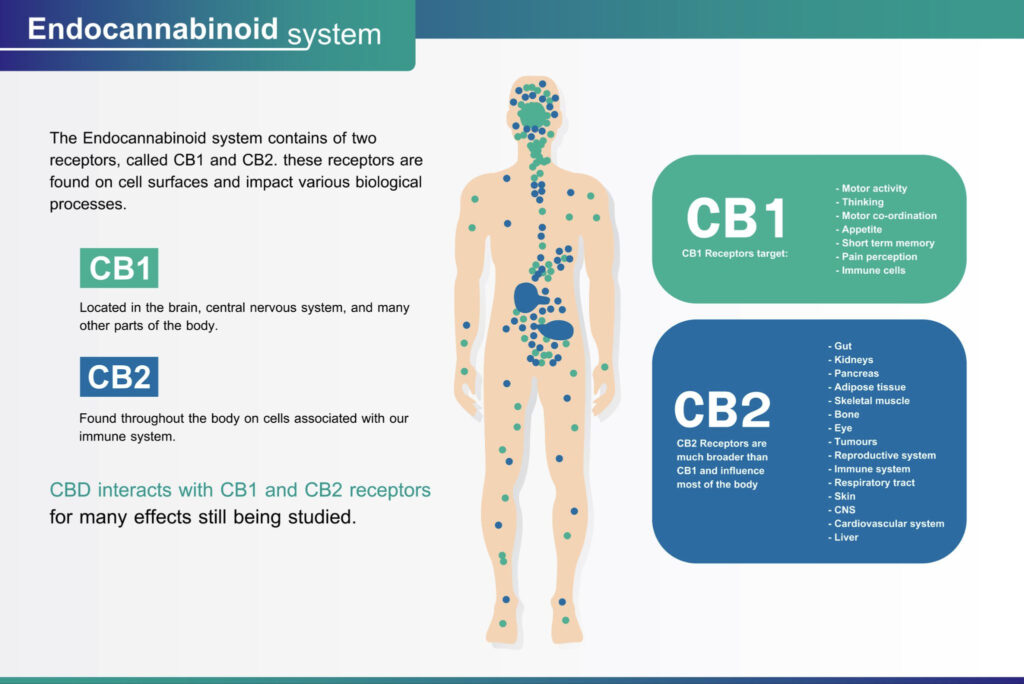
CB1 receptors are found primarily in the brain and the central nervous system. They are particularly concentrated in areas associated with memory, motor control, pain perception, and mood. THC binds directly to these receptors—and that is exactly why THC affects how you think and feel.
CB2 receptors are found primarily in the immune system and in tissues throughout the body, particularly in the intestines, spleen, and skin. They are involved in processes such as inflammation and immune responses. THC and CBD can both interact with CB2 receptors, though in different ways.
Enzymes
Once an endocannabinoid has delivered its message, the body must break it down. That is precisely the job of enzymes. Two enzymes handle most of this work: FAAH, which breaks down anandamide, and MAGL, which breaks down 2-AG. Without them, signals would continue to be transmitted long after they were no longer useful. You can think of enzymes as a cleanup crew that resets the system after each cycle.
What does the ECS regulate?
Because the receptors of the endocannabinoid system are distributed throughout the body, it influences a surprising number of physiological processes. Among the areas where its involvement is best documented are:
| area | What the ECS appears to be involved in |
| Mood and Stress Response | Helps modulate emotional state and responses to stress |
| Sleep | Affects sleep cycles and alertness |
| appetite | Indicates hunger and satiety |
| Pain perception | Modulates how pain signals are processed |
| Immune function | Helps regulate the inflammatory response |
| memory | Does it play a role in how memories are formed and stored? |
| ℹ️Scientists know that the ECS is involved in these functions. However, the exact mechanisms and what happens when something gets out of balance are still being studied. We do not claim that the ECS cures anything. The honest answer is: Science is still learning. |
How do plant-based cannabinoids (THC and CBD) interact with the ECS?
The cannabis plant produces molecules called phytocannabinoids. “Phyto” simply means “from a plant.” Some of them happen to bind to the same receptors that the body’s own endocannabinoids use. It’s a happy coincidence—or, if you will, a quirk of evolution.
THC binds directly and strongly to CB1 receptors. This direct binding in the brain produces the psychoactive effects that most people associate with cannabis. It also explains why THC can affect mood, memory, perception of time, and appetite—all functions associated with areas where CB1 receptors are particularly abundant.
CBD is harder to pin down. It does not bind particularly strongly to either CB1 or CB2. Instead, it appears to influence the endocannabinoid system indirectly. It may slow down the breakdown of the body’s own endocannabinoids or interact with entirely different receptors. Either way, researchers are still working to understand the details.
One thing we can say for sure: CBD doesn't get you high because it doesn't activate CB1 the same way THC does. That's exactly why different cannabinoids feel different—they don't all open the same figurative door.
The ECS and Temperature: Why Vaporization Is Important
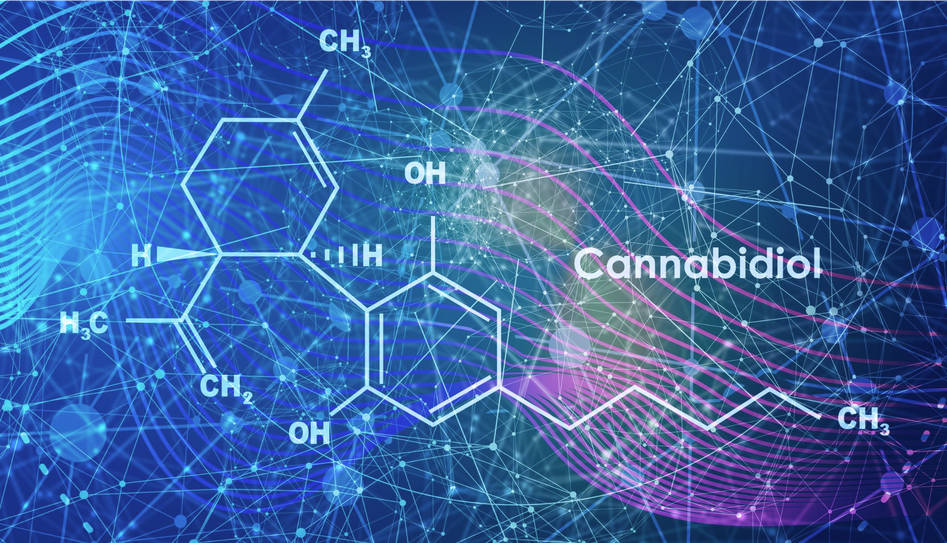
Each cannabinoid has its own boiling point—that is, the temperature at which it transitions from solid plant material to inhalable vapor. THC vaporizes at about 157 °C. CBD vaporizes at about 160 °C. CBN, CBG, and the various terpenes each have their own thresholds, some of which are significantly higher.
In practice, the temperature you set on your vaporizer determines which compounds are actually released. If you set it too low, you’ll likely miss out on some cannabinoids entirely. If you set it too high, you’ll break down more sensitive terpenes and move closer to combustion—which defeats the purpose of vaporizing from the start.
That's exactly why precise temperature control is so important—much more important than many people realize.
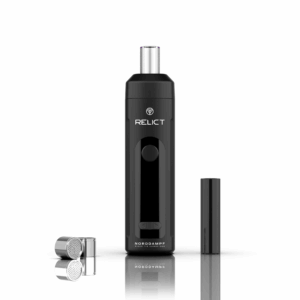
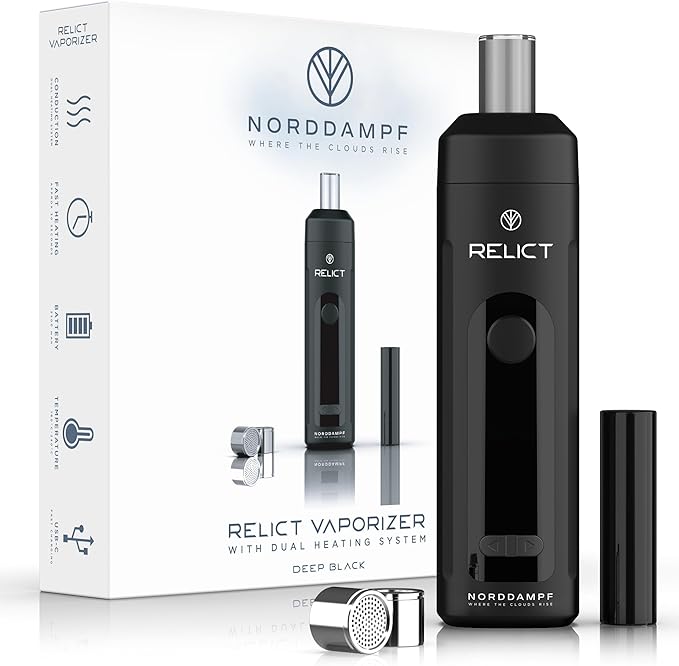
| ℹ️ A device like the RELiCT can be adjusted across the entire range in 1°C increments. This gives you the ability to specifically target certain cannabinoids and influence how they interact with your endocannabinoid system. |
Bottom Line
The endocannabinoid system helps keep your internal systems in balance by regulating important functions such as pain perception, sleep, hunger, and even mood—albeit indirectly. Cannabis interacts with this system due to a biochemical characteristic: the plant produces molecules that bind to our receptors.
This is where your choice of vaporizer makes a real difference. Different cannabinoids are released at different temperatures, so your device determines which compounds you actually absorb. A vaporizer with precise temperature control allows you to specifically target certain cannabinoids and influence how they interact with your endocannabinoid system.
If this type of control interests you, it's worth taking a look at the complete Norddampf is definitely worth checking out.
Frequently Asked Questions
Does every person have an endocannabinoid system?
Yes. The endocannabinoid system is found in all vertebrates—that is, in all mammals, birds, reptiles, fish, and amphibians. It evolved hundreds of millions of years ago—long before anyone smoked, ate, or vaporized cannabis.
What is the difference between endocannabinoids and cannabinoids?
Endocannabinoids are produced in your body. Anandamide and 2-AG are the two most important ones. Cannabinoids—more specifically, phytocannabinoids—are produced by the cannabis plant and include THC, CBD, CBN, CBG, and others. Both types can interact with the same receptors.
What are CB1 and CB2 receptors?
These are the two most important receptor types in the ECS. CB1 is concentrated in the brain and central nervous system. CB2 is found primarily in immune cells and peripheral tissues. Both are involved in different physiological processes.
Why does THC get you high, but CBD doesn't?
THC binds directly and strongly to CB1 receptors in the brain, producing the psychoactive effect. CBD does not bind strongly to CB1 and therefore does not produce a high. Its exact mechanism is still being studied.
Can the endocannabinoid system be underactive?
Some researchers have proposed the idea of a “clinical endocannabinoid deficiency.” This theory suggests that a chronically underactive ECS could contribute to certain symptoms. It is an interesting hypothesis, but it remains just that: a hypothesis. The evidence to support it is insufficient at this time.
Does temperature affect how cannabinoids interact with the ECS?
Yes. Each cannabinoid is released at its own specific temperature. So the setting on your vaporizer determines which compounds you inhale—and, consequently, which parts of the endocannabinoid system you activate. Our guide to vaporizer temperatures covers every important compound and its ideal temperature range.
Sources
Devane WA, Hanus L, Breuer A, et al. Isolation and structure of a brain constituent that binds to the cannabinoid receptor. Science. 1992;258(5090):1946–1949. https://doi.org/10.1126/science.1470919
Mechoulam R, Ben-Shabat S, Hanus L, et al. Identification of an endogenous 2-monoglyceride, present in the canine gut, that binds to cannabinoid receptors . Biochemical Pharmacology. 1995;50(1):83–90. https://doi.org/10.1016/0006-2952(95)00109-D
Zou S, Kumar U. Cannabinoid receptors and the endocannabinoid system: signaling and function in the central nervous system. International Journal of Molecular Sciences. 2018;19(3):833. https://doi.org/10.3390/ijms19030833
Russo EB. Clinical endocannabinoid deficiency reconsidered: current research supports the theory in migraine, fibromyalgia, irritable bowel syndrome, and other treatment-resistant syndromes. Cannabis and Cannabinoid Research. 2016;1(1):154–165. https://doi.org/10.1089/can.2016.0009
Blessing EM, Steenkamp MM, Manzanares J, Marmar CR. Cannabidiol as a potential treatment for anxiety disorders. Neurotherapeutics. 2015;12(4):825–836. https://doi.org/10.1007/s13311-015-0387-1
Lu HC, Mackie K. An introduction to the endogenous cannabinoid system. Biological Psychiatry. 2016;79(7):516–525. https://doi.org/10.1016/j.biopsych.2015.07.028
This article is for informational purposes only and does not constitute medical advice. Always consult a qualified healthcare professional before using cannabis products for health-related purposes.